

General News
Nigeria’s IT Literacy is Poor –Olufuye

Dr. Jimson Olufuye, IT Specialist/Consultant with over 20years experience is a man of a man of integrity and honour. He has undying love for ICT.Olufuye, president, Information Technology (Industry) Association of Nigeria (Itan) and MD/CEO, Kontemporary Komputers Limited rings a bell in the ICT sector.Olufuye spoke to john ikpea in Abuja on a wide range of issues.
About Itan and Olufeye’s Presidency
Information Technology (Industry) Association of Nigeria (Itan) is the umbrella body of all other associations of IT companies in Nigeria. We are major stakeholder in the Nigeria computer society and also in the computer professional registration council of Nigeria. Our vision is a actually to engender a new Nigeria driven by information and technology and our mission is to use every means possible to ensure that these things are championed to its conclusion.
As the president of ITAN my responsibilities include over seeing day to day activities of the association and to protect members’ interest where necessary and also to ensure that the objective of the constitution is not only implemented but committed to drive it to its conclusion
Challenges
The challenges we face are not different from the conventional ones other corporate Nigerian companies are facing. It is the issue of leadership with clear vision and appropriate strategy to implement set objectives. So far, with the privilege I have as the ITAN president and knowing what to do as well and in the right time, we have been able to put our vision in the right perspective and with appropriate mission objective to drive it. The goal is clear, that is, we want to see a Nigeria that is powered by IT and we are working very hard to mobilize all stakeholders to be involved.
In my opinion, Nigerians are looking for leader and when they see a good one they follow and I am happy that many of our members have good level of trust in my leadership and they give all the cooperation I need. So, I want to use this opportunity to encourage all those IT companies sitting on the fence to come down and lets together move this nation to the next plateau.
Kontemporary Komputers
It is an IT solution and consulting company based in Abuja. The company started operation in 1995 and since then we have been into training and rendering capacity reports. We give oral IT solution to corporations for software and design for networking and of late we started rendering IP services through the provision of middle conferencing solution.
We also consult on electronic document management to high profile companies, and our cliente include ECOWAS, EU, World Bank, federal government of Nigeria through the Ministry of Science and Technology and office of the auditor-general of the federation.
We are cutting edge IT solution company and we have in Lagos, Kano, Dubai, US, Malaysia, UK and Canada. As a matter of fact, we have technical partners around the world. This is to ensure that we provide cutting edge services in the West Coast of Africa.
R&D in the ICT in Nigeria
Thanks so much for that question. It is a critical one. There is a provision in the NITDA Act to have an IT development fund and I believe if this fund is well appropriated towards the promotion of R&D in the ICT field in the country, in our research institutions, institutions of higher learning and in other sectors of the economy that are cut from R&D like Itan where we are taking the issue very seriously, it will be well for all of us.
It is a general knowledge that without R&D no nation can grow economically and otherwise and one can always see the result of R&D only if both are available. On the local perspective, if you don’t do as much as cutting edge product, that shows that our level of R&D and innovation is very low.
R&D requires a lot of funding. It is not something individual or low capital corporation can do alone without government intervention. There has to be specific grant to ensure that this is done and done well. A graphic example is our university system, if you look at the products of our universities it does not measure up sufficiently which is as a result of very low of R&D because if there is sound R&D it will be seen in the products that comes from the universities.
Telecoms & Investment
Well, if there is any success story that the last administration would readily jubilate over, it is the issue of success in the Telecoms sector. Without any doubt, there has been sufficient foreign director investments, though we cannot see it around but the challenges are enormous, yet I can see something outstanding happening in the sector and that is a lesson for us; that based on the right policy investors were able to come in and invested their money despite the infrastructural problem such as the challenges of power, the players were also able to do their utmost best and today we have Telecom ratio climbing so high in the country.
In my opinion, I think there is a lesson for the other sectors from Telecoms sector where level of investments is quite high and that is encouraging, but government has to do more to ensure that sound infrastructure are put in place such as energy which is very important too. Government should solve these problems so that within the next seven years Nigerians can, at least, see the penetration of good Telecoms services with the poor infrastructure we have on ground and we if we are able to put in place sound infrastructure within same period that means we will be able to short-tackle the development circle, with that achieved, then we can then start talking about realization of Vision 2020, which I doubt will ever see the light of the day in the absence of IT.
Nitel
This is my personal opinion. Actually it was a costly mistake trying to do police somersault. Any government which share the view that there is nothing called continuity of policy no investor will take such government seriously.
If actually there as flaw in the negotiation, it is unfortunate. As it is sold let it be, because in the era of Nitel we never achieved anything significant in Telecom. We never did. So, lets take it as bad investment. Let it go off. Let private people, private managers, investors that can turn it round let them do it. But it is high time government should steer of Nitel and allow those who bought it to do their work.
1-Gov.net
It is a right step in the right direction. That is the way it should be done if you are actually serious about fast-tracking development, that is, government supporting a single network for e-government.
What I will want to counsel against in this circumstance, is the driver sleeping. We are always in a process of when we start a project like the one we are talking about, we go to sleep. We don’t make provision for the energy, intellectual and well withal required and the resources needed to ensure that it worked.
However, the initiative is good and if the project is supported financially and with excellent strategy, with great technical backing it has the potentials of fast-tracking e-government and e-business and ensuring that we get services from government at a faster rate.
IT Literacy
The federal government has not done enough. It has not taken the bull by the horn as it should as regards to IT in the grassroots and empowering the youths. IT literacy in Nigeria is still very low even in the civil service. But the process has just begun with the presence of 1-Gov.net in place. With regard to the youths, we have to back to the basis, primary and secondary schools should be computerized and not just having one computer but computer in education for teaching, for studying and is the way to go.When people are exposed to IT they are equally exposed to its infrastructure and tools and the facilities like the Internet, they will be able to acquire a lot of information and with the information so acquired there would be knowledge which will eventually bring about knowledge economy.
Majority of Nigerian youth are still devoid of IT knowledge and it’s a serious matter. Let me give you another illustration. We have NYSC scheme in this country but there is no ground design to ensure that part of the period of that camping is used to train the youth in IT.



Nigeria Centre for Disease Control (NCDC) has intensified nationwide disease surveillance following reports of a Hantavirus infection cluster connected to international cruise ship travel involving several countries.

Dr Jide Idris, director-general, NCDC, in a public health advisory, confirmed that Nigeria has not recorded any confirmed Hantavirus case and stated that the overall public health risk remains low.
According to the agency, the reported outbreak currently involves a limited number of confirmed and suspected infections linked to cruise ship exposure, while international investigations and contact tracing efforts continue.
The NCDC explained that the advisory was released to strengthen national preparedness and encourage vigilance against emerging infectious diseases amid growing global concern surrounding the outbreak.
Health authorities noted that Hantaviruses are mainly transmitted through exposure to infected rodents, their urine, saliva, droppings, or contaminated dust particles. Symptoms may include fever, fatigue, muscle pain, gastrointestinal illness, and in severe cases, respiratory complications.
The current outbreak has reportedly been associated with the Andes virus strain, which has shown limited human-to-human transmission through close contact in previous cases.
The NCDC stated that enhanced monitoring systems have been activated nationwide to support early detection and rapid response efforts.
The agency also urged Nigerians to maintain proper hygiene, prevent rodent infestations, safely store food items, and avoid exposure to rodents and contaminated environments.
Officials further advised the public to rely only on verified information from recognized health authorities and avoid spreading misinformation regarding the outbreak.
General News
Moniepoint Partners GDG Lagos, Women Techmakers to Empower the Next Generation of Women Architects in Tech

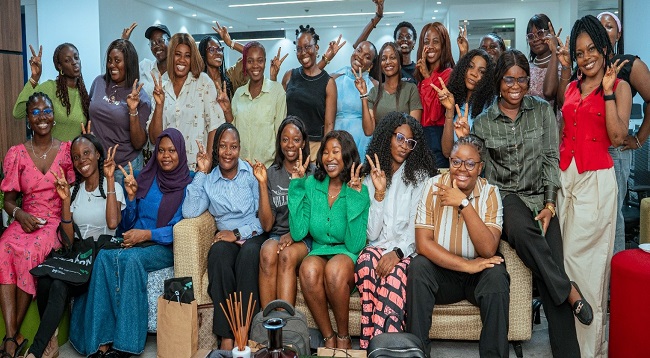
In a critical move to bolster talent density and accelerate Nigeria’s digital economy, Africa’s all in one financial ecosystem, Moniepoint hosted an International Women’s Day event bringing together women in technology for a day of leadership development and hands-on product building.

Held at Moniepoint’ Headquarters in Lagos, themed “Break the Pattern,” the event was organised in partnership with Women Techmakers Lagos and Google Developer Group (GDG) Lagos with participants spanning both technical and non-technical backgrounds, reflecting the breadth of women currently active across Nigeria’s digital economy.
In a keynote address delivered by Kemi Nwogu, Head of Product at Moniepoint Inc, titled “Breaking the Pattern: How Women Can Redefine the Future of Tech,” she made the case that progress for women in technology requires not just access to existing structures, but the tools and confidence to reshape them. Furthermore, Nwogu issued a bold call to action, urging attendees to move beyond traditional career playbooks and take ownership of shaping the industry’s future.
“From a young age, many girls have been subtly discouraged from pursuing science and tech. They are told sometimes directly, sometimes indirectly, that tech is too hard, too technical, or simply not for them. These patterns are not facts, they are constructs. And what has been constructed can be deconstructed! The future of tech needs leaders who build people, not just products, cultures, not just systems,”said Nwogu.
On building skills with purpose, she urged women to “show up everyday, make small, steady progress with online courses, coding bootcamps, open-source projects while leveraging the full ecosystem; take on challenging tasks as your greatest classroom using real problems to build real skills; while knowing why you’re building a skill as every learning goal can be tied to a career journey.”
This thematic fare of the event was further explored in a panel discussion, “Unscripted: Leading Beyond the Patterns We Inherited”, moderated by Atinuke Oluwabamikemi Kayode and featuring leaders from fintech, creative design, and software engineering space, including Chukwu Adaeze (Creative Director, CAV Digital), Chinenye Ogbu (Customer Experience Lead, Hydrogen), and Motunrayo Koyejo (Senior Software Engineer, Cowrywise).
The robust and extensive conversation examined the professional archetypes that have historically defined leadership in the Nigerian tech ecosystem: the engineering culture that equates output with exhaustion, the creative industry’s tendency toward top-down authority, the script-driven rigidity of customer-facing roles. The panelists also provided deep insights into how they had navigated and, in places, dismantled those patterns within their teams and organizations.
The event went beyond conversations to a hands-on workshop, Prompt to Production, facilitated by Taiwo Famakinde which guided attendees through modern product development from prompt design through rapid prototyping to the deployment of a functional application using AI tools.
A lot of the participants entered with little to no prior experience building software products. The workshop then fed directly into a Buildathon, where participants developed and deployed their own solutions in real time, with the strongest builds recognised and rewarded at the closing ceremony.
“IWD celebrations are often heavy on inspiration, but we wanted to offer something more, a proof of capability. Oftentimes, there is a gap between having ideas and actually building them, and we set out to bridge that by creating a space where women could easily deploy their ideas into live products with AI in just a few hours. By the end of the day, something that once felt complex due to the fast pace of AI started to feel possible.
“Our participants left with both the technical confidence to build and the leadership frameworks to navigate their careers on their own terms, ensuring they are no longer just participants in the tech ecosystem, but the architects of its future. They are now ready to test their ideas and lead without waiting for perfect conditions or a full team.” said Funke Olasupo, Co-organizer, Women Techmakers Lagos.
Interestingly, the “Break the Pattern” event sits within a broader investment in Nigeria’s technology talent pipeline that Moniepoint has deployed over the years. As one of Nigeria’s most significant fintech employers, the company runs a critical engine that sustains Nigeria’s formal and informal economy.
Moniepoint has invested in developer community partnerships including its ongoing collaboration with GDG Lagos as well as internal programmes designed to build engineering depth across product domains that include its highly successful Women in Tech initiative, DreamDevs, HatchDev and the government’s acclaimed 3MTT programme.


Google says it has disrupted an attempt by a criminal group to use artificial intelligence (AI) to exploit a previously unknown software vulnerability, highlighting growing concerns over the use of AI in cybercrime.

The technology company disclosed this on Monday, saying the hackers planned to exploit a “zero-day” vulnerability in an unnamed company’s digital system before the attack was intercepted.
A zero-day vulnerability refers to a software flaw unknown to the vendor or security teams, leaving no time to develop a protective fix before exploitation.
John Hultquist, Chief Analyst at Google’s threat intelligence arm, described the incident as a significant shift in cybersecurity threats.
“It’s here. The era of AI-driven vulnerability and exploitation is already here,” Hultquist said.
According to Google, the attackers intended to exploit a security flaw that would have allowed them to bypass two-factor authentication and gain access to a widely used online system administration tool.
The company said it had notified the affected firm and relevant law enforcement agencies, successfully disrupting the operation before any damage occurred.
Google, however, declined to identify the targeted company, the threat actors involved, or the AI model used in the attempted breach.
The firm said preliminary analysis suggests the hackers used a large language model, similar to those powering popular AI chatbots, to identify the vulnerability.
Google noted there was no evidence linking the attempted attack to any government-backed operation, although groups connected to China and North Korea have reportedly explored similar AI-enabled cyber techniques.
The disclosure comes amid growing debate over the regulation of increasingly advanced AI systems capable of coding, vulnerability discovery, and cybersecurity analysis.
Recent advancements in AI hacking tools, including Anthropic’s newly announced cybersecurity-focused model, Mythos, have intensified concerns among governments and technology firms worldwide.
The U.S. government has also stepped up oversight of advanced AI systems, with the Commerce Department recently announcing agreements with major technology firms, including Google, Microsoft, and xAI, to evaluate powerful AI models before public release.
Industry analysts warn that while AI could strengthen cybersecurity by helping organisations detect and patch software flaws faster, it could also accelerate cyber threats by enabling criminals to discover and weaponise vulnerabilities at unprecedented speed.
Dean Ball, Senior Fellow at the Foundation for American Innovation, said governments may need to consider stronger oversight of advanced AI tools.
“I don’t like regulation. I would prefer for things not to be regulated. But I think we need to in this case,” Ball said.
Experts say the growing use of AI in cybersecurity could create a transitional period of heightened digital risk before stronger defences are developed globally.

Mastercard, BMONI Launch Multi-Currency Payment Cards in Nigeria

NCDC Enhances Monitoring, Releases Advisory amid Rising Global Hantavirus Cases

Metro Digital, Nigerian Firm Accuses Multichoice Of Refusal to Obey Court Judgements

SERAP Demands Probe of Disappearance of N27.9Bn from USPF, Calls Out Minister, Secretary of Fund

Moniepoint Partners GDG Lagos, Women Techmakers to Empower the Next Generation of Women Architects in Tech

Kaspersky Discovers Vulnerability in Qualcomm Snapdragon Chips that can Lead to Data Loss & Device Compromise

MTN Suspends Data, Airtime Borrowing Service over New FCCPC Lending Rules

Bank Customers to Pay N1,500 for ATM Card Issuance, Replacement – CBN

FCCPC Licenses 5 Firms for Airtime, Data Lending as Telcos Step Aside

ATM Card Fees Jump to ₦1,500 as CBN Scraps Maintenance Charges




 E-Financial1 day ago
Transcorp Excites Shareholders with ₦20.3 Billion Dividend @20th AGM

 E-Financial1 day ago
Africa Prudential Launches Sabivest to Boost Digital Investment Access

 Telecom1 day ago
PAFON 3.0: Agency Banking Key to Reaching Millions of Unbanked Nigerians – AMMBAN

 General News1 day ago
Interswitch Inducts 3rd Interns into Its Developer Academy

 General News1 day ago
PIN Records 3.07Bn Media Reach, Expands Digital Rights Impact Across Africa in 2025

 General News1 day ago
UK Reaffirms Commitment to Press Freedom, Science Journalism Training for Nigerian Media
 General News19 minutes ago
Moniepoint Partners GDG Lagos, Women Techmakers to Empower the Next Generation of Women Architects in Tech
 Telecom18 minutes ago
SERAP Demands Probe of Disappearance of N27.9Bn from USPF, Calls Out Minister, Secretary of Fund