

E-Business
Facebook Opens New Tools, 50m SMEs Connect Customers via “Pages”


Facebook has announced that over 50 million businesses are now using Facebook Pages to connect with their customers all over the world.
Facebook said, “People are also communicating with Pages more than ever, with 2.5 billion comments on Pages every month. In Nigeria, 54% of people on Facebook are connected to an SMB.
Facebook said, it is introducing new features to make it easier for businesses to manage communications with customers from their Page.
What’s New:
More communication controls for Page owners: Pages can set the average time it takes for them to reply to messages: either “within minutes,” “within an hour,” “within hours” or “within a day.”
Redesigned inbox tells businesses more about their customers to better serve them: More context on the people businesses messaging them helps Page admins keep up with messages faster and manage conversations more easily.

An easier way to respond to and keep track of comments: A tool under the new Activity tab that helps admins monitor and respond to comments on their Page.
Sheryl Sandberg, chief operating officer, Facebook, “The number one challenge for small and medium businesses is reaching customers. Facebook Pages are the mobile solution for millions of businesses around the world because they make it easy for business owners to reach new customers and communicate with current ones where they are – on mobile.”
Also, Michael Sharon, Product Manager, Pages, “People can contact businesses anytime and from any device, so we’re offering new tools for Pages to better manage their customer interactions. Now it’s easier than ever for Pages to address both the public comments and private messages that people send them, in order to build and maintain strong relationships and grow their business.”
In addition, two case studies from Nigeria and Kenya respectively, Facbook disclosed, that Thando’s is the brainchild of entrepreneurial couple, and NYU Alums, J.G. and Taffi Ayodele, who designed the Africa’s first foldable ballerina flat shoe.
Their company aims to create a platform for creative talent on the African continent by crowdsourcing designs from African men and women who would otherwise have limited opportunities to design for a global audience.
Each purchase results in shared profits for the designers who were crowd sourced or selected as brand ambassadors.
Thandos are a new company but love the traction they’re seeing from Instagram and Facebook.
Also, Mikul Shah, founded EatOut, an online restaurant guide, booking system and magazine.
Founded in 2010 by Shah who, after living in London for over a decade, returned to Kenya and found there was no single place to find, review and book restaurants.
EatOut has since grown from a blog with 1 employee to a full-fledged company with an amazing team of 13 and growing.
They have won numerous awards including Kenya Tourism Award for Best Digital Media.
Earlier this year, Facebook introduced new features for Pages to make it easier for businesses to be where their customers are and communicate with them anytime, anywhere.
As more customers interact with businesses on the go, Pages are the mobile solution for businesses.
Now there are over 50 million active business Pages and many of them are using their Page to communicate with customers. In fact, the number of messages sent to businesses on Facebook has doubled in the past year, and people now leave 2.5 billion comments on Pages every month.
More communication controls for Page owners
“This summer we rolled out a new feature that helps people identify Pages that are very responsive to messages.
“Because a business’s response time is central to the quality of their customer service, we set a high standard for the feature by adding the “Very responsive to messages” indicator only to Pages where 90% of messages were responded to within five minutes. Now we’re offering new controls and more responsiveness levels, so a wider range of businesses can encourage people to reach out to them through private messages.
“Starting this month all Pages can set the average time it takes for them to reply to messages. Admins can choose to show that they respond either “within minutes,” “within an hour,” “within hours” or “within a day.” Average response times for Pages are calculated for each Page automatically and the response time shown on the Page defaults to their average response time, but admins can now control what response time shows publicly on their Page. So even if a Page typically responds to messages within an hour, they can can set their visible response time to within a day and set customer expectations accordingly. This updated feature gives Page admins more control and flexibility to use their Page as a communication channel,” Facebook said in an email to Nigeria CommunicationsWeek.
Availability
The tech giant said that all of the new Page communications features are starting to roll out globally now and will be available to every Page in the coming months.
As mobile device usage continues to push people to communicate with businesses in real time, businesses need tools to manage communication efficiently.
These new features help admins build and a manage a convenient, personal and scalable communication channel for customers, so businesses can connect with people easily and focus on growing their business.


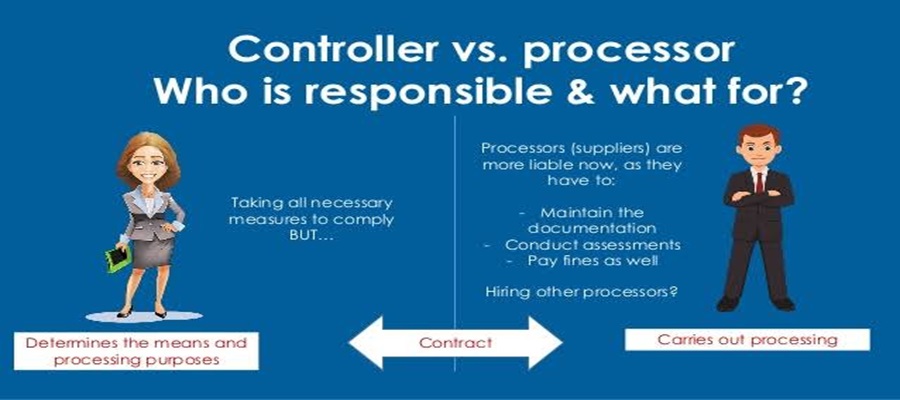
Nigeria Data Protection Commission (NDPC) has directed all Data Controllers and Data Processors of Major Importance (DCPMIs), yet to register with the commission to do so immediately.

This followed a Federal High Court judgment affirming NDPC statutory powers to designate and register such entities.
DCPMIs are entities operating in Nigeria that handle sensitive personal data or large volumes of information, requiring mandatory registration with the NDPC under the Nigeria Data Protection Act (NDPA).
In a statement issued on Tuesday by Babatunde Bamigboye, head of Legal, Enforcement and Regulations at the NDPC, described the judgment as a major milestone for data accountability and regulatory oversight in Nigeria.
The commission said the ruling arose from a suit filed by Emmanuel Harunna against the NDPC in Emmanuel Harunna v. NDPC (FHC/L/CS/1116/2024), in which the applicant sought a declaration that Point of Sale agents were not Data Controllers or Processors of Major Importance under the Nigeria Data Protection Act and requested a perpetual injunction restraining the commission from registering them.
According to the statement, Justice F.N. Ogazi examined the commission’s Guidance Notice on Registration alongside Sections 5(d), 6(c), 44, 45 and 65 of the Nigeria Data Protection Act before concluding that the commission acted within its statutory powers in designating entities under the Major Data Processing – Ordinary High Level category as Data Controllers and Processors of Major Importance.
Quoting the judgment, the statement read, “The Nigeria Data Protection Act was enacted to promote accountability, transparency and responsible data governance. Registration enables the Respondent to identify entities engaged in significant data processing activities, monitor compliance.”
It added that the court held that, “Far from undermining the constitutional right to privacy, the registration framework is one of the statutory mechanisms designed to safeguard that very right by subjecting data controllers and data processors to effective regulatory oversight.”
The statement further quoted the court as saying, “Looking at the recitals of the Guidance Notice, there is every indication that the Guidance Notice is also aimed at protecting the privacy and security of data subjects, thus bringing the registration requirement of the Guidance Notice within the protective shield of Section 45 of the 1999 Constitution.”
According to the commission, the court also held that, “Remarkably, Section 63 of the Data Protection Act provides that the provisions of the Act shall prevail over any other law inconsistent with its provisions on matters relating to the processing of personal data.”
Reacting to the judgment, the commission described the decision as a significant boost to Nigeria’s data protection regime.
“The Commission appreciates the ground-breaking efforts of the court towards the advancement of the jurisprudence relating to data accountability in Nigeria, as eloquently demonstrated in this case,” the statement read.
Following the ruling, Vincent Olatunji, national commissioner and chief executive officer, had directed every Data Controller and Processor of Major Importance that had yet to comply with the registration requirement to register without delay.
The commission warned that entities failing to comply with the registration requirement could face legal consequences.
“Failure to register creates serious legal liabilities under the law, while compliance with registration requirements builds public trust and safeguards the fundamental rights and freedoms of data subjects in Nigeria,” the statement added.


The University of Nigeria (UNN) is set to partner with The Roxettes Group to establish a research and innovation centre focused on artificial intelligence (AI), smart and green mobility, and digital technologies, in a move aimed at strengthening research, entrepreneurship and technology-driven industrial development.

Chairman of The Roxettes Group, Arc. Dr. Kaycee Orji-Kelechi, announced the proposed partnership while delivering his acceptance speech after receiving an Honorary Doctor of Business Administration (Honoris Causa) during the university’s convocation ceremony.
The proposed facility, to be known as the Dr. Kaycee Orji Centre for Artificial Intelligence, Smart/Green Mobility and Digital Innovation, is expected to provide a platform for research, innovation and collaboration between academia and industry, with a focus on developing commercially viable solutions to local and continental challenges.
Orji-Kelechi said the initiative was conceived as a long-term investment in human capital and technological advancement rather than simply another physical infrastructure project.
He said the vision was to position the University of Nigeria among Africa’s leading institutions in artificial intelligence, smart mobility and digital innovation through research, entrepreneurship and technology development.
According to him, the centre will house five specialised laboratories covering artificial intelligence and machine learning, smart and green mobility, robotics and the Internet of Things (IoT), digital finance and financial technology, as well as cloud computing and advanced data centre technologies.
He also announced plans for the proposed Kaycee Orji Founders Innovation Challenge, an annual programme intended to identify, mentor and support innovative ideas from students, researchers and academic staff with the potential to become scalable businesses.
“Every student of this University should know that a great idea conceived in a classroom should have a pathway to becoming a patent, a startup, a global enterprise, and a solution that transforms society,” he said.
Orji-Kelechi disclosed that preliminary conceptual work on the project had commenced, with architectural and engineering designs being prepared by K.KH Contractors Ltd., a subsidiary of The Roxettes Group.
He added that discussions with the university would begin on identifying a suitable site for the project, while a comprehensive proposal containing architectural drawings, engineering designs and an implementation framework would be submitted after completion of the design phase.
Reflecting on his career, Orji-Kelechi said Africa must move beyond consuming innovation to creating it through investment in manufacturing, technology and entrepreneurship.
“We have pursued one simple vision: that Nigeria and Africa must move from consumption to production; from importing innovation to creating it; and from waiting for opportunities to building them,” he said.
He urged graduating students to see their education as a foundation for solving societal challenges through innovation, leadership and enterprise, adding that he remained committed to promoting industrial development, youth empowerment and sustainable economic growth.
The proposed collaboration forms part of broader efforts to strengthen university-industry partnerships, which are increasingly seen as critical to improving research commercialisation, innovation capacity and technology-led economic development in Nigeria.

National Population Commission (NPC) has announced commencement of full digital registration of births and deaths through the VitalReg platform, which became operational nationwide on July 1, 2026.

Chidi Ezeoke, federal commissioner representing Anambra, disclosed this in Awka during a press conference to announce commencement of full digital birth and death registration under the Electronic Civil Registration and Vital Statistics (E-CRVS) system and the marking of World Population Day commemorated every July 11.
He revealed that a total of 131 registration centres had been opened in the 21 local government headquarters and several communities in the state, adding that more centres would be opened later.
Ezeoke described the initiative as a major milestone in Nigeria’s Civil Registration and Vital Statistics (CRVS) system, to ensure every birth and death in the country was captured through a digitally enabled registration platform.
“It builds on the launch of the E-CRVS system and the inauguration of the National Coordination Committee on Civil Registration and Vital Statistics by President Bola Tinubu on Nov. 8, 2023.
“A total of 4,011 functional registration centres has been established across the 774 LGAs of the federation and the commission iswas working to expand the number to about 8,000.
“In Anambra, 131 registration centres have been opened in the 21 local government headquarters and several communities. More centres had been proposed for the state,” he said.
According to the Commissioner, the VitalReg platform would provide faster registration services, 24-hour online access, digital certificate issuance where applicable, reduced paperwork and waiting time, improved data validation and a more secure national CRVS database.
While noting that the platform would serve as a foundational database to support other national data systems and strengthen interoperability across Nigeria’s digital identity ecosystem, Ezeoke urged Nigerians and other stakeholders to support the initiative by ensuring prompt registration of all births and deaths.
Speaking on the 2026 World Population Day themed, “Realising the Hopes and Aspirations of Young People – Today and for the Future”, the Commissioner called for greater investment in education, healthcare, skills development, decent employment opportunities and youth participation in governance for sustainable national development.
Earlier, Mr Obiakonwa Okagwu, state director, NPC, said the occasion served as a reminder of great opportunities provided to harness young people’s capabilities, which he said would shape the future of the country when adequately harnessed.
He called on residents to take registration of births and deaths as national responsibility, just as he urged the media to take the message on civil registration to all parts of the State.

Fact-Check: Elon Musk’s “Tesla Pi Phone” is Internet Rumor

Dangote Plans to Donate One-Third of Wealth to Charity as Legacy

NDPC Directs DCPMIs to Register with Agency or Face Legal Consequences

Malpass, Ex World Bank Chief Raises Alarm over Nigeria’s Secretive Debt Structures

How and Why Apps Deplete Data – ALTON

NRC, Ponzi Scheme Collapses Resulting Loss of Billions of Naira

EFCC Busts NIS Visa Overstay Racket, Uncovers N700m in an Account

Tokenization, Blockchain Technology will Transform Financial Institutions – IMF

From Scarcity to Scale: What Africa Can Learn from India’s Agricultural Transformation

BON Establishes Six Ad Hoc Committees to Modernize Broadcasting




 News2 days ago
See Verified 20 Countries Nigerian Passport Holders Can Travel Visa-Free

 E-Business2 days ago
Report Says Cybercriminals Deploy Malware to Hijack Crypto Wallets, Monitor Browsers Telegram

 Telecom2 days ago
NCC, REA Partner to Cut Telecom Costs with Renewable Energy

 Telecom2 days ago
Subscribers, Telcos Warn FCCPC over Airtime Lending Enforcement

 E-Business2 days ago
NPC Opens 131 Births, Deaths Registration Centres in Anambra

 General News2 days ago
AfDB, Nigeria Urge African Control of Mineral Resources

 General News2 days ago
Lagos Chamber Opposes 21 Percent Pension Contribution, Warns of Job Losses

 News1 day ago
History as Lagos Becomes First Nigerian State to Launch Greenhouse Gas Registry