

Telecom
Xiaomi Mi4 Built With Incredible Power, Fast Software

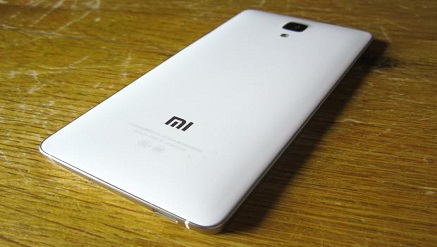
The Xiaomi Mi4 is one of the biggest handset releases in Nigeria in 2015 and deserves testing one out.
Here is the experience you are going to get upon using the smartphone:
Up: Xiaomi Mi4 proves to be amazingly built with quality, fast software, excellent hardware and pocket-friendly.
Down: It is unbelievable that Xiaomi Mi4 has no Micro SD card slot; showing that the design is a clear imitation of the iPhone.
Design & Display (DD)
The Mi4 come with a metal chassis fronted by a Gorilla Glass screen and backed with a plastic rear panel. Along the bottom you’ll find a single speaker and again looking like the one seen on the iPhone 5.
The device uses MicroUSB-B, a clear departure from what “regular” smartphones use which is MicroUSB-A.

The USB-B connection will still fit, however, but there’s the added danger of inserting it upside down here.
Sleek phones loving Nigerians will definitely find a “companion” in Xiaomi Mi4, especially for it semblance with iPhone.
The hardware (body) build quality is fantastic, and the use of metal equates the smartphone to a standard not usually associated with Android arena.
The 5in IPS display is also striking and very impressive, sporting a full HD 1080 x 1920 pixel resolution and rock-solid viewing angles.
Interestingly, the display is easily seen in direct sunlight, and boasts the kind of colour replication you’d expect from a top of the line handset.
Hardware and Performance (HP)
While the Xiaomi Mi4’s price may be well below what you’d pay for an iPhone 6 or Galaxy S5 –– in Nigeria, of course, it retails for less than N50,000.
Mi4 has some elegant specifications, including a quad-core Snapdragon 801 chipset clocked at 2.5GHz. That’s backed by 3GB of RAM, all of which provides a silky-smooth user experience and amazing performance when playing 3D games.
The 3G unit we reviewed comes with 16GB of storage while the 4G unit has 64 gigabytes .
It’s worthy of note that there is no way to add in more storage using Micro SD cards, so you’ll have to choose wisely if you like downloading lots of content.
Also, NFC is also missing, which iis not pleasant when you consider that the tech is likely to take off in a big way now that Apple is officially supporting it with its new iPhone models.
Software (MIUI)
Xiaomi’s MIUI (pronounced, “Me-You-Eye”) is snap on Android.
In the case of MIUI 5, which ships with the Mi4, it’s built on Android 4.3.
However, unlike other manufacturers Xiaomi has been quite aggressive with its UI skin.
Unlike to a Western user who may not enjoy not Google apps, largely because Android phones sold in China rarely come with such software pre-installed, Nigerians can (though a Google Installer application) load up everything you need, from Gmail to Google Play.
While MIUI 5 was the OS that shipped with the device reviewed, it is upgradable to MIUI 6 (based on Android 4.4), which isn’t officially available as yet but can easily be flashed to the phone using a dedicated application.
Another feature of MIUI that makes it feel like iOS is the lack of an app drawers. Of course, all time Android fans may find it hard to get adapt. But, you can still use widgets as normal.
There is minor change on the MIUI based as the notification bar at the top of the screen no longer displays any icons, and instead you have to slide down the notification panel to see what messages you have.
The challenge is the possible of one often missing notifications or ignored them purely because they didn’t flash up in the bar.
But, designers at Mi are smart enough to compensate. Thus, notifications now pop up at the top of the screen no matter what activity you’re involved in –– just like they do in iOS.
MIUI 6 are very cool; coming with “Do Not Disturb” option built into the OS itself, and there are little customizations to play around with, including a menu which allows you to control the colour temperature of the screen.
Most of all though, MIUI is fast; perhaps not as swift as stock Android on a Nexus 5, but certainly meets the fancy.
Battery and Camera (BC)
The Mi4 has a large 3080mAh battery, and edges of the in the Galaxy S5 in terms of size. It seems there is behind the scenes operations that ensure the Mi4 lasts longer than most of its big-screen rivals.
This is because, it lasts almost three entire days out of the pphone. This has not been the case with an Android phone for some time now.
It’s actually possible to select from different battery profiles, but most interesting to us is the “Balanced” mode that left most features running and intact, presumably dialing down the Snapdragon 801 chipset in order to save on the juice. Regardless of what tactics Xiaomi is adopting to preserve battery life, the Mi4’s stamina supercede others of same status.
Xiaomi Mi4 brandished its Sony-made 13MP camera and that is equally impressive.
It offers excellent picture quality and fast focus times. The Mi4 is capable of producing some spectacular images, even if it does occasionally struggle with high-contrast areas.
Verdict
Xiaomi understands that iPhone hasn’t made significant inroads to Nigeria, which might have spurred it to through up the “iPhone of China” into the market late last year.
However, and with its incredible power and a gorgeous design; making it one of the best phones of 2015 (in Nigeria) , as long as you can put up with snatches of Chinese text, there are drawbacks also. Without Micro SD card slot being possibly the most obvious and the lack of 4G in this launch model is also an issue.
Not including NFC seems very shortsighted by Xiaomi.
Nonetheless, it is worth putting up with due to the speed and the design being the most aesthetically pleasing Android handsets in the market now.



Telecommunications operators have called on the Federal Competition and Consumer Protection Commission (FCCPC) and the Nigerian Communications Commission (NCC) to establish a clear regulatory framework for airtime and data credit services, warning that millions of Nigerians could face fresh disruptions if the agencies fail to coordinate their responsibilities.

Gbenga Adebayo, chairman, ALTON
This is coming on the heels of the Federal High Court judgment affirming the FCCPC’s authority to regulate consumer protection in the airtime and data credit market while preserving the NCC’s exclusive mandate over telecommunications licensing and technical regulation.
The ruling effectively clarified that both regulators have complementary roles rather than overlapping powers.
Association of Licensed Telecommunications Operators of Nigeria (ALTON), said the judgment should serve as the basis for stronger collaboration between the two regulators to avoid the regulatory uncertainty that earlier forced operators to suspend airtime and data credit services.
Gbenga Adebayo, chairman, ALTON, said the industry was not disputing the authority of either regulator but was seeking a clearly defined operational framework before any further regulatory actions are taken.
“The court has done something important. It has confirmed the FCCPC’s authority and, in the same breath, affirmed that the NCC’s role is preserved. Concurrency means coexistence. The industry now expects both regulators to establish the coordination framework that the court’s reasoning requires,” Adebayo said.
He stressed that regulatory certainty had become critical because millions of Nigerians depend on airtime and data credit services for daily communication.
“Forty million Nigerians depend on these services. The court has made clear that both regulators have a role. The industry is asking them to define how that works before any action that could disrupt access again,” he stated.
Adebayo also urged both agencies to engage industry stakeholders before introducing measures capable of affecting consumer access to the services.
According to him, the Presidential Enabling Business Environment Council (PEBEC) directive requiring Regulatory Impact Assessments before major policy changes should be observed to minimise unintended consequences on businesses and consumers.
The renewed call comes months after major mobile network operators temporarily suspended airtime and data borrowing services following the implementation of the FCCPC’s Digital, Electronic, Online and Non-Traditional Consumer Lending (DEON) Regulations, a development that affected millions of subscribers nationwide.
In its judgment, the Federal High Court held that while the FCCPC has powers over competition and consumer protection issues in the digital lending ecosystem, it cannot assume the NCC’s statutory responsibility for licensing telecommunications operators.
Justice Ambrose Lewis-Allagoa ruled that the two agencies must operate within their respective mandates, describing their relationship as one of “coexistence, not displacement.”

MTN Nigeria has warned customers to disregard fraudulent online posts claiming the telecom operator is offering “1 Month Free Data for Old Subscribers,” describing the promotion as fake and unauthorised.

In a statement shared on its X handle, the telco said the circulating promotion is not from MTN and is not affiliated with the company.
MTN urged customers not to click on the accompanying link in the online post or provide their phone numbers or personal information on any third-party website.
Customers are advised not to click on the link or provide their phone numbers or personal information on any third-party website.
“We will never require customers to submit their details on external platforms to claim data or any other reward,” MTN said.
The company added that all genuine promotions, products and services are announced only through its official communication channels.
“All authentic MTN promotions, products and services are communicated exclusively through our official channels, including www.mtn.ng, our verified social media pages and *180#,” the company said.
MTN also urged customers to remain vigilant against online scams designed to steal personal information, warning that fraudulent offers often impersonate trusted brands to deceive unsuspecting users.
“Don’t be the next victim!” the company said, reiterating that the purported “1 Month Free Data for Old Subscribers” offer is fake and not associated with MTN Nigeria.


National Industrial Court of Nigeria (NICN), sitting in Ikoyi, Lagos, has dismissed a Notice of Preliminary Objection filed by Pan African Towers Ltd. (PAT) in an employment dispute instituted by its former Managing Director and Chief Executive Officer, Mr. Azeez Amida.

The court also awarded ₦500,000 in costs against the company after holding that the application lacked merit.
Justice Essien, who delivered the ruling on July 21 in Suit No. NICN/LA/143/2025: Mr. Azeez Amida v. Pan African Towers Limited, held that the substantive case concerning Amida’s alleged outstanding contractual entitlements under a Mutual Separation Agreement should proceed to hearing.
The ruling effectively rejected the company’s attempt to terminate the proceedings on jurisdictional grounds.
Jurisdictional Challenge Rejected
Pan African Towers had argued that the National Industrial Court lacked jurisdiction to entertain the matter because the Mutual Separation Agreement executed between the parties required disputes to first pass through negotiation, mediation and arbitration before litigation could be initiated.
The company maintained that Mr. Amida failed to exhaust those contractual dispute resolution mechanisms before approaching the court.
However, Justice Essien rejected the argument after examining evidence presented by the claimant showing that several attempts had been made to activate the agreed dispute resolution process before legal proceedings commenced.
According to the court, documentary evidence showed that Mr. Amida, through his solicitors, issued correspondence and formal demand letters aimed at resolving the dispute amicably in line with the terms of the agreement.
The court found that rather than engaging with those efforts, Pan African Towers failed to meaningfully participate in the process and later sought to rely on the same contractual provisions to challenge the court’s jurisdiction.
Evidence Considered by the Court
According to evidence presented by Mr. Amida’s legal team, the court considered correspondence involving senior officials of Pan African Towers and its investors.
Among the documents relied upon was a letter allegedly written by the Chairman of the Board of Pan African Towers and Partner at Development Partners International (DPI), Mr. Adefolarin Ogunsanya, rejecting the demand made by Mr. Amida’s legal representatives for an amicable resolution before litigation.
The claimant’s legal team also tendered multiple email communications allegedly sent from January 2025 to Verod Capital Management’s in-house legal counsel, Mr. Dipo Okuribido.
According to the claimant, those emails did not receive any response before the commencement of the suit.
Based on the evidence before it, the court held that the conduct of Pan African Towers was inconsistent with reliance on the contractual dispute resolution provisions.
Justice Essien ruled that the company had effectively waived its right to insist on arbitration after frustrating the preliminary dispute resolution process contemplated by the parties’ agreement.
The court consequently held that Pan African Towers could not rely on the arbitration clause to prevent the court from hearing the substantive claims.
Court Awards Costs
Having dismissed the Preliminary Objection, the National Industrial Court awarded costs of ₦500,000 against Pan African Towers.
The court described the objection as lacking merit.
Substantive Defence Yet to Be Filed
The ruling represents the first judicial determination in the employment dispute.
The claimant’s legal team noted that since the suit commenced, the principal response filed by Pan African Towers had been the Preliminary Objection challenging the jurisdiction of the National Industrial Court.
According to the claimant, the company has yet to file a substantive defence addressing the merits of the claims relating to the alleged outstanding contractual entitlements.
With the dismissal of the jurisdictional challenge, the matter will now proceed to hearing on its merits.
The court adjourned the substantive suit until Jan. 12, 2027.
Background to the Dispute
The dispute arose following Mr. Amida’s departure from Pan African Towers after both parties executed a Mutual Separation Agreement.
According to the claimant, while the agreement governed the terms of his exit from the company, certain contractual entitlements remained unpaid.
His legal representatives said they initially sought to resolve the dispute through the mechanisms provided under the agreement by engaging the company through correspondence and formal demand letters.
When those efforts failed to produce a resolution, they commenced proceedings before the National Industrial Court seeking payment of the outstanding contractual entitlements.
Rather than filing a substantive defence to the claims, Pan African Towers challenged the jurisdiction of the court, arguing that arbitration and other dispute resolution mechanisms had not been exhausted.
The National Industrial Court has now rejected that position.
Related Commercial Litigation
The employment proceedings are separate from ongoing commercial cases before the Federal High Court involving Mr. Amida, Development Partners International (DPI), Verod Capital Management and other parties.
Those proceedings relate to issues concerning the ownership of Pan African Towers and remain pending before the courts.
The National Industrial Court noted that those matters would be determined independently based on their respective facts, evidence and applicable legal principles.
Legal Team Reacts
Reacting to the ruling, representatives of Mr. Amida’s legal team welcomed the decision.
“The Court has affirmed an important principle of contractual dispute resolution.
“A party cannot frustrate the agreed process and later seek to rely on that same process to prevent a claim from being heard.
“We now look forward to presenting the substantive case before the Court,” the legal team said.
The lawyers acknowledged that Pan African Towers retained the right under Nigerian law to pursue any available appellate remedies but stated that they were fully prepared for the substantive hearing scheduled for January 2027.

NDIC Begins Payment to Depositors of 46 Failed Microfinance Banks

Telcos Seek Clear Regulatory Framework on Airtime Credit Services

FG Says Rumours, Fear, Can Crash Banks

MTN Warns Customers against Fake Promo

EU Debunks Fake Compensation Scheme Targeting West African Bank Customers

NRC, Ponzi Scheme Collapses Resulting Loss of Billions of Naira

NASENI Moves to Digitize CCB’s 5m Assets Declaration and Operations

Lebara Nigeria Launches Lebara Play, Africa’s First Telecom-Owned Micro-Drama Platform

Tokenization, Blockchain Technology will Transform Financial Institutions – IMF

EFCC Busts NIS Visa Overstay Racket, Uncovers N700m in an Account




 News3 days ago
Adebutu, PDP Chieftain Accuses Nigerian Governors of Embezzling LG Allocations

 News2 days ago
YEDC Warns Customers, Says 20 Percent Electricity Bonus is Scam

 News2 days ago
PFIPC Probe: Dollar, Pounds Accounts of Fake Agency Inactive – CBN

 E-Financial2 days ago
No Going Back on July 31 Deadline for Insurance Firms’ Recapitalisation – NAICOM

 Broadcasting2 days ago
NBC, INEC, Plan Joint Broadcast Monitoring Framework ahead of 2027 Elections

 News2 days ago
STEM Africa Fest to Nurture Nigeria’s Future Innovators

 E-Business2 days ago
Jumia Nigeria Expands Flexible Payment Options with Klump Partnership

 E-Financial2 days ago
Court Affirms FCCPC’s Power to Regulate Digital Lending