

E-Business
How Social Media Change the World: The Good & Bad


Twitter, Facebook, Instagram, Snap chat, Periscope and Google+ to mention but a few social media are changing the way the world is perceived either for good or bad.
These different social media have evolved into an indispensable tool for interaction, mobilization, promotion and communication.
It has changed the human race in so many incredible ways. Jovago.com, Africa’s No 1 hotel takes a close look at how social media has changed us: the good and the bad.
The Good
Unlimited Access to Information
Unlike in the past when you have to wait for a newspaper to publish breaking news the next day or rely on radio or television, social media is now the pathway to news. You will not only get current information; you also get live news feeds.
This social media trend has led to the emergence of blogs and online media which has threatened the existence of newspapers.
However, they now seem to be a gradual synergy between new and traditional media.
Connectivity to Others
Social media has made it possible to keep in touch with friends and family. It has also connected us to new ones.
In fact, for some persons, it is easier to make friends on social media. In addition, social media has reconnected us to childhood friends.
You will always relish the opportunity to meet a long lost friend online and exchange banters about the fun times of your childhood. It is worth it.
Voice to the Voiceless
Social media has become the voice to the voiceless. It is an effective platform to express unencumbered and unfettered opinions, views and grievances.
Videos of harassment have gone viral and in other cases, it has been used to bring down previously impregnable government-Arab spring.
In addition, it is being used for health and developmental campaigns.
It is therefore not surprising that many governments are battling to regulate social media. It has to a very large extent returned power to the people.
The Bad
Prevalent Rumours
Spreading rumours and false information is a huge shortcoming of social media.
It is an unregulated space and every Tom, Dick and Harry have unhindered access to it. False breaking news has become the norm.
Due to this, many are careful about the information they read online.
A good example was a hoax that the Eritrean government has passed a law making it compulsory for Eritrean men to marry two wives or go to jail.
It trended in Nigeria and even reputable media houses reported the story.
Made People Distant
It is an African and Nigerian culture to visit friends and family.
Chinua Achebe in his book Things Fall Apart stressed: “When we gather together in the moonlit village ground it is not because of the moon.
Every man can see it in his own compound. We come together because it is good for kinsmen to do so.”
But things have fallen apart in today’s social media world as nobody is visiting one another anymore.
We rely heavily on social media to connect with loved ones. Unfortunately, many people live false lives online.
All Talk, No Action
Social media may give voice to the voiceless, call people to action and a particular subject may trend for a few days.
But beyond twitter, what happens?. There have been several viral hashtags on twitter and videos on YouTube which demanded an offline action but oftentimes the trend begins and ends on social media.
Very few have gotten worthwhile online and offline attention like the#BringBackOurGirls campaign for the rescue of Chibok girls.


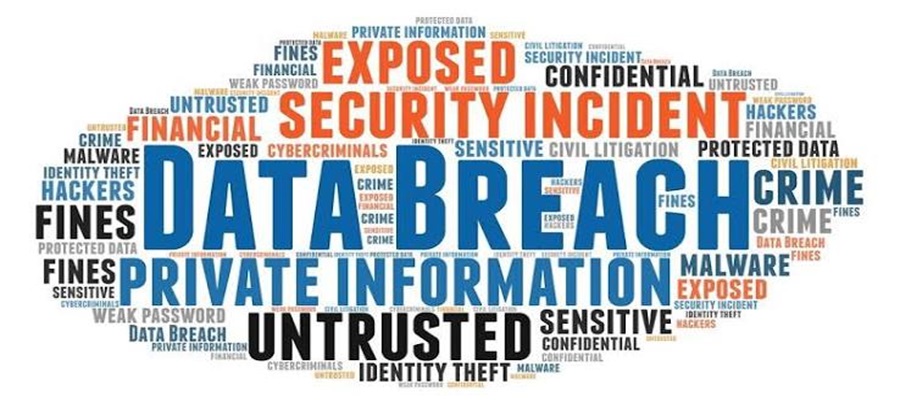
Nigeria’s weak data protection guardrails may undermine the recent directive by Central Bank of Nigeria (CBN) to banks, fintech firms, and other payment service providers to store payment transaction data generated within the country local servers.

CBN said that the new rule will start from January 1, 2027, as part of new measures to strengthen oversight of the fast-growing digital payments ecosystem.
This will also provide the country greater control over critical data infrastructure, allowing authorities to easily access records, conduct audits, enforce compliance, and investigate, especially in cases where criminal offenses are involved, reducing delays often caused by intermediation between local and foreign entities.
Apart from data sovereignty, the CBN added that moving transaction records from foreign servers will help drive investments in local data centers and cloud storage capacity.
Though reliable estimates are hard to come by, it is believed that Nigeria loses over N60 billion in hosting data in foreign servers.
But a coalition of civil society organizations (CSOs), has raised concerns over safety measures in place to protect data of Nigerians, despite having data protection laws in place.
The coalition, comprising Media Rights Agenda, Paradigm Initiative, Digital Rights Lawyers Initiative, and Accountability Lab Nigeria, among others, released the “Protected From the State, Not By It: Nigeria’s Data Protection Crisis Is a Crisis of Implementation,” where they criticized regulators’ failure to effectively enforce data protection laws, which led to rising cases of digital fraud and rampant illegal sale of sensitive information.
There have been leaks of sensitive voter, financial, and personal records.
For instance, there was alleged unauthorized access to the Continuous Voter Registration (CVR) database of the Independent National Electoral Commission (INEC) during a nationwide CVR exercise.
INEC earlier released the preliminary findings of its investigation into the matter, saying that it found no external breach of its systems and that the personal information of over 90 million registered voters was not compromised.
Despite this, CSOs argued that the incident underscored the lack of oversight, adding that it showed that while data privacy laws are in place, sensitive information can be easily moved from a secure government database and into the hands of private political entities.
The coalition also pointed out regulators’ failure to conduct human rights impact assessments on public surveillance systems before related programs were deployed, urging the government to act on these issues by subjecting public institutions to the same compliance requirements as private organizations.
“This is the asymmetry at the heart of the crisis: citizens are under-protected from data abuse and over-exposed to state monitoring and punishment,” the CSOs stated.
Additional report by coingeek

Visa, a multinational firm into payment card services says Artificial intelligence enabled scams have emerged as the fastest-growing source of consumer payment fraud globally as cybercriminals increasingly target people.

Visa stated this in its Mid-year 2026 Biannual Threats Report released on Wednesday in Lagos.
The report said scammers were increasingly using AI tools and social engineering tactics to manipulate consumers into authorising fraudulent payments themselves.Premier League Fixtures
It indicated that from July to December 2025, Visa identified nearly one billion dollars in scam-related activity, making scams the largest category of consumer payment fraud.
According to the report, fraudsters now impersonate trusted brands and institutions, create a sense of urgency and deceive victims into completing seemingly legitimate transactions.
The report said stronger network-level security had reduced opportunities for direct system compromises, forcing criminals to shift their focus to exploiting human trust.
It revealed that fraud involving device tokens declined by 9.6 per cent between July and December 2025, compared with the same period in 2024.
The report identified accelerating scams, growing use of AI in fraud, migration of attacks from technology to people, and evolving ransomware trends as key developments shaping payment security.
It stated that global ransomware activity rose by 26 per cent during the review period compared with the corresponding period in 2024.
However, only 23 per cent of ransomware victims paid ransoms, the lowest level on record, reflecting improved resilience and recovery capabilities, according to the report.
Commenting, Mr Paul Fabara, chief Risk and Client Services officer, Visa, said that payments at network level continued to get safer, but threats were evolving faster than ever
Fabara said criminals were increasingly using deception, urgency and AI-enabled tools to exploit trust, requiring stronger collaboration across the payments ecosystem.
Also, Andrew Uaboi, vice president and Cluster head, Visa West Africa, said AI had significantly lowered the barriers to entry for fraudsters.
“What once required deep technical skill can now be executed with a prompt,” Uaboi said.
He said intelligence-driven defence and coordinated action across the ecosystem were becoming increasingly critical to protecting consumers from emerging threats.


Kaspersky has released its Sustainability Report for 2024–2025, outlining how the company is working toward a safer and more resilient digital future.

The report reflects Kaspersky’s broader commitment to responsible business — protecting people and organisations from cyberthreats, supporting law enforcement cooperation, investing in secure technologies, and helping strengthen the digital resilience of societies and economies.
In 2024-2025, the company continued advancing digital sustainability and strengthening global cyber resilience, reducing thedisruption, financial losses and social risks caused by cyber incidents, and enabling safer and more stable conditions for digital adoption across economies and societies.
Over the period, the number of detected advanced persistent threat (APT) groups and operations has increased significantly — by 74% compared to 2023, supported by intelligence gathered through five dedicated Expertise Centers.
Building a safer cyberworld
A significant part of Kaspersky’s social impact comes from the company’s cooperation with global law enforcement agencies. During the reporting period, the company contributed to joint operations with INTERPOL and AFRIPOL that resulted in the arrest of more than 2,600 suspected cybercriminals.
From a sustainability perspective, this shrinks the opportunities attackers can exploit — making digital environments safer for governments, businesses and individuals, and lowering the long-term economic and social costs associated with cyber incidents.
During the reporting period, Kaspersky formalised its collaborations with AFRIPOL, signing a five-year cooperation agreement, and delivered cybersecurity training to law enforcement representatives from 23 African countries, covering the fundamentals of Security Operations Center (SOC) operations and advanced threat hunting techniques.
This capacity-building work has a compounding effect: as local teams become more capable of independently detecting and responding to threats, the overall resilience of the digital ecosystem increases, while the cost and duration of cyber incidents decrease over time.
Implementing future tech
To effectively protect people, businesses and public institutions from evolving cyberthreats, Kaspersky constantly improves its security solutions and conducts cybersecurity research to stay one step ahead of attackers.
In 2024–2025 the company was granted 155 patents, including 135 AI-related ones. Its global R&D team of around 3,000 employees also produced 373 research publications. Together, these efforts help advance the baseline of secure technologies available to the market.
This reduces systemic vulnerability in digital infrastructure and supports more stable technological adoption at scale.
Responsible innovation frameworks further reinforce this effect. By joining the European Commission’s AI Pact and supporting the UN Global Digital Compact, Kaspersky has aligned its development practices with emerging global governance standards.
This contributes to sustainability by helping reduce the risks of unsafe AI deployment, such as misuse, bias or system exploitation, which could otherwise undermine trust in digital transformation.
The company’s Cyber Immunity approach, implemented through KasperskyOS, adds another layer of long-term sustainability impact by shifting security from reactive protection to architectural resilience.
Instead of repeatedly patching vulnerabilities, systems are designed to be inherently resistant to compromise, which reduces maintenance overhead, lifecycle risk and resource inefficiency in securing digital environments.
Among the new product launches, the Kaspersky eSIM Store expanded the company’s offering beyond cybersecurity into mobile connectivity. By reducing reliance on physical SIM cards and making global mobile access more seamless, the solution supports more sustainable travel and digital lifestyles.
Together with that, Kaspersky also released Kaspersky Cloud Workload Security for protecting cloud workloads wherever they reside: on servers or virtual machines, or in private, public, or hybrid clouds, etc.
“At Kaspersky, we see cybersecurity not only as a technology issue, but as a social one. Every day, people rely on digital services to work, communicate, study, receive services and manage their lives and they need to be able to do this safely.
“That is why our sustainability agenda starts with our core expertise: protecting people, organisations and critical systems from cyberthreats. But it also goes further — through responsible innovation, transparency, partnerships and support for communities.
“This report shows how our technologies, research and cooperation with partners translate into practical impact: fewer risks, stronger resilience and a safer digital environment for everyone,” said Maria Losyukova, Head of ESG & Sustainability at Kaspersky.

FCMB Turns Normal Banking into Rewards with New Mobile App Upgrade

Despite Warnings, FG Draws Down $1.5Bn as First Tranche of FAB $5Bn Loan Deal

PalmPay Strengthens Data Protection Culture with Employee Privacy Workshop and Privacy Champions Programme

Paystack Unveils AI-powered Payments Tools

NRS, CITN Deepen Partnership to Strengthen Tax Awareness

CBN Extends PoS Geo-Fencing Enforcement Deadline to August 2026

London Strengthens Global Investment Ties with Africa @ First Ever London-Africa Business Summit

FG Targets Alleged N3tn Capital Flight, Opens Airtime Credit Market to Nigerian Fintechs

Mobile Internet Gender Gap Widest in Africa – GSMA

Japan, UNESCO Boost Digital Learning in 15 CoEs with Donation of ICT Equipment




 E-Business2 days ago
Privacy Crisis May Undermine Local Hosting of Data by Banks, Fintechs

 Telecom2 days ago
NITDA Unveils Bold Vision to Make Nigeria an AI Powerhouse

 Telecom2 days ago
GSMA Launches Global Satellite Regulatory Playbook to Help Policymakers Build Future-Ready Connectivity Frameworks

 Telecom1 day ago
6 Easy Ways to Enjoy the 2026 World Cup with Google and Gemini

 General News2 days ago
Nestlé Commits to Boosting West Africa Solar Rollout Through Partnership

 E-Business2 days ago
How to Build a Safer Cyberworld for People, Business, and Society

 Telecom2 days ago
Airtel Africa Foundation Launches Airtel Green Schools to Promote Sustainability Education in Nigeria

 E-Business2 days ago
AI-Powered Scams are Biggest Payment Fraud Threat -Visa Report