

Telecom
ITU, UNESCO Advocate Mobile Technology for Equitable, Better Quality Education

A joint ITU/UNESCO Policy Forum on mobile learning brought together for the first time Ministers of Education and Ministers of Information & Communication Technology (ICT) to examine the role that policies and cross-sectoral collaboration can play in fostering innovation and the use of mobile technology to improve the quality, equity and accessibility of education.
Held under the framework of ITU’s m-Powering Development Initiative, the Forum was a highlight of this year’s UNESCO Mobile Learning Week (MLW), which had the theme “Innovating for Quality”.
The event featured a Ministerial High-Level Roundtable which looked at how increasingly affordable digital devices can help address urgent educational challenges and meet the needs of students, teachers and administrators. Ministers also explored ways to create synergies between national policies in the areas of technology, education, telecommunication and innovation.
During the Forum, participants from Latin America discussed how m-learning was being used in the region to address key education issues such as literacy, access and retention.
An interactive dialogue between public and private sector stakeholders was also held examining how to establish strong public private partnerships for infrastructure provision, technical support and learning resources development.
“ICTs will go a long way towards achieving inclusive and equitable quality education and lifelong learning for all, as envisioned by the Sustainable Development Goals,” said ITU Secretary-General Houlin Zhao.
“The growing power, affordability and ubiquity of mobile technology offers an unprecedented opportunity for governments to make great strides in lowering the barriers to education and connecting teachers and students to a wealth of resources via mobile devices.”
“Meeting the full promise of mobile learning calls for supporting innovation and scaling up what works,” said UNESCO Director-General Irina Bokova.
“To succeed calls for comprehensive mobile learning policies and a shared political framework encompassing access, equity and teacher training. By drawing a bridge between telecommunications and education stakeholders, this Forum provides a unique platform to build partnerships that foster mobile learning environments that work for all.”
“This Policy Forum marks the start of an important collaborative effort between the education and ICT sectors to design policies that will build comprehensive and sustainable strategies for the digital learning revolution,” said Brahima Sanou, Director of the ITU Telecommunication Development Bureau.
“Using ICTs and mobile devices for learning is about empowerment. It is about empowering teachers with extremely rich resources for improving their teaching methods and allowing students to take a more active role in their own education both inside and outside the classroom,” he added.
The MLW Forum comes just ahead of the 13th full meeting of the UN Broadband Commission for Sustainable Development in Dubai, UAE, which will look closely at the role of broadband in education, among other issues.
The meeting is being hosted by Commissioner Sunny Varkey alongside the annual Global Education & Skills Forum.
ITU’s m-Powering Development Initiative is designed to give advice and share recommendations on how to deploy ICT services, from m-Health, m-Learning and m-Governance to m-Commerce and m-Sport.
UNESCO Mobile Learning Week is an annual event which brings together experts from around the world to share how affordable and powerful mobile technology – from basic handsets to the newest tablet computers – can accelerate learning for all, particularly people living in disadvantaged communities.


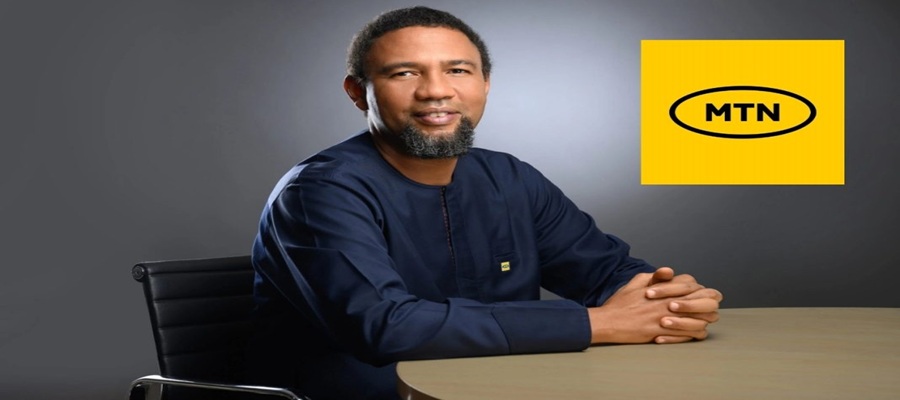
MTN Nigeria has raised the bar for corporate disclosure in Africa after publishing its 2025 sustainability report in full compliance with International Financial Reporting Standards S1 and S2.

Dr. Karl Toriola, CEO of MTN Nigeria,
The report, independently assured by Ernst & Young, marks the telecom operator’s seventh consecutive annual sustainability publication and third year as an early adopter of the global framework ahead of its mandatory implementation.
Dr. Karl Toriola, CEO of MTN Nigeria, said, “strong governance and ethical conduct are foundational to our sustainability strategy. We reinforced compliance through our Conduct Passport Framework and robust internal controls.”
He added that “in May 2025, we became the first telecommunications company in Nigeria to publicly present a sustainability report on the Nigerian Exchange Group platform, an important milestone in our commitment to IFRS S1 and S2- aligned disclosure and accountability.”
The company also secured Carbon Disclosure Project ratings of ‘B-’ for climate change and ‘C’ for water security.
Under the IFRS S2 framework, the telecoms operator disclosed climate-related risks linked to flooding, heat stress, regulatory changes and possible future taxes or charges on carbon emissions, following a climate scenario analysis completed in 2024.
The report also showed that MTN Nigeria now uses a digital reporting format – XBRL. This makes its sustainability and governance data easier for investors and ESG rating agencies to access and analyse through automated systems.
The Company also carried out assessments to understand how sustainability issues affect both its business operations and society at large, while measuring its overall economic, environmental and social impact from 2021 to 2024.
In addition, over one-third of MTN Nigeria’s biggest suppliers (based on spending) have committed to supporting the company’s net-zero emissions goals, although these commitments have not yet gone through an independent audit or verification process.

National Agency for Science and Engineering Infrastructure (NASENI) has signed a Memorandum of Understanding (MoU) with the Rural Electrification Agency (REA) to promote locally manufactured renewable energy technologies under the Federal Government’s ‘Nigeria First Policy’.

L-R: EVC/CEO, National Agency for Science and Engineering Infrastructure, Mr. Khalil Suleiman Halilu; Director-General of the Bureau of Public Procurement (BPP), Dr. Adebowale Abraham Adedokun; and Dr. Abba Abubakar Aliyu, Managing Director and Chief Executive Officer of the Rural Electrification Agency (REA), at the signing of the MoU on implementation of Nigeria First Policy for offtake of NSSENI’s renewable energy products for rural electrification projects held on Friday, June 19, 2026 at BPP’s office in Abuja.
The agreement signing was facilitated by the Director-General of the Bureau of Public Procurement (BPP), Dr. Adebowale Abraham Adedokun at the BPP headquarters in Abuja on Friday, June 19, 2026.
Speaking at the event, the Executive Vice Chairman/CEO of NASENI, Mr. Khalil Suleiman Halilu, said the Agency is focused on linking research, production, and commercialization to ensure that innovations are translated into market-ready products.
He said “NASENI would scale up renewable energy production, including solar panels and streetlights, through initiatives such as DefFrontier, to strengthen local manufacturing and reduce import dependence, adding that the Agency will meet the renewable energy requirements of REA.”
Instead of continuous importation of technologies, machines and equipment for producing renewable energy solutions, NASENI by this MoU will be committed to local manufacturing and domestication of the technologies, equipment and other ways and means of proliferation of renewable resource in the country and to increase the nation’s off-grid energy solutions.
The Managing Director/CEO of REA, Dr. Abba Abubakar Aliyu, described the relationship with NASENI as a strategic partnership aimed at building Nigeria’s renewable energy ecosystem through local production and deployment.
He stated that “while NASENI provides the manufacturing and technological capacity for renewable equipment, REA will focus on deploying solutions to expand electricity across rural areas.”
Meanwhile, the Director-General of BPP, Dr. Adebowale Abraham Adedokun, said the Nigeria First Policy, exemplified by this agreement, is aimed at strengthening local content, ensuring value for money, and promoting accountability in public procurement.
He emphasized that implementation of the agreement will be performance-based, with strict monitoring to ensure compliance and measurable outcome. He added that the MoU is expected to deepen collaboration between NASENI and REA in expanding renewable energy and reducing dependence on imported technologies.
The MoU will be implemented through NASENI’s subsidiary company, NASENI Devfrontier Green Energy FZE and REA limited liability company, RAMco.The two Federal Government agencies seek to establish a strategic collaboration under which REA shall offtake PV modules, inverters, energy storage batteries of NASENI-Devfrontier Green Energy FZE directly or through its approved distribution companies/assembly and manufacturing factory.
As part of the agreement, REA shall provide institutional visibility to enable NASENI participate in electrification projects; facilitate opportunities for engagements between NASENI and eligible developers/contractors under REA programs; ensure that such facilitation is consistent with applicable procurement, local content, and transparency requirements; and also collaborate with NASENI in promoting standardized, high-quality PV technologies across its programme portfolio.
Telecom
TikTok, ICC Gather Nigeria’s Entrepreneurs to Drive Small Business Growth and Digital Transformation

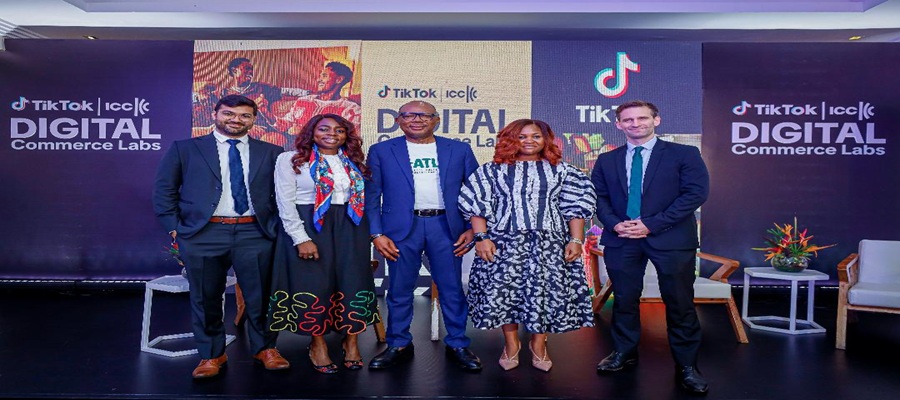
TikTok, in collaboration with the International Chamber of Commerce (ICC), on Thursday convened hundreds of entrepreneurs, small business owners, digital creators and industry stakeholders in Lagos for a flagship Digital Commerce Labs (DCL) event aimed at accelerating digital skills development and economic inclusion across Sub-Saharan Africa.

TikTok
The event, supported by the National Information Technology Development Agency (NITDA) and the Lagos State Employment Trust Fund (LSETF), brought together participants from across Nigeria’s business and technology ecosystem to explore how digital platforms can be leveraged to scale enterprises, improve market access and drive job creation.
Speaking at the event, organisers said the initiative marks the beginning of a broader programme designed to train thousands of small and medium-sized enterprises (SMEs) across the region in digital commerce skills through both online and physical learning platforms.
According to TikTok, the partnership reflects its commitment to supporting small businesses and strengthening Africa’s growing digital economy.
“Digital commerce is reshaping how businesses grow across Sub-Saharan Africa, and Nigerian entrepreneurs are at the heart of that shift,” said Tokunbo Ibrahim, Acting Head of Government Relations and Public Policy, Sub-Saharan Africa, TikTok.
He said the initiative would ensure that small businesses benefit from emerging opportunities in social commerce and digital trade.
The Director-General of NITDA, Kashifu Inuwa Abdullahi, said digital platforms have evolved beyond entertainment and are now key drivers of economic growth and innovation.
He noted that Nigeria’s youth population and growing digital adoption position the country to benefit significantly from the expansion of online commerce and creator-led businesses.
“At NITDA, our vision is to make Nigeria a digitally enabled nation, fostering inclusive economic development through technological innovation,” he said.
The ICC Deputy Secretary General, Julian Kassum, described the programme as a strategic effort to equip small businesses with tools needed to compete in the global digital economy.
He said the Digital Commerce Labs initiative would help expand opportunities for trade, entrepreneurship and employment.
The Lagos State Employment Trust Fund (LSETF) also announced support for the programme through capacity-building training in financial literacy, business structuring, record keeping, taxation and legal advisory services. It said participating businesses would gain access to funding opportunities after completing the programme.
Data presented at the event showed that Nigeria’s social commerce sector is projected to reach $2.04 billion in 2025 and nearly $4 billion by 2030, while Africa’s wider market is expected to grow to $9.43 billion within the same period.
Speakers at the event noted that social media platforms have become central to business growth in Nigeria, with many SMEs relying exclusively on digital channels to reach customers and drive sales.
The programme also featured keynote presentations, business training sessions, and a creator economy spotlight where Nigerian entrepreneurs shared experiences on building brands and scaling businesses through digital platforms such as TikTok.
Organisers said the initiative is expected to strengthen digital literacy, expand market access for SMEs, and deepen Nigeria’s participation in the global digital economy.

Galaxy Backbone @ 20, Unveils New Identity

ALTON Backs CBN on Local Data Hosting Rule for Banks, Fintechs

MTN Nigeria Commits to Ethical Conduct with IFRS S1, S2 Compliance

NDPC to Review Data Law to Address AI, Privacy Concerns

FG Moves to End Double Taxation

CBN Extends PoS Geo-Fencing Enforcement Deadline to August 2026

London Strengthens Global Investment Ties with Africa @ First Ever London-Africa Business Summit

FG Targets Alleged N3tn Capital Flight, Opens Airtime Credit Market to Nigerian Fintechs

Japan, UNESCO Boost Digital Learning in 15 CoEs with Donation of ICT Equipment

African Electric Vehicle Platform Raises $215m to Scale Electric Mobility in Nigeria, Others




 E-Financial3 days ago
How Fraudsters Stole N134Bn from Banks, Customers in 6 Years – CBN

 General News3 days ago
Police Uncovers N7.7Bn Telecom Data Fraud Syndicate, Recovers Assets Worth Millions

 Telecom2 days ago
TikTok, ICC Gather Nigeria’s Entrepreneurs to Drive Small Business Growth and Digital Transformation

 E-Business2 days ago
Payaza Launches AI-powered Storefront Platform to Drive Cross-border Commerce

 Telecom2 days ago
How a New NITDA-TikTok Partnership Could Transform Thousands of Nigerian Businesses

 Telecom2 days ago
Nigeria Moves to End Solar Imports as NASENI, REA Seal Major Renewable Energy Deal

 E-Financial2 days ago
NAICOM’s 18 Months Management Spill @ African Alliance Ends

 E-Financial2 days ago
Standard Bank Targets $15.4b SME Growth in Nigeria, Others with Trade Expansion Drive