

E-Business
The Networked Economy is Becoming the New Normal – Edet

Richard Edet, Cisco’s general manager for Nigeria as described network as crucial to driving growth, innovation, efficiency and productivity for the nation and its people.
This, he said is a platform for creating intelligent, sustainable solutions for public safety and security, transportation, buildings, utilities, healthcare and education.
Edet, in an article discussed the lessons learned from the recent economic downturn and how working closer with African governments, placing technology at the core of economic growth, and environmental and social sustainability are high on the agenda.
“New business models that came to life during the downturn will, most likely, be here to stay. Even from a go-to-market perspective, many businesses were prompted to explore new revenue channels and services,” he said.
Edet added that sustainable competitive advantages will be realized by organizations that move quickly to embrace collaborative processes and the tools that allow their employees, customers and partners to intelligently connect and interact anytime, anywhere, via any device – along with services that can save time, money and deliver better results in today’s global environment.
In moving toward a global economy, he explained that the power of Web 2.0 and social media is giving end-users the capability to share their own personal experience of the goods and services they invest in, and in many cases this offers a real time return on those investments.
“This interconnected environment of sharing knowledge and ideas helps many businesses around the world – those that are listening and engaging with their customers in one hand, and to continue developing innovating, and offering better products and more valuable services that can meet these demands, on the other.”
He opined that an economy built on intelligent technology architecture has the potential to help organizations and individuals to be productive and drive innovative collaboration irrespective of where they or their teams happen to be located.
The Cisco general manager said there is also a growing recognition in the Nigerian business community around the importance of public-private partnerships for driving economic growth and prosperity. While the private sector will play a significant role in catapulting the upturn, government and the private sector also need to work collaboratively, now more than ever.
“Technology is primed to take a leadership role as the economic catalyst. Health systems globally are challenged to meet increasing demand for quality services. In Nigeria for example, patients in both urban and rural settings, often have limited access to health care, particularly when they require specialty services or need care for chronic illness, healthcare workers are under similar pressures were more is needed from them in terms of information availability, reliable access and inter-collaboration capabilities within the healthcare facility environment.”
Edet however explained that: “In the very near future, with solutions like Cisco TelePresence technology healthcare professionals will be able to collaborate more easily, regardless of location, thereby improving both the timeliness and the quality of care delivered. Patients will have access to physicians and specialists from remote locations. The infrastructure is also ideal for applications of telemedicine such as specialist or radiologist consultations”.
He said holistic transformation can also be applied to the educational system. “Enabled by collaborative technologies that allow individuals to create, adapt and share content and best practices; by providing access to high-quality educational opportunities through public and private partnerships with educational leaders, can help create a knowledge economy by imparting vocational training to rural youth and preparing students to become members of the global 21st century workforce. In the future, technology solutions like the Cisco TelePresence Classroom will help transform the learning environment in Nigeria by providing a means to bring education to remote locations and also connect with colleges, institutions and tutors from around the world”.
Edet affirmed that intelligent and innovative use of this technology can increase productivity, reduce overall costs and ultimately help transform companies, cities, countries and subsequently, individual lives. Countries that prioritize national networking readiness can enjoy a higher competitive advantage and help capture a bigger share of foreign direct investments.



Jumia Nigeria has reaffirmed its role as one of the leading forces driving the adoption of e-commerce in Nigeria, saying sustained investment in consumer trust, local logistics and digital infrastructure has helped expand online shopping while laying the foundation for Africa’s broader digital commerce ecosystem.

Speaking during a panel discussion at the AfCFTA Digital Trade Forum 2026, the Chief Executive Officer of Jumia Nigeria, Temidayo Ojo, said the company’s experience over the years shows that building consumer confidence remains the single most important factor in accelerating e-commerce adoption across the continent.
According to him, while millions of Nigerians have embraced online shopping, significant opportunities still exist to bring many more consumers into the digital marketplace through stronger consumer protection, seamless payment systems and supportive public policies.
Ojo noted that Jumia’s growth has mirrored the increasing acceptance of e-commerce in Nigeria, with the company consistently investing in technologies, logistics capabilities and customer experience initiatives that have made online shopping more accessible, convenient and reliable for consumers.
He explained that one of the biggest challenges facing digital commerce remains consumer trust, particularly among first-time online shoppers who are unable to physically inspect products before making purchases. To address this, Jumia has continuously strengthened its customer experience through reliable delivery, transparent order tracking, quality assurance and responsive dispute resolution processes that encourage repeat purchases and long-term confidence in online retail.

“Trust is the currency of digital commerce,” Ojo said, adding that stronger consumer protection frameworks across African markets would further accelerate the growth of the sector by giving consumers greater confidence whenever issues such as payment disputes, delayed deliveries or product quality concerns arise.
Beyond consumer confidence, Ojo identified fragmented payment systems as one of the major obstacles limiting intra-African digital trade. Despite significant innovation within Africa’s fintech ecosystem, varying regulations and limited interoperability continue to make cross-border transactions more complex than necessary.
He called for greater harmonisation of payment frameworks across the continent, noting that seamless digital payments would make it easier for businesses to scale beyond their domestic markets while allowing consumers to transact effortlessly across borders.
Ojo also emphasised the importance of stronger collaboration between governments and the private sector in creating an enabling environment for digital businesses. According to him, coordinated policies and regulatory certainty would accelerate investment, encourage innovation and strengthen confidence in Africa’s digital economy.
As one of Africa’s largest e-commerce platforms, Jumia sees regional integration as a significant growth opportunity. The company already connects tens of thousands of merchants with consumers across several African markets and believes improved cross-border trade policies would enable many more local businesses to reach new customers beyond their national boundaries.
Such integration, he said, has the potential to unlock access to a combined consumer market of more than 500 million people, creating new opportunities for African enterprises to trade with one another and strengthen the continent’s digital economy.
He added that while many first-time shoppers initially prefer cash-on-delivery because of perceived risks, their confidence in digital payments increases significantly after experiencing reliable service, quality products and efficient deliveries.
According to Ojo, Jumia’s journey reflects the broader evolution of e-commerce in Nigeria, one driven by sustained investments in trust, technology and local partnerships. He maintained that with stronger consumer protection, harmonised regulations and deeper collaboration between governments and the private sector, Africa is well positioned to unlock the next phase of digital commerce growth.

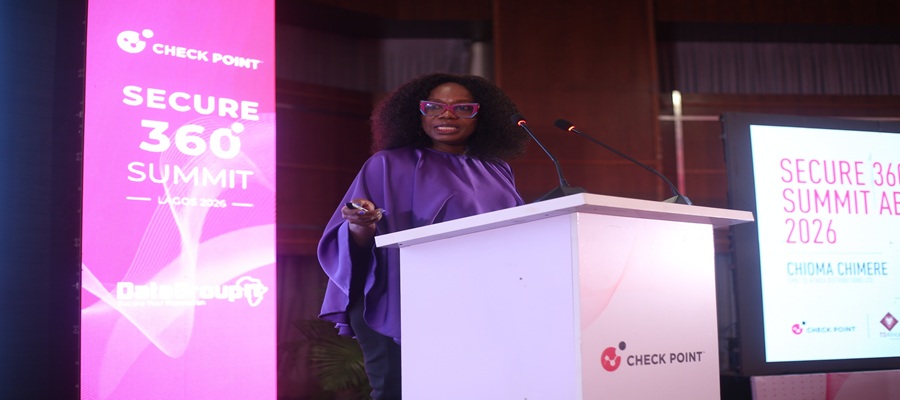
Africa’s leading technology distributor Powerhouse, TD Africa, has reaffirmed its commitment to advancing cybersecurity awareness and digital resilience by sponsoring the 3rd Annual Secure 360 Summit Nigeria 2026, hosted by global cybersecurity leader Check Point Software Technologies, as Gold Sponsor.

Chioma Chimere, Coordinating Managing Director, TD Africa
This year’s summit was held in Abuja and Lagos, bringing together key stakeholders from across Nigeria’s technology ecosystem.
Now in its third edition, the Secure 360 Summit has evolved into one of Nigeria’s premier cybersecurity forums, bringing together Chief Information Security Officers (CISOs), Chief Information Officers (CIOs), IT Directors, and senior technology leaders from the financial services, telecommunications, enterprise, energy, and public sectors to address today’s rapidly evolving cyber threat landscape.
Speaking on the significance of the summit, Kingsley Oseghale, Country Manager, Check Point Nigeria, emphasized the need for stronger collaboration in tackling emerging cyber risks. “Cybersecurity has become a business priority rather than just an IT concern.
“Through the Secure 360 Summit, we continue to provide a platform for industry leaders to exchange insights, strengthen partnerships, and explore innovative approaches to securing today’s digital economy.
“We are pleased to have TD Africa as a valued partner in driving cybersecurity awareness across Nigeria.”
In her remarks, Chioma Chimere, Coordinating Managing Director, TD Africa, applauded Check Point for creating a platform that addresses one of the most critical challenges facing businesses and individuals. “Cybersecurity is everyone’s business. We owe it to ourselves, our organisations, and our communities to remain security-conscious in an increasingly connected world.
“At TD Africa, innovation drives everything we do, and innovation can only thrive in a secure environment.
“This is why we are proud to support initiatives like the Secure 360 Summit that promote knowledge sharing and strengthen our collective cyber resilience.”
The summit featured expert-led sessions on emerging cyber threats, artificial intelligence, cloud security, ransomware, and strategies for building resilient digital infrastructures, equipping participants with practical insights to navigate today’s cybersecurity landscape.
Through its continued partnership with global technology leaders like Check Point, TD Africa remains committed to empowering businesses across Africa with world-class cybersecurity solutions, fostering industry collaboration, and driving the continent’s secure digital transformation.

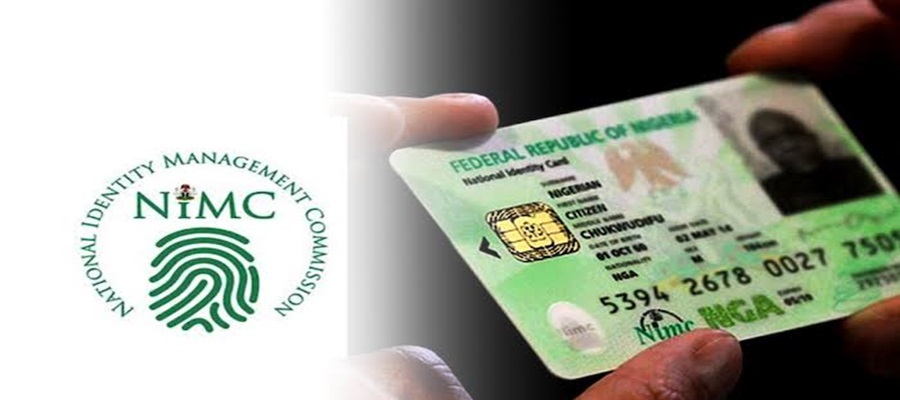
President Bola Tinubu has directed the National Identity Management Commission (NIMC) to ensure that every Nigerian is enrolled in the national identity database before the end of 2026, according to Abisoye Coker-Odusote, director general and chief executive officer of the agency.

Abisoye Coker-Odusote, director general and chief executive officer, NIMC
Coker-Odusote, who appeared on Channels Television, said the directive forms part of the federal government’s efforts to establish a comprehensive national identity system capable of supporting effective governance, planning, and service delivery.
“The President has given us till the end of this year to make sure that we capture every single Nigerian,” she said.
According to her, NIMC is working with partners under the World Bank-supported Identification for Development (ID4D) project to accelerate nationwide enrolment.
“What we have done is we have partnered through the World Bank ID4D project with front-end partners. They are part of the digital identity ecosystem. These are private citizens that we’ve enabled and given jobs to enrol citizens on our behalf,” she explained.
She stressed that the National Identification Number (NIN) remains a unique identifier, ensuring that every individual is registered only once.
“That’s why it’s called a unique identifier, so that you’re only enrolled once,” the NIMC DG added.
Coker-Odusote said Nigeria’s actual population remains uncertain, with estimates ranging from 200 million to 250 million, making a comprehensive identity database essential for national planning.
“It is estimated that we’re 200 million. When we’re done enrolling, we will then know the actual numbers that we have. Some estimates say 230 million, while a few people say 250 million.
“Your identity is basically the foundation for effective governance and service delivery. How can you plan if you don’t know the total number of persons that you have? We have been mandated by Mr President to go down to the community levels to enrol every single Nigerian”, she said.
Responding to concerns about whether an individual could obtain multiple identities by registering in different locations or under different names, the NIMC boss said the commission’s biometric verification system prevents such occurrences.
She explained that while the previous system could accept duplicate enrolments before detecting them later, the current process automatically identifies and invalidates multiple registrations.
“The legacy system had no way of verifying at the front end whether you had already been captured. Once the record comes into the system, it flags it as a duplicate or that the person already exists in the database.
“You would only have one identity generated for you. The other record goes into a deduplication bucket where it is invalidated,” she said.
The NIMC DG added that biometric verification, including fingerprints and facial recognition, makes it virtually impossible for one person to maintain multiple identities.
“Absolutely. One of the things that this Act has done is to cement our role in capturing biometrics. Private and public sector organisations will no longer capture biometrics independently. They will validate identities through API integration with NIMC.
“The telcos are already doing that with us. If you need a SIM card, they capture your facial biometrics, which are matched against our database in real time to confirm that you are who you claim to be. We’re using biometric validation to tighten security around identity confirmation,” she said.
The remarks come weeks after Tinubu signed the National Identity Management Commission (NIMC) Act 2026 into law on June 26, repealing the 2007 legislation.
The new law reinforces the “One Person, One Identity” policy by making the NIN the country’s foundational identity credential for accessing government and essential private services, including banking, passport applications, tax administration, pensions, land transactions, and consumer credit.
It also introduces stiffer penalties for identity theft, multiple registrations and unauthorised access to personal identity data, while strengthening data privacy protections and granting NIMC wider powers to investigate identity-related offences.

NBC Scraps Annual Digital Access Fee on DSO

Surge in Fibre Cuts Hobbles Service Provisioning

Why Bandits, Kidnappers are Hard to Trace despite NIN-SIM Linkage – FG

First Securities Brokers Empowers Nigerians to Trade in the Stock Market with the Launch of FirstInvest App

Quest Merchant Bank Hosts Great Place to Work® Nigeria Study Mission

NRC, Ponzi Scheme Collapses Resulting Loss of Billions of Naira
Nigeria Launches FreeTV Nationwide

NASENI Moves to Digitize CCB’s 5m Assets Declaration and Operations

Lebara Nigeria Launches Lebara Play, Africa’s First Telecom-Owned Micro-Drama Platform

CANAL+ Partners Samsung to Pre-Load DStv Stream on New Samsung TVs In Nigeria, Other African Countries




 Telecom2 days ago
MTN Nigeria Slashes Cost of Broadband Internet Router, Unwraps New Data Bundles for Low-Budget Users

 E-Financial2 days ago
Nigerians Accumulate $59Bn in Cryptocurrency Assets —FDC

 E-Financial2 days ago
Flutterwave Partners Xoom on Transfers into Nigeria

 General News2 days ago
Nearpays, Nigerian Fintech Becomes First African Startup to Win UN’s AI for Good Innovation Factory

 News2 days ago
DataPro Upgrades Dangote Cement’s Credit Rating to AA+

 Telecom2 days ago
Nokia’s 14 Years of Mobile-Phone Supremacy Ended in an Afternoon

 General News2 days ago
Fintech Brands Should Communicate Right in a VUCA Economy

 E-Business2 days ago
Tinubu Orders NIMC to Enrol Every Nigerian by End of this Year – DG