

E-Business
The Networked Economy is Becoming the New Normal – Edet

Richard Edet, Cisco’s general manager for Nigeria as described network as crucial to driving growth, innovation, efficiency and productivity for the nation and its people.
This, he said is a platform for creating intelligent, sustainable solutions for public safety and security, transportation, buildings, utilities, healthcare and education.
Edet, in an article discussed the lessons learned from the recent economic downturn and how working closer with African governments, placing technology at the core of economic growth, and environmental and social sustainability are high on the agenda.
“New business models that came to life during the downturn will, most likely, be here to stay. Even from a go-to-market perspective, many businesses were prompted to explore new revenue channels and services,” he said.
Edet added that sustainable competitive advantages will be realized by organizations that move quickly to embrace collaborative processes and the tools that allow their employees, customers and partners to intelligently connect and interact anytime, anywhere, via any device – along with services that can save time, money and deliver better results in today’s global environment.
In moving toward a global economy, he explained that the power of Web 2.0 and social media is giving end-users the capability to share their own personal experience of the goods and services they invest in, and in many cases this offers a real time return on those investments.
“This interconnected environment of sharing knowledge and ideas helps many businesses around the world – those that are listening and engaging with their customers in one hand, and to continue developing innovating, and offering better products and more valuable services that can meet these demands, on the other.”
He opined that an economy built on intelligent technology architecture has the potential to help organizations and individuals to be productive and drive innovative collaboration irrespective of where they or their teams happen to be located.
The Cisco general manager said there is also a growing recognition in the Nigerian business community around the importance of public-private partnerships for driving economic growth and prosperity. While the private sector will play a significant role in catapulting the upturn, government and the private sector also need to work collaboratively, now more than ever.
“Technology is primed to take a leadership role as the economic catalyst. Health systems globally are challenged to meet increasing demand for quality services. In Nigeria for example, patients in both urban and rural settings, often have limited access to health care, particularly when they require specialty services or need care for chronic illness, healthcare workers are under similar pressures were more is needed from them in terms of information availability, reliable access and inter-collaboration capabilities within the healthcare facility environment.”
Edet however explained that: “In the very near future, with solutions like Cisco TelePresence technology healthcare professionals will be able to collaborate more easily, regardless of location, thereby improving both the timeliness and the quality of care delivered. Patients will have access to physicians and specialists from remote locations. The infrastructure is also ideal for applications of telemedicine such as specialist or radiologist consultations”.
He said holistic transformation can also be applied to the educational system. “Enabled by collaborative technologies that allow individuals to create, adapt and share content and best practices; by providing access to high-quality educational opportunities through public and private partnerships with educational leaders, can help create a knowledge economy by imparting vocational training to rural youth and preparing students to become members of the global 21st century workforce. In the future, technology solutions like the Cisco TelePresence Classroom will help transform the learning environment in Nigeria by providing a means to bring education to remote locations and also connect with colleges, institutions and tutors from around the world”.
Edet affirmed that intelligent and innovative use of this technology can increase productivity, reduce overall costs and ultimately help transform companies, cities, countries and subsequently, individual lives. Countries that prioritize national networking readiness can enjoy a higher competitive advantage and help capture a bigger share of foreign direct investments.


TeKnowledge and Equinix announced a partnership to accelerate secure hybrid and multi-cloud adoption and enable AI-ready digital infrastructure across the region.

Nigeria’s digital transformation is accelerating rapidly, with the digital economy being a significant contributor to the country’s gross domestic product (GDP).
As demand for cloud services, AI adoption, digital payments and data-driven innovation continues to accelerate across West Africa, the partnership is positioned to advance the region’s digital transformation.
By combining Equinix’s in-country and global data centre infrastructure and secure interconnection capabilities with TeKnowledge’s expertise in designing, deploying and managing AI, data, customer experience and cybersecurity solutions, organisations can accelerate innovation while maintaining data residency and sovereignty requirements.
Together, the organisations empower enterprises and government institutions to bridge the gap between digital ambition and execution through secure, high-performance digital environments built on local infrastructure and delivered by local talent.

Speaking, CEO and President, TeKnowledge, Aileen Allkins, said: “Organisations across Africa are increasingly looking to modernise their infrastructure while maintaining the performance, security, and compliance required to support growth.
Through our partnership with Equinix, we are combining world-class digital infrastructure with deep local expertise to help customers accelerate cloud adoption, strengthen resilience, and unlock new opportunities through AI and emerging technologies.”
Managing Director of Equinix West Africa, Wole Abu, expressed delight at partnering with TeKnowledge to bring together Equinix’s globally interconnected platform, spanning over 280 data centres and 10,000 customers worldwide.

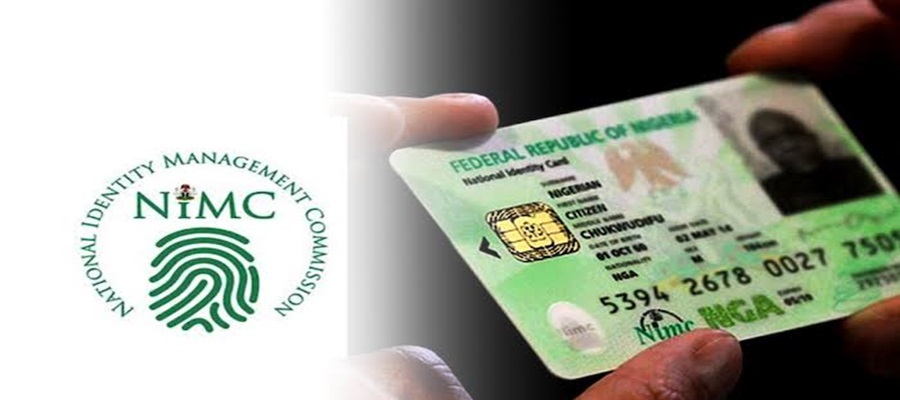
Uche Chigbo, coordinating director of Operations, National Identity Management Commission, (NIMC), has said the newly enacted NIMC Act strengthens data protection and privacy, expands identity coverage to include everyone in Nigeria and Nigerians in the diaspora, and provides the legal framework for a secure and trusted digital identity ecosystem.

She said the new law replaces the 2007 NIMC Act, which had become outdated due to rapid technological advancements, evolving cybersecurity threats, the growth of the digital economy, and the enactment of the Nigeria Data Protection Act.
According to her, the updated legislation better positions the Commission to deliver Nigeria’s digital identity agenda and improve access to government and private sector services.
“The Act itself has taken in a whole lot of things to make sure that NIMC is well-positioned to be able to deliver on the identity agenda and program of Nigeria. The area of universal coverage was expanded within the Act so that NIMC can enroll everybody that is within the soil of Nigeria—male, female, children, whether they are IDPs or orphans or whatever it is, and even Nigerians in diaspora.
“There is quite a lot within the Act that over the few days and weeks, even with my Director-General’s courtesy visit, we are trying to sensitize and educate the general public, and also bring awareness to this new Act so that people will know what are the rights that exist within it, what are the obligations, what are the stronger enforcement and penalties that has also been expanded within the Act, and then what are also the regulatory autonomy that has been given to NIMC to make sure that they drive the digital identity ecosystem in Nigeria,” she explained.
“There’s a lot of provisions and changes with the new Act. Um, the NIMC 2007 Act has been operating for close to 19 years now. So, we can see that, um, you can actually say it’s almost obsolete. And then with a lot of technological advancements in the world now, with the enactment of the Nigeria Data Protection Act, and then with also a lot of evolving security challenges, cybersecurity challenges, as well as the ever-growing digital economy, it became very necessary that a comprehensive review of the NIMC Act should be done.
So, that 2007 Act has been repealed and a new NIMC 2026 Act is in place,” she explained.
Chigbo clarified that the National Identification Number (NIN) is Nigeria’s unique identifier and the only valid means of identification for accessing government services.
She added that it enables secure identity verification and improves access to services.
“NIN has been designated as the unique identifier in Nigeria and then by the government of Nigeria establishing it as the only valid means of identification for assessing government services. So, NIN, it’s positioned to be a valuable tool for empowering citizens and legal residents to facilitate access to service delivery in Nigeria. And it’s also a tool for people to be able to prove their identity as they go about their daily businesses,” she said.
Speaking on identity harmonisation across government agencies, Chigbo said NIMC is integrating identity databases to enable Nigerians to access services seamlessly using the National Identification Number (NIN), while other agencies continue to issue functional identities for specific purposes.
“There’s a distinction between a foundational identity and a functional identity. NIMC provides the foundational identity, which answers the question, ‘Who are you?’ Are you a Nigerian or a legal resident? Who are you? That’s what NIMC is providing. All these other agencies that you have mentioned, they provide functional ID, which is an ID that relies on the foundational ID, where they have established who you are and then they are now trying to answer the question, ‘Are you now eligible to have these services? Are you now eligible to benefit from this transaction or scheme?’ So, those are two different distinctions.”
However, Chigbo said NIMC’s mandate is to harmonise and integrate identity systems across government, with the amended Act designating the Commission as the sole repository for biometric data.
“However, NIMC mandate is to make sure that we harmonize and integrate with all these agencies so that you’re one and the same person in any of the databases or registries that you have. The Act that has been expanded and amended also positions NIMC as the only repository for biometric data capture so that we can have effective identity management and coordination in Nigeria.
“So, that harmonization is already happening, the integration is already happening,” she stated.
She also disclosed that NIMC has introduced an online modification portal that allows Nigerians to begin the process of correcting or updating their personal information from the comfort of their homes or offices.
“But also, NIMC we have a modification portal that enables you to sit in the comfort of your home or office to be able to start the process of correction or updates of your data. We already have a self-service modification portal that allows you to make corrections,” she disclosed.
On the cost of obtaining a NIN, Chigbo clarified that enrolment and issuance of the National Identification Number are free.
She, however, noted that some other identity-related services attract approved fees, which are published on the NIMC website and paid electronically through the government Remita platform.
“Enrollment for the issuance of the National Identification Number, NIN, is free. There are other services, identity services that NIMC provide. Those ones have their charges, and those fees and charges are publicized on the NIMC website so that people can see what those charges are. And NIMC does not collect cash. Our transactions and the charges are paid electronically through the government Remita platform,” she said.

International Monetary Fund (IMF) has retained Nigeria’s economic growth forecast at 4.1 per cent for 2026, while warning that rising prices of essential goods could worsen poverty and food insecurity in the country.

IMF
The IMF made the projection in its July 2026 World Economic Outlook (WEO) Update, released on Wednesday.
According to the report, Nigeria’s Gross Domestic Product (GDP) is projected to grow by 4.1 per cent in 2026 and improve to 4.3 per cent in 2027, with both forecasts unchanged from the Fund’s April outlook.
The IMF also maintained its growth projections for sub-Saharan Africa at 4.3 per cent in 2026 and 4.5 per cent in 2027.
The Fund said Nigeria’s economic outlook continued to benefit from improved macroeconomic stability and favourable terms of trade but cautioned that the rising cost of essential commodities remained a major concern.
“Nigeria is supported by improved macroeconomic stability and favourable terms-of-trade effects, though higher prices for essentials are expected to further aggravate poverty and food insecurity,” the report stated.
The IMF noted that economic performance across sub-Saharan Africa would remain uneven, reflecting differences in policy implementation, reform progress and countries’ exposure to external shocks.
It added that oil-importing and non-resource-intensive economies would likely face increased pressure from rising food and energy prices, while some larger economies continued to benefit from earlier macroeconomic reforms.
Globally, the IMF revised its 2026 growth forecast downward to 3.0 per cent from the 3.1 per cent projected in April but raised its 2027 forecast to 3.4 per cent.
According to the Fund, the downgrade for 2026 reflects the impact of the ongoing conflict in the Middle East, although stronger demand driven by advances in artificial intelligence and technology adoption has helped cushion some of the adverse effects.
Despite the resilience of the global economy, the IMF warned that risks remained tilted to the downside.
It identified renewed trade tensions, geopolitical conflicts and tighter global financial conditions as key threats to economic growth.
The Fund urged governments to rebuild fiscal buffers through credible fiscal consolidation, improved revenue mobilisation, stronger tax administration, efficient public spending and increased investment in infrastructure, skills development and targeted social protection programmes.
It also advised commodity-exporting countries to avoid excessive public spending during periods of high commodity prices.
“Economies benefiting from commodity windfalls and the upturn in the global technology cycle should avoid procyclical spending and save or redeploy gains within a credible medium-term fiscal framework anchored in debt sustainability,” the report stated.
The IMF further called on policymakers to accelerate structural reforms aimed at boosting productivity, strengthening labour markets, expanding digital and physical infrastructure, promoting predictable trade policies and enhancing international cooperation to support sustainable economic growth.

Police Busts Syndicate Who Allegedly Stole N3Bn from Financial Institution

MTN Accelerates Network Expansion to Meet Surging Telecom Demand

Court Remands Akujobi, Ex Access over alleged Theft of N294.5m

TeKnowledge, Equinix Partner to Advance Nigerian Digital Infrastructure

NSIB Faults Runway Identification, Reveals Cockpit Disagreement in Asaba Jet Incident

NASENI Moves to Digitize CCB’s 5m Assets Declaration and Operations

Mobile Internet Gender Gap Widest in Africa – GSMA

Nigeria Launches FreeTV Nationwide

CANAL+ Partners Samsung to Pre-Load DStv Stream on New Samsung TVs In Nigeria, Other African Countries

Lebara Nigeria Launches Lebara Play, Africa’s First Telecom-Owned Micro-Drama Platform




 Telecom2 days ago
NCC Seeks Cost-Based Pricing Framework for Ducts

 E-Financial2 days ago
CBN Warns against Rejection of N100 Banknotes

 News2 days ago
Flutterwave Secures Circle Ventures Investment to Deepen USDC Payment

 Telecom1 day ago
Fixed Wired Internet Market Lags as Mobile Gains Ground

 Telecom2 days ago
Meta Introduces Muse Image With Advanced AI Image Editing Across WhatsApp and Instagram

 E-Financial2 days ago
BVN Enrollments Hit 69.55m- NIBSS

 News2 days ago
How EFCC Turned Recovered Loot Into School Supplies for Thousands of Nigerian Students

 News2 days ago
CJN Warns Judges: Reject Gifts or Risk Petitions and Ruined Careers