

Telecom
Fresh Confusion over MTN Mega Fine


Federal government has insisted that MTN Nigeria pays N50 billion for its violation of Subscriber Identification Module (SIM) cards registration policy.
MTN was fined the N1.04 trillion for failing to register a number of subscribers in accordance with laid down rules.
The downward review of the fine by 25 per cent as well as payment of N50 billion by the telecommunication company led to an investigation of the issue by the House of Representatives.
While making his presentation on the floor of the House on diversification of the Nigerian economy, Mr Adebayo Shittu, minister of Communications, disclosed that his Ministry asked the telecommunication company to pay N50 billion fine.
The minister however said that the money was not part of the fine.

He told the lawmakers that negotiation for review of the fine could not commence due to the ongoing investigation into the matter by the House.
Shittu however assured the House that as soon as the House concluded its investigation, negotiation of the fine would commence.
Rep. Saheed Fijabi (Oyo-APC), chairman, House Committee on Communications told the minister that his comment on the floor was contrary to what he told the investigative committee.
According to Fijabi, the minister denied being involved in the downward review of the fine as well as the payment of N50billion.
The minister, who said the government was set to turn the Information and Communications Technology (ICT) sector into highest revenue earner for the country disclosed that plans were at advanced stage to reposition the Nigerian Postal Services (NIPOST).
He said with over 2,500 locations around the country, the government was set to go into Public Private Partnership (PPP) whereby post offices could perform financial services, especially in the rural areas.
According to him, government is considering sourcing the chief executive of the organisation, Post Master General from outside the system through open advertisement.
He said that it was a better option to ensure that the required expertise was gotten for the new NIPOST.
He regretted the non-patronage of indigenous ICT companies, which had resulted in 70 per cent of the personal computer market going to foreign manufacturers.
He assured that with an enabling environment, which his ministry was set to provide, the sector could drive the Nigerian economy


ntel, has officially moved away from its traditional voice and data business, unveiling a major transformation that will see it focus on digital infrastructure, artificial intelligence and technology-driven services.

As part of the consolidation process, ntel unveiled The Next Frontier, a transformation agenda planned to see the firm transform into an integrated digital infrastructure, connectivity and real estate enterprise.
Its new focus is a now BET Agenda – anchored on three growth pillars, Beam, Eden, and Titan and the drivers said that the strategy reflected ntel’s commitment to creating new opportunities through technology innovation, infrastructure development, and strategic asset optimisation.
The launch comes as ntel continues its journey towards regaining spectrum assets, while actively leveraging strategic partnerships to redefine innovation in the telecommunications industry and unlock new pathways for growth.
Built on the company’s BET Agenda – anchored on three growth pillars, Beam, Eden, and Titan – the strategy reflected ntel’s commitment to creating new opportunities through technology innovation, infrastructure development, and strategic asset optimisation.
The launch comes as ntel continues its journey towards regaining spectrum assets, while actively leveraging strategic partnerships to redefine innovation in the telecommunications industry and unlock new pathways for growth.
The company also showcased a portfolio of initiatives designed to strengthen its position as a future-focused infrastructure platform.
Under Beam, ntel announced the launch of WakaGo, a global e-SIM solution that delivers seamless connectivity for international travellers, alongside AirFibre, a high-speed fixed wireless broadband service designed to provide reliable internet access for businesses.
Under Titan, the company highlighted its growing infrastructure business focused on tower development, fibre connectivity, duct infrastructure, colocation services, and infrastructure sharing solutions that enable operators, enterprises, and technology providers to expand efficiently and sustainably.
A major highlight of the launch was Eden, ntel’s real estate development platform, which is transforming NatCom’s extensive property portfolio into high-value commercial and residential developments.
To further push its transformation, the company unveiled three flagship projects. They are Eden Place, a premium multi-storey commercial development in Lagos’ prime business district.
There is also Nova Place, a modern commercial development strategically located within Port Harcourt’s growing technology and business hub.
Terenna Court, a premium multi-storey residential apartment development in Abuja.
Together, these projects demonstrate ntel’s ambition to unlock the full potential of its real estate assets through strategic partnerships, innovative design, and long-term value creation.
Speaking at the unveiling of The Next Frontier, Soji Maurice-Diya, managing director/chief executive officer, NatCom Development and Investment Limited (trading as ntel), described the initiative as far more than a business transformation strategy.
According to him, it represents the company’s commitment to building an integrated ecosystem that connects people, empowers businesses, drives digital inclusion, and creates sustainable economic value for Nigeria.

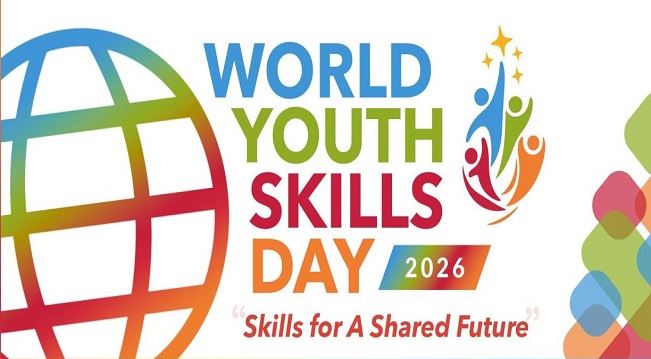
Airtel Africa Foundation, through Airtel Nigeria, has reaffirmed its commitment to developing Nigeria’s future workforce with a high-impact virtual masterclass designed to equip young people with the practical skills required to thrive in an increasingly technology-driven economy.

The Initiative, held to commemorate World Youth Skills Day 2026, themed “Skills for a Shared Future – The NextGen Advantage,” presented a platform on which experienced Airtel professionals provided mentorship and coaching to undergraduates, interns, and recent graduates for the current realities of formal work environments.
Organised on the auspices of the Airtel Employee Volunteer Programme (EVP), by which staff donate their time and expertise towards social programmes, the 90-minute virtual masterclass, which was attended by over 400 undergraduates and young professionals, extended the reach of the Foundation’s education and youth development programmes.
Speaking on the initiative, Chief Executive Officer of Airtel Nigeria, Dinesh Balsingh, said investing in young people remains one of the most impactful ways to build Nigeria’s future economy.
He said, “The future of work is changing faster than ever before, and success will increasingly belong to those who are equipped with the right skills, the right mindset, and the confidence to adapt. As an organisation, we believe that empowering young people with practical digital and professional capabilities is an investment in Nigeria’s future competitiveness.
Through our Employee Volunteer Programme, our people are sharing not just knowledge, but real industry experience to help shape careers, unlock opportunities, and prepare the next generation to lead in a digital world.”
Unlike traditional career seminars, the masterclass adopted an interactive learning model that offered participants the option to select specialised breakout sessions aligned with personal interests and career aspirations.
In his keynote remarks titled The Next Gen Advantage, Director, Corporate Communications and CSR, Airtel Nigeria, Femi Adeniran, noted that the future will be shaped by the skills to transform great ideas into impactful solutions.
He summed up the pathway to a future-ready career into five actions, namely learning continuously, solving problems, building a digital reputation, embracing Artificial Intelligence, and developing human skills.
“Technical knowledge remains important, but employers today are equally looking for adaptability, collaboration, communication, digital confidence, and the ability to learn continuously,” he said.
In the first general session titled Your Network is Your Net Worth, Adebimpe Ayo-Elias, Director, Human Resources and Administration, Airtel Nigeria, charged attendees to build character. The second general session themed Your Money, Your Future, delivered tips on budgeting and financial discipline was facilitated by Olakunbi Osigbesan, Head, Treasure, Smartcash PSB.
Following the general sessions were five breakout rooms, in which attendees were offered curated guides designed to develop contemporary workplace competencies.
The first session, Digital Transformation and Growth, led by Oyebowale Akideinde, General Manager, Digital and Innovation, Airtel Nigeria, presented a mechanism to leverage digital platforms for visibility and opportunity creation.
The CV Clinic and Interview Masterclass, which was led by Chidera Okoye, HR Outsourcing Lead, Airtel Nigeria, discussed practical recruitment strategies, including applicant tracking system (ATS)-friendly CVs, and the STAR interview framework.
A third session on Communication and Personal Branding, delivered by Sam Adeoye, Head, Public Relations, Airtel Nigeria, focused on value presentation, executive communication, and earned visibility, built on “V.I.R.A.L.”, a mnemonic device created for the attendees by the facilitator.
The programme also featured a dedicated session titled AI as Your Superpower, presented by Ezenwa Agbanusi, IT Governance Executive at Airtel Nigeria, in which participants discussed prompt engineering and AI-powered tools for enhanced learning, creativity, and workplace performance.
Corporate Social Responsibility Lead at Airtel Nigeria, Victoria Ndu, led the fifth breakout room on Emotional Intelligence, with a guide on building a high emotional intelligence quotient (EQ) for improved workplace and business performance.
By connecting future professionals directly with industry experts, the company continues to support the development of a workforce equipped to participate meaningfully in Nigeria’s rapidly evolving digital economy and contribute to shared prosperity.


Meta has announced new safety measures that will notify parents when teenagers using its artificial intelligence assistant show possible signs of suicide or self-harm during conversations.

The company said the initiative is aimed at ensuring age-appropriate AI experiences while helping parents provide timely support to children who may be in emotional distress.
Under the new feature, parents using Instagram’s parental supervision tools will receive alerts if Meta AI detects that a teen’s conversation indicates a potential risk of suicide or self-harm.
Meta said the alerts would be based on signals developed in collaboration with mental health experts and would include resources to help parents respond appropriately.
According to the company, all conversations flagged by its AI system will undergo manual review before any notification is sent to parents to minimise false alerts.
Meta said that where a teen’s intentions remain unclear, it would err on the side of caution by informing supervising parents.
The company also announced plans to introduce a system that would enable it to alert emergency responders when conversations with Meta AI suggest that a user—whether a teenager or an adult—may be at imminent risk of taking their own life.
It said the initiative builds on its existing suicide prevention efforts across Facebook and Instagram, where the company already notifies emergency services about credible suicide threats.
Meta disclosed that it made more than 19,000 referrals to emergency responders worldwide in the past year, leading to welfare checks on individuals considered to be at risk.
To improve the quality of its responses, the technology company said it consulted more than 75 clinicians specialising in adolescent mental health to review how Meta AI responds to prompts relating to suicide and self-harm.
The experts evaluated hundreds of AI interactions and provided recommendations on making responses more empathetic while directing teenagers to professional support and trusted adults.
Meta said it had incorporated the recommendations into its AI system to ensure more supportive and age-appropriate conversations.
The company also announced that its stricter Limited Content setting for Instagram Teen Accounts would now apply to Meta AI conversations.
According to Meta, the setting further limits the types of conversations teenagers can have with the AI assistant by declining to respond to a broader range of sensitive prompts.
The parental alert feature is already available to supervising parents in the United States, the United Kingdom, Australia and Canada, while global rollout is expected before the end of the year.

FAAN to Replace Physical ID Check with V-Pass Biometric Verification

World Bank Says 79 Percent of Nigerians Still Trapped in Poverty despite Reforms

SEC Begins Drive to Recover Unclaimed Dividends

ntel Plays Down Calls and Data Services, Moves to BET Agenda

Nigeria Facing Rising Cybercrime Losses – Report

NRC, Ponzi Scheme Collapses Resulting Loss of Billions of Naira

Nigeria Launches FreeTV Nationwide

NASENI Moves to Digitize CCB’s 5m Assets Declaration and Operations

Lebara Nigeria Launches Lebara Play, Africa’s First Telecom-Owned Micro-Drama Platform

CANAL+ Partners Samsung to Pre-Load DStv Stream on New Samsung TVs In Nigeria, Other African Countries




 E-Business2 days ago
TD Africa Sponsors Check Point Secure 360 Summit to Boost Cybersecurity in Nigeria

 Telecom2 days ago
MTN Foundation, MUSON Celebrate Emerging Music Talents at 2026 Graduation Ceremony

 Telecom2 days ago
NITDA Calls for Digital Infrastructure Expansion to Drive Nigeria’s Industrialisation

 E-Financial2 days ago
Next Currency Crisis May Turn $300Bn in Stablecoins into National Currencies

 News2 days ago
Guinness Rolls Out Nationwide Consumer Rewards Promotion

 General News2 days ago
First Trustees Advocates Estate Planning as an Essential Tool in Every Wealth Creation Strategy

 E-Financial2 days ago
Gigbanc Nigerian Fintech Startup Closes Shop after 3 Years

 Broadcasting2 days ago
Mbunabo, Nigerian Filmmaker Accuses Ghana TV Stations of Pirating Nollywood Films