

News
Key Reasons Africa Must Enforce SIM Cards Registration- Nadeem Juma

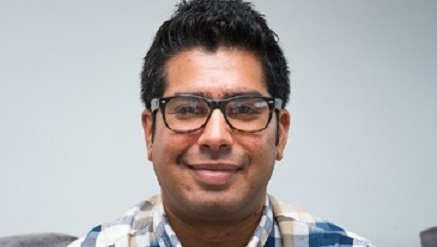
The increasing level of fraud, terrorism and other illicit uses, are part of major reasons regulators across Africa must not soft-pedal on the clampdown on unregistered SIM cards, in addition to the massive benefit to MNO’s for additional services to be provided, said Nadeem Juma, the chairman and co-founder of AIM Group.
AIM Group is an innovation and digital agency founded in Tanzania focused on R&D, digital communications and creating enterprise and business solutions that have been shaping consumer experiences since 2009.
Speaking to Nigeria CommunicationsWeek over the weekend, Juma said, we have seen an increase in deadlines from regulators in many African countries on SIM cards registration, MNOs have a great opportunity here to lead the unique identity space and the potential to up their games to meet the demands.
AIM Groups EKYC solution is credited for its data visualization this invaluable data which can be used to build and market other products and services that will add value.
Here is the brief interview with Juma,
How EKYC Emerged
“EKYC emerged just under three years ago as a result of the need to maintain an accurate customer/client database, especially by the telecoms operators. We recall what happened in Kenya when the telecoms regulator wanted to have the numbers of registered users, but the operators lacked such data base. Such irregularity sparked a ripple effect across the Continent.
So, what we saw in Tanzania was our regulator also going after the operators, requesting for quality KYC of SIM card users. The manual registration is usually filled with irregularities.
So, we approached the operator and sought for us to develop an app; piece of technology to enable them to carry out a seamless KYC (Know Your Customer) registrations. So, they asked to make a presentation to the regulator first.
So in October 2013, the Tanzanian Communication Regulatory Authority (TCRA) the telecom regulator issued us a letter of no objection to that effect. Since then, we have been providing technology to Tigo, Airtel and Vodacom in Tanzania.
The Peculiarities of EKYC
“Therefore, with EKYC, the app allows you to register users seamlessly. We are on the ground and understand the issues concerning the consumers and the operators, and have been using this technology to tackle them head-on; such as agent behavior, rural connectivity, power issues, facial and ID recognition and now biometrics.
“Our technology is deployed at over 20,000 agents, making sure they capture the users in accurate and specified manner. It is a powerful tool that the mobile operators now rely on to carry out that function, effectively; and in real time, we can determine the demographic, geographic and other information about the SIM card user. We have over a million registrations on the platform each month at the moment
As we have established the feat with the telcos, we are now moving to the banking sector. The pilot scheme involves three banks. We are providing these services with the banks to drive financial inclusion, either in Agent Banking or in the real branch locations.
Key Reasons to Enforce SIM Card Registration
“What happened with MTN Nigeria is a reflection of what happens, almost all over the Continent, particularly during the SIM cards registration where it was discovered that the pictorial representations of the users were done with faces of goats, cats, dogs, or other animals. We must admit that not all the countries have the data, but when you want to capture these data, there are guidelines that must be in place.
“We cannot run away from the issue of having adequate infrastructure. What we do is: where there is no existing data, we send text based information to temporarily activate the customer, there after when the agent is in a place with connectivity the images are sent to do full registration Essentially, we do not encourage disconnecting the people.
Secondly, we engage on cross-checking the captured data. That is when the user will be encouraged to provide additional information if anything is missing or the risk level seems to be high for that particular individual.
Tackling Defective SIM Card Registration
There are occasion we recommend the customer to be sampled. We have the capacity to integrate the data we captured to the national ID scheme. It makes a lot of sense and for easy identification of the citizens.
So, we validate the national ID against the database, which makes biometric registration a possibility.
Thus, the process helps the customer create a digital ID. Assuming we have the opportunity to execute the program with the telcos and the Nigerian government, the digital ID is enough to help deliver services to targeted citizens, be it insurance, vehicle license, financial services etc., provided the customer is on mobile. So, this is a powerful tool for the operators.
In terms of volume, we have over 20,000 agents on ground, delivering over a million transactions monthly. The technology can be customeized to fit into whatever goal a telco or banks wants to achieve, at a very affordable rate. It has the capacity to move from one million registrations to over twenty million without a huge CAPEX.
Unsolicited SMS & Targeted Marketing
“The issue of unsolicited SMS should not be dumped on the door-steps of the telcos alone, because a lot of companies are leveraging the services to market their services to targeted customers. And telcos are in business; they wouldn’t say no to a business that needs their services. We should not forget the activities of fraudsters or unethical hackers who ride on the network to perpetuate some cybercrimes.
“However, the telcos have a duty to prevent frivolous SMS. How can they achieve that? At the point of registering a customer, you can make provision for them to opt in for mobile marketing, alluding to receiving messages about your products/services, be it beer, food items, vehicles, hotels etc this communication can be sent by SMS, MMS, IVR, ring-back tunes, etc For instance, a certain message that appeals to a 60-year old, might be annoying to a 25-year old. That is why, through proper opt in, segmentation and our data analysis, you can make predictions about your customers.
“Proper SIM card registration provides you with such opportunity to know your customers well; that is why the regulator would always insist on getting it right. Some customer might prefer calling them to SMS. So engage with them in the manner they choose and not pushing communication or marketing messages blindly.
“A well filtered bulk SMS will also help you dispatch messages at the right time. Some people would prefer late night SMS, others early in the morning, while others would say, send it during lunch time. Our technology will help you get it right. You can tie some benefits to your message: if you accept my SMS, I will give you one minute free airtime. So, you can monetize what you are doing with mobile customers. The packages have to be compliant and communicated directly to the consumers. If given opportunity in the Nigerian market for instance, we can help the telcos address come of these problems.
Financial Inclusion
“I will address that in multiple parts. There is need to understand the critical role mobile money plays in financial inclusion. We are the first company to develop mobile money application in Tanzania in conjunction with the Central Bank, here in Tanzania. We understand the ecosystem very well. It is also fundamental to conduct research on how deepen financial inclusion. Tanzania and Nigeria have different templates in terms of the regulators’ approach to mobile money and financial services. First, the mobile operators are channels. They are the pipes to deliver the services.
Secondly, the mobile operators through the SIM card registrations know or should know the customer. They can offer the opportunities for the financial institutions to offer services to these customers.
“Thirdly, the mobile operators know about the consumer’s financial spending to an extent. They can tell how much the consumer uses in data, voice, SMS and/or receive including other telecoms related transactions. They have these fact sheets about the customers spending.
“Fourthly, they are in charge of the networks and thus have the last mile connections with the customers. Now, it behoves on the regulator to allow the telcos have closer ties with the financial institutions. Through the corporation, the financial institutions will tap into the resources of the telcos, and pay them for the services they will render on their behalves.
“At that point, the customer will have options to either walk up to the financial institution or leverage the mobile platform. I think that could be massive opportunity in Nigeria. In other words, the telcos are the enablers of financial inclusion, because they have a robust channel.



National Reading Culture (NRC), an online investment platform targeting Nigerians has collapsed, resulting in the loss of billions of Naira for investors.

The website unexpectedly shut down, blocking users from withdrawing their funds and locking in their investments.
Just like all other investment scams, victims were lured with promises of doubling their money in few weeks.
When National Reading Culture eventually crashed, the operators vanished with users’ funds, leaving investors devastated.
How the Platform WorkedTask-Based Earning:
According findings, National Reading Culture lured users with promises of making money by completing simple daily tasks like reading articles, clicking links, or inviting friends.
They also offered investment tiers to earn higher daily profits, where users had to deposit their own money into the platform.
Evidence showed the website previously operated as a Chinese job search platform before rebranding into an “earning” scheme.


The Nigeria Social Insurance Trust Fund (NSITF) has signed a memorandum of understanding (MoU) with Rand Mutual Assurance (RMA) to collaborate on digital transformation aimed at strengthening worker protection systems and support economic growth.

According to RMA, the agreement was concluded during a visit by its delegation to Abuja.
The partnership will focus on institutional capability development, modernising operating models, improving service delivery and sharing knowledge between the two organisations.
Through the partnership, RMA and NSITF will collaborate to strengthen institutional capability, modernise operating models, accelerate digital transformation and improve services for workers and employers.
The organisations will also explore opportunities for knowledge exchange and the adoption of best practices in social security administration.
RMA said the agreement forms part of its broader engagement with governments, regulators and social security institutions across Africa to support improvements in governance, operational resilience and service delivery.
“Our partnership with NSITF reflects much more than the signing of an agreement,” said Mandla Shezi, group chief executive officer of RMA. “This partnership is not simply about sharing knowledge. It is about co-creating the next generation of African social security systems.”
He added: “By combining our respective strengths, we can help build institutions that are more resilient, more responsive and better equipped to protect workers while supporting national development.”
Shezi said the future of social security depends on integrated systems where prevention, insurance, healthcare, rehabilitation, technology, investment management and institutional capability work together.
News
Senate Rejects Nationalisation of MTN, DStv Over Xenophobic Attacks on Nigerians in South Africa


Senate on Tuesday rejected calls for the nationalisation of South African-owned companies operating in Nigeria, including MTN and DStv, as a retaliatory measure against renewed xenophobic attacks on Nigerians in South Africa.

The upper chamber, however, condemned the attacks and intimidation of Nigerians and other African nationals in South Africa, urging the Federal Government to intensify diplomatic efforts to secure the safety of Nigerians living in the country.
The resolutions followed a motion titled: “Motion on the Need to Halt the Recurring Xenophobic Attacks and Intimidation Against Nigerians and Other African Nationals in the Republic of South Africa,” sponsored by Senator Asuquo Ekpenyong (APC-Cross River South).
The motion was triggered by renewed concerns over attacks against foreign nationals in South Africa following the expiration of a June 30, 2026 deadline reportedly issued by some vigilante groups asking foreigners to leave the country.
During the debate, Senator Wasiu Eshilokun proposed that South African companies operating in Nigeria should be nationalised, while Senator Adams Oshiomhole suggested that profits generated by South African firms could be appropriated to compensate Nigerians who suffered losses if the South African government failed to provide compensation.
Oshiomhole argued that Nigerians should not continue to bear the consequences of attacks against their businesses and lives while South African companies operating in Nigeria continued to make profits.
He said the government should consider using profits from affected companies to compensate victims if South Africa refused to address the losses suffered by Nigerians.
However, the Senate declined the proposal, opting instead for diplomatic engagement and further investigation into the attacks.
Presiding over plenary, Deputy Senate President Barau Jibrin cautioned lawmakers against relying on unverified social media reports and urged a careful approach to the matter.
Jibrin said Nigeria must condemn attacks against its citizens but should allow relevant committees to complete their investigations before taking further actions.
He directed the Senate Committees on Foreign Affairs and Diaspora and Non-Governmental Organisations to review previous resolutions on the matter and submit a report within two weeks.
The Senate also urged the Federal Government, through the Ministry of Foreign Affairs and the Nigerian High Commission in South Africa, to obtain written assurances from South African authorities on the protection of Nigerians and demand the arrest and prosecution of persons responsible for violence, intimidation and looting.
The lawmakers further called for collaboration with other African countries and relevant continental institutions to establish effective mechanisms for monitoring and preventing xenophobic attacks.
Senator Ekpenyong had earlier raised concerns that the attacks were no longer limited to undocumented migrants but had extended to Nigerians with valid work and residence permits.
He described the situation as a threat to the dignity and safety of Nigerians abroad, urging the government to take stronger measures to protect citizens.
The Senate’s latest action comes amid renewed public anger over attacks targeting Nigerians and other foreigners in South Africa, with lawmakers insisting that diplomatic solutions should be prioritised over economic retaliation.

Court Declares ARCON’s N60Bn Fine against Facebook Nigeria Illegal

NIN Enrollment Hits over 136m as New ID Law Takes Effect

NRC, Ponzi Scheme Collapses Resulting Loss of Billions of Naira

Plateau PCC Collects Nigerians’ Data without Privacy Policy – FIJ

FG Suspends New Internet Regulations to Prevent Overlapping Rules

NASENI Moves to Digitize CCB’s 5m Assets Declaration and Operations

Mobile Internet Gender Gap Widest in Africa – GSMA

Nigeria Launches FreeTV Nationwide

CANAL+ Partners Samsung to Pre-Load DStv Stream on New Samsung TVs In Nigeria, Other African Countries

CredibleVoteNG Opens Free Access to all Polling Units in Nigeria after INEC Demanded N1.Bn for Register




 E-Financial3 days ago
Tokenization, Blockchain Technology will Transform Financial Institutions – IMF

 General News3 days ago
NIS Deploys Advanced Surveillance Masts, other Critical Infrastructure to Boost Border Security

 General News2 days ago
IHS Nigeria, FCT-HSES Concludes Clean Cooking Energy Campaign “Project Breathe Clean Air” in Abuja

 Broadcasting3 days ago
Obi, NDC Presidential Candidate Faces N50Bn Defamation Claim over Alleged Podcast Remark

 E-Business3 days ago
Weebly Websites to Shut Down for Nigeria, 66 Other Countries from September

 E-Financial3 days ago
FG Denies N8 Trillion ‘Shadow Budget’, Says IMF Quoted out of Context

 Telecom3 days ago
No Plans for Fresh Tariff Hike – MTN

 News3 days ago
World Bank Sounds Alarm: Low Revenue, Not Debt, Is Nigeria’s Biggest Fiscal Threat