

Broadcasting
Multichoice, Aiding Learning Through Audio-Visuals

The power of sight and sound in education cannot be over emphasized as the pictorial representation of the subject matter lingers on the mind of students than its expression in verbal form.
To bridge the digital divide between Nigeria and other advanced countries of the world, Multichoice, leading direct-to-home digital pay television operator set up resource centres to enhance teaching and learning processes in Nigerian schools.
The resource centres known as Multichoice Resource Centres is a partnership between Multichoice Nigeria and SchoolNet Nigeria, a non-governmental organization committed to the effective use of Information Communication Technologies (ICTs) to nurture young talents, harness skills and expand opportunities by providing access to technology and premium educational content to transform learning in the classroom.
John Ugbe, managing director, Multichoice Nigeria speaking on the Multichoice Resource Centre project said beneficiary schools of the resource centre project have access to the special Multichoice education bouquet.
“We have instructional channels such as Discovery, National geographic, BBC World, History Channels, Animal Planet and Mindset Learn at no cost to the schools.”
Ugbe said the Resource Centre Project is part of a broad based community development strategy designed to raise the standard of education in public schools on the African continent by leveraging on assets and expertise of Multichoice digital satellite television for development and growth of African communities.
Using its technology platform, Segun Fayose, head, Corporate Communications Multichoice said Multichoice provides innovative educational resources to teachers and students in 201 schools in 21 states across the country, adding that the company would include 40 more schools before the year runs out.
The schools are provided with a DStv decoder, a television, a DVD player, burglary proof for the equipment, a small generator, a whiteboard, 50 blank video cassettes, a stabilizer and DStv education bouquet amongst others.
“Since inception of the project in Nigeria, Multichoice Nigeria has spent over N100 million in the training of teachers across the country,” he said.
The long term vision of the project is to raise the standard of education in Nigeria by deploying communication technology tools in secondary schools across the federation and assisting in bridging the digital divide between Nigeria and other advanced nations using education in secondary schools as the point of contact.
During a media tour to African Church Grammar School, Owu, Abeokuta, one of the beneficiary schools, Olanrewaju Nicholas, vice principal, Special Duties commended Multichoice on the initiative, saying it has impacted positively on learning in the school.
He said the establishment of Multichoice Resource Centre in the school is an added advantage and a boost to its image as the school is known for high academic standards.
The vice principal explained that the school has taken upon itself the responsibility of providing needed logistics necessary to the keep the centre running, seeing its impact on students academic performance.
Olabode Saheed, the school’s Chemistry teacher explained that the resource centre has really worked in the sense that chemistry as a subject is abstract but watching it on screen makes it more interesting and understandable.
He said the school produced the best students in all science subjects in the last WAEC examinations.
“Before all we depended on were textbooks and notebooks but with the Resource centre even when reagents for practicals are missing, when we watch it on TV, we understand better,” said Omoniyi Ayodeji, a SS 3 student.
Though the project is not without its challenges, Orisalola Tajudeen, the school’s mathematics teacher identified computer illiteracy among the teachers as one of the set backs, as those already trained by Multichoice were transferred from the school during the tussle between missionaries and government on ownership of the school.
Adeniyi Olufemi, principalof yewa College, Ilaro observed that the resource centre contributed to improvement in the study of sciences compared to when the school was without a resource centre.
He said: “Students are opportuned to view programmes, give their assessment and teachers are also able to interact with them on the performance viewed, especially in Mathematics and Physics.


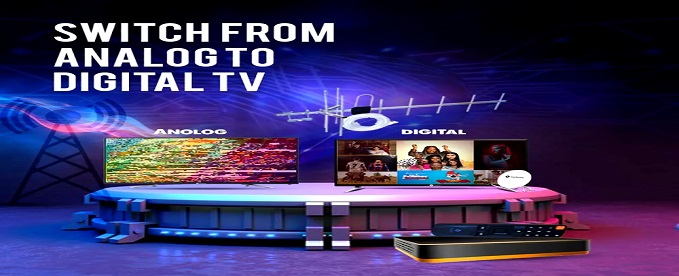
National Broadcasting Commission (NBC) has said that Nigerians will no longer pay annual Digital Access Fees under the renewed Digital Switch Over (DSO) project.

Charles Ebuebu, director-general, NBC, disclosed this in an exclusive interview with the News Agency of Nigeria (NAN) on Wednesday in Abuja,
Ebuebu said viewers only need to purchase an approved decoder and satellite dish which cost below N20,000 to enjoy free television permanently.
“Previously, users paid an annual digital access fee of about N1,500, described as an administrative charge.
“The new system removes that annual fee. It provides free access to free-to-air television channels without any payment.

“Premium channels will be introduced later. Viewers who want those additional channels will be able to access them through paid services.
“Nigerian content on free-to-air channels remains free to watch. Unlike Pay TV, this platform does not require monthly subscriptions for its basic service,” he said
Ebuebu said approved decoders for the FreeTV will cost less than N20,000 and authorised sales outlets will soon be announced.
He urged Nigerians to wait for official information on approved dealers for the DSO decoders, warning that unauthorised sellers are exploiting growing public demand.
He reiterated that people only need a free-to-air decoder, along with a satellite dish instead of the old antenna system to receive the DSO signal.
“Once the equipment is installed, viewers can access all available channels across the country without paying any subscription fees,” he stressed
The DG dismissed claims by some retailers that there are different categories of decoders sold at varying prices, stressing that such sellers are not authorised by the commission.
According to him, the NBC will soon publish the list of approved dealers, official prices, and locations where genuine decoder boxes and accessories can be purchased.
The NBC boss said the DSO project is designed not only to improve television broadcasting but also to stimulate economic growth by creating jobs, attracting investment, and opening up opportunities for businesses that support the broadcasting industry.
Ebuebu noted that content producers and broadcasters stand to benefit significantly from the nationwide reach of the DSO platform.
Unlike the previous system, where many stations had limited regional audiences, he said the new platform will make their channels available to viewers across Nigeria.
He added that the introduction of audience measurement technology will provide scientific and reliable data on television viewership.
Ebuebu added that audience measurement technology will give advertisers greater confidence in placing adverts and enable broadcasters to demonstrate the true size and reach of their audiences nationwide.
Uchenna Mbunabo, Nigerian filmmaker, has raised concerns over the alleged unauthorised broadcast of Nollywood films by some Ghanaian television stations, calling on Ghana’s National Film Authority (NFA) to strengthen the enforcement of copyright laws.

Uchenna Mbunabo, Nigerian filmmaker
Mbunabo made the remarks during a conversation with James Gardiner, deputy CEO of the National Film Authority (NFA) of Ghana.
He questioned whether it was permissible for television stations in Ghana to download Nigerian movies from YouTube and air them without obtaining permission from the producers.
“I noticed that Ghanaian TV stations, the way they are stealing our films and showing them for free with impunity. Is it legalised in your country for TV stations to go on YouTube, download people’s sweat and show it for free?”
According to Mbunabo, some Ghanaian television stations have been downloading newly released Nollywood films from YouTube and broadcasting them without authorisation, depriving producers of revenue generated through the platform.
He also stated that he had not witnessed Nigerian television stations engaging in similar practices and questioned what measures Ghana was taking to protect filmmakers’ intellectual property.
Responding to the concerns, Gardiner acknowledged that the issue exists and said the National Film Authority had begun engaging relevant stakeholders to address it.
He disclosed that the NFA has held discussions with the Ministry of Communications, the National Communications Authority (NCA) and the National Media Commission (NMC) on improving copyright enforcement.
Gardiner explained that while Ghana has copyright laws, enforcement remains challenging because many television stations now operate digitally and may not have physical offices within the country.
“There are copyright laws, but they are not effective because a lot of the TV stations don’t have offices. Most of them are now digital, so they operate from anywhere. They can even have a Ghanaian TV station but be operating from Austria simply because it is digital.”
He added that authorities are considering a new licensing framework that would require broadcasters to undergo a fresh licensing process to improve monitoring and enforcement.
According to Gardiner, television stations found guilty of illegally broadcasting copyrighted content would be required to compensate affected producers through fines.
He added that repeat offenders could face suspension of their broadcasting licences, while a third violation could result in the revocation of their licences.
Although he did not provide a specific timeline, Gardiner said the reforms were already underway and expressed hope that significant progress would be seen next year.
Mbunabo welcomed the proposed measures but urged the National Film Authority to expedite the process, stating that unauthorised broadcasts continue to affect filmmakers’ ability to recover production costs through legitimate distribution channels such as YouTube.
He also stressed that his comments were not directed at Ghana’s film industry, noting that he has worked with several Ghanaian actors over the years and supports collaborations between Nollywood and Ghallywood.



FAAN to Replace Physical ID Check with V-Pass Biometric Verification

World Bank Says 79 Percent of Nigerians Still Trapped in Poverty despite Reforms

SEC Begins Drive to Recover Unclaimed Dividends

ntel Plays Down Calls and Data Services, Moves to BET Agenda

Nigeria Facing Rising Cybercrime Losses – Report

NRC, Ponzi Scheme Collapses Resulting Loss of Billions of Naira

Nigeria Launches FreeTV Nationwide

NASENI Moves to Digitize CCB’s 5m Assets Declaration and Operations

Lebara Nigeria Launches Lebara Play, Africa’s First Telecom-Owned Micro-Drama Platform

CANAL+ Partners Samsung to Pre-Load DStv Stream on New Samsung TVs In Nigeria, Other African Countries




 E-Business2 days ago
TD Africa Sponsors Check Point Secure 360 Summit to Boost Cybersecurity in Nigeria

 Telecom2 days ago
MTN Foundation, MUSON Celebrate Emerging Music Talents at 2026 Graduation Ceremony

 Telecom2 days ago
NITDA Calls for Digital Infrastructure Expansion to Drive Nigeria’s Industrialisation

 E-Financial2 days ago
Next Currency Crisis May Turn $300Bn in Stablecoins into National Currencies

 News2 days ago
Guinness Rolls Out Nationwide Consumer Rewards Promotion

 General News2 days ago
First Trustees Advocates Estate Planning as an Essential Tool in Every Wealth Creation Strategy

 E-Financial2 days ago
Gigbanc Nigerian Fintech Startup Closes Shop after 3 Years

 Broadcasting2 days ago
Mbunabo, Nigerian Filmmaker Accuses Ghana TV Stations of Pirating Nollywood Films