

/home/kenneth/web/nigeriacommunicationsweek.com.ng/public_html/wp-content/themes/zox-news/parts/post-single.php on line 153
">
Warning: Undefined array key 0 in /home/kenneth/web/nigeriacommunicationsweek.com.ng/public_html/wp-content/themes/zox-news/parts/post-single.php on line 153
Warning: Attempt to read property "cat_name" on null in /home/kenneth/web/nigeriacommunicationsweek.com.ng/public_html/wp-content/themes/zox-news/parts/post-single.php on line 153
FG, Lagos in Face-off Over Wrecked Vessels

The Federal Government and Lagos state are headed for another showdown, this time on the rights and obligation to save the Lagos coastal shoreline from the constant threats of the Atlantic Ocean. Nigeria CommunicationsWeek checks last week show discontent tunes from both Abuja and Lagos concerning evacuation of abandoned ship wrecks.
The Lagos State Ministry of Waterfront Infrastructure Development and the Nigerian Maritime Administration and Safety Agency (NIMASA) – and agency of the federal government – were in war of words harping on jurisdiction to perform duties of evacuating the ship wrecks which constitute environment pollution from ships and wreck/derelicts on the coastal shoreline.
Nationwide, there are claims of over 100 abandoned such wrecks along the coastlines of such port cities as Lagos, Port Harcourt, Calabar and Warri.
A maritime source says these ports are gradually becoming hubs of old ships and abandoned marine vessels. “The situation, apart from causing environmental nuisance, identifiably, it leads to navigational hazards,” the source said.
Last week, the Lagos state government issued a 21-day ultimatum for the removal of these wrecked vessels at Maiyegun and Alpha beach fronts by their owners or face legal action.
Adesegun Oniru, Lagos state commissioner for waterfront infrastructure development said in a press advertorial last week that their removal has become necessary in view of the current degradation being witnessed around the two beach fronts.
“The degradation and decomposition of beached vessels causes major erosion, environmental pollution and the effects of such poisonous substances in the waterways is hazardous to the water ecosystem,” Oniru stated.
“The situation also posed threats to human life,” he added, and stated that the abandoned vessels could encourage tidal lock, which often resulted in distortion of the current and rise in sea level.
He explained that wrecked vessels also create abnormal sea action, resulting in coastal shoreline erosion and the possibility of flooding.
“The climate change and the coming heavy rains, predicted by the Meteorological Agency this year, have prompted the government to take measures towards controlling flooding in the state.
“Government,” Oniru said “will proceed to remove the wrecks after the 21 day ultimatum of the public notice,” which commenced last Tuesday.
“We will not hesitate to institute legal action against owners of such vessels, after the expiration of the ultimatum.’’
But NIMASA in swift reaction advised all maritime stakeholders, involving mariners, ship owners, ship operators, shipping companies/agents and the general public to disregard the notice issued by the state.
Patrick Akpobolokemi, director general of NIMASA said the 2007 ‘merchant shipping act’ makes it the sole regulatory and management agency of all maritime activities in Nigeria.
“NIMASA is the sole authority designated to receive and generally deal with wrecks and derelicts in our waters. This is also in accordance with respect to safety of navigation and the sustenance of the Marine Eco-system,” Akpobolokemi said in a media statement.
NIMASA absorbed itself of any lapses on the matter but said it would partner interested members of the organized private sector (OPS) to remove all abandoned vessels and wrecks.
Similar war-songs were let loose in 2009 following establishment of the Lagos State Inland Waterways Authority (LASWA). National Inland Waterways Authority, (NIWA) a federal agency authorized to collect levies on boats, motorised dug out canoes, ferries and other water crafts which ply Lagos waters had accused Governor Babatunde Fashola, of usurping the powers of then President Umaru Yar’Adua.
Lagos State government argued that by the provisions of Section 315 of the Constitution of the Federal Republic of Nigeria, 1999, which purportedly empowered it to repeal an existing law, it had the power to repeal the National Inland Waterways Authority Act, Cap N47, LFN, 2004 ("NIWA Act"), which vested the powers over the inland waterways of Nigeria in the National Inland Waterways Authority.


Warning: Undefined array key 0 in /home/kenneth/web/nigeriacommunicationsweek.com.ng/public_html/wp-content/themes/zox-news/parts/post-single.php on line 493
Warning: Attempt to read property "cat_ID" on null in /home/kenneth/web/nigeriacommunicationsweek.com.ng/public_html/wp-content/themes/zox-news/parts/post-single.php on line 493


Nigeria has emerged as one of Africa’s most regulated online gambling markets, even as illegal operators continue to dominate the continent, according to a new report by Gaming Compliance International (GCI).

The report, the first comprehensive assessment of online gambling across all 54 African countries, showed that Africa’s online gambling Gross Gaming Revenue (GGR) reached $23 billion in 2025.
However, only $5.2 billion (23 per cent) was generated by licensed operators, while $17.8 billion (77 per cent) remained in the unregulated market.
In West Africa, total online gambling revenue rose to $4.8 billion in 2025 from $4.3 billion in 2024. Of the 2025 figure, regulated operators accounted for $1.5 billion (31 per cent), while $3.3 billion (69 per cent) flowed to unlicensed platforms, highlighting the region’s persistent enforcement challenges.
Nigeria stood out as the region’s strongest performer, recording the lowest unregulated market share at 56 per cent, compared with the West African average of 69 per cent and the African average of 77 per cent.

The study also found that online gambling participation across Africa increased from 198 million people (13 per cent of the population) in 2024 to 215 million (14 per cent) in 2025.
Despite this growth, GCI estimated that illegal operators deprived African governments of about $3.55 billion in tax revenue in 2025. The number of unlicensed gambling platforms targeting African consumers also rose to 4,129, up from 3,644 in 2024.
Commenting on the findings, Matt Holt, chief executive officer, GCI, said the report provides regulators with the first continent-wide benchmark for strengthening oversight and consumer protection.
Ismail Vali, president, GCI, urged governments to develop competitive and well-regulated markets that encourage consumers to patronise licensed operators, boost public revenue and attract greater investment.
Online gambling in Nigeria is regulated by the Nation Lottery Regulatory Commission.
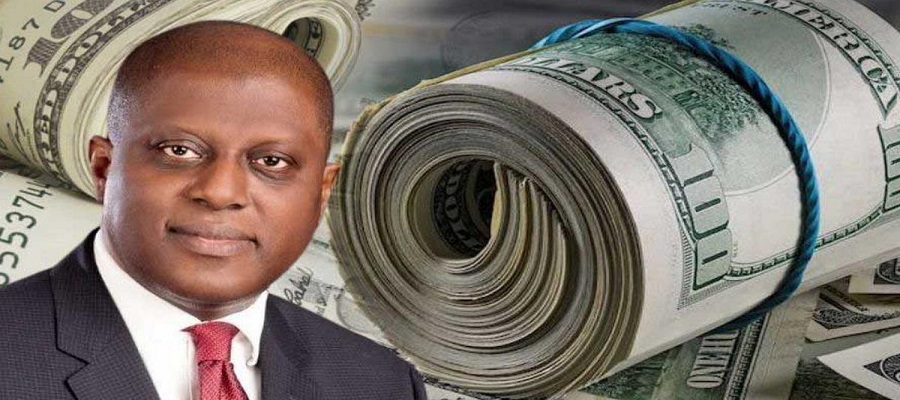
Central Bank of Nigeria (CBN) has yet to publish its annual financial statements beyond the 2022 financial year, despite legal provisions requiring the apex bank to release its audited accounts annually.

An annual report is a comprehensive report on a company’s activities throughout the preceding year.
Annual reports are intended to give shareholders and other interested people information about the company’s activities and financial performance.
The most recent annual report and financial statements of the CBN available to the public remain those for the 2022 financial year.
Under Section 50 of the Central Bank of Nigeria (CBN) Act, the bank is required to prepare, submit and publish its audited annual financial statements.
Section 50(1) stipulates that the CBN must transmit its annual accounts, certified by an external auditor, to the President and the National Assembly within two months after the end of each financial year.
Section 50(2) further provides that the annual report submitted to the President and the National Assembly should be published in a manner determined by the CBN Governor, while Section 50(3) mandates the CBN Board to ensure the accounts are published in the Federal Government Gazette as soon as possible.
Despite these statutory requirements, the apex bank has not made public any annual financial statements after the 2022 reporting year.
The development comes after the CBN, on August 11, 2023, released its consolidated financial statements covering seven years the first such publication since 2015.
President Bola Tinubu appointed Olayemi Cardoso as Governor of the CBN on September 15, 2023, following the removal of former Governor Godwin Emefiele in June of the same year.
Emefiele is currently facing trial over alleged corruption-related offences.
Last week, the Supreme Court ordered the final forfeiture of several of Emefiele’s properties, along with $2.045 million in cash.
ChatPay has launched Africa’s conversational banking platform, enabling individuals and businesses to access financial services through WhatsApp.

The Lagos-based fintech startup, is in controlled rollout, connecting WhatsApp to linked-bank management, airtime and supported electricity payments through simple conversations.
The company said the platform is designed to enable users to send money, pay bills, buy airtime and manage business transactions within WhatsApp conversations, subject to the completion of regulatory approvals and integration with licensed banking partners.
According to ChatPay, the platform is operated by CP Technology Limited and is currently undergoing a phased rollout ahead of its planned public launch.
The company said the initiative is intended to simplify access to financial services by leveraging WhatsApp, which it estimates is used by more than 50 million Nigerians monthly.
Speaking on the idea behind the platform, Adeoluwasubomi Odebunmi, product lead and co-founder, said the concept emerged while she was studying Software Engineering at Babcock University.
“I saw the gap while I was still in school—how much friction there was just to move money. I didn’t want to just study the problem. I wanted to help fix it,” she said.
Odebunmi said she had previously worked on software solutions spanning e-commerce, real estate management, school administration and artificial intelligence applications before co-founding ChatPay.
Aseoluwa Siyanbola, growth lead and co-founder, said his experience managing Nigerian bank accounts while studying abroad highlighted some of the challenges users face with digital banking services.
According to him, difficulties such as one-time password (OTP) failures and inconsistent banking applications inspired the team to explore conversational banking solutions.
“We each encountered similar challenges and came together to build a solution that simplifies everyday financial transactions,” he said.
cAbraham William, tech lead and co-founder, said the company is focused on improving access to financial services through a platform that many Nigerians already use daily.
“We want to make financial services easier to access by allowing people to carry out transactions through a familiar messaging platform,” he said.
William said he oversees the company’s engineering, technology strategy and system architecture.
ChatPay said its services will be introduced in phases as regulatory requirements are met and integrations with banking partners are completed.
The company added that its newly launched “Founding 2,500” programme will enable selected early users to test features, provide feedback and participate in product development before the platform’s wider rollout.
According to the company, interested users can register for the waitlist and the Founding 2,500 programme through its website.
Founded by Odebunmi, Siyanbola and William, ChatPay said its long-term goal is to expand conversational banking services beyond Nigeria into other African markets after its domestic rollout.

Nigeria Leads Africa in Online Gambling Regulation – GCI

CBN Has Not Published Annual Financial Statements Since 2022 despite Legal Requirement

ChatPay Unveils Public Waitlist for WhatsApp-Based Banking Platform

GSMA Says High Smartphone Costs Threatens Africa’s AI Future

Dangote Refinery Completes Landmark $2.5bn Private Equity Placement

NRC, Ponzi Scheme Collapses Resulting Loss of Billions of Naira

NASENI Moves to Digitize CCB’s 5m Assets Declaration and Operations

Lebara Nigeria Launches Lebara Play, Africa’s First Telecom-Owned Micro-Drama Platform

Tokenization, Blockchain Technology will Transform Financial Institutions – IMF

EFCC Busts NIS Visa Overstay Racket, Uncovers N700m in an Account




 General News2 days ago
FG Launches C.L.I.C.K.D., Consumer Credit Scheme for Tech Devices

 Telecom2 days ago
Airtel Nigeria Expands Retail Footprint to Strengthen Customer Access Nationwide

 Telecom2 days ago
MTN Nigeria Opens Applications for Next Afrobeats Star Season 2 with Bigger Prizes

 News2 days ago
NPC Opens Nationwide Digital Birth, Death Registration Platform

 Telecom2 days ago
Kaspersky Survey Highlights the Need for Smartphone Security

 E-Financial2 days ago
CBN Retains Interest Rate at 26.5% as Cardoso Cites Global Uncertainty Despite Inflation Drop

 E-Business2 days ago
Ovaloop Technologies Unveils Digital Tools to Formalize SMEs Operations Across Africa

 Telecom2 days ago
Why Africa’s Top ICT Ministers Are Gathering in Abuja This Week