

/home/kenneth/web/nigeriacommunicationsweek.com.ng/public_html/wp-content/themes/zox-news/parts/post-single.php on line 153
">
Warning: Undefined array key 0 in /home/kenneth/web/nigeriacommunicationsweek.com.ng/public_html/wp-content/themes/zox-news/parts/post-single.php on line 153
Warning: Attempt to read property "cat_name" on null in /home/kenneth/web/nigeriacommunicationsweek.com.ng/public_html/wp-content/themes/zox-news/parts/post-single.php on line 153
FG, Lagos in Face-off Over Wrecked Vessels

The Federal Government and Lagos state are headed for another showdown, this time on the rights and obligation to save the Lagos coastal shoreline from the constant threats of the Atlantic Ocean. Nigeria CommunicationsWeek checks last week show discontent tunes from both Abuja and Lagos concerning evacuation of abandoned ship wrecks.
The Lagos State Ministry of Waterfront Infrastructure Development and the Nigerian Maritime Administration and Safety Agency (NIMASA) – and agency of the federal government – were in war of words harping on jurisdiction to perform duties of evacuating the ship wrecks which constitute environment pollution from ships and wreck/derelicts on the coastal shoreline.
Nationwide, there are claims of over 100 abandoned such wrecks along the coastlines of such port cities as Lagos, Port Harcourt, Calabar and Warri.
A maritime source says these ports are gradually becoming hubs of old ships and abandoned marine vessels. “The situation, apart from causing environmental nuisance, identifiably, it leads to navigational hazards,” the source said.
Last week, the Lagos state government issued a 21-day ultimatum for the removal of these wrecked vessels at Maiyegun and Alpha beach fronts by their owners or face legal action.
Adesegun Oniru, Lagos state commissioner for waterfront infrastructure development said in a press advertorial last week that their removal has become necessary in view of the current degradation being witnessed around the two beach fronts.
“The degradation and decomposition of beached vessels causes major erosion, environmental pollution and the effects of such poisonous substances in the waterways is hazardous to the water ecosystem,” Oniru stated.
“The situation also posed threats to human life,” he added, and stated that the abandoned vessels could encourage tidal lock, which often resulted in distortion of the current and rise in sea level.
He explained that wrecked vessels also create abnormal sea action, resulting in coastal shoreline erosion and the possibility of flooding.
“The climate change and the coming heavy rains, predicted by the Meteorological Agency this year, have prompted the government to take measures towards controlling flooding in the state.
“Government,” Oniru said “will proceed to remove the wrecks after the 21 day ultimatum of the public notice,” which commenced last Tuesday.
“We will not hesitate to institute legal action against owners of such vessels, after the expiration of the ultimatum.’’
But NIMASA in swift reaction advised all maritime stakeholders, involving mariners, ship owners, ship operators, shipping companies/agents and the general public to disregard the notice issued by the state.
Patrick Akpobolokemi, director general of NIMASA said the 2007 ‘merchant shipping act’ makes it the sole regulatory and management agency of all maritime activities in Nigeria.
“NIMASA is the sole authority designated to receive and generally deal with wrecks and derelicts in our waters. This is also in accordance with respect to safety of navigation and the sustenance of the Marine Eco-system,” Akpobolokemi said in a media statement.
NIMASA absorbed itself of any lapses on the matter but said it would partner interested members of the organized private sector (OPS) to remove all abandoned vessels and wrecks.
Similar war-songs were let loose in 2009 following establishment of the Lagos State Inland Waterways Authority (LASWA). National Inland Waterways Authority, (NIWA) a federal agency authorized to collect levies on boats, motorised dug out canoes, ferries and other water crafts which ply Lagos waters had accused Governor Babatunde Fashola, of usurping the powers of then President Umaru Yar’Adua.
Lagos State government argued that by the provisions of Section 315 of the Constitution of the Federal Republic of Nigeria, 1999, which purportedly empowered it to repeal an existing law, it had the power to repeal the National Inland Waterways Authority Act, Cap N47, LFN, 2004 ("NIWA Act"), which vested the powers over the inland waterways of Nigeria in the National Inland Waterways Authority.


Warning: Undefined array key 0 in /home/kenneth/web/nigeriacommunicationsweek.com.ng/public_html/wp-content/themes/zox-news/parts/post-single.php on line 493
Warning: Attempt to read property "cat_ID" on null in /home/kenneth/web/nigeriacommunicationsweek.com.ng/public_html/wp-content/themes/zox-news/parts/post-single.php on line 493

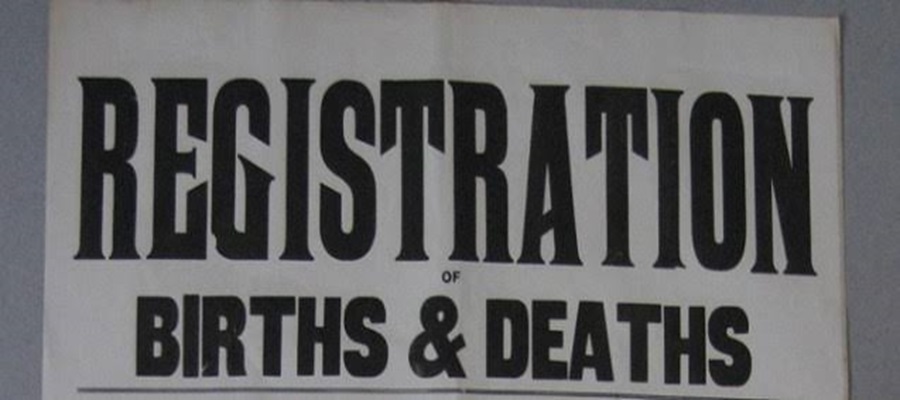
National Population Commission (NPC) has commenced the nationwide digital registration of births and deaths under the Electronic Civil Registration and Vital Statistics (E-CRVS) system to strengthen legal identity management and improve demographic data.

Speaking at a press briefing in Lokoja on Tuesday, Mr Afolabi Yori, federal commissioner representing Kogi, said the initiative became operational nationwide on July 1, through the VitalReg platform.
Yori described the development as a landmark in Nigeria’s civil registration system, noting that it would modernise birth and death registration through a technology-driven platform that meets international standards.
He said the digital platform would improve service delivery, strengthen data integrity and ensure that every birth and death occurring in Nigeria was accurately documented and securely stored.
According to him, civil registration is more than an administrative process, as it provides reliable statistics that support public policy formulation, resource allocation and national development planning.

“Nigeria records an estimated five million births annually, yet millions of births and deaths remain unregistered.
“Birth registration coverage currently stands at about 57 per cent nationwide, while death registration remains below 20 per cent,” he said.
The commissioner said that the commission had established 4,011 functional registration centres across the country’s 774 local government areas and was working to expand the number to about 8,000.
He added that the commission was strengthening collaboration with stakeholders to improve the capacity of registration personnel and ensure prompt documentation of vital events through the VitalReg platform.
Yori said the platform would provide faster registration services, 24-hour online access, digital certificate issuance where applicable, and reduce paperwork, waiting time and unnecessary travel.
He disclosed that the platform was being operated under a Public-Private Partnership with Barnks-forte Technologies Ltd. as the commission’s technical partner to ensure system availability, cybersecurity and continuous technological improvement.
He called on parents, healthcare institutions, traditional and religious leaders, civil society organisations, development partners and the media to support the initiative by encouraging the prompt registration of births and deaths.
Earlier, Samuel Omonakpeme, director in Kogi, NPC State, described the commencement of the digital registration system as another milestone in efforts to strengthen Nigeria’s Civil Registration and Vital Statistics system.
Omonakpeme stated that the initiative aligns with the Federal Government’s digital transformation agenda and the Sustainable Development Goals, particularly Goal 16.9, which seeks to provide legal identity for all.
He appreciated the Federal Government, the leadership of the commission, UNICEF and other development partners for supporting the implementation of the initiative.
The state director also urged parents, guardians, health institutions, community leaders, religious organisations and the media to mobilise public support for the timely registration of all births and deaths.
The News Agency of Nigeria (NAN) reported that ICT personnel of the commission, led by Ehimoni Kolawole, conducted a live demonstration of the digital birth registration process using the VitalReg platform.
The demonstration showed that the registration process captures the biodata of both parents, while at least one parent must possess a valid National Identification Number (NIN) to complete the registration of a newborn.

Federal government has launched Credit for Laptops, Internet, Connectivity and Knowledge Digital Devices (C.L.I.C.K.D.), a new consumer credit initiative, to provide affordable financing for locally assembled laptops and other digital devices.

L-R: Mr Uzoma Nwagba, managing director and chief executive officer, CREDICORP, and Dr Bosun Tijani, minister of Communications, Innovation and Digital Economy, at the launch
The initiative by the Nigerian Consumer Credit Corporation (CREDICORP) and the Federal Ministry of Communications, Innovation and Digital Economy, is aimed at equipping Nigerians with the tools needed to participate in the country’s growing digital economy.
During the launch, Dr Bosun Tijani, minister of Communications, Innovation and Digital Economy, described access to credit as critical to improving productivity and driving economic growth.
Dr Tijani said no nation could achieve sustainable development without a strong credit system that enables individuals and businesses to access resources needed to become more productive.
He noted that in today’s digital age, technology has become indispensable for education, innovation and wealth creation.
The minister explained that many talented young Nigerians possess the skills required to succeed in the digital economy but remain constrained by their inability to own computers and other digital tools.
Drawing from his personal experience, Dr Tijani recalled how his first laptop as a student in the university opened doors to international opportunities and eventually inspired him to establish one of Nigeria’s pioneering technology hubs.
He said the new programme would ensure that more young Nigerians are not denied similar opportunities because of financial barriers.
According to him, the initiative aligns with President Bola Tinubu’s vision of building a one-trillion-dollar economy by expanding access to technology, boosting productivity and supporting local manufacturing.
Mr Uzoma Nwagba, managing director and chief executive officer, CREDICORP, described the programme as a strategic investment in Nigeria’s future workforce and digital transformation.
Mr Nwagba said that while improvements in internet connectivity and digital skills training have positioned Nigeria for the Fourth Industrial Revolution, access to devices remains a major challenge preventing many young people from fully participating in the digital economy.
He explained that C.L.I.C.K.D. would bridge that gap by providing affordable consumer credit that enables beneficiaries to acquire laptops and other internet-enabled devices while they develop in-demand digital skills


Airtel Nigeria has strengthened its nationwide retail and distribution network as part of its continued investment in enhancing service delivery and making telecommunications and digital services more accessible to millions of Nigerians.

The company’s retail ecosystem comprises more than 4,000 exclusive Airtel shops and over 200,000 retail touch-points nationwide, including partner stores, channel partners and neighborhood agents. This network ensures that subscribers can conveniently easily access SIM registration, device purchases, airtime and data recharge, customer support and other digital solutions.
Commenting on the company’s retail distribution strategy, Dinesh Balsingh, CEO, Airtel Nigeria, said,
“Telecommunications goes beyond the physical infrastructure, it is important that we are able to reach people where they live and work. That is why we continue to invest in a strong retail and distribution ecosystem that enables us to bring Airtel closer to our customers while delivering a consistent, high-quality experience wherever they are.”
According to Joypratip Sengupta, Director, Sales and Distribution, Airtel Nigeria, the company’s distribution network plays a vital role in ensuring seamless service delivery.
“Our retail network is designed to ensure that our services reach customers efficiently. It is a combination of efficient logistic systems, strong partnerships and local engagement that enables us to consistently meet the needs of our customers across the country,” he said.
The strengthened distribution strategy complements the company’s ongoing investments in network infrastructure and digital innovation, recognising that customer proximity remains a critical driver of service excellence and digital inclusion.
In addition to improving customer access, Airtel’s extensive retail ecosystem continues to create economic opportunities for thousands of entrepreneurs, distributors, retailers and small business owners who form an integral part of the company’s value chain.
As demand for accessible, interconnected digital services continues to grow across Nigeria, Airtel remains committed to investing in improving its service delivery and ensuring that every subscriber enjoys quality service.

NPC Opens Nationwide Digital Birth, Death Registration Platform

FG Launches C.L.I.C.K.D., Consumer Credit Scheme for Tech Devices

Airtel Nigeria Expands Retail Footprint to Strengthen Customer Access Nationwide

Ovaloop Technologies Unveils Digital Tools to Formalize SMEs Operations Across Africa

Kaspersky Survey Highlights the Need for Smartphone Security

NRC, Ponzi Scheme Collapses Resulting Loss of Billions of Naira

NASENI Moves to Digitize CCB’s 5m Assets Declaration and Operations

Lebara Nigeria Launches Lebara Play, Africa’s First Telecom-Owned Micro-Drama Platform

CANAL+ Partners Samsung to Pre-Load DStv Stream on New Samsung TVs In Nigeria, Other African Countries

Tokenization, Blockchain Technology will Transform Financial Institutions – IMF




 News3 days ago
Adebutu, PDP Chieftain Accuses Nigerian Governors of Embezzling LG Allocations

 E-Financial3 days ago
Access Holdings Sells 7.44% Stake in Ghana Unit

 E-Financial3 days ago
NDIC Urges Youths to Shun Ponzi Schemes, Embrace Savings

 E-Business3 days ago
SERAP to Sue NASS over Bill Empowering NDPC to Regulate Social Media

 News3 days ago
NIMASA Unveils Accelerator Scheme to Drive Innovation, Sustainable Growth

 E-Financial3 days ago
NRS Issues July 31 Deadline for e-Invoicing Compliance

 News3 days ago
ICPC Secures Final Forfeiture of N941m Linked to IPPIS Fraud

 News3 days ago
eBusinessLife Advocates Greater Support for Girls in ICT as Students Showcase AI Innovations