

E-Financial
IFC Supports Expansion of Promasidor Nigeria Limited with $25m Loan

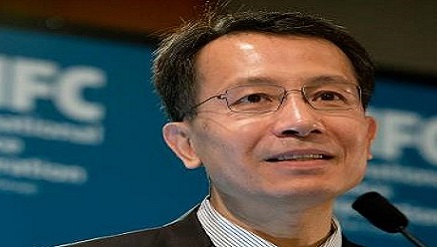
IFC, a member of the World Bank Group, will lend $25 million to support the expansion and modernization of Promasidor Nigeria Limited (PNL), a leading Nigerian dairy and seasoning products company targeting low- and middle-income consumers.
IFC’s financing will support purchases of new machinery that will enable PNL to increase efficiency, expand production and develop new products, leading to greater availability of nutritious food products in Nigeria at competitive prices.
PNL is a subsidiary of Promasidor Holdings limited (the Company), a leading Pan-African consumer goods company operating in 25 countries across the continent.
The Company was founded in 1979 in the Democratic Republic of Congo by Mr. Robert Rose, who pioneered formulations and packaging of dairy products which extended shelf life and made them more accessible and affordable for millions of low-income consumers.
“This is a very competitive market for food products. We expect that this investment will help us optimize production costs, enabling us to reach and nourish more consumers with our affordable range of quality products. We will also target our portfolio extension by gradual integration of more locally sourced raw materials from producers in Nigeria and widening our network of distributors,” said PNL CEO Olivier Thiry.
Mary-Jean Moyo, IFC Head of Manufacturing, Agribusiness and Services for sub-Saharan Africa said, “Agribusiness is Nigeria’s largest employer. Increasing investment in food-processing companies like PNL will help diversify Nigeria’s economy and improve nutrition by expanding the supply of affordable food.”
IFC invests in Agribusiness to enhance productivity with the goals of greater food security, higher rural incomes, and improving environmental and social sustainability. Today the average African farm performs at just 40 percent of potential.
But by 2030, Africa’s agriculture and agribusiness market is expected to triple in value to reach $1 trillion. Africa needs more than $10 billion in new investment annually to achieve this aspired expansion of output.
In the fiscal year ended in June 2016, IFC’s overall, long-term investments in sub-Saharan Africa totaled nearly $3.7 billion, including more than $1.8 billion mobilized from other investors.
IFC clients provided 240,000 jobs, supported nearly 1.2 million farmers, and treated nearly 960,000 patients.



Taiwo Oyedele, minister of Finance and coordinating minister of the Economy, has said that Africa’s payment ecosystem should move beyond traditional systems that rely on third-party currencies for cross-border transactions, noting that such arrangements increase costs and create inefficiencies.

Taiwo Oyedele, minister of Finance and coordinating minister of the Economy
To this end, he proposed the development of an Africa-wide payment card that would enable direct transactions between African currencies without requiring conversion through the United States dollar or other intermediary currencies, as part of efforts to deepen intra-African trade and reduce transaction costs.
Oyedele, made the proposal while receiving a delegation from Mastercard in Abuja.
Currently, most card payments between African countries are routed through currencies such as the U.S. dollar. For instance, when a Nigerian cardholder makes a purchase in Ghana, the transaction is often converted from Ghanaian cedis to U.S. dollars before being converted into naira, attracting additional costs through multiple exchange-rate conversions.
Speaking during the meeting, the minister urged Mastercard to support the creation of a payment system that allows direct settlements between African currencies.
“We hope that, for example, we have a payment card that you can use to pay from naira to Kenyan shillings, to South African rand, without a third currency. And we know you can make it possible,” Oyedele said.
He said eliminating intermediary currencies would improve payment efficiency, reduce transaction costs and strengthen economic integration across the continent, particularly under the framework of the African Continental Free Trade Area (AfCFTA).
The minister also called on Mastercard to expand access to credit cards in Nigeria, describing consumer credit penetration as low even among top public officials and high-income earners.
“Based on my own personal experience, one of the areas where we hope you will take the lead is just making credit cards available to Nigerians.
It is difficult, even for someone at my level, to get a credit card,” he said.
While acknowledging the progress made by Nigeria’s financial technology sector, Oyedele said there remains significant room for growth and innovation.
He noted that Nigeria hosts five of Africa’s nine fintech unicorns, reflecting the country’s growing prominence in the continent’s digital finance landscape.
“Our fintech sector is quite developed, but we know that we can do much better. We can be much bigger,” he said.
“It is interesting to know that Africa has nine unicorns, and five of them are in Nigeria. So we know that the possibilities are even bigger.”
Oyedele assured investors and fintech operators of the government’s commitment to maintaining policy consistency and providing regulatory support to encourage further investment and expansion.
“We welcome you to Nigeria. We want you to do more, and we are willing, from the government’s side, to work with you,” he added.
The proposal comes amid expectations of rapid growth in Africa’s cross-border payments market over the next decade. Industry reports project the market will expand significantly as fintech adoption rises, mobile money usage grows, and intra-African trade increases under AfCFTA.
Despite the growth prospects, stakeholders say cross-border payments across Africa continue to face challenges including fragmented financial systems, multiple currency conversions, high transaction costs and settlement inefficiencies.
The merger between Providus Bank and Unity Bank has entered the integration phase following the completion of all legal and regulatory requirements, setting the stage for the emergence of ProvidusUnity Bank Limited.

Recall that the Supreme Court upheld the merger scheme, ordering all of Unity Bank’s assets and liabilities to be transferred to Providus Bank.
The enlarged institution operates as a national commercial bank.
Providus Bank in a statement to customers formally notified them of the announced the successful completion of the legal process backing the merger and assured them that banking operations would remain seamless throughout the integration period.
“We are pleased to announce the final court sanction of the merger between ProvidusBank and Unity Bank. This business combination is set to create a strong institution with broader national reach, deeper capabilities and an even greater commitment to delivering exceptional banking experiences to you,” the bank stated.
According to the bank, the merger marks a significant milestone that will strengthen its capacity to serve customers through improved access to banking services, enhanced technology infrastructure, stronger digital capabilities and expanded product offerings.
“This merger represents an important milestone in our journey and positions us to serve you better through expanded access, enhanced technology infrastructure, improved digital capabilities, improved product offerings, and a wider network of service channels across Nigeria,” the bank said.
Providus Bank also assured customers that the transition would not affect their banking relationship, stressing that all accounts and existing service channels would remain fully operational during the integration process.
“Your banking relationship remains secure and uninterrupted,” the bank assured customers, adding that they would continue to enjoy access to their accounts and banking services through existing channels while integration activities progress.
The bank further noted that customers should expect improved service delivery arising from the merger, supported by stronger capabilities and a wider operational footprint across the country. It added that any actions required from customers during the transition would be communicated clearly and in advance.
Highlighting the strategic importance of the combination, the bank said the next phase of its evolution is geared towards building a stronger institution capable of supporting economic growth while maintaining high service standards.
“This next chapter reflects our commitment to building a stronger institution for customers, supporting economic growth and continuing to deliver the service standards you expect from us,” it stated.

Economic and Financial Crimes Commission (EFCC) and the Corporate Affairs Commission (CAC) have expressed concern over the growing activities of unregistered Point of Sale (POS) operators and warned that they pose significant risks to businesses, the financial system and national security.

The concern was raised on Thursday in Abuja when Senator Ibrahim Adah, chairman of the CAC Board, led a delegation of the commission’s management staff on a courtesy visit to Mr Ola Olukoyede, executive chairman of the EFCC, at the anti-graft agency’s headquarters.
Adah disclosed that only about 20 per cent of POS operators in Nigeria are currently registered with the CAC, describing the situation as a violation of the Companies and Allied Matters Act (CAMA) 2020 and the Central Bank of Nigeria’s Agent Banking Regulations 2026, which require businesses operating under business names to be duly registered.
He appealed for stronger collaboration between both agencies to enforce compliance and develop a reliable database of POS operators for law enforcement purposes.
According to him, emerging evidence indicates that criminal proceeds, including ransom payments from kidnapping activities, are sometimes channelled through POS terminals.
“We seek closer cooperation in developing a reliable database of POS operators for use by the EFCC and other law enforcement agencies,” Adah said.
He noted that the visit was part of efforts to strengthen partnerships with institutions whose mandates intersect with that of the CAC, particularly in combating financial crimes.
The CAC chairman stressed that the two agencies could not effectively tackle economic and financial crimes in isolation, especially those involving corporate entities.
“When companies are misused for fraud or money laundering, the mandates of both institutions are directly affected. Neither of the two agencies can therefore fight and win the war against economic and financial offences if we work alone,” he said.
Adah identified data and intelligence sharing, public sensitisation on financial risks, and staff capacity building as critical areas for deeper collaboration, reaffirming the CAC’s commitment to protecting the integrity of Nigeria’s financial system.
Responding, Olukoyede described the activities of unregulated POS operators as a major challenge to the country’s financial ecosystem.
“If you do not regulate the activities of such key players, you will be having major problems and challenges within your financial ecosystem,” he said.
The EFCC chairman assured the CAC of the commission’s readiness to strengthen cooperation in tackling economic crimes and promoting regulatory compliance.
He described the CAC as the gateway to economic growth in Nigeria, noting that foreign investors often have their first engagement with the country through the commission.
Olukoyede revealed that the EFCC had established a dedicated desk to handle matters relating to the CAC and disclosed that the commission was currently investigating about 200 companies referred to it by the corporate regulator.
“As a matter of fact, I think we have about 200 companies that you forwarded to us that we are currently investigating and we have made reasonable progress.
“We have made very interesting discoveries, which will help you when you lay your hands on the report,” he said.
He added that many public corruption cases handled by the EFCC involve procurement and contract fraud perpetrated through companies registered by the CAC.
Olukoyede also underscored the need for both agencies to address insider-related challenges and improve internal accountability mechanisms.
On information sharing, he directed officials of both organisations to review and update their existing Memorandum of Understanding to reflect current realities, particularly regarding beneficial ownership information and data protection.
The renewed partnership, according to both agencies, is aimed at deepening corporate compliance, enhancing transparency and safeguarding the integrity of Nigeria’s financial system.

Telcos Lose 30m Subscribers in 3-Year Slump due to NIN-SIM Link Policy

Pay Your taxes for Me to Do More – Tinubu

NCC Launches Maiden Women’s Leadership Mentorship Programme

FG Proposes Africa-Wide Payment Card without Conversion through US Dollar

Providus, Unity Bank Begin Integration Phase after Supreme Court Nod

CBN Extends PoS Geo-Fencing Enforcement Deadline to August 2026

London Strengthens Global Investment Ties with Africa @ First Ever London-Africa Business Summit

FG Targets Alleged N3tn Capital Flight, Opens Airtime Credit Market to Nigerian Fintechs

Mobile Internet Gender Gap Widest in Africa – GSMA

Japan, UNESCO Boost Digital Learning in 15 CoEs with Donation of ICT Equipment




 News2 days ago
PalmPay MD Seeks Stronger Infrastructure, Access to Finance for SMEs @ Digital Pay Expo 2026

 Telecom2 days ago
Africa Projected to Lead Global 5G Growth

 News2 days ago
Kaspersky Identifies over 336 Unique Domains Impersonating the Official World Cup Website

 Broadcasting2 days ago
Lebara Nigeria Launches Lebara Play, Africa’s First Telecom-Owned Micro-Drama Platform

 General News2 days ago
Paystack Launches Programme to Support Nigerian Businesses

 Telecom1 day ago
NITDA Unveils Bold Vision to Make Nigeria an AI Powerhouse

 E-Business1 day ago
Privacy Crisis May Undermine Local Hosting of Data by Banks, Fintechs

 E-Financial2 days ago
SEC Bars Dangote Refinery IPO Adverts