

E-Financial
7 Nigerian Banks in Deep Financial Crisis – Report

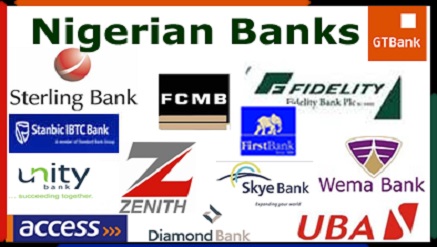
Seven Nigerian banks are undercapitalised to the tune of N1trillion ($3.2billion), according to a stress test conducted by Arqaam Capital, a Dubai-based international investment bank.
According to the report, two Nigerian banks are close to being insolvent and another two would need urgent financial injection to save them from full blown crisis.
The report of the test, claim that the conditions of the banks are further compounded by currency depreciation and souring loans.
It also reported that two other banks were close to being insolvent.
The investment bank said the Nigeria’s banking industry “is experiencing a full-blown financial crisis” as failed fiscal and monetary policies had led to a credit crunch.
The stress test identified the undercapitalised banks as First Bank of Nigeria, Unity Bank Plc, Diamond Bank Plc, Skye Bank Plc, FCMB Group Plc, Sterling Bank Plc and Fidelity Bank Plc.
In an emailed note on Monday, Jaap Meijer and Tarek Sleiman, analysts at the investment bank and brokerage, said capital adequacy ratios in Nigerian banks were set to worsen because of the depreciation of the naira and huge non-performing loans, Bloomberg reported.
“Our acid test reveals seven undercapitalised banks” with a deficit of as much as N1tn ($3.2bn) in the financial system,” Meijer and Sleiman said.
“Unity Bank and Skye Bank are close to being insolvent, while lenders, FBN Holdings Plc and Sterling Bank Plc, will need a dilutive capital hike,” they added.
The affected banks reacted to the report on Monday, saying there was no iota of truth in the report.
Punch newspapers dug further and reported that Mr. Babatunde Lasaki, spokesman for First Bank, said, “First Bank is not undercapitalised. We are still within the industry regulatory threshold. This is their opinion. Our position has been published in our half-year report; it is not the one from an investment bank or a speculative report. Our Q3 report will soon be published.”
Punch also reported that Ikechukwu Mike Omeife, spokesman for Diamond Bank said, “Our bank is strong. Our capital-adequacy ratio and non-performing loans are within the statutory requirements.”
A top source at the Unity Bank said the bank was still meeting its obligations.
The source, who did not want to be quoted, said, “Our financial position has been enhanced. We have just moved our head office to Lagos in order to be closer to the market and retail market. All these strategic investment decisions have shored up market confidence in the bank.”
Similarly, a top official of Skye Bank, who spoke on condition of anonymity, said the bank was not close to being insolvent.
The source said the Central Bank of Nigeria had issued a statement, stating that the bank was not distressed.
To create a capital buffer, Sterling Bank is planning to issue a N27bn bond and “if the interest rate looks better, we will do it this year,” the Sterling Bank Chief Financial Officer, Abubakar Suleiman, told Bloomberg.



Ecobank Group has broken new ground in sustainable finance with the launch of the world’s first International Capital Market Association (ICMA) commercial bank-issued Nature Bond on the London Stock Exchange, raising $450 million to channel capital into biodiversity conservation, sustainable agriculture and water infrastructure across Africa.

The landmark transaction, which attracted overwhelming investor demand and earned the highest sustainability quality rating from Moody’s, is being hailed as a major milestone in efforts to close Africa’s nature-finance gap and mobilise private capital for environmental resilience.
The bond, which was oversubscribed nearly four times, creates a new mechanism for international and African investors to finance the protection of the continent’s natural capital through the communities, farmers and businesses that depend on it.
Africa hosts 25 percent of global biodiversity and is home to some of the world’s most important ecological assets, including vast tracts of arable land, tropical forests, freshwater ecosystems and wildlife habitats.
Yet despite its ecological significance, the continent attracts less than three percent of global nature finance, according to industry estimates.
Ecobank’s Nature Bond is designed to address this imbalance by directing capital into sectors where environmental outcomes and economic livelihoods are deeply interconnected.
Unlike traditional conservation financing vehicles that often focus on protected areas and environmental projects, the Nature Bond channels funding directly into the real economy.
The proceeds will support smallholder farmers adopting sustainable agricultural practices, agribusinesses operating verified deforestation-free supply chains, and water infrastructure projects that safeguard freshwater ecosystems relied upon by millions of people.
The initiative will span 24 African markets, with significant deployment planned in biodiversity-priority countries including Côte d’Ivoire, Burkina Faso and Ghana.
According to Ecobank, 81 percent of the eligible lending portfolio will be directed to countries where agricultural land-use change remains the primary driver of biodiversity loss. This approach is intended to ensure that financing reaches areas where environmental intervention can generate the greatest impact.
Nature Bonds represent one of the newest categories within sustainable finance.
Under ICMA’s nature bond framework, proceeds must be used specifically to support nature-positive outcomes, including biodiversity conservation, sustainable agriculture, land restoration and water ecosystem protection.
The designation differs from conventional green bonds, which often support a broader range of environmental objectives.
By contrast, Nature Bonds are designed to target activities directly linked to preserving and restoring natural ecosystems.
For Ecobank, the transaction represents the culmination of several years of investment in sustainability governance, environmental risk management and impact measurement frameworks.
The bank said every eligible loan financed through the bond will be subject to seven independently verified sustainability conditions, supported by monitoring systems that include deforestation screening, supply-chain traceability requirements and ongoing environmental performance assessments.
These safeguards were instrumental in securing Moody’s highest possible Sustainability Quality Score (SQS1 Excellent), providing investors with confidence that the proceeds will generate measurable environmental outcomes.
The $450 million issuance attracted orders worth more than $1.36 billion, representing 3.9 times the original target size.
The strong demand enabled Ecobank to increase the deal size by $100 million while simultaneously tightening pricing by 50 basis points, a rare achievement in sustainable finance markets and a reflection of growing investor interest in credible nature-based investment opportunities.
The transaction drew participation from both African and international institutional investors, underscoring Ecobank’s unique position as a pan-African financial institution capable of bridging global capital markets with local development priorities.
Jeremy Awori, group chief executive officer of Ecobank Transnational Incorporated, described the transaction as a defining moment not only for the bank but also for Africa’s sustainable finance landscape.
“This transaction is a defining moment for African sustainable finance. Investors did not just support this bond. They demanded more of it, allowing us to increase the size and tighten pricing,” Awori said.
He noted that Ecobank had spent four years building the governance systems, accountability structures and operational frameworks required to make nature finance both credible and scalable across African markets.
“We are not a bank that simply labels bonds,” he said. “This bond is ultimately about the farmers, cooperatives and communities whose livelihoods depend on healthy ecosystems.”
Rachael Antwi, Ecobank’s group head of sustainability and environmental and social risk management, said the future of nature finance on the continent would depend on practical models that connect environmental objectives with real economic activity.
“Nature finance will only scale in Africa if it is practical, measurable and connected to the real economy. This bond is designed to do that by linking international capital to eligible lending for sustainable agriculture and water infrastructure across 24 countries,” she added.
Antwi added that the framework reflects the systems and standards Ecobank has developed to ensure environmental sustainability and economic development can advance together.
The launch is expected to strengthen Africa’s position within the rapidly expanding global sustainable finance market, which is increasingly looking beyond climate mitigation to address biodiversity loss and ecosystem degradation.

Nigeria’s National Payment Stack (NPS) processed 153,000 transactions during its pilot phase, moving closer to a full rollout.

Pic credit…..manifieldsolicitors.com
This next-generation payment infrastructure aims to unify banks, fintechs, mobile money operators, and other financial institutions on a single payment rail.
Premier Oiwoh, managing director and CEO, Nigeria Inter-Bank Settlement System (NIBSS), announced this milestone at the launch of the Nigeria Payments System Vision (PSV) 2028 in Abuja.
According to Oiwoh, the National Payment Stack recently recorded its highest transaction volume during testing and is now awaiting final approval before it can be formally launched.
“We’ve started a control pilot transaction on the National Payment Stack. I’m very happy to announce that last night we had the highest level of transactions at 153,000 on the National Payment Stack. So, I’m awaiting the Governor’s nod to put it up formally,” he said.
According to him, the pilot exercise has already provided a strong indication of what the system can handle once it is fully deployed across the financial sector.
The project is part of the broader reforms under the Nigeria Payments System Vision 2028, introduced by the Central Bank of Nigeria (CBN) to modernise payment services and strengthen the country’s digital economy.
At the Abuja event, stakeholders stressed that building the technology alone will not guarantee success.
They said the real challenge lies in how effectively the system is implemented, how affordable it becomes for users, and how far it reaches people who are still outside formal banking services.
Oiwoh noted that the human and operational side of the reform is just as important as the technical design.
“In reality, technology is only a fraction of what determines success. The bigger part is execution. Without proper implementation, even the best system will not achieve its purpose. A significant number of Nigerians are still not part of the formal financial system,” he said.
He also expressed support for a pricing structure that would make digital payments cheaper or even free, arguing that reducing transaction costs could encourage wider participation in electronic banking and fintech services.
“I personally believe transfer charges should be eliminated or reduced to zero on financial applications. Payment services should be accessible without fees where possible,” he said.
The NPS is expected to significantly improve how financial transactions are processed in Nigeria by allowing different financial institutions to communicate and settle payments more seamlessly.
This interoperability is expected to reduce delays, lower friction in transactions, and improve the overall customer experience.
It is also expected to enhance transaction speed and strengthen the reliability of digital payments, particularly as more Nigerians continue to shift toward cashless and mobile-based financial services.
Industry players at the event said the pilot results demonstrate that the system is capable of handling large volumes of transactions and can be scaled up without major disruptions when fully launched.
They added that the platform could support innovation in the financial sector by creating a more connected and efficient payment environment for businesses, startups, and consumers.
However, discussions at the event also reflected concerns about cost and sustainability.
While there is growing pressure to reduce transaction fees, operators warned that pricing must still allow payment service providers to remain viable in the long term.

Supreme Court of Nigeria delivered a landmark ruling on the merger between Unity Bank Plc and Providus Bank Limited.

By dismissing the final appeal challenging the consolidation, the apex court has dissolved the board of Unity Bank, cleared all legal obstacles, and formally sanctioned the creation of the enlarged entity,.
The apex court decision ends the legal dispute that had delayed the merger process.
The merger is expected to create a stronger and larger bank in Nigeria’s banking sector.
The shareholders of both banks had already approved the merger during a court-ordered Extraordinary General Meeting (EGM) held in September 2025.
The Central Bank of Nigeria (CBN) had also given its approval before now.
With the Supreme Court’s approval, the merger process can now be completed.

Legend Internet Reports Losses despite N505m Revenue

INEC Probes Claims of Leaked Voter Data from CVR System

Ecobank Raises Record $450m in Nature Bond for Africa’s Biodiversity

NPS, New Payment Infrastructure Hits 153,000 Transactions in Pilot Phase

African Electric Vehicle Platform Raises $215m to Scale Electric Mobility in Nigeria, Others

MTN, VDT, Zoracom, Digital Realty Back 2026 Girls in ICT Campaign

Vitel Wireless Partners Fintechs to Expand Access to Services

CPN Begins Crackdown on Quack IT Professionals, Vows Tougher Action against Cybercrime

Nigeria Hit by 24.1m Data Breaches – Surfshark

Kaspersky Identifies Ongoing Supply Chain Attack on Official Daemon Tools Website Distributing Backdoor Malware




 Telecom2 days ago
NCC Retains Rudman as Chair of Newly Inaugurated IPv6 Council Board, Urges Advancement of Nigeria’s Digital Migration

 E-Financial2 days ago
POS Operators Threaten to Suspend Services over Exclusivity Practice

 E-Financial2 days ago
Nigerian Banks Under Pressure as Bad Loans Hit 8.03% After CBN Policy Shift

 E-Financial2 days ago
Banks Lending to FG Hit N15.66 Trillion in One Year– CBN

 Telecom2 days ago
MTN, ALTON, Upperlink, NiRA back 2026 Nigeria DigitalSENSE forum, awards

 General News2 days ago
AfDB Says 70 Percent of Nigerian Firms Depend on Generators

 Broadcasting1 day ago
Good News for DStv Users: Watch over 160 Channels Without Paying Extra

 E-Business1 day ago
AI and IoT Hold the Key to Nigeria’s Economic Future – NCC