

General News
Mobility Changing Banking Dynamics- Adedeji

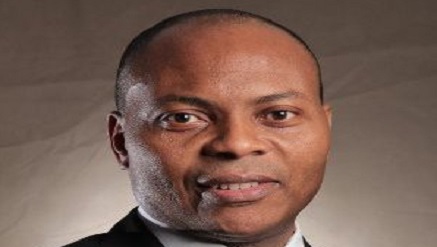
As mobility is the future of electronic banking, Dr. Yinka Adedeji, divisional head, Consumer and Digital Banking of the United Bank for Africa (UBA) Plc., has disclosed the Bank’s unrelenting efforts to provide her millions of customers with improved and convenient channels for seamless transactions.
Adedeji has been with UBA Group for over a decade now, working as Divisional Head of Consumer and Digital Banking; Divisional Head, e-Banking; CEO, Afri-Pay Mobile Money, UBA Group; Director, Channels; Head Business Transformation; Strategist and Head e-Banking Managment.
He has rallied his team in developing the newest and e-payment channel called EmailMoni aimed supporting the Central Bank of Nigeria’s cashless policy, driving financial inclusion, making banking more convenient and secure for the banking public, among others. Peter oluka was there for Nigeria CommunicationsWeek and brings the excerpts:
E-Payment Sector in Last One Year
In the last one year, we have seen some very interesting changes that are positive in the market since the last year that we had encounter with the media to brief them on the development in the e-payment industry.
The Central Bank of Nigeria (CBN) has removed the penalty that was hitherto associated with digital payment and collections. Initially, you would have thought the reason people were using or adopting electronic payment of cashless scheme was because of the penalty.
Interestingly, the adoption continues and it is even going faster which means that the adoption by the people of e-payment is beyond penalty; it also hinges on convenience of doing banking as well as security that comes with, not necessarily as result of the sanction.
So, without the central bank’s restriction, people are actually using e-payment which means it is the right time for cashless or electronic payment in the society.
At UBA, for instance, we have seen rapid changes so much that the deposit that comes into the bank is now about 70 per cent coming through digital channels, that is, all these instant transfers either by mobile internet; card transfer using transfer kiosks, Automated Teller Machines (ATMs) is now about 70 per cent compared to 30 per cent that comes through the branches where people bring cheque and cash deposits.
The proportion that comes through digital channels, that’s is , Point of sales terminals, instant transfers through other channels either from ATM, mobile banking, Internet banking and the rest now constitute 70 per cent in terms of inflow of money into the banks as deposits.
The outflow which is actually payment by individuals is now over 80 per cent. Over 80 per cent in terms of transactions count because what we have seen is that people don’t lump their transactions anymore; they actually do individual transactions even though the average size of a transaction, as we have seen, is relatively smaller because people are breaking up their transactions because they know they can always do it 24/7.
These are new developments and they are very positive. This also, therefore, has to shape the way banking is done. You will see that there is less emphasis on building of bricks and mortals. It is not just in Nigeria but also across the globe. It also dictates the way we do our business across Africa.
Technologies to Ensure Resilient, Secure E-Channels
Well, let me state clearly here that the most important to us is the technology that would sit behind the transactions.
We all have just one phone, but if you imagine the kind of technology infrastructure that sits behinds to support all the transactions on your own phone, you will marvel.
So, the bank has really focused on putting a lot of resources into Information Technology infrastructure, the electronic payment infrastructure, security monitoring and protection of customers.
For UBA, our security infrastructure at UBA House on Marina is state-of-the-art and a benchmark for the industry.
If you look at our approach to the market, we know there are a lot of electronic payment and collection options. But everything is bounded on the fact that customers have an account with you.
So, the structure and organisation of UBA has transformed in that anticipation and changes that we have seen in the industry.
Before, consumer banking used to be separate. Digital banking used to be separate. But you will agree with me that there is no digital banking without consumer banking.
People have to open an account with you first; they need to know about your service before you now give them convenience.
Therefore, we want people to open account with the bank and then, we now give you the convenience that comes with. We want people to come to the bank because he has the convenience that comes with it.
But the account used to lead and convenience comes as addition. Convenience should be the reason why you come to the bank as customer and the bank has now re-organised.
The consumer and digital banking are now combined. The consumer banking digital banking roles have, therefore, been fused because with the changing landscape of banking system, they cannot exist exclusive of each others.
Now, we manage all these together, which means account opening that you have, the types of account that you open is now the responsibility of the Consumer and Digital Banking unit of UBA.
Not only that, even the remittances is changes from those days when you would need to go and queue, taking questions and answers.
We have seen transform into directly coming into your bank account going through switches, therefore, the method of remittances is changing and that is why we have brought evening together under consumer and digital banking.
In addition to that, collection is now part of the same group of consumer banking because collection is now beyond the manual collection at the branches.
Even when you are making collections such as payment of taxes, utilities such as your DStv, power and other stuff, it now beyond just paying cash at one branch and you select one bank. You have multi-banks options when you even to go the branch even though the lead bank van be one bank, that is also becoming digital.
The collections of fees for energy, Discos and other stuffs like that is now being seen happening through PoS terminals.
Now, we have them on all our channels where the banking is now extended to all those payments that you do.
Before, when mobile and Internet banking first started, it is to see your account, then, we extended it to transfers within the bank then to inter-bank.
Now, more can be done as you can but airline ticket, you can do bill payment irrespective of the biller and now beyond that, you can even do airtime vending.
You even pay for Internet data and bills for either pre-paid or post-paid. There are more transactions features that are now making banking more interesting which are reasons why many people may want to bank with a bank because those services that make transactions more convenience for them can be provided safely and simply. For us, we balance this from the angle of product.

Convergence and Fusing Consumer & Digital Banking; Deepening E-Channels Adoption
Because we have put all units that belong together to work as one entity and under one umbrella, our bank, for instance, is now focusing on simplifying the way by which your initiative financial relationship with our bank.
We are looking at the directions that the Central Bank wants to push. We are also aligning with all the regulators’ rules in the other countries where we have operations across Africa to see how we can push account opening having access to financial services more easily through creation of capacity or through collaboration with the people that are deeper in the grassroots cadre, particularly people that are doing agency banking to see how we can work with them to drive financial inclusion.
These, all being together, you would have seen that at UBA, there has been some capability and introduction of ability to open account online.
You can open account online while BVN can be completed when you come to the banking hall. If you already have an account with the bank, it is easy to just create another account either for your dependants or for any special purposes. Very soon, we would also create account opening process for online using the USSD to able to create new accounts.
There are multiple names of account today and we are trying to simply it and make it easier for people to have transactions with us.
CBN New Policy On Cheque Lodgement into Savings Accounts: Expected Benefits To SMEs
Thanks to the central bank in Nigeria, as they have allowed us as bankers to service the country better.
The BVN actually makes banking easy, each customer become unique. Now, you are allowed to accept cheque of up to N2 million per day into your savings account.
You can look at it as something minor but I can tell you that it is a major change if you think about.
You can run businesses having a savings account. While the CBN has introduced this ‘cheque deposits into savings account’ initiative over a month ago, I don’t think the benefits have been well communicated. It is a good thing.
For instance, if you get your dividend cheque and other suchlike, you can just use your savings account, given the fact that you have BVN on your account.
It is a beautiful thing and it makes banking more convenient. It allows the old cheque method should be integrated to the inflow that is electronic now. If you really think about, over 95 per cent of Nigerians probably receive cheque of N2 million per day.
For SMEs, people that run businesses, people that run schools, they don’t receive more than a cheque of N2 million per day and this is a blessing. Majority of them actually come through electronic channels anyway. So, having this initiative is a plus.
CBN’s Improvement on the Amounts of Deposit People Can Receive on Low-KYC Accounts
The ability to open accounts or really engage people that are not banked already is increasing. Ability to use your existing account more productively, using instant transaction is increasing.
The capacity to accept payment is also increasing. For the low Know Your Customer (KYC) account, the central bank also recently improved the amount you can receive for transaction per day from N20,000 to N50,000.
That is very good. When you want to pay salary, you know is ought when you want to pay salary where most people are earning more than N20,000. So, this now makes it easy to use those low KYC accounts to receive your salary or a benefit that is as high as N50, 000.
The total account balance that you can receive into that account before you elevate your KYC is now N300, 000 increased from N200, 000 before.
That is very good and, therefore, it is more encouraging for people to open an account when they know they will get all these, even students benefits are now getting more than N20, 000. Look at money to their kids every semester, now students accounts can receive up to N50,000 at a transaction.
This is beautiful. So, the extension of the ability to do this being under the same umbrella as our commercial strategy is actually very god and we are exporting this capability across Africa as well and that is why in Africa, UBA is actually rated as changing the landscape of doing the banking in the continent and it is very god for us because we haven’t built a lot of brick and mortals in those places but we are using electronic channels to really penetrate in those countries where we operate in addition to Nigeria.
Back in Nigeria, as we increase the number of account in the country – I think the UBA has over 10 million accounts – across African countries where we operate. In Nigeria, we have over eight million of the 10 million accounts. The CBN is actually encouraging banks towards financial inclusion and is actually giving hem he drive to simply account opening and methods. With this, we believe we would go very fast in the coming year.
Our strategy is very clear; I think we are consolidating on how we play in this market. We would focus heavily on really driving account opening as well as increasing the transactions types you can do on your bank accounts.
In essence, we are looking at driving transactions as a means of actually driving the bank, instead of the traditional method of always raising deposits and waiting for credits.
We realised that we really want to make banking very important through making transactions very simple and safe to enable you do transactions any time of the day securely using all the methods we have put in place.
Strategies to Ensure Increased Usage of ATMs, U-Mobile/Internet Banking
We have increased the flexibility on our mobile banking applications as well our Interne banking applications, U-Mobile.
Now, we call it exactly what it does- UBA Mobile Banking. We also have our UBA Internet banking, which we call Direct Banking. That is now also on mobile. You can log in through web address and we also have it an app now.
So, you will see that all our services are now becoming applications. For those that have tokens to securely do their transactions, it used to be physical; it is now an app for us now, all in an effort to make it much simpler.
At the beginning of the year, we challenged ourselves that amount of transactions going through mobile or Internet banking will equal that of ATM transactions volume by end of the year.
Surprisingly, the ATM volume is already inching about N100 billion a month – of cash- that we dispense over 8, 500 ATMs in Nigeria.
Now, through this, Internet and mobile applications, we have now crossed over N50 billion a month. So, by really increasing security on our channels and making the adoption much easier, we have achieved that and by end of the year.
That is in terms of penetration of these channels and it is going o grow faster giving the fact that we simplifying transactions.
Adoption of smartphone is increasing, meaning that there would still be a lot of transactions that will go through mobile going forwards. So, for us, we believe mobility is the future of electronic banking and we are preparing for this every second.
Latest E-Payment Innovation from UBA
Yes, EmailMoni is our latest innovation and it is the world’s newest game changing technology and will dramatically advance the payments landscape in Nigeria and across Africa.
EmailMoni is a next generation payments technology that enables people and businesses to securely send and receive money electronically in real-time and at low cost using a downloadable mobile smartphone app or from a web app.
The EmailMoni web app can be accessed from any mobile device, any browser or any type of internet connected computer.
EmailMoni allows people and businesses to pay and receive electronic payments securely in a number of easily accessible and convenient ways. Users can send and request money instantly using Microsoft Outlook email, or any web mail.
Money can also be securely requested and sent using Facebook, SMS text and other methods. Available on iOS on the Apple App Store and for Android on Google Play, the EmailMoni mobile app for smartphones will over time, interact with a card-less ATM network using Quick Response Code enabling cash to be deposited and withdrawn from the system at thousands of ATM locations in Nigeria and across Africa.
EmailMoni will enable faster more efficient payments for UBA customers who are billers, such as cable and utility companies.
Customers can also send and receive secure payments instantly and conveniently, while non-bank customers will be able easily access UBA banking and payment services. We are proud to open a new frontier for e-payments in Africa with EmailMoni.
This conforms with our desire to continuously deliver innovative and convenient payment options to our customers.
Our innovations in the digital banking space have been possible because of our huge investments in building efficient, trustworthy platforms.
We assure our customers that we are committed to continually bring the best in the financial technology space to ensure they always have the best and most convenient banking experience with all our service channels.


NLNG and the Nigerian Content Development and Monitoring Board (NCDMB) have commenced the construction of a research and innovation centre at Rivers State University, aimed at strengthening indigenous capacity in computer and electrical engineering.

The NLNG Research and Innovation Centre for Computer and Electrical Engineering (RICCEE), which was inaugurated yesterday, is the company’s largest Human Capital Development Institutional Strengthening project to date.
The centre is expected to provide specialised training, advanced research facilities and technological solutions for challenges in Nigeria’s energy and industrial sectors.
It will also house a professorial chair and operate as a research and development centre where industry-focused solutions, particularly for NLNG, can be developed and potentially commercialised.
Speaking at the groundbreaking ceremony, NLNG’s Managing Director and Chief Executive Officer, Adeleye Falade, described the project as a strategic investment in the country’s future and evidence of the company’s commitment to sustainable human capital development.
Falade, who was represented by NLNG’s General Manager, External Relations and Sustainable Development, Sophia Horsfall, said the facility would improve the university’s ability to produce highly skilled professionals while ensuring that research responds to industry needs.
He said the centre would also help bridge the gap between academic knowledge and practical industry requirements by creating opportunities for researchers and professionals to work together on innovations with commercial and developmental value.
Felix Omatsola Ogbe, the Executive Secretary of NCDMB, represented by the Director, Capacity Building, Abayomi Bamidele, said the project marked an important step in advancing the Board’s Human Capital Development objectives.
According to him, the centre is part of the Board’s Institutional Strengthening Programme, which seeks to build lasting partnerships with higher institutions through infrastructure that supports teaching, research, innovation and practical skills development.
Ogbe challenged the centre to emerge as a hub for discovery, creativity and technological advancement, where students can develop innovative ideas, researchers tackle real-world problems and industry can find reliable research and development partners.
The Vice-Chancellor of Rivers State University, Prof. Isaac Zeb-Obipi, said the project aligned with the institution’s 2026–2030 strategic plan, particularly its focus on research collaboration, innovation and entrepreneurship.
“We envisage the Centre as a world-class hub where researchers and students can develop practical solutions to engineering and technological challenges, where university-industry collaboration can flourish, and where innovative ideas can be transformed into useful products, technologies and services,” he said.
The centre will occupy about 9,336 square metres within the university and include specialised laboratories for electronics and signal processing, robotics and embedded systems, software engineering, and digital forensics and cybersecurity.
The facility will also feature solar energy provisions, energy-efficient lighting and other environmentally responsible systems designed to reduce operating costs and support reliable research activities.
RICCEE is one of NCDMB’s Institutional Strengthening Projects designed to improve learning institutions through modern infrastructure, research facilities, technical equipment and training aligned with industry needs.
General News
NITDA Seals Strategic Deals with Goose FL and Fireflies AI to Power $1 Trillion Digital Economy Vision


In a significant step toward expanding Nigeria’s tech footprint on the global stage, the National Information Technology Development Agency (NITDA) has signed strategic Memoranda of Understanding (MoUs) with Canadian tech companies Goose FL and Fireflies AI.

The signings took place during the Nigeria–Canada Investment Forum and the Nigeria Investment Economic Conference in Toronto, Canada, witnessed by NITDA’s Director-General, Kashifu Inuwa Abdullahi.
The strategic partnership centers on three core pillars designed to accelerate the nation’s digital roadmap:
- Expanding Financial Inclusion: Developing innovative technology solutions to broaden access to digital financial services and create sustainable economic opportunities for underserved communities.
- Deploying Local AI Infrastructure: Establishing indigenous Artificial Intelligence infrastructure and services to strengthen Nigeria’s internal capacity to build, manage, and benefit from AI technologies locally.
- Building a Stronger Digital Economy: Driving long-term economic growth through strategic global partnerships, technology transfer, innovation, and digital capacity development.
This international collaboration directly aligns with President Bola Ahmed Tinubu’s vision to grow Nigeria into a $1 trillion economy by 2030, anchored by innovation, digital technology, and human capital development.
By forging key global ties, NITDA continues to position Nigeria as a rising leader in the digital economy, ensuring that emerging tools like AI deliver real, tangible value for local citizens and businesses.

Anambra State Government says it is exploring partnerships with the Federal Government and other stakeholders to extend digital connectivity to underserved rural communities across the state.

The Managing Director and Chief Executive Officer of the Anambra State ICT Agency, Mr Chukwuemeka Fred Agbata, disclosed this during a virtual media engagement with journalists on Thursday.
Agbata said rural connectivity remained a major challenge because telecommunications operators were often reluctant to invest heavily in communities where network deployment might not be commercially viable.
He said the state was willing to explore opportunities to leverage Federal Government infrastructure and the Universal Service Provision Fund (USPF) to extend connectivity to underserved communities.
“We understand what digital inclusion means because we are dealing directly with these communities,” Agbata said.
According to him, the objective is to ensure that rural residents are not excluded from the benefits of digital government and the wider digital economy simply because of where they live.
Agbata said the effort formed part of the state’s broader digital transformation agenda, which is targeting deeper digitalisation of government services and a more digitally enabled business environment by 2030.
He said the second phase of the agency’s digital transformation agenda would focus on e-governance, digital infrastructure, smart government and the use of emerging technologies to drive development.
“My core vision is that we would have digitised every single government entity in Anambra State,” he said.
The ICT boss said the digital transformation agenda would extend beyond government ministries, departments and agencies (MDAs) to businesses and residents across the state.
He said the agency was already developing websites for government MDAs and transforming them from mere information platforms into channels for delivering government services.
“We are building websites for all the MDAs. We are also automating them to be able to carry out services and give government support and government services through their websites,” he said.
Agbata said the initiative would reduce the need for citizens to physically visit government offices to access basic services.
He said the Smart Anambra platform had already demonstrated growing demand for remote access to government services.
According to him, the platform recorded about 14,000 visits between July 9 and July 29, averaging approximately 700 visits daily, despite limited publicity.
He said the data indicated that residents were interested in accessing government services online, including applications, permits and identification-related processes.
“What the data is already showing us is that we really need to build a system that allows people to actually get government services remotely,” Agbata said.
He explained that the objective was to allow residents to initiate processes online, complete forms remotely and only visit government offices where physical presence was eventually required.
This, he said, would reduce the time and cost citizens spend travelling to Awka or other government offices to access services.
Agbata said services in areas including hospitals, schools and other government processes were being connected to Smart Anambra.
Anambra Targets 2030 for Digital Government
Agbata said the state’s 2030 target was to deepen the digitalisation of government services and create an environment where businesses could increasingly operate within the formal digital economy.
He said the agency was working with the Ministry of Commerce to promote the formalisation of businesses, particularly SMEs and businesses operating in major markets.
“One of the biggest challenges that we have is that SMEs are not formalised enough,” he said, adding that the agency was exploring partnerships to address the challenge.
The ICT agency boss said the transformation would be gradual because major government initiatives required the necessary approvals and resources.
On the possibility of making Anambra completely paperless, Agbata disclosed that the State Executive Council was already operating a paperless system.
He, however, said the entire civil service might continue to operate a combination of digital and paper-based processes for some time because of the complexity of government operations.
“What might happen is a dual situation,” he said, adding that selected MDAs could be used as pilots for deeper digital transformation.
Agbata also disclosed that the Anambra State ICT Agency had commenced the deployment of a locally trained artificial intelligence (AI) system to automate its operations and explore applications in governance, revenue management and public-sector productivity.
He explained that the agency did not develop a frontier large language model from scratch because of the huge computing and financial resources required.
Instead, he said, it adopted an open-source model, modified it and was training it for specific local use cases.
“We have started doing our own local AI system. It is an open-source system, so we didn’t build our own frontier model. We basically looked at open source and modified it, and we are training it,” Agbata said.
He said the system had already been deployed to automate the agency’s operations end-to-end.
“We have used it to automate our agency end-to-end. Everything that we do now is currently automated,” he said.
Agbata said the agency was exploring how the model could be applied across other areas of government to improve productivity, address revenue leakages and strengthen governance.
He said the AI initiative formed a major part of what he described as the agency’s “2.0” phase following his reappointment by Gov. Chukwuma Soludo.
According to him, the second phase would build on achievements in infrastructure, capacity development, e-governance and smart government while placing greater emphasis on AI and emerging technologies.
Agbata also said the state’s free public Wi-Fi initiative remained operational, stressing that the programme was introduced before the electioneering period.
“The free Wi-Fi didn’t start as a political thing, a campaign thing. It started way before the campaigns,” he said.
He explained that the strategy was adjusted during the campaigns to enable residents to follow the governor’s activities and participate in live engagements while on the move.
According to him, existing Wi-Fi locations, including facilities at the state Secretariat, remain operational, although occasional downtime occurs, particularly during periods of adverse weather.
“There are downtimes now and then because with the rains and all of that, these things have their uptime and their downtimes, but it is still very much available,” he said.
He disclosed that there were currently no plans to establish additional Wi-Fi locations, noting that existing sites were still providing services.
Agbata said the state would continue to develop digital skills and education programmes, including Smart Schools and other capacity-development initiatives.
He also called for stronger collaboration among government, technology companies, telecommunications operators, local technology manufacturers and other stakeholders to accelerate the state’s digital transformation.
He cited the procurement of about 2,000 computers supplied by indigenous technology company, Zinox, as an example of the state’s engagement with local technology providers.
Agbata said the agency would remain open to partnerships capable of supporting Anambra’s technology agenda.
He said the ultimate objective was to build an Anambra where residents and businesses could increasingly interact with government digitally, while technology becomes a central driver of economic development across the state.

FG Seeks to Half Burkina Faso’s Internet Cost while Nigerians Pay more

Cyberthreat: New Malware, Turns Phones into Tools for Card Fraud- Report

SEC Clears Blockchain for Accelerated Regulatory Incubation Programme

Union Bank Secures Global Payment Data Security Certification

NLNG, NCDMB Boost Engineering Research with Innovation Centre

EFCC Busts NIS Visa Overstay Racket, Uncovers N700m in an Account

Fact-Check: Elon Musk’s “Tesla Pi Phone” is Internet Rumor

NBC Tasks Broadcasting Stations over 2028 DSO Global Deadline

Glo Sponsored African Voices to Feature Netflix’s “The Polygamist” Stars

NBC, INEC, Plan Joint Broadcast Monitoring Framework ahead of 2027 Elections




 News3 days ago
NCAA to Introduce RFID Technology to Tackle Missing Luggages

 General News3 days ago
Nigeria Not Making Progress in Fiscal Transparency –US

 Telecom3 days ago
GSMA Industry Services Unveils Circularity Services to Help Operators Reduce E-Waste and Unlock Value

 Telecom2 days ago
Airtel Nigeria Adds Over 1,000Cell Sites in Nationwide Expansion to Surpasses 17,000

 Telecom3 days ago
MTN Nigeria Unveils Y’ello Street Museum to Mark 25 Years of Connectivity

 News3 days ago
Firm Urges MSMEs to Increase Digital Payments Adoption for Growth

 E-Financial3 days ago
SEC Directs Operators to Subscribe to NigSac Alerts, Freeze Terrorists-Linked Funds

 E-Financial2 days ago
Mastercard, TeamApt Collaborate to Expand Digital Payments Across Africa