

Broadcasting
Eutelsat Hits Milestone, Crosses 1000 HD Channels

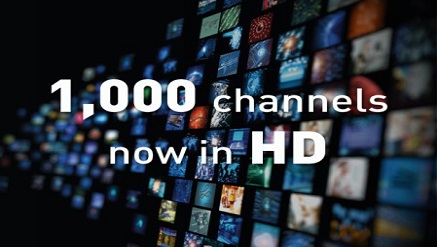
High Definition TV continues to gain ground across the broadcast satellites operated by Eutelsat Communications with the 240 HD channels launched in 2016 equalling the total number launched during the previous two years.
The symbolic landmark of 1,000 channels was crossed this month with the launch at Eutelsat’s HOTBIRD neighbourhood of CGTN HD, the news and current affairs channel of China’s CCTV media organisation, marking its first foray into HDTV in Europe.
Eutelsat’s key video neighbourhoods all saw HD growth in 2016, with three distinguished for exclusive content and market leadership.
Accelerating HD growth at the HOTBIRD neighbourhood
The upwards curve of HD take-up was particularly strong at Eutelsat’s flagship HOTBIRD position where HD channels increased by 25% to 250, now accounting for almost one in four channels in the HOTBIRD line-up. This dynamic is driven by three key trends:
Progressive HD adoption by public broadcasters including RAI that has transitioned nine channels to HD and CCTV that launched three channels;
New premium pay-TV content in flagship platforms including Sky Italia, Polsat, nc+ and Nova and
A wave of new free-to-air channels that include Euronews HD and Al Jazeera English
Eutelsat 7/8° West position sets the trend in Middle East, North Africa and features exclusive HD channels
With almost 150 HD channels (up 40% in one year), of which 100 are exclusive, the 7/8° West position hosted by Eutelsat and Nilesat satellites leads the transition to HD in the Middle East and North Africa.
Free-to-air channels in HD now outnumber pay, with strong brands launched exclusively at this neighbourhood including five channels launched by Kuwait TV and Echourouk News HD, the 24/7 Algerian news channel.
Eutelsat 36° East neighbourhood hits new high spot in Russia and Africa
Eutelsat satellites at 36° East that serve Russian and African markets clocked 14 additional HD channels over the last 12 months, rising to 114 HD channels.
Russia’s leading NTV+ and Tricolor platforms each broadcast around 40 channels, to which can be added 32 HD channels broadcast to homes in Siberia from 56° East.
In Africa, MultiChoice Africa and Zap are in the vanguard of HD, broadcasting 16 and 17 channels respectively and underscoring the trend towards higher resolution in Africa’s TV market.
Michel Azibert, Commercial and Development Director at Eutelsat, said:“2016 marked a tipping point for High Definition TV across our portfolio of video neighbourhoods, culminating in a new landmarkof 1,000 channels, many of which are exclusive to Eutelsat. We are fully equipped to accommodate this accelerating pace and to work closely with broadcasters as they transition to an enhanced viewing experience.”
Established in 1977, Eutelsat Communications is one of the world’s leading and most experienced operators of communications satellites.
The company provides capacity on 39 satellites to clients that include broadcasters and broadcasting associations, pay-TV operators, video, data and Internet service providers, enterprises and government agencies.
Eutelsat’s satellites provide ubiquitous coverage of Europe, the Middle East, Africa, Asia-Pacific and the Americas, enabling video, data, broadband and government communications to be established irrespective of a user’s location.


The Court of Appeal in Abuja has dismissed an appeal filed by the National Broadcasting Commission (NBC) challenging a Federal High Court judgment that restrained the commission from imposing fines on broadcast stations.

Delivering judgment, Justice Jane Esienanwan Inyang held that the appeal was fundamentally defective and therefore incompetent.
The appeal stemmed from a Jan. 17, 2024 judgment delivered by Justice Rita Ofili-Ajumogobia of the Federal High Court, Abuja, which barred the NBC from enforcing N5 million fines imposed on several broadcast stations in 2022.
The sanctions had been issued over allegations that the stations aired documentaries on banditry and insecurity considered by the commission to be capable of undermining national security.
The affected broadcasters included Multichoice Nigeria Limited, owners of DStv, TelCom Satellite Limited, Trust TV Network Limited and NTA StarTimes Limited.
The suit was instituted by Media Rights Agenda (MRA), which challenged the legality of the fines imposed by the commission.
In her ruling, Justice Inyang pointed to a discrepancy in the appeal documents, noting that the respondent before the Federal High Court was listed as the “National Broadcasting Commission,” while the notice of appeal identified the appellant as the “Nigerian Broadcasting Commission.”
According to the court, the inconsistency was substantial enough to deprive it of the jurisdiction required to entertain the appeal.
“The notice of appeal is the foundation of an appeal and a condition precedent to the exercise of appellate jurisdiction by this court,” the judge held.
Consequently, the appeal was struck out without consideration of the substantive issues raised by the commission.
The ruling represents another setback for the NBC in its efforts to defend its authority to sanction broadcast organisations through administrative fines.
In April 2026, the Court of Appeal similarly dismissed a separate appeal by the commission against another judgment that restricted its powers to impose fines on broadcasters.
Earlier, in May 2023, the Federal High Court in Abuja ruled that the NBC lacked the judicial authority to impose penalties on media organisations without recourse to the courts.
The controversy over the commission’s sanctioning powers dates back to March 2019 when the NBC imposed N500,000 fines on 45 broadcast stations for alleged violations of the Nigerian Broadcasting Code during the general elections.
At the time, the then Director-General of the commission, Is’haq Kawu, said the sanctions were imposed for ethical breaches and violations of broadcasting regulations.
Legal analysts say the latest judgment reinforces previous court decisions limiting the commission’s authority to impose fines on broadcasters without judicial intervention.

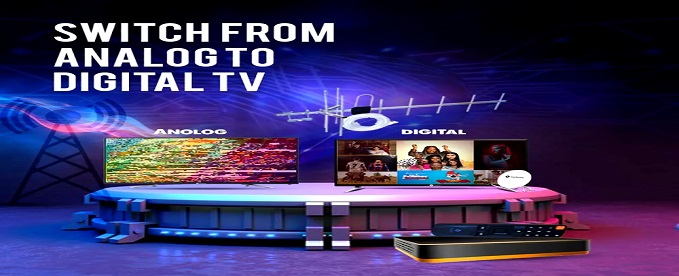
Nigeria has launched FreeTV, a broadcasting platform, designed to provide households across the country with free access to digital broadcasting, improved picture quality, and a wide range of local and international content without subscription fees.

The announcement was made in a post on the official X handle of the Presidency, describing the initiative as part of President Bola Ahmed Tinubu’s Renewed Hope Agenda, which prioritises inclusion, expanded access to opportunities, job creation, support for local enterprise and the use of technology to improve daily life for citizens.
According to the statement, FreeTV forms part of Nigeria’s Digital Switch-Over (DSO) programme and is intended to ensure that no Nigerian is excluded as the country transitions fully from analogue to digital broadcasting.
The platform will offer access to more than 100 national, regional and state-owned channels, covering news, sports, films, music, children’s programming, educational content, as well as dedicated Yoruba, Hausa and Igbo language channels.
The Presidency noted that the service will be accessible through satellite, terrestrial transmission and a dedicated FreeTV mobile application, enabling coverage for users in urban centres, rural communities and previously underserved areas that were not fully captured in earlier DSO pilot phases.
It also clarified that Nigerians will not need to purchase new television sets to access the service. Existing televisions can work with compatible DVB-T2 or DVB-S2 decoders, while users with already compatible free-to-air devices may not require additional equipment.
Speaking ahead of the launch, Charles Ebuebu, director-general, National Broadcasting Commission (NBC), said the initiative reflects the administration’s broader digital inclusion strategy.
“FreeTV speaks directly to President Bola Ahmed Tinubu’s vision of Renewed Hope towards expanding access, creating opportunity and ensuring that every Nigerian, regardless of location or income, can benefit from the digital economy. With FreeTV, families across Nigeria can enjoy quality digital television without a monthly subscription, while our local content producers, technicians and young creatives gain new platforms and new jobs,” he said.
The statement added that the platform will also strengthen Nigeria’s creative and broadcast industry through regional production hubs in Lagos, Abuja, Port Harcourt, Enugu, Kano and Benin, creating employment opportunities for content creators, editors, camera operators, sound engineers and other media professionals.
The Presidency further disclosed that the final analogue switch-off remains scheduled for December 31, 2028, urging Nigerians to begin preparations by confirming decoder compatibility and downloading the FreeTV mobile application ahead of rollout.

Stakeholders in Nigeria’s broadcasting industry have endorsed a hybrid digital broadcasting model that combines Digital Terrestrial Television (DTT), Direct-to-Home (DTH) satellite services, and digital application-based platforms for the country’s Digital Switch Over (DSO) programme,

The resolution was reached at a high-level stakeholder meeting convened by the National Broadcasting Commission (NBC) under the supervision of the Federal Ministry of Information and National Orientation at NICON Luxury Hotel, Abuja.
The meeting, chaired by Alhaji Mohammed Idris, minister of Information and National Orientation, brought together regulators, broadcasters, signal distributors, set-top box manufacturers, content producers, satellite operators, and industry associations to chart a sustainable path for Nigeria’s long-delayed digital migration project.
Addressing stakeholders during the closed-door engagement session, the minister described the meeting as a collaborative effort aimed at finding practical solutions to challenges facing the DSO project.
“This engagement is a family discussion aimed at finding practical solutions to ensure the success of the Digital Switch Over project. Government has no hidden agenda, and all decisions will be guided by national interest, stakeholder inclusion, and the long-term sustainability of the broadcasting industry,” he said.
The minister acknowledged concerns raised by industry players regarding stakeholder consultation and participation in previous phases of the project, noting that while broader engagement should ideally have commenced earlier, there remained an opportunity to build consensus and move forward together.
“While there may be differing views on implementation approaches, there is broad agreement that Nigeria must complete its digital migration journey. We must work collectively to achieve this national objective,” he stated.
Mr Charles Ebuebu, director general, NBC, described the stakeholder meeting as “iconic”, noting that it marked a turning point in Nigeria’s efforts to complete the digital migration.
He said the country had spent over a decade on the DSO journey, missing several deadlines, but expressed optimism that a clear implementation plan was now being developed.
Ebuebu said the commission, in collaboration with stakeholders, is working toward a sustainable model that ensures return on investment for industry players while delivering value to the nation.
He said that the outcome of the consultation process would produce a unified framework for implementation and communication going forward.
Mrs Jane Nkechi Egerton-Idehen, managing director, Nigerian Communications Satellite (NIGCOMSAT), said the DSO initiative forms part of broader federal interventions aimed at building a sustainable broadcasting ecosystem.
She explained that government investments had supported satellite coverage, national call centres, and regional production studios across the country.
According to her, the objective is to address gaps in content distribution and ensure that Nigerian broadcasting reflects the country’s linguistic and cultural diversity.
“We are not departing from the original plan. We are innovating on how it is implemented,” she said.
She also highlighted efforts to expand access to production facilities across geopolitical zones to support content creators and reduce dependence on major urban centres.
The meeting attracted 128 participants, including the Director-General of the NBC; Permanent Secretary of the Federal Ministry of Information and National Orientation, Dr. BRM Ukire; Director-General of the Nigerian Television Authority (NTA), Abdulhamid Dambos; Director-General of the Advertising Regulatory Council of Nigeria (ARCON), Dr Olalekan Fadolapo; Chairman of the Broadcasting Organisations of Nigeria (BON), Chief Tony Akiotu; Managing Director of NIGCOMSAT Ltd, Mrs Jane Nkechi Egerton-Idehen; and representatives of licensed broadcasters and other industry stakeholders.
During deliberations, stakeholders agreed that the DSO project remains both necessary and desirable for Nigeria, emphasising that the transition should prioritise national interest, industry sustainability, local content development, local manufacturing, and job creation.
Among the key resolutions reached was the affirmation that Digital Terrestrial Television (DTT) remains a critical component of the DSO framework and should not be discontinued. Participants also agreed on the need to reconstitute the DigiTeam implementation platform to provide a structured mechanism for consultation, collaboration, and industry participation.
Stakeholders further called for stronger engagement between regulators and industry players, with an agreement that stakeholder meetings would be held at least quarterly to ensure continuous alignment on implementation strategies.
The meeting also welcomed ongoing efforts by the NBC and ARCON to develop a sustainable business model aimed at improving audience measurement systems, strengthening advertising revenue generation, and enhancing the long-term viability of broadcasting organisations.
In addition, stakeholders were assured by NIGCOMSAT of the reliability of satellite infrastructure supporting the DSO platform.
The company disclosed that backup arrangements with alternative satellite operators were already in place to guarantee uninterrupted service and eliminate the need for subscriber dish realignment.
As part of the agreed next steps, the Federal Government, through the Ministry of Information and National Orientation, will reconstitute the DigiTeam stakeholder platform, while the NBC will continue consultations with set-top box manufacturers and other industry stakeholders to address concerns relating to existing investments and future participation in the digital broadcasting ecosystem.
The stakeholders expressed confidence that the renewed collaborative approach would accelerate Nigeria’s digital migration, improve broadcasting services, expand audience reach, attract investment, create jobs, and deliver greater value to Nigerian consumers.

FG Bans Use of Gmail, Other Personal Emails for Civil Service Operations

Indwelt Studios Seeks Increased Awareness @ World Sickle Cell Day

Standard Bank Targets $15.4b SME Growth in Nigeria, Others with Trade Expansion Drive

Payaza Launches AI-powered Storefront Platform to Drive Cross-border Commerce

NAICOM’s 18 Months Management Spill @ African Alliance Ends

CBN Extends PoS Geo-Fencing Enforcement Deadline to August 2026

FG Targets Alleged N3tn Capital Flight, Opens Airtime Credit Market to Nigerian Fintechs

London Strengthens Global Investment Ties with Africa @ First Ever London-Africa Business Summit

NCC Drafts New Rules for Virtual Mobile Operators

Japan, UNESCO Boost Digital Learning in 15 CoEs with Donation of ICT Equipment




 E-Financial3 days ago
FG Issues Transition Guidelines for Tax Acts 2025

 E-Financial3 days ago
How Fraudsters Stole N134Bn from Banks, Customers in 6 Years – CBN

 Telecom3 days ago
Telecom Regulator, NCC, Digital Encode, AfriGoPay Support eBusinesslife Girls In ICT Campaign

 Telecom3 days ago
Mobile Technologies Boost Africa’s Economy by $240B in 2025, Commences a New Phase of Digital Transformation

 General News3 days ago
Police Uncovers N7.7Bn Telecom Data Fraud Syndicate, Recovers Assets Worth Millions

 Telecom2 days ago
TikTok, ICC Gather Nigeria’s Entrepreneurs to Drive Small Business Growth and Digital Transformation
 E-Business2 days ago
Payaza Launches AI-powered Storefront Platform to Drive Cross-border Commerce

 Telecom2 days ago
How a New NITDA-TikTok Partnership Could Transform Thousands of Nigerian Businesses