

News
FG Sacks NTDC Boss

Federal government has removed Mrs. Mariel Rae-Omoh, acting director-general of the Nigerian Tourism Development Corporation (NTDC) and appointed Dr. Paul Adalikwu as the new acting DG pending the appointment of a new helmsmen.
Also, 15 senior officials, who were arbitrarily promoted in defiance of civil service rules, were demoted.
The measures were in line with the restructuring of the corporation, which has been involved in crisis in the past few months.
Following the receipt of a petition, Lai Mohammed, minister of Information and Culture asked a committee to look into the crisis of confidence in NTDC.
A top source said: “Based on the findings of the committee, the NTDC Acting Director-General, Mrs. Mariel Rae-Omoh, was directed to revert to her former status. Dr. Paul Adalikwu was appointed as the new Acting DG pending either his confirmation or appointment of a substantive holder by President Muhammadu Buhari.”
Adalikwu is the third Acting D-G after the removal of the immediate past Director General of the Nigeria Tourism Development Corporation (NTDC), Mrs. Sally Mbanefo.
Mrs. Mbanefo was removed on November 27, 2016 through a letter by the Secretary to the Government of the Federation, Babachir David Lawal.
Boniface Ebuka was appointed as Acting DG but replaced barely a month in office.
The source added: “Also, the promotion of 15 senior staff has been reversed by the Office of the Head of the Civil Service of the Federation because their elevation was not in line with the civil service rules.
“These actions are just the first in the series of overhaul of the NTDC. The corporation is always involved in one crisis or the other. But the Minister of Information and Culture will address the challenges in the agency.”
Besides arbitrary promotion of workers, some of the problems in NTDC include recruitment of about 50 personnel without due process, certificate scandal, curious spending of over N600 million in the last two years, disappearance of N38.3 million financial assistance from some banks and conflict between the management of the corporation and the Amalgamated Union of Public Corporations, Civil Service Technical and Recreational Service (AUPCTRE).
Others are alleged mismanagement of N12 million for the launch of “Fascinating Nigeria”, blowing of N81.7 million on empowerment programme in 2013 and N38.5million in 2014.
Others listed include alleged misuse of N52,014, 821 released to NTDC as capital budget from March to July 2014, the whereabouts of N342, 654,807 overhead budget from February-September 2014, curious withdrawal of N35million after SURE-P had organised and sponsored Tour Guide Training Programme and alleged spending of N14,720,000 on Notting Hill Carnival in 2013.


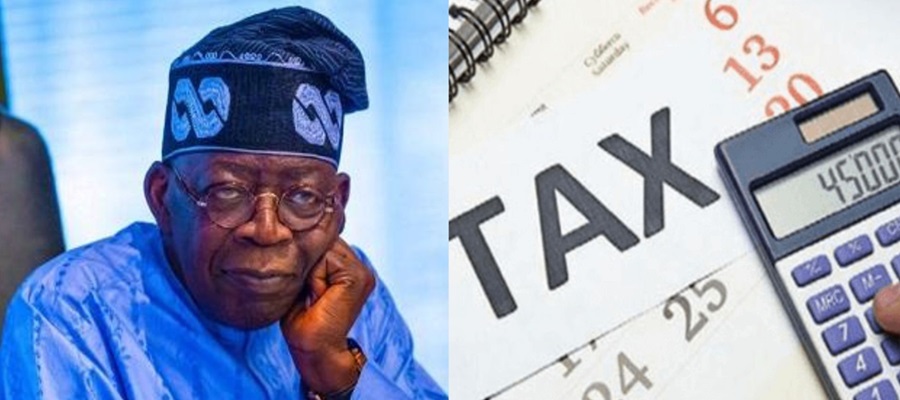
President Bola Tinubu on Thursday urged Nigerians to pay their taxes, because the revenue is critical for his administration’s Renewed Hope Agenda to fund public infrastructure like roads, hospitals, and amenities across the country.

President Bola Tinubu
He spoke during the commissioning of interchange at Arterial Road N16 – Ring Road III Intersection linking Jahi District to Gwarimpa District of the FCT.
The project was among those earmarked to celebrate his third year anniversary and he was represented at the commissioning by Godswill Akpabio, Senate President.
He said: “I’m very proud to stand here to commission this Arterial road interchange N16 linking Jahi district to Gwarimpa District of the FCT.
“This is not just a bridge and slip roads, this is freedom of movement and time returned to the people, this is renewed hope that you can even drive on. This intersection used to choke the entirety of Abuja, gridlock stretched from Maitama to Gishiri, from Jahi to Gwarimpa; hours lost, fuel wasted, business were lost but today that story ends.
“This interchange opens up critical districts of the FCT and connects them smoothly to the rest of the FCT. Workers will get home earlier, security will improve because criminals strive when security stands still.
“Ladies and gentlemen, infrastructure is the foundation of prosperity which is the cardinal principle of this administration. Roads are the arteries of a nation, when we connect districts we connect destines and that is the logic of the renewed hope agenda, build the roads unlock the economy and let Nigerians strive.
“The Jahi-Gwarimpa interchange is prove that Nigeria is not beyond redemption. With focus, discipline, and political will, Nigeria will deliver and we are delivering, the FCT is delivering.”
The president also charged Nigerians and residents of the FCT to pay their taxes.
According to Tinubu, it would allow his administration to provide more infrastructural projects.
“Also pay your taxes and levies so that government can do even more for you,” he added.
News
MTN ASAP Enugu Stakeholders’ Conference Rallies More Action Against Youth Drug Abuse, Unveils N33Bn ASAP Impact

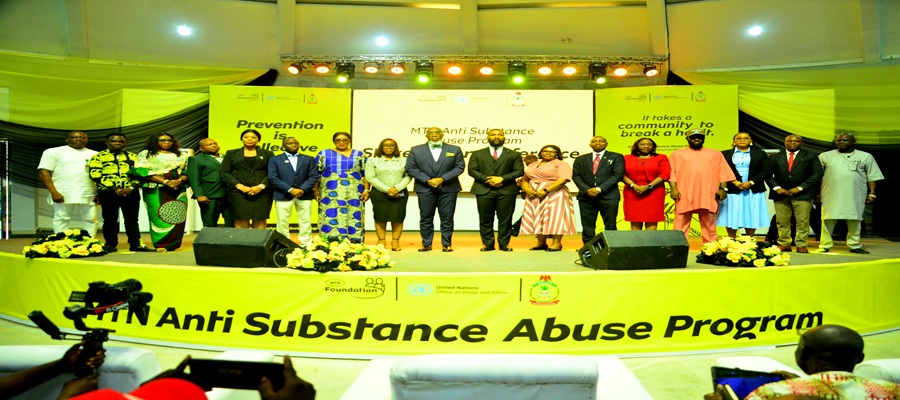
In a renewed push to confront the rising tide of drug abuse among Nigerian youth, stakeholders converged on Tuesday, June 9, 2026, at the ICC Dome, Enugu, for a State Stakeholders’ Engagement convened under the Anti-Substance Abuse Programme (ASAP).

The conference brought together government representatives, educators, development partners, and civil society actors to chart a unified path against substance abuse, with disclosures at the gathering revealing that an estimated ₦33 billion has so far been committed to developmental projects, programmes, and initiatives across the country, interventions that have impacted more than 33 million Nigerians directly and reached over 100 million through advocacy and awareness campaigns.
The Executive Governor of Enugu State, Barr. Peter Mbah, represented by the Secretary to the State Government, Prof. Chidiebere Onyia, commended the Foundation for its sustained investment in youth development and the fight against substance abuse.
He noted that the state’s transformation agenda is anchored in youth empowerment, education, healthcare, and human capital development – areas where the Foundation’s ₦33 billion commitment was already making a measurable difference.
“The MTN Foundation’s investment in youth development and the fight against substance abuse aligns directly with our administration’s transformational agenda. Initiatives like ASAP are exactly the kind of partnerships that move the needle on national development,” Prof. Onyia said.
He further urged other private sector players to emulate the Foundation’s example, stressing that the scale of Nigeria’s drug abuse demands sustained collaboration between government, the private sector, development partners, and civil society.
Addressing stakeholders, Odunayo Sanya, Executive Director of the MTN Foundation, said the Foundation, established in 2004 and fully funded by MTN Nigeria, was created to drive impact across health, capacity building, and economic empowerment, with deliberate focus on young people, who constitute the majority of Nigeria’s population.
She explained that the ASAP initiative, launched in 2019 in partnership with the National Drug Law Enforcement Agency (NDLEA) and the United Nations Office on Drugs and Crime (UNODC), was designed to reduce first-time drug use among young Nigerians through awareness campaigns and school-based interventions.
“We have reached over 50,000 students across the country and trained about 1,556 teachers as part of our efforts to create anti-drug ambassadors in schools and communities.”
“For us at the MTN Foundation, saving even one young person from substance abuse is a worthwhile achievement. The consequences go beyond the individual and affect families, communities, and the nation at large,” Odunayo said.
Looking ahead, she disclosed that the Foundation plans to reach more than 20,000 additional students in 2026 through expanded stakeholder engagements, school-based interventions, teacher training programmes, and community awareness campaigns.
She described substance abuse as a major threat to families, communities, and national development, stressing the urgent need for collective action to shield young people from addiction.
According to her, the Foundation’s mission is rooted not just in numbers, but in human outcomes – the lives, families, and futures it helps preserve.
The Executive Director, on her part, called on parents, educators, faith leaders, and community influencers to remain active partners in safeguarding the next generation from the dangers of substance abuse.
The intervention comes at a critical time. Fresh data presented at the conference indicate that over 360,000 youths in Enugu State – approximately 13.4% of the state’s young population – are actively involved in drug use.
Currently, the MTN Foundation (MTNF) and the United Nations Office on Drugs and Crime (UNODC) are conducting a comprehensive National Substance Use Survey to gather grassroots data on drug abuse, especially among secondary school students.
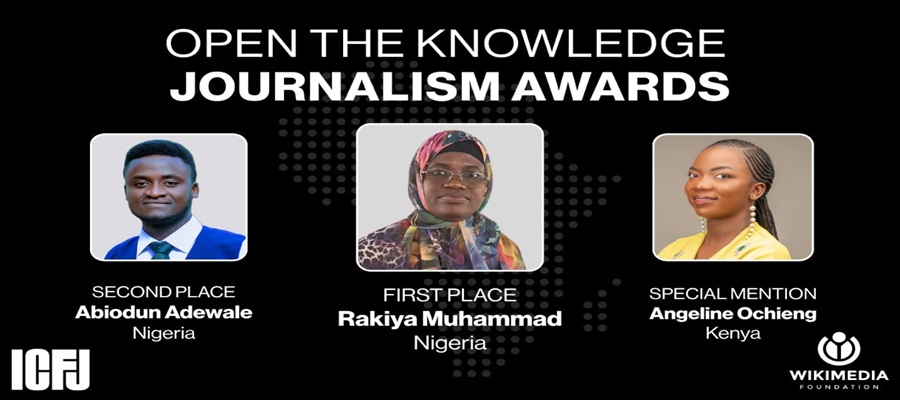
International Center for Journalists (ICFJ), in partnership with the Wikimedia Foundation, has named three African journalists as recipients of the 2026 Open the Knowledge Journalism Awards, with two Nigerians emerging as first and second-place winners.

The awards recognise journalists whose well-researched reporting helps expand knowledge about Africa and serves as reliable source material for volunteer editors who develop content on Wikipedia.
Wikipedia, the online encyclopedia operated by the Wikimedia Foundation, relies on evidence-based reporting to improve and expand its content, making journalists key contributors to building a more comprehensive global knowledge base.
Earlier this year, African journalists living on the continent were invited to nominate articles they had written that contribute to expanding knowledge about Africa, particularly in the areas of women and youth, as well as arts, culture, heritage and sports.
The organisers said a total of 320 entries were received from journalists across 40 African countries.
The first prize was awarded to Nigerian freelance journalist, Rakiya Muhammad, for her article, West Africa’s Borderless Women: Inside the Yoruba Sisterhood Linking Nigeria and Côte d’Ivoire, published in RM Times.
The story documents the decades-long migration of women from Ejigbo in Osun State to Côte d’Ivoire in search of economic opportunities.
According to the report, the women have become a dominant force in markets in Abidjan while strengthening cultural and economic ties between Nigeria and Côte d’Ivoire.
The article also revealed that as much as 80 per cent of Ejigbo’s economy is supported by remittances and investments from its people living in Côte d’Ivoire.
Reacting to the recognition, Muhammad said the award had renewed her commitment to telling authentic stories that place African women at the centre of development, leadership and social change.
“Receiving this honour renews my passion for telling stories that place African women at the heart of the narrative as active agents of development, leadership and social change.
“The recognition rekindles my commitment to documenting positive stories about Africa with authenticity and depth, while shedding light on the gendered dimensions often overlooked in broader discussions,” she said.
Second place went to another Nigerian journalist, Abiodun Adewale of The Punch, for his story, Breaking Boundaries: How Nigeria’s U-19 Women Are Rewriting Cricket History.
The article chronicles the preparation and performance of Nigeria’s Junior Female Yellow Greens at the 2025 International Youth Cricket World Cup.
The organisers noted that the story highlighted the growing popularity of cricket in Nigeria, a sport that receives relatively limited media attention compared to other sporting disciplines.
A special recognition award was presented to Kenyan journalist Angeline Ochieng of Nation Media Group for her article, The Converts: How Reformed Midwives Are Ending Maternal Deaths, published in the Daily Nation.
The story focuses on former traditional birth attendants in rural Kenya who abandoned the practice to advocate hospital deliveries, contributing to a reduction in maternal deaths and childbirth complications.
President of ICFJ, Sharon Moshavi, said journalism and Wikipedia have a mutually beneficial relationship.
According to her, Wikipedia’s volunteer editors rely on independent journalism to build a more complete knowledge resource, while journalists benefit from the encyclopedia’s global and multilingual reach.
“These awards recognise that relationship and the African journalists who are making our digital information ecosystems stronger,” she said.
Chief Communications Officer of the Wikimedia Foundation, Anusha Alikhan, said although Wikipedia is the largest encyclopedia ever created, it remains incomplete.
She said stories written by Africans about issues affecting the continent were essential to ensuring that the encyclopedia reflected diverse experiences and perspectives.
“We celebrate the three journalists who have received the Open the Knowledge Journalism Awards and thank them for making this kind of reporting possible,” she said.
President of Wikimedia Nigeria and member of this year’s awards selection committee, Olaniyan Ishola Oulushola, commended the quality of the winning entries.
He said each of the selected articles presented opportunities to improve information about Africa on Wikipedia.
“From documenting the history of women cross-border traders in West Africa to the achievements of female cricketers, each of these articles brings us a step closer to closing the knowledge gaps we are working on every day,” he said.
The organisers noted that Wikipedia marked its 25th anniversary in January 2026.
They said the platform is currently among the world’s 10 most-visited websites and remains the only one in that category operated by a non-profit organisation.
According to them, Wikipedia currently hosts more than 65 million articles in over 300 languages, created by nearly 250,000 volunteer editors worldwide, attracting close to 15 billion page views every month.
However, they observed that many topics relating to Africa remain underrepresented, with only about 3.7 per cent of articles on the English version of Wikipedia focusing on the continent.
They explained that the knowledge gap reflects broader shortcomings in global media coverage, noting that new information can only be added to Wikipedia when supported by citations from published and reliable sources.
The 2026 award recipients were selected by a committee comprising African civil society leaders, academics, representatives of ICFJ and the Wikimedia Foundation, as well as members of the Wikipedia volunteer community.

FCCPC Dismisses Report Claiming Approval of 48 New Loan Apps

ALTON Backs NCC’s Local Smartphone Manufacturing Drive to Widen Digital Access

LASTMA Launches 3367 Toll-Free Hotline for Emergency Response, Traffic Management

PalmPay Calls for Trust, Infrastructure and Responsible AI to Drive Payment Ecosystem Innovation

OADC Reaffirms Abundant Capacity in Data Centres in Nigeria to Host Financial Data

London Strengthens Global Investment Ties with Africa @ First Ever London-Africa Business Summit

Mobile Internet Gender Gap Widest in Africa – GSMA

FG Targets Alleged N3tn Capital Flight, Opens Airtime Credit Market to Nigerian Fintechs

Japan, UNESCO Boost Digital Learning in 15 CoEs with Donation of ICT Equipment

African Electric Vehicle Platform Raises $215m to Scale Electric Mobility in Nigeria, Others




 General News3 days ago
Tinubu appoints Adigwe to head National Health Technology, Data Analytics Office

 E-Financial3 days ago
Fidelity Bank Wins DBN Award for Expanding First-Time Credit Access to MSMEs

 E-Financial3 days ago
Paystack Unveils AI-powered Payments Tools

 E-Financial3 days ago
NRS, CITN Deepen Partnership to Strengthen Tax Awareness

 General News3 days ago
PalmPay Strengthens Data Protection Culture with Employee Privacy Workshop and Privacy Champions Programme

 E-Financial3 days ago
FCMB Turns Normal Banking into Rewards with New Mobile App Upgrade

 Telecom3 days ago
Meta, FG Unveil New Safety Measures to Protect Nigerian Teens Online

 E-Financial3 days ago
Despite Warnings, FG Draws Down $1.5Bn as First Tranche of FAB $5Bn Loan Deal