

News
Vodacom Partners eBusiness Life on Int’l Girls in ICT Celebration

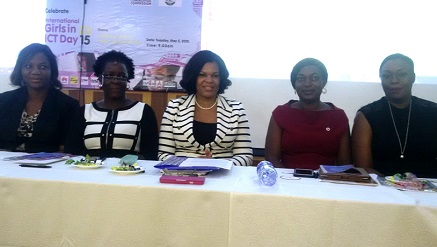
The 6th edition of the International Girls in ICT Day Celebration is gathering steam as key stakeholders in the industry have lined up to partner with eBusiness Life Limited in its bid to create awareness among young girls on the need to take up careers in Information and Communication Technology (ICT).
Vodacom Business Nigeria one of the major partners in the previous editions of the event has indicated their interest to be part of this year’s campaign.
This year’s event, scheduled to hold in Lagos on Tuesday May 23, 2017 at the Lagos Oriental Hotel, the 6th edition since eBusiness Life joined the annual campaign in 2012, is an initiative of the International Telecommunication Union (ITU) geared at sensitizing young girls and encouraging them to take up ICT as a career.
Vodacom’s support is borne out of the quest to ensure that the Nigerian girl child is presented with all options available in shaping her career and ensuring that the profession of ICT is demystified among females.
The company has consistently been engaged in the development of human capital and in contributing positively to the community in which it operates through various initiatives.

The partnership with eBusinesslife is one of such vehicles that will help the operator achieve its goals.
Speaking on the partnership, Anne Ihugba, marketing manager, Vodacom Business Nigeria, noted: “At Vodacom, one of our business principles is contributing to communities in which we operate; so this event is one of the many avenues, we believe, fulfils part of this obligation. Based on this, we are happy to inform you that we will partner with your organization this year as a sponsor”.
Last year, Vodacom also organised a workshop for school that won the competition at the event, as a means of furthering the cause of the partnership.
The workshop was a post-benefit activity for the students, which the company affirms will also be part of this year’s post event activity.
“We will invite the winning school to a one day Field Trip to Vodacom Business Nigeria to learn about new technologies and how they can contribute to the development of Nigeria using these technologies.”
According to the chief executive officer of Mrs. Ufuoma Emuophedaro, eBusiness Life Communication, the need to sensitise young girls is premised on the fact that the society has unconsciously relegated the female gender and delegated careers in technical fields, especially in ICT, to their male counterparts.
According to her, effort should be made to introduce young girls to career opportunities in technical fields in both the public and private sectors to help them have a wider range of options and contribute their quota in the industry and in the development of the economy.
She stated that the International Girls In ICT Day workshop and attending campaign will further open up opportunities for girls in ICT sector.
As part of the 2017 event, there will be students’ training on basic robotics and graphic design competition between female students from select secondary schools, roundtable discussions, interactive and motivational talk from renowned women ICT professionals, among others.
The event will also form a platform for participating companies to network and find areas of complementarity.
At the end of the event, it is expected that the young students should be able to introspect and pursue any desired career path in ICT, technical or not, without bias, or being gender conscious.
While the motive of this campaign is not to force these young and budding girls into a profession which is currently dominated by men, it tends to present and demystify the ICT profession, making them realize the need and intrigues of the profession.
It will also expose their hidden abilities to tackle the challenges that were faced and surmounted by some other women who are already excelling in and enjoying the profession.
International Girls’ Day is an initiative launched through ITU Resolution 70 with the idea of creating a global environment that will empower and encourage girls and young women to consider careers in the field of information and communication technologies.
e-Business Life Communication, publisher of the monthly Information and Communications Technology (ICT) Magazine, was incorporated to bringing better information that would link users and service providers as well as enable Nigeria take its pride of place among the comity of nations in the new global economy by furthering the cause of ICT.
The mission at e-Business Life is to inform and educate ICT users on trends and developments both locally and internationally; to provide a platform on which to build ICTs in Nigeria and also to be a voice for ICT consumers in the country. In addition we are poised to create a world where corporate Nigerians, businesses and Nigerian youths have a platform for growth and a better understanding of modern technologies and can easily deploy these technologies in developing their communities.



The World Bank Group has announced the 31-month debarments of United Aviation Services Limited (UNASEL), a transportation services company based in Nigeria, and Air Vice Marshal Alkali Mamu, its owner and president, “in connection with fraudulent practices under the Enhancing Niger Northeastern Connectivity Project,” according to a press release issued by the multilateral development bank.

The statement said that the project aims to enhance connectivity and road safety along the Zinder-Agadez Road section and improve access to basic socioeconomic infrastructure for selected communities in that road section.
However, according to the statement: “UNASEL and Mr. Mamu presented false experience documents in a prequalification application to qualify for a contract under the project. This was a fraudulent practice under the World Bank’s sanctions framework.”
“The debarments make UNASEL and Mr. Mamu ineligible to participate in projects and operations financed by Bank Group institutions. The debarments are part of two settlement agreements under which UNASEL and Mr. Mamu admit culpability for the underlying sanctionable practices,” it added.
The statement further said: “Per the Bank Group Sanctioning Guidelines, the settlement agreements provide for a reduced period of debarment in light of UNASEL and Mr. Mamu’s cooperation.
As a condition for release from sanction under the terms of the settlement agreements, UNASEL and Mr. Mamu commit to developing and implementing integrity compliance measures that reflect the relevant principles set out in the Bank Group Integrity Compliance Guidelines, and Mr. Mamu further agrees to complete corporate ethics training.
UNASEL and Mr. Mamu also commit to continue to fully cooperate with the Bank Group’s Integrity Vice Presidency.
“The debarments of UNA SEL and Mr. Mamu qualify for cross-debarment by other multilateral development banks under the Agreement for Mutual Enforcement of Debarment Decisions that was signed on April 9, 2010.”


Governor Peter Mbah of Enugu State, has approved the allocation of a parcel of land in Enugu, the state capital, for the establishment of a state-of-the-art Digital Fabrication Centre by the Industrial Training Fund.

Mbah announced this while receiving a delegation from the Industrial Training Fund on a courtesy visit to the Government House, Enugu.
The ITF disclosed this on Friday in a statement signed by its Director of Press and Public Relations, Thomas Ngor.
According to the statement, Mbah described the proposed project as timely and aligned with his administration’s vision of transforming Enugu into a leading destination for investment, innovation and technology-driven industrial development.
He noted that the future of economic prosperity lies in deliberate investments in human capital and emerging technologies, adding that the state has continued to create an enabling environment for innovation, enterprise and sustainable growth.
The governor explained that his administration has made technical education compulsory in the state’s basic education system, with emphasis on digital literacy, robotics and mechatronics to prepare learners for the future of work.
According to him, many traditional trades are now driven by digital technologies, making it imperative to equip young people with relevant technical competencies that will enable them to compete globally and contribute meaningfully to economic development.
Governor Mbah further disclosed that his administration has built smart schools across the state, equipped with robotics centres, mechatronics laboratories and other modern learning facilities, to prepare youths for the evolving global economy.
He noted that artificial intelligence is expected to contribute about $20tn to the global economy in the coming years.
He therefore stressed that the state must be intentional about upskilling its citizens, adding that the establishment of the ITF Digital Fabrication Centre will significantly strengthen the state’s drive to build a knowledge-based economy, foster innovation, promote local manufacturing and create employment opportunities for its growing youthful population.
Earlier, Afiz Ogun, the Director-General of the ITF, who led the delegation, said that upon his appointment by President Bola Tinubu, he was mandated to upskill Nigerian artisans to international standards.
He explained that the Fund subsequently repositioned its technical and vocational skills development efforts through strategic initiatives, including the Skill-Up Artisans Programme, which is designed to train, certify and license Nigerian artisans to international standards.
Ogun disclosed that the Fund had already established a Digital Fabrication Centre in Ikeja, Lagos, with the capacity to produce more than 400 different products. He therefore requested the allocation of land in Enugu State to establish a similar centre with the same production capacity.
According to him, the initiative is aimed at promoting industrialisation, reducing dependence on imports and preparing Nigerians for opportunities in the Fourth Industrial Revolution.
He also reaffirmed the Fund’s readiness to enter into public-private partnerships that will transform Nigeria’s artisanal ecosystem.
Ogun further noted that digital technologies, including artificial intelligence, robotics and computer-aided manufacturing, are rapidly transforming the global economy, making it imperative for Nigeria to deliberately invest in upskilling its workforce to remain globally competitive.
The ITF delegation was later conducted on a guided tour of facilities at one of the smart schools established by the Enugu State Government.

Glovo, a multi-category tech company, has announced its integration into the generative AI ecosystem with the launch of its “Shopping Assistant” for ChatGPT and Claude. Users can now discover retail products, compare prices, and seamlessly order any item using natural conversational language with the AI systems.

The Glovo experience inside such platforms introduces a conversational commerce model that shifts from a search-based web to an intent-based web. Rather than navigating traditional app menus and filters, users can express needs, such as asking for a “last-minute gift for a coffee lover under ₦50,000”, and the assistant handles semantic search, location validation, and product curation.
A Seamless, Concierge-Like Experience
Once both platforms have been connected through either ChatGPT or Claude apps, the user will be able to have a multi-turn dialogue where the assistant remembers context and constraints, such as budget caps. Users receive a visual carousel of up to five highly customised product options available at local stores. Each product displays its image, name, store details and ratings, and price. While the search and discovery experience takes place directly on the Generative AI platforms, selecting a product via the “view on Glovo” button takes the user to the Glovo mobile or web app, where the payment and final purchase are exclusively completed.
Strategic Focus on Retail and Growth
Glovo is prioritising the retail and grocery sectors for this initial launch, capturing the established habit of using AI for product research. Generative AI has driven a significant jump in retail traffic globally, so this first-mover advantage aims to meet customers where they are meeting Gen AI daily, and ensure it captures high-intent organic traffic as search behaviours evolve.
“We’re always looking for ways to meet our customers where they already are. Being available on Claude and ChatGPT means people can discover what Glovo has to offer as part of a natural conversation, with no friction. Glovo has always been about being the everyday app that provides choice and convenience, and this is another step in that direction”, said Shiro Theuri, Chief Technology Officer at Glovo.
How to look for products in the Glovo app through ChatGPT or Claude
- The user must sync ChatGPT or Claude with the Glovo app with the plug-in.
- Once synced, the user must type in @glovo followed by their request.
- The AI platform displays a carousel with 5 available options for the user.
- If the user wants to purchase any of the products or continue searching within the Glovo app, they must click “View on Glovo”, which will redirect the user to the Glovo app or website.
- After the order is confirmed, the store will prepare the item(s) and the courier will head up to the pick-up location. The user will receive the order in minutes.

World Bank Debars United Aviation Services, Owner over Fraudulent Activities

NITDA Introduces Cloud Certification Boost Data Localisation Compliance

Enugu State Approves Land for ITF’s Digital Fabrication Centre

BOI Opens N250Bn Bond Offer to Fund Businesses

Guinness Rewards Consumers with ₦17 Million in First Week of ‘Open for More’ Promo Draw

From Scarcity to Scale: What Africa Can Learn from India’s Agricultural Transformation

EFCC Busts NIS Visa Overstay Racket, Uncovers N700m in an Account

Fact-Check: Elon Musk’s “Tesla Pi Phone” is Internet Rumor

NBC Tasks Broadcasting Stations over 2028 DSO Global Deadline

Police Busts Syndicate Who Allegedly Stole N3Bn from Financial Institution



 General News2 days ago
Guinness Rewards Consumers with ₦17 Million in First Week of ‘Open for More’ Promo Draw

 News2 days ago
Glovo Pioneers AI Quick-Commerce

 News3 days ago
Fleeing Southeast Asia Scam Syndicates Find New Homes in Nigeria, Kenya- Report

 Telecom3 days ago
MTN Paid 600Bn in Taxes in H1 2026 – Kadri, MTN CFO

 Telecom3 days ago
NCC Asks Telcos to Make Budgetary Provisions for Cybersecurity

 News3 days ago
DSS Arraigns Eze for Allegedly Hacking, Stealing N800m from SunTrust Bank

 Telecom3 days ago
Glo Leads Internet Growth Figures in Nigeria for May

 News3 days ago
Liquid Intelligent Uses Light Beam Technology to Bridge Lagos Fibre Gaps