

E-Business
EFCC Requires Computer Forensic Experts in Anti-Graft Fight- Adeoye

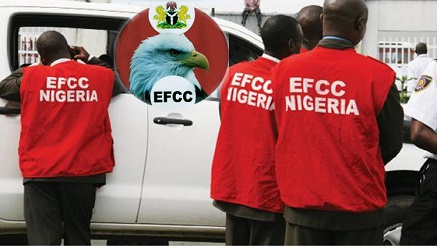
Concerned by Economic and Financial Crimes Commission (EFCC) inability to win high-profile cases in its anti-graft fight, Information technology expert, Mr. Aderogba Adeoye, has suggested the Agency needs services of competent and approved computer forensic practitioners to need the requirements of the law.
Computer forensics, according to experts, entails the application of investigation and analysis techniques to gather and preserve evidence from a particular computing device in a way that is suitable for presentation in a court of law.
Mr. Adeoye, who is the chairman, Education and Manpower Development Committee at the Nigeria Computer Society (NCS) told Nigeria CommunicationsWeek that for EFCC to win such cases they must not neglect laws guiding IT practices in the country, adding that synergy between the lawyers representing the Agency and IT industry cannot be over emphasized.
Recall, Former President Olusegun Obasanjo, recently expressed concern over the issue, believing the anti-graft Agency was losing cases due to its failure to engage what he called “staunch ogbologbo lawyer,” stressing that most of the lawyers employed were outsiders.
He made the remark in response to a charge by President Muhammadu Buhari to the anti-graft agency to stop losing cases.
Speaking in Abeokuta, the Ogun State capital, the former President said, “I was reading today (Sunday) when the President (Muhammadu Buhari) said the EFCC should stop losing cases. They lose cases for a number of reasons.
“One, they engage more of outside lawyers. I believe that they need staunch, `ogbologbo’ lawyers inside that will do the work. If I am a lawyer and I want the opponent to win a case, what I will file will be `wishy washy’. And if I file a `wishy washy’ case, the opponent will see the loophole and he will get out of it. I believe that it is important.
“Secondly, thorough investigation is very important. Now, investigation must be thorough, it must be proper and it must be really taken seriously. Third, our judges must be committed in fighting corruption. “They must be committed to fighting corruption. Because if the investigation is very sound and you have `ogbologbo’ lawyer to handle the case, if you have Salamigate, you know what the answer will be.
“So it is a line: investigation, prosecution and the judiciary. If there is weakness along this line, chances are that corruption cases will continue to be lost. “
But, Mr. Adeoye in a chat with Nigeria CommunicationsWeek, on the trending ‘Ikoyigate’, wondered why television clips of the EFCC entry into the place where the $43m was allegedly kept in an apartment at Osborne Towers Ikoyi, none of the operatives who broke open the doors wore gloves and apparently no effort was made to get fingerprints the dollar bills, the doors, the safes and every other item of furniture in that apartment that will certainly be full of fingerprints.
In his words, “EFCC will continue to lose high profile cases on technicalities. There are so many technicalities involved in cases, however, the Nigeria Computer Society (NCS) is advocating that in forensic evidences, the only organ, according to the laws of the Federal Republic of Nigeria (FRN), to verify and approve your Information Technology (IT) practices is the Computer Professional Registration Council Of Nigeria (CPN), no other Agency should encroach on this space.
“The definition of the profession and the practices depicts it as the use of computational machinery and the technique thereof. So, forensic evidences and the techniques, thereof to computer, the EFCC needs this in order not to lose cases. They have to be clear about the legal line on need for forensic inputs. Then, the government has to take the assignment given to CPN very serious.
“If they refuse to hide this advice, it will form part of the technical ground on which they will be losing cases. Forensic experts of London, U.S.A or Tokyo, or whatever, can only be legally permissible in our law court provided he/she is carrying an authorization by CPN. So, if CPN has not authorized such practitioner in our jurisdiction, and a legal guru notices that, all the funds invested to fly him in, lodge him in hotel and consulting fees, become wastes; because such evidence is not known to our legal system. Who is an IT person? The only IT person know to the law of Nigerian is the one recognized by CPN, otherwise, he/she cannot legally give forensic evidence.
“That is the problem with the legal practitioners. We must marry these two areas together, coupled with trainings and understanding. We have good computer/forensic training schools both private and public but ignorantly some people may not research deeply to see that there is a law recognizing IT practice in Nigeria for you to analyze fingerprints, voice, iris, and other biometrics features, decoding them; API management, cryptography.
He urged the Agency to rally IT experts for technological input to the anti-graft war in the country.


Corporate Affairs Commission (CAC) has raised alarm over a cybersecurity incident involving unauthorised access to parts of its information systems, urging users to update their login credentials as a precaution.

In a public notice yesterday, CAC, informed stakeholders that the Commission is currently reviewing the breach and assessing its potential impact.
According to the Commission, response protocols have been activated, with containment measures already in place to safeguard affected systems.
The CAC stated that it is working closely with the National Information Technology Development Agency (NITDA) and other relevant government agencies and partners to determine the scope of the incident and prevent further compromise.
“Appropriate containment measures have been implemented, and additional safeguards are in place,” the Commission stated, while advising users to monitor activities on the CAC portal and remain cautious of unsolicited communications that may arise from the breach.
Reports online claim that as many as 25 million documents may have been exfiltrated from the Commission’s infrastructure.
The claims, attributed to a cybercrime-tracking account, have not been independently verified, and the CAC has not confirmed the figures or identified any perpetrators.
The development has raised fresh concerns over the security of Nigeria’s corporate registry, particularly given the Commission’s increasing reliance on digital systems.
In February 2026, the CAC disclosed that it processes up to 10,000 business registration requests daily, following the deployment of artificial intelligence across its service delivery platforms.
It also handles an average of 5,000 customer enquiries each day via emails and call centres.
Despite the breach, the Commission reaffirmed its commitment to maintaining the integrity and security of its systems, assuring stakeholders that updates will be provided as investigations progress.


By Eric Gumbo, MBS
The writer is a partner at G&A Advocates LLP, a firm with two decades of experience advising on infrastructure, capital markets, and regulatory law across East Africa.

In 1961, John F. Kennedy promised the American people something that, by any rational measure, should have been impossible: that the United States would land a man on the moon and return him safely to earth before the decade was out.
The technology did not yet exist. What existed was the decision to begin. Six decades later, that decision is still paying forward.
On April 1, 2026, NASA’s Artemis II lifted off from Kennedy Space Center in Florida, carrying four astronauts on a ten-day journey around the moon, the first crewed lunar mission in over fifty years.
It was a test flight, one rung on a ladder that future missions will continue to climb. The greatest national achievements are rarely completed in a single term. They are built incrementally, passed from one generation to the next.
Kenya is at a similar moment today. Having spent two decades advising on infrastructure and regulatory frameworks across East Africa, I have seen the pattern repeat: the countries that succeed are not those with the most resources at the outset.
They are the ones that build the strongest legal and institutional foundations beneath their ambitions. The Sovereign Wealth Fund framework is Kenya beginning to do exactly that.
The Draft Sovereign Wealth Fund Bill proposes to gather revenues from oil, minerals, privatisations, and strategic investments into a single disciplined framework. Its three purposes are clear: stabilise revenues when commodity prices fall, finance critical infrastructure, and preserve savings for future generations.
With oil reserves estimated at 560 million barrels and resource revenues projected to exceed $1.5 billion annually, Kenya is not a poor country imagining wealth. It is a resourced country deciding whether to spend that wealth on today or invest it in tomorrow.
“A sovereign wealth fund is not a savings account. It is a declaration that we believe our country’s best days are ahead, and that we intend to fund them.”
The wise farmer does not eat all the seed after the harvest. She saves enough for the next planting season, because what she holds today is not just food. It is the future.
Those entrusted with managing this fund must act not as owners, but as caretakers. Nigeria’s oil revenues once promised national transformation; five decades later, the Niger Delta remains among the most underdeveloped regions on the continent, a cautionary tale written in squandered windfalls and weak institutions.
The Santiago Principles, which the draft bill aligns with, exist precisely to prevent that story from repeating. Auditors, parliament, civil society, and the media must be empowered to scrutinise this fund as its guardians, not as obstacles to it.
Kenya is not venturing into unknown territory. Botswana built the Pula Fund from diamond revenues and transformed one of Africa’s smallest economies into one of its most stable. Ghana’s Petroleum Funds have cushioned oil shocks and preserved a heritage for future generations.
Both succeeded not because they struck lucky, but because they built the governance architecture to protect what they found.
From M-Pesa to the 2010 Constitution, Kenya has a documented history of building things others eventually copy. The Sovereign Wealth Fund is the next chapter.
But it must be written with discipline and institutional independence that outlasts any single administration. Visible returns, better hospitals, more schools, jobs funded by resource revenues rather than donor goodwill, are what will determine whether ordinary Kenyans trust this fund across generations.
When we extract minerals from Kenyan soil today, coal from Kitui, rare earth elements from Kwale, gold from Migori, we are drawing down on a balance sheet that does not belong to us alone. It belongs to the Kenyan who will be born twenty years from now, who never had a vote in how we used her inheritance.
As Xi Jinping has put it: “We must act on the responsibility to our ancestors, our generation, and those yet to come.” The Sovereign Wealth Fund is how Kenya answers that responsibility. Not with words, but with architecture that lasts.
Nigeria needs some 480,000 data protection officers (DPOs), to develop, implement, and oversee organizations’ data privacy strategy to ensure compliance with laws like the GDPR and the Nigeria Data Protection Act (NDPA).

Currently only about 10,000 individuals possess the necessary certification highlighting a major skills gap, according Vincent Olatunji, national commissioner, Nigeria Data Protection Commission (NDPC).
Olatunji spoke on Monday at the second edition of its Data Protection Officers training and certification programme in Abuja and Lagos.
He said that the NDPC has domesticated the certification of data protection officers (DPOs) to address the widening gap in certified DPOs, despite steady growth in the number of trained professionals over the past three years.
“At the moment, we have about 10,000 certified DPOs to work in that space. The gap of about 480,000 still exists,” he said.
The shortfall reflects rising demand for data privacy skills as more businesses, government agencies and digital platforms process personal data under the Nigeria Data Protection Act.
Olatunji said the number of certified DPOs has grown from fewer than 1,000 three years ago to over 10,000, while more than 27,000 professionals now operate within Nigeria’s wider data protection ecosystem.
He said the commission is scaling up training and certification efforts to close the gap and position Nigeria as a leading source of data protection talent in Africa.
“Our goal is to make Nigeria the go-to country when it comes to sourcing qualified data protection officers in Africa,” he said, adding that the certification meets global standards.
The NDPC said expanding the talent pool could also support job creation and strengthen trust in Nigeria’s digital economy.
Tolu Fadipe, head of research and development at the commission, said data protection is becoming critical as the country moves deeper into digital systems and emerging technologies.
“As we move towards a digital economy, data becomes central and protecting that data is essential,” she said.
Adeola Sopade, lead trainer, said participants in the programme would be trained on global best practices, including data protection principles, compliance requirements and handling user data requests.
The training also includes practical exposure and internships with organisations to improve job readiness.
Participants said the programme offers opportunities for young Nigerians to build careers in technology and prepare for emerging fields such as artificial intelligence.

Lagos Targets Vulnerable Residents in Expanded Social Register

CBN Proposes 30-Member Mediation Panel for Loan Disputes

CAC Urges Users to Secure Accounts after Cyberattack Scare

NCDC Predicts Cholera Outbreak in 10 States as Heavy Rains Loom

NDIC Seeks Court Nods to Liquidate 89 Failed Banks

Kuda MFB Increases Kuda for Her Business Grants to ₦10 Million

Canal+ to Cut Jobs as Part Sweeping Restructuring

Nigeria tops global rankings for USDT, USDC ownership

NBC Boss Urges Content Ceators to Participate in DSO

NITDA Takes Over National Digital Architecture System




 E-Financial3 days ago
Fidelity Surges Ahead in Recapitalisation Drive with ₦564bn Capital

 General News2 days ago
Guinness Nigeria Surpasses ₦1Trillion Market Capitalisation, Signalling Strong Investor Confidence and Sustained Value Creation

 Telecom3 days ago
Qualcomm Unveils Startup Selection for Qualcomm Make in Africa 2026

 Telecom3 days ago
AfDB Grants Project BRIDGE $200m Facility for Nationwide Internet Access

 E-Financial3 days ago
Digital “Pickpockets” Compromise Over a Million Banking Accounts – Kaspersky

 Telecom3 days ago
Nigeria Seeks Stronger Digital Sovereignty, National Software Infrastructure

 E-Financial3 days ago
EFCC Warns Banks against Loans without Credible Collateral

 E-Business3 days ago
Nigeria Needs Some 480,000 Local DPOs for Data Protection