

General News
Maritime Challenges: Nigeria Requires Multidimensional Approach


Stakeholders in the maritime have called for inter-agency collaborations among other multidimensional approaches to tackle the multifaceted challenges facing the nation’s industry.
They believe that collaboration among the agencies of government, and incorporating the private sector in policy formation and implementations are imperative to rejig the sector.
The stakeholders wax worriedly at problems besetting the industry at Maritime Security seminar organised by the Maritime Reporters’ Congress of Nigeria (MARCON) in collaboration with the Nigerian Maritime Administration and Safety Agency (NIMASA).
Dr. Alex Okwuashi, Rector, Certified Institute of Shipping (CIS) Nigeria, said that maritime challenges in Nigeria require a multidimensional approach and could be viewed from five perspectives.
According to him, economic, political, environmental, technological and security inadequacies pose gravel dangers particularly as they affect the activities in the nation’s territorial waters.

They lead to problems such as “piracy and sea robbery, illegal bunkering and crude oil theft. Pipelines vandalisation and sabotage, maritime boundary dispute, illegal tapping of petroleum products and crude oil, oil rig capture, hostage taking and oil spillage,” Okwuashi said.
He also identified illegal trafficking in drugs and small arms through the nations’ sea gate, dumping of toxic wastes, illegal unreported and unregulated fishing, international terrorism, unstoppable polity and youth/militant violence as repercussions and inadequacies that must be tackled.
Dr. Boniface Aniebonam, founder, National Government Approved Freight Forwarders (NAGAFF) said that public private partnership the best global trend in handling maritime.
Aniebonam said: “These challenges have resulted in initiatives like the multilateral agreements between Nigeria and eight other maritime nations on search and rescue operations in 2009, with late President Umaru Musa Yar’Adua assuring the International Maritime Organisation (IMO) of his readiness to partner with it for a safe and effective policing of international waters”.


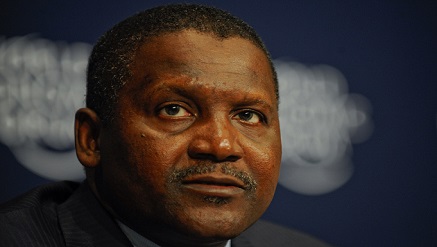
Aliko Dangote, Africa’s richest man, plans to dedicate one-third of his wealth to charity as part of his succession plan, Halima Dangote, his daughter, has revealed.

Aliko Dangote
Halima, a trustee of the Aliko Dangote Foundation, disclosed this in an interview with Bloomberg published on Tuesday, saying the billionaire had secured the support of his family to commit 33 per cent of his estate to philanthropy.
According to the Bloomberg Billionaires Index, Dangote’s net worth is estimated at $35.1 billion, meaning one-third of his current wealth would be worth about $11.7 billion if his fortune remains at that level.
Halima explained that her father views philanthropy as a key part of his legacy and has incorporated it into the family’s long-term succession plans.
She said Dangote had structured his estate to ensure that charitable giving continues across generations, particularly in areas such as healthcare and education.
“He sort of put all the structure in place whereby we focus a lot on health and education. He actually donated 25 per cent to the foundation. If you look at it, it is what we call in Sharia Code in Islam; it means he has donated 33 per cent of his whole inheritance to his foundation,” she said.
Halima added that Dangote believes giving back is central to the success of his businesses and the family’s values.
She said the billionaire asked her, her two sisters, and his mother to sign the agreement allowing 33 per cent of his inheritance to be dedicated to humanitarian causes.
The planned donation builds on Dangote’s longstanding philanthropic activities through the Aliko Dangote Foundation, which was established in 1994.
According to Halima, the foundation received an endowment of $1.25 billion about a decade ago and has since received an additional $700 million in funding.
She said about 70 per cent of the foundation’s spending goes to programmes in Nigeria, while 20 per cent supports projects across Africa, with the remaining funds directed to initiatives in other parts of the world.
The foundation’s interventions focus on healthcare, education, nutrition, and humanitarian support, including partnerships that contributed to the eradication of wild poliovirus in Africa.
Dangote’s planned charitable commitment adds to increasing global attention on billionaire philanthropy.
Although the proposed 33 per cent allocation is below the 50 per cent commitment associated with the Giving Pledge, it would rank among the largest philanthropic commitments announced by an African billionaire.
Earlier this year, Dangote was named among the world’s most influential philanthropists by TIME magazine’s inaugural TIME100 Philanthropy list, recognising the impact of the Aliko Dangote Foundation, which reportedly spends more than ₦50 billion annually on programmes across Africa.

Nigeria Atomic Energy Commission (NAEC), has said that there are plans for Nigeria to begin to generate electricity from nuclear sources.

Mr Anthony Godwin Ekedegwa, chief executive, NAEC stated this when he recently visited Mr Umar Yusuf Girei, acting managing director, National Inland Waterways Authority (NIWA),in Abuja.
He was at NIWA’s office to solicit the support of NIWA in achieving the numerous advantages of using nuclear energy technology in the country.
According to him, the partnership of critical stakeholders in Nigeria will position the country well in developing and maintaining its nuclear power plant.
The NAEC chief said Nigeria intends to begin the generation of electricity from nuclear sources instead of fossil-based power plants and hydro-based power plants, stressing that for Nigeria to develop, there is a need for the country to diversify its energy needs.
In his remarks, Mr Girei assured NAEC of his agency’s readiness to collaborate on the advancement of a nuclear power plant in Nigeria.
He promised the full support of NAEC for the success of a nuclear power plant in the country, saying that as the organisation saddled with the responsibility of regulating and developing Nigeria Inland Waterways, his entity is strategically positioned to play a critical role in the federal government’s quest for sustainable energy through the new technology.

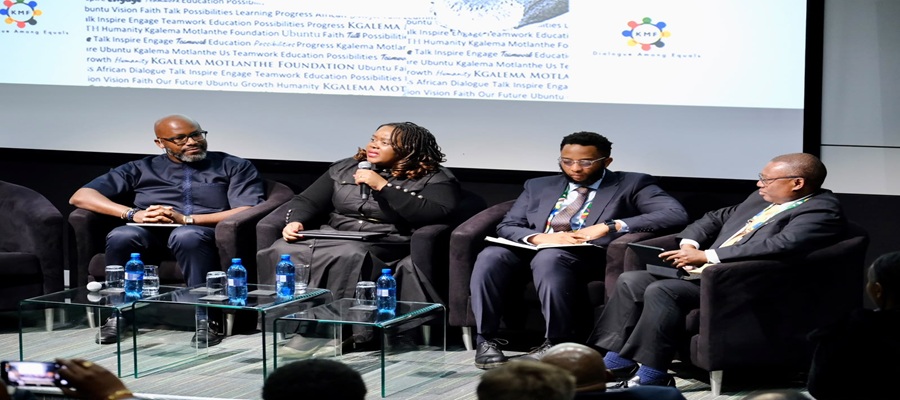
In a powerful call for continental solidarity, Ralph Mupita, Group CEO of MTN, has asserted that the future of the African continent depends on the dismantling of xenophobic barriers.

Speaking at the Kgalema Motlanthe Foundation (KMF) Winter Seminar, Mupita framed migration as a fundamental characteristic of the African identity, urging South Africa and other nations to embrace integration over exclusion.
He emphasised that the survival of African enterprises depends on a borderless approach to trade and talent. “The digital economy we’re fast moving to knows no borders.” Mupita declared, noting that the mindset of exclusion is an outdated relic that hinders the continent’s ability to compete globally.
He argued that for Africa to leverage the African Continental Free Trade Area (AfCFTA), the psychological barriers of xenophobia must be eradicated.
Providing a stark financial justification for this stance, Mupita highlighted MTN’s own operational reality as a blueprint for Pan-African success. “We earn about 80 to 82% of our earnings from outside South Africa,” he revealed, illustrating that the prosperity of South African-born entities is inextricably linked to their success across the rest of the continent. This figure underscores the interdependence of African economies and the danger of isolationist policies.
Mupita’s stance was strong advocating for unity: “The future of Africa will not be determined by the borders that separate us, but by the economic opportunities that connect us. Governments must set predictable policy and regulations.
Businesses will follow and allocate resources and capital. Together, we can build a continent where opportunity is more evenly shared and prosperity is more widely created.”
Analysts observing the seminar noted that Mupita’s remarks come at a critical juncture where economic volatility often fuels nationalist rhetoric. By tying the fight against xenophobia to the balance sheet, MTN is positioning Pan-Africanism beyond the moral imperative to its function as a business necessity. The CEO stressed that “Migration is part of who we are,” suggesting that the movement of people is the primary engine for the movement of capital and innovation.

Fact-Check: Elon Musk’s “Tesla Pi Phone” is Internet Rumor

Dangote Plans to Donate One-Third of Wealth to Charity as Legacy

NDPC Directs DCPMIs to Register with Agency or Face Legal Consequences

Malpass, Ex World Bank Chief Raises Alarm over Nigeria’s Secretive Debt Structures

How and Why Apps Deplete Data – ALTON

NRC, Ponzi Scheme Collapses Resulting Loss of Billions of Naira

EFCC Busts NIS Visa Overstay Racket, Uncovers N700m in an Account

Tokenization, Blockchain Technology will Transform Financial Institutions – IMF

From Scarcity to Scale: What Africa Can Learn from India’s Agricultural Transformation

BON Establishes Six Ad Hoc Committees to Modernize Broadcasting




 News3 days ago
See Verified 20 Countries Nigerian Passport Holders Can Travel Visa-Free

 E-Business3 days ago
Report Says Cybercriminals Deploy Malware to Hijack Crypto Wallets, Monitor Browsers Telegram

 Telecom3 days ago
NCC, REA Partner to Cut Telecom Costs with Renewable Energy

 Telecom3 days ago
Subscribers, Telcos Warn FCCPC over Airtime Lending Enforcement

 E-Business3 days ago
NPC Opens 131 Births, Deaths Registration Centres in Anambra

 General News3 days ago
AfDB, Nigeria Urge African Control of Mineral Resources

 News2 days ago
History as Lagos Becomes First Nigerian State to Launch Greenhouse Gas Registry

 E-Business2 days ago
UNN to Partner Firm on AI, Smart Mobility Innovation Centre