

E-Financial
Youtap Introduces QR code Payment Apps in Africa


Global provider of mobile payments and financial services software Youtap has introduced a QR code solution and smartphone apps for mobile money services in Africa and Asia.
As a global provider of contactless mobile payments and financial services software, Youtap enables mobile money and virtual wallet customers to tap and pay at any point of sale with any mobile device.
The New Zealand-headquartered company says it has introduced its range of white label quick response (QR) code solutions to banks and mobile money services in Africa.
The products and services include Youtap Pay platform, the Youtap Pay app and the Youtap merchant app. Providers and banks offering Youtap’s white label QR code solution take it to the market with their own name and brand.
Peter Meredith, EVP operations and marketing at Youtap, says the company has services installed in 18 countries across Africa, and is expanding its efforts to cover remaining countries through its telecoms operator and banking partnerships.
“Youtap already has extensive experience across Africa, and we understand the unique challenges to digital payments in these and other global growth markets. Our newly introduced solutions address needs specific to Africa.
“For example, we developed a payment solution called the Youtap X8, which is a low-cost, highly portable payment device that allows small merchants to accept near-field communication (NFC) mobile money payments without an expensive payment acceptance device.
“Our QR code solution is another step in that direction – making mobile money and digital payments accessible to anyone who wants to do business – whether it’s a street vendor, a motorcycle taxi driver, or a large retail chain,” he explains.
The new solution gives any merchant or small businesss owner with a smartphone the potential to download Youtap’s merchant app, self-register, and start accepting mobile money payments. Likewise, any subscriber with a smartphone can download the Youtap Pay app and start making payments.
Merchants that do not own a smartphone could be provided a printed QR code to accept mobile money, notes the company.
What distinguishes Youtap’s QR code payment solutions from similar payment platforms is that it integrates, serves and grows existing mobile money and banking services in the market, it says.
“This integration enables those services to rapidly extend into mass market payments, and provide QR code agent services including cash in, cash out, bill payments and airtime top-up. Other QR code payment methods, such as Alipay and WeChat, serve their own mobile wallets only and typically rely on bank transfers to fund those wallets,” explains Meredith.
Unlike other QR code services, Youtap’s solution also provides NFC-based payments for both banked and unbanked customers through low-cost mobile point-of-sale (POS) devices, merchant NFC smartphones, and integration with existing bank and merchant acquirer POS networks, he concludes.


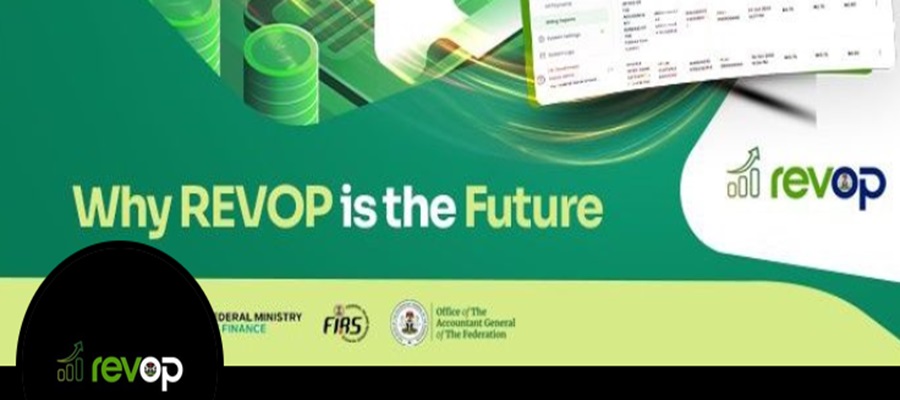
Federal government has engaged the banking community in Abuja to deepen understanding of the Revenue Optimisation Assurance Platform (RevOp), a digital platform designed to improve revenue generation, reduce leakages, and enhance public sector accountability.

Mr Taiwo Oyedele, minister of Finance and coordinating minister of the Economy, told RevOp sensitisation workshop, organised by the Office of the Accountant General of the Federation (OAGF) in Abuja, that RevOp is a centralised digital revenue collection and monitoring system designed to modernise Nigeria’s public finance operations.
Oyedele, who was represented by Mr Mohammed Danjuma, permanent secretary, Special Duties, explained that the platform provides a real-time, automated framework for all federal agencies to raise, collect, and report revenues, replacing fragmented manual processes that have plagued revenue collection for decades.
He reiterated the government’s commitment to improving revenue generation, enhancing transparency, strengthening accountability, and leveraging technology to drive efficiency across public financial management processes.
“RevOp serves as a critical tool in the government’s drive to improve revenue administration, reduce leakages, and enhance public sector accountability,” he said.
According to him, a lot had been achieved since the inception and implementation of the platform and that the successes were not without challenges.
He identified one of the challenges as limited awareness among some banking channels and frontline officers.
The minister explained that some banking channels are not familiar with RevOp, its purpose, or the procedural requirements to support transaction processes through the platform.
“These challenges, though operational in nature, have significant impacts on the overall customer experience and effectiveness of the initiative. This is precisely why we are here today,” he said.
The minister said that the success of RevOp would not be achieved by government alone, adding that it required strong collaboration among all stakeholders, particularly banking institutions, which serve as critical collection and service channels.
He explained that the banking institutions’ role extends beyond merely collecting or processing payments to ensuring that government revenue collection processes are efficient and user-friendly.
“Today’s sensitisation session has, therefore, been organised to deepen understanding of the platform, clarify operational processes, address concerns, and establish stronger communication channels between the project team and participating financial institutions.
“We expect that the knowledge shared here will cascade throughout your respective organisations, especially to branch operations, customer service personnel, and tellers who interact directly with customers on a daily basis,” he said.
Oyedele said the ministry remained committed to working closely with all stakeholders to address identified challenges and continuously improve the platform.
In his speech, Dr. Shamseldeen Ogunjimi, accountant general of the Federation, said that the revenue optimisation portal had been adopted as a strategic platform for improving revenue collection, reconciliation, monitoring, and reporting.
Ogunjimi, represented by Mr Felix Ogundairo, his chief of staff, explained that the platform was designed to provide greater visibility into government revenue, eliminate leakages, improve compliance, and support informed decision-making through real-time data and analytics.
“This engagement, therefore, provides an opportunity for us to discuss implementation challenges, align expectations, clarify operational issues, and strengthen the partnership necessary for the success of the application,” he said.
In his remarks, Mr. Idris Dosunmu, RevOp Product Manager, explained that the platform unifies billing, payment and settlement under one platform and that every transaction passes through secure connections, ensuring complete transparency from bill creation to treasury receipt.
“This will ensure that every penny due to the federal government goes into the coffers of the government,” Dosunmu said.

Federal government has started new efforts to improve tax collection in the Federal Capital Territory (FCT) and stop the problem of multiple taxation.

Mr. Taiwo Oyedele, minister of Finance and coordinating minister of the economy, disclosed this after a meeting with Nyesom Wike, minister, FCT, on Sunday.
According to Oyedele, the meeting focused on strengthening cooperation between the Ministry of Finance and the FCT Administration to support development projects in Abuja.
A major part of the discussion was how to improve tax administration in the territory.
He explained that the proposed tax harmonisation would create a more coordinated tax system, reduce the burden of multiple taxes on residents and businesses, and improve government revenue collection.
Oyedele said the plan is in line with the new tax reform law and is expected to help accelerate development across the FCT.
“The two ministers also reviewed plans to harmonise tax administration within the FCT,” he said.
He added that the initiative would eliminate multiple taxation while ensuring that government revenue is collected more efficiently.
The meeting also examined ways to strengthen collaboration on infrastructure projects across Abuja.
According to Oyedele, discussions centred on supporting the FCT’s ongoing infrastructure renewal programme.
He commended Wike’s approach to development, noting that the minister has focused on completing long-abandoned projects rather than starting new ones.
Oyedele said this strategy is helping to unlock economic and social benefits for residents by bringing stalled public projects back into use.
The proposed tax harmonisation is expected to make tax administration easier for individuals and businesses operating in the FCT while aligning Abuja’s revenue system with the provisions of the new tax reform law.


Standard Bank Group has identified Nigeria and four other markets as strategic growth hubs as it seeks to tap into $15.4 billion revenue opportunity driven by expanding small and medium-sized enterprises (SMEs) and rising intra-African trade.

The bank disclosed the plan through Bill Blackie, the Chief Executive Officer of its Business and Commercial Banking (Standard Bank Group) division, who outlined the lender’s growth strategy in an interview with Bloomberg.
Under the strategy, Standard Bank will deepen its presence in Nigeria, Ghana, Kenya, Uganda and Tanzania while consolidating its dominance in South Africa. The five markets account for about 85 per cent of the estimated revenue opportunity available to the group’s BCB operations.
The expansion forms part of the lender’s broader ambition to accelerate earnings growth through 2028, leveraging increasing demand for banking services among businesses across the continent.
According to Blackie, the BCB division has recorded robust growth over the past five years, supported by rising business activity and greater demand for financial services across Africa.
He said the division doubled both headline earnings and return on capital between 2020 and 2025, with return on capital increasing from 19 per cent to 38 per cent during the period.
Earnings from operations across the continent also expanded at an average annual rate of 30 per cent.
Building on this performance, the bank is targeting compound annual growth of between eight and nine per cent through 2028, although Blackie expressed confidence that growth could reach double-digit levels as the strategy gains traction.
A key pillar of Standard Bank’s growth strategy is expanding support for SMEs and mid-sized businesses, which account for most enterprises across Africa.
The bank is particularly positioning itself to benefit from opportunities created by the African Continental Free Trade Area (AfCFTA), which is expected to accelerate economic integration and cross-border commerce across the continent.
According to the International Trade Centre, nearly half of Africa’s small businesses export to other African countries, compared with only 14 per cent of larger firms, underscoring the critical role of SMEs in driving regional commerce.
The lender is also leveraging its extensive African footprint and strategic partnership with the Industrial and Commercial Bank of China (ICBC) to attract businesses seeking access to international markets, particularly China.

CredibleVoteNG Opens Free Access to all Polling Units in Nigeria after INEC Demanded N1.Bn for Register

NESREA Defends Plastic Waste Rules, Says Policy Targets Pollution

FG Engages Banks on RevOp, New Digital Platform for Revenue Generation

Kaspersky Discovered a Malware Campaign Targeting Steam Users Through Infected Wallpaper

Fiona Ahimie Launches LEADHER Mentorship Session to Inspire the Next Generation of Female Leaders

CBN Extends PoS Geo-Fencing Enforcement Deadline to August 2026

London Strengthens Global Investment Ties with Africa @ First Ever London-Africa Business Summit

FG Targets Alleged N3tn Capital Flight, Opens Airtime Credit Market to Nigerian Fintechs

Japan, UNESCO Boost Digital Learning in 15 CoEs with Donation of ICT Equipment

Mobile Internet Gender Gap Widest in Africa – GSMA




 Telecom1 day ago
MTN Nigeria Commits to Ethical Conduct with IFRS S1, S2 Compliance

 E-Financial1 day ago
FG Moves to End Double Taxation

 News1 day ago
BoI’s EIB-Backed Financing Accelerates Fidson’s Pharmaceutical Manufacturing Growth

 General News1 day ago
ALTON Backs CBN on Local Data Hosting Rule for Banks, Fintechs

 E-Business1 day ago
NDPC to Review Data Law to Address AI, Privacy Concerns

 Telecom1 day ago
NCC, CAC Move to Block Unapproved Ownership Changes in Telecom Sector

 E-Business1 day ago
Galaxy Backbone @ 20, Unveils New Identity

 General News1 day ago
Nwanegbo Bags Africa Digital Award in Applied Artificial Intelligence and Data Science