

News
Nigerian Life Expectancy Increases but Malaria, Others Take Deadly Toll


Annual Global Burden of Disease study – world’s largest scientific collaboration on population health — reveals new trends in illnesses, deaths, and risk factors leading to poor health
Life expectancy is growing in Nigeria but the country continues to struggle with communicable diseases like malaria and HIV, as well as neonatal ailments that kill infants.
Globally, countries have saved more lives over the past decade, especially among children under age 5, but persistent health problems, such as obesity, conflict, and mental illness, comprise a “triad of troubles,” and prevent people from living long, healthy lives, according to a new scientific study.
“Life expectancy in Nigeria is growing, but people in many other sub-Saharan African countries are living longer, healthier lives. Communicable diseases like malaria, diarrhea, lower respiratory diseases, and HIV are still taking the lives of far too many Nigerians. Infants and children are at particular risk from these diseases, and neonatal ailments like sepsis and encephalopathy kill thousands of infants. We have much more work to do,” said Jacob Olusanya, Director, Center for Healthy Start Initiative.
This year’s version of the annual Global Burden of Diseases Study (GBD) is composed of five peer-reviewed papers, and was published today in the international medical journal The Lancet. The five papers provide in-depth analyses of life expectancy and mortality, causes of death, overall disease burden, years lived with disability, and risk factors that lead to health loss.
The study’s main findings for Nigeria include: a Nigerian man born in 2016 can expect to live 63.7 years, an increase in life expectancy of 7 years over the past decade.
A woman has a life expectancy of 66.4 years, up 8.1 years from 2006.
But illness and injuries take away years of healthy life. A Nigerian male born in 2016 will live approximately 55.5 years in good health; a female only 57.2 years.
Nigeria has a higher life expectancy than South Africa, Niger, or Cameroon, but it lags behind Kenya, Rwanda, and Ethiopia.
The top five causes of premature death in Nigeria are malaria, diarrheal diseases, HIV, neonatal encephalopathy, and lower respiratory infection. The ailments that cause illness can be very different.
Iron-deficiency anemia, back pain, and migraines are the top causes of years that people live with disability in Nigeria.
Deaths of children under 5 are a persistent health challenge. For every 1,000 live births, 46.6 Nigerian children under the age of 5 die.
That far exceeds the global figure of 38.4, and the regional average of countries in western sub-Saharan Africa, which is 40.7.
Only a few countries in the region – such as Niger, Mali, and Chad – have higher rates of under-5 mortality.
Moreover, in 2016, for the first time in modern history, fewer than 5 million children under age 5 died in one year, as compared to 1990 when 11 million died.
Researchers attribute this global health landmark to improvements inincreased educational levels of mothers,rising per capita incomes, declining levels of fertility, increased vaccination programs, mass distribution of insecticide-treated bed nets, improved water and sanitation, and a wide array of other health programs funded by development funding for health.
“Death is a powerful motivator, both for individuals and for countries, to address diseases that have been killing us at high rates,” said Dr. Christopher Murray, director of the Institute for Health Metrics and Evaluation (IHME) at the University of Washington. “But, we’re been much less motivated to address issues leading to illnesses. A ‘triad of troubles’ – obesity, conflict, and mental illness, including substance use disorders – poses a stubborn and persistent barrier to active and vigorous lifestyles.”
Visualizations have been created from which to compare and contrast data among nations and by health conditions. See:https://vizhub.healthdata.org/gbd-compare/.
Despite progress on reducing deaths, this “triad of troubles” – obesity, conflict, and mental illness, including substance use disorders – is preventing further progress.
One of the most alarming risks in the GBD is excess body weight. The rate of illness related to people being too heavy is rising quickly, and the disease burden can be found in all sociodemographic levels.
High body mass index (BMI) is the fourth largest contributor to the loss of healthy life, after high blood pressure, smoking, and high blood sugar.
Deaths over the past decade due to conflict and terrorism more than doubled. Recent conflicts, such as those in Nigeria, Syria, Yemen, South Sudan, and Libya, are major public health threats, both in regard to casualties and because they lead to long-term physical and mental consequences.
Mental illness and substance use disorders continued to contribute substantially to the loss of healthy life in 2016, affecting all countries regardless of their socioeconomic status.
Treatment rates for mental and substance use disorders remain low. Even in high-income countries where treatment coverage has increased, the prevalence of the most common disorders has not changed.
The GBD is the largest and most comprehensive epidemiological effort to quantify health loss across places and over time. It draws on the work of over 2,500 collaborators from more than 130 countries and territories.
IHME coordinates the study. This year, more than 13 billion data points are included; the papers comprise a complete edition of The Lancet.



African electric vehicle (EV) platform Spiro has raised $215 million in equity to scale electric mobility and energy infrastructure across the continent.

The funding is backed by institutional investors including Impact Fund Denmark and Equitane.
The investment will accelerate the expansion of Spiro’s battery-swapping network, industrial footprint and next-generation EV infrastructure across high-growth African markets, the company said.
This funding comes as economies in the region aim to reduce dependence on imported fuel, reinforce energy and industrial sovereignty, and modernise urban transport systems.
Driven by rising fuel costs, growing demand for affordable transportation and increasing policy support for clean energy, investors are backing scalable EV platforms poised to support Africa’s next phase of urban and industrial growth.
Building on support from long-standing institutional partners such as the Fund for Export Development in Africa, Spiro’s latest equity round draws capital from Europe and Africa, reflecting growing global confidence in scalable infrastructure-led business models in emerging markets.
With operations in seven African countries—Kenya, Rwanda, Uganda, Togo, Benin, Nigeria and Cameroon—and plans to expand local production and enter new markets such as the Democratic Republic of Congo and Ethiopia, Spiro is building one of Africa’s most advanced EV and battery-swapping ecosystems.
Its industrial footprint includes manufacturing plants in Kenya, Rwanda and Uganda, alongside a battery recycling facility in Nigeria.
“This past year marked a defining strategic milestone for Spiro. Across seven active markets, our deployment of 100,000 electric vehicles and 2,500 smart-swap stations has made sustainable mobility an affordable, everyday reality,” said Gagan Gupta, founder of Spiro and chairman of Equitane.
“Spiro has become a major driver of local industrialisation, value creation and manufacturing across African markets, providing 6,000 sustainable direct and indirect jobs. Supported by our global investors, we are entering our next growth chapter to deliver clean, cost-effective energy and transport alternatives to millions of riders across the continent.”
Lars Bo Bertram, CEO of Impact Fund Denmark, added: “We are investing in Spiro and bringing Danish pension capital into one of Africa’s most promising growth markets because we see potential for significant commercial growth in Spiro and electric mobility across Africa, as well as measurable climate impact. That is exactly the type of investment we want to make.”

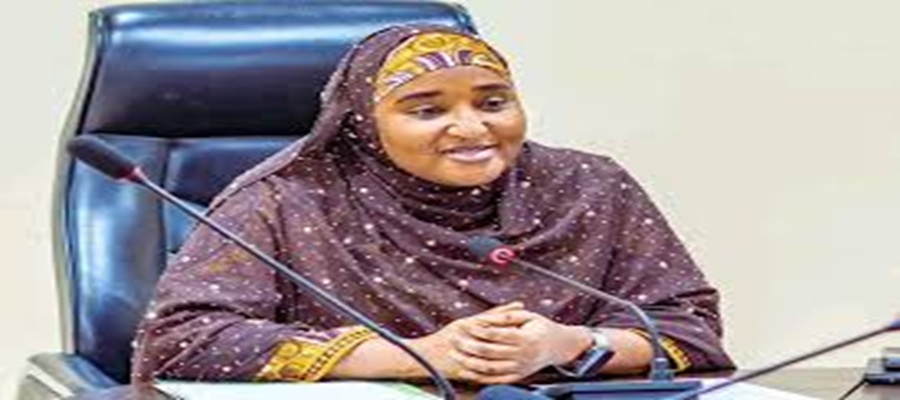
Federal Government on Tuesday distributed Information and Communication Technology (ICT) equipment and materials to 15 federal and state colleges of education across the country to strengthen teacher training, promote digital literacy and improve access to quality education.

Prof. Suwaiba Ahmad, Minister of State for Education
The intervention was facilitated through support from the Government of Japan and the United Nations Educational, Scientific and Cultural Organisation International Institute for Capacity Building in Africa (UNESCO-IICBA) under the project titled, “Capacity-building of Teachers to Promote Continuous and Inclusive Access to Safe and Quality Education for Girls in West Africa.”
Speaking at the handover ceremony in Abuja, the Minister of State for Education, Prof. Suwaiba Ahmad, described the initiative as a significant contribution to Nigeria’s education sector and one that aligns with the ministry’s strategic priorities.
Ahmad commended UNESCO-IICBA, the Government of Japan and the African Union for launching the regional project in March 2024, saying it reflected a shared commitment to strengthening teacher preparation systems and expanding educational opportunities, particularly for girls.
According to her, the project, which covers Burkina Faso, Cameroon, Chad, Mali, Mauritania and Nigeria, is in line with the Federal Ministry of Education’s priorities under the Renewed Hope Agenda.
“Teachers remain the backbone of every education system. No education reform can succeed without well-trained, motivated and digitally empowered teachers,” she said.
The minister said the ICT resources would enhance both pre-service and in-service teacher training through improved access to digital learning content, innovative teaching methods and learner-centred instructional approaches.
She noted that the beneficiary institutions include Federal College of Education, Kontagora; Federal College of Education, Zaria; Federal College of Education (Technical), Gombe; Federal College of Education, Yola; Federal College of Education (Technical), Asaba; Federal College of Education (Special), Oyo; Federal College of Education (Technical), Umunze; College of Education, Zuba; Isaac Jasper Boro College of Education; Enugu State College of Education (Technical); Sa’adatu Rimi College of Education, Kano; Adamu Augie College of Education, Argungu; Shehu Shagari College of Education, Sokoto; Adamawa State College of Education, Hong; and Taraba State College of Education, Zing.
According to Ahmad, the equipment distributed includes 65 laptop computers, 71 tablets, four desktop computers, five interactive smart boards, 19 all-in-one desktop computers, 14 projectors, 15 printers and 15 backup hard drives.
She added that the event also provided an opportunity to discuss school safety and infrastructure security.
“Safe schools are essential to achieving quality education, especially for girls and vulnerable learners.
“We must continue to ensure that our institutions remain secure, supportive and conducive spaces for teaching and learning,” she said.
The minister reiterated the government’s commitment to Technical and Vocational Education and Training (TVET), Science, Technology, Engineering and Mathematics (STEM), out-of-school children education, girl-child education, quality assurance and digital transformation.
She also disclosed plans for additional interventions aimed at empowering female teachers and school leaders through mobile-based learning platforms and integrating out-of-school children into formal education.
Speaking at the event, Mr Hitoshi Kozaki, Chargé d’Affaires of the Embassy of Japan, reaffirmed his country’s commitment to supporting educational development in Nigeria.
“I want to thank Nigeria for the collaboration that we have had for many years. I really hope that this project makes a difference for the future and the institutions represented here,” he said.
Kozaki said Japan’s partnership with African countries was built on mutual respect and local ownership, stressing that development efforts should be driven by the priorities of beneficiary nations.
He urged the institutions to make effective use of the ICT resources to improve teacher preparation and expand learning opportunities, especially for girls.
Also speaking, the Director of UNESCO-IICBA, Quentin Wodon, commended Nigeria’s commitment to education reforms and active participation in international education programmes.
Wodon stressed the importance of promoting female leadership in schools, noting that studies had shown positive learning outcomes when women occupied leadership positions.
“If there was one thing I would love Nigeria to do, it would be to see whether we could launch some kind of programme to encourage more women to become school leaders. It is really important,” he said.
He added that teachers in Nigeria remained critical to efforts aimed at improving learning outcomes and advancing inclusive education across Africa.
News
Easybuy Partners WAWUAfrica to Upskill 10 Million Youths and Women, Boosting Nigeria’s Economic and Financial Inclusion


Easybuy, Africa’s leading smartphone and electronics financing provider and a pioneer in the continent’s Buy Now, Pay Later (BNPL) sector, has partnered with WAWUAfrica to empower 10 million Nigerian youths and women with job-ready skills for sustainable wealth creation.

The initiative spans digital and IT literacy, financial and economic literacy, creative arts and design, business and entrepreneurship, as well as hospitality and tourism.
At a recent signing ceremony held in Lagos, Easybuy was named the Official Device Financing and Lifestyle Partner for the Federal Government of Nigeria–approved training initiative. The programme is being launched by the Office of the Vice President through the Presidential Committee on Economic and Financial Inclusion (PreCEFI), and implemented by WAWUAfrica, in collaboration with key development partners, including Ministry of Youth, Ministry of Women, Ministry of Humanitarian Affairs, Ministry of Trade & Investment, the World Bank, African Union Sixth Region Global, Economic Community of West African States (ECOWAS), and the National Information Technology Development Agency (NITDA), as well as leading professional bodies such as the Institute of Chartered Accountants of Nigeria (ICAN), Chartered Institute of Bankers of Nigeria (CIBN), Chartered Institute of Stockbrokers (CIS), National Institute of Credit Administration (NICA), Chartered Risk Management Institute of Nigeria (CRMI), and the Nigeria Institute of Innovation and Entrepreneurship (NIIE).
“Smartphones have become essential for participation in today’s economy, yet millions of Nigerians still face barriers to accessing the devices they need,” said Abdul-gaffar Adesoji, Sales Director of Easybuy Nigeria. “As the Official Device Financing and Lifestyle Partner for this great initiative, Easybuy will support WAWUAfrica’s mission by bridging the smart device access gap, empowering underserved communities across the country, and unlocking new economic opportunities for Nigerians through inclusive financing solutions.”
“To boost Nigeria’s economic and financial inclusion drive, as part of our contribution to the initiative, Easybuy will be providing up to 10,000 of sales jobs to trained participants among the 10 million beneficiaries of this worthwhile initiative. The Easybuy team is dedicated to bringing an easier life to millions of Nigerians across the country,” Adesoji further noted.
Commenting on the partnership, Emmanuel Lennox, Chief Executive Officer of WAWUAfrica, said: “This partnership reflects a deliberate shift from skills acquisition as an end, to skills deployment as a driver of national productivity.
By integrating Easybuy’s device financing into the WAWUAfrica training ecosystem, we are ensuring that participants are not just trained, but fully equipped to participate meaningfully in today’s digital economy. It is a model designed to remove structural barriers and accelerate inclusion at scale.”
“What we are building with Easybuy is a closed-loop system for economic transformation, one that connects skills training and real earning opportunities in a continuous cycle. Individuals are given access to acquire smartphones through Easybuy, receive free training, and participate in income-generating activities from sales roles.
The result is a scalable model that doesn’t just prepare people for jobs, it actively enables new businesses, and empowers a new generation of Nigerians to earn, grow, and contribute sustainably to the economy,” Lennox added.
Despite rising connectivity, a significant access gap persists, with over 120 million Nigerians still offline, largely due to the high cost of smartphones. As mobile devices remain the primary gateway to financial inclusion, education, and commerce, affordability continues to limit market penetration.
This gap represents a substantial growth opportunity for scalable financing models to accelerate digital inclusion while unlocking new consumer markets and economic value. This is where Easybuy comes in, offering affordable device financing plans, and empowering millions of users to purchase quality mobile phones through flexible repayments.
This partnership with WAWUAfrica is a strategic response to Nigeria’s economic and financial inclusion gap. Despite steady progress, nearly 29 million adult Nigerians are still excluded from the financial system and only about 52% of the population hold bank accounts.
With rural and low-income communities disproportionately affected, the gap offers an opportunity for scalable, mobile-driven financial solutions like the partnership between WAWUAfrica and Easybuy that can unlock access, drive adoption, and accelerate inclusive economic growth.

Legend Internet Reports Losses despite N505m Revenue

INEC Probes Claims of Leaked Voter Data from CVR System

Ecobank Raises Record $450m in Nature Bond for Africa’s Biodiversity

NPS, New Payment Infrastructure Hits 153,000 Transactions in Pilot Phase

African Electric Vehicle Platform Raises $215m to Scale Electric Mobility in Nigeria, Others

MTN, VDT, Zoracom, Digital Realty Back 2026 Girls in ICT Campaign

Vitel Wireless Partners Fintechs to Expand Access to Services

CPN Begins Crackdown on Quack IT Professionals, Vows Tougher Action against Cybercrime

Nigeria Hit by 24.1m Data Breaches – Surfshark

Kaspersky Identifies Ongoing Supply Chain Attack on Official Daemon Tools Website Distributing Backdoor Malware




 Telecom2 days ago
NCC Retains Rudman as Chair of Newly Inaugurated IPv6 Council Board, Urges Advancement of Nigeria’s Digital Migration

 E-Financial2 days ago
Nigerian Banks Under Pressure as Bad Loans Hit 8.03% After CBN Policy Shift

 E-Financial2 days ago
POS Operators Threaten to Suspend Services over Exclusivity Practice

 E-Financial2 days ago
Banks Lending to FG Hit N15.66 Trillion in One Year– CBN

 E-Business1 day ago
AI and IoT Hold the Key to Nigeria’s Economic Future – NCC

 Telecom2 days ago
MTN, ALTON, Upperlink, NiRA back 2026 Nigeria DigitalSENSE forum, awards

 Broadcasting1 day ago
Good News for DStv Users: Watch over 160 Channels Without Paying Extra

 General News2 days ago
AfDB Says 70 Percent of Nigerian Firms Depend on Generators