

General News
Global Internet Content Provider, Distribution Network Eye Nigeria


Internet content in Nigeria is set to receive a boost as one of the world biggest internet content providers and the biggest content distribution network have concluded arrangement to launch their services in the country, Nigeria CommunicationsWeek has learnt.
Government and stakeholders have been making efforts to encourage hosting of local content locally in order to make local internet traffic local.
Recently, National Information Technology Development Agency (NITDA) mandated MDAs to relocate their website servers to the country to boost local internet traffic.
Mohammed Rudman, managing director, Internet Exchange Point of Nigeria (IXPN), confirmed the coming into the country of this content provider and distribution network to Nigeria CommunicationsWeek but did not disclose their names as the agreement with them is yet to be consummated.
“I can assure you that by the end of this year these big internet content provider and distribution network will be in the country. When they are fully connected to the exchange point, it means that for Nigerians to access their content will be easier as they don’t need to go through international links again. More so, local content providers in the country can also be assisted by the content distribution network to distribute such content outside of the country and make money from it,” he said.
He also urged local content providers who host their servers outside of the country to consider relocating them in other to boost local traffic and save money for the country.
“Media and entertainment contents are generated locally but hosted abroad. The day we experience cut to undersea cable infrastructure that links Nigeria to the outside world, we won’t have access to those content which are generated here and are meant for Nigerians,” he added.
Corroborating Rudman, Mark Tinka, head of engineering at Seacom, a submarine cable operator with a network of submarine and terrestrial high-speed fibre-optic cable that serves the east and west coasts of Africa, said that 80 percent of Africa’s Internet traffic comes out of Europe.
“Most African Internet users tend to get much more of their content from Europe than from the US. Seacom’s dream is to one day be able to keep the majority of traffic on the continent, thereby reducing the amount of money Africa spends on transporting traffic to Europe. That will also help to drive more Internet penetration in Africa because of a reduction in cost of business,” Tinka noted.
Nigeria CommunicationsWeek investigations revealed that there has been an improvement in the hosting of contents in the country with the advent of commercial data centre operators such MainOne, Rack centre and Medallion that have also achieved Tier 111 certification.



The Gathering on 100 made its latest stop in Enugu over the weekend, bringing together hundreds of young Nigerians for a day of networking, fun, entertainment, and business opportunities.

The event, previously held in Lagos and Aba, arrived in Enugu as the city gains recognition as one of Nigeria’s emerging innovation and startup hubs. Recent ecosystem reports rank Enugu among the country’s leading startup cities. The South-East region now accounts for more than half of identified startups across the South-East and South-South, highlighting the region’s growing role in Nigeria’s entrepreneurial landscape.
A major highlight of the Enugu edition was the Pitch-a-thon competition, where three entrepreneurs received a combined ₦5 million in grants to support their business growth. More than 100 entrepreneurs applied for the competition, with 10 finalists selected to pitch before a panel of judges. At the end of the contest, Velas Global Nutrition Limited emerged as the overall winner, securing ₦2.5 million. Werxio, founded by Donatus Prince, received ₦1.5 million, while Whipcare Company was awarded ₦1 million.
These grants address a persistent funding challenge. According to the Small and Medium Enterprises Development Agency of Nigeria (SMEDAN), the country is home to over 39 million MSMEs, contributing nearly half of Nigeria’s Gross Domestic Product and accounting for about 84 per cent of employment nationwide. Despite this, access to finance remains a significant obstacle to business growth.
For Chizoba Osuji, founder of Velas Global Nutrition Limited, the funding facilitates the expansion of a business built on years of research. Her company processes indigenous crops into shelf-stable blends, supporting nutrition and local women smallholder farmers. “This is motivation to keep making Nigerians healthier through better food,” she remarked, noting the grant will fund semi-automated equipment to increase production capacity to 20 tonnes monthly.
She added that the ₦2.5 million grant would be used to acquire semi-automated equipment capable of increasing production capacity to about 20 tonnes monthly. Beyond increasing output, the expansion is expected to create additional opportunities for women smallholder farmers across the South-East who supply many of the raw materials used by the company.
Speaking on the initiative, MTN’s Regional General Manager (Sales), Callima Inino, represented by Peter Kajovo, said The Gathering on 100 was designed to provide young Nigerians with platforms to connect, learn, showcase their talents and access opportunities that can help them grow.“We want to encourage youths to live their best lives and have fuller expressions of themselves,” he said.
As the Enugu edition concludes, the energy of the South-East’s startup scene remains evident. The Gathering on 100 continues its nationwide tour, connecting more young founders with the visibility and support they need. Stay tuned to discover where the tour will land next as it moves to its next exciting location.

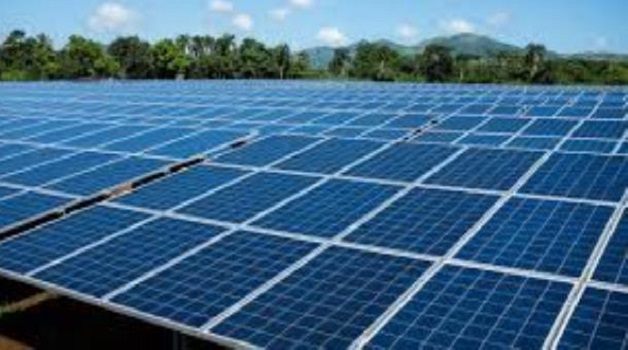
Renewable energy firm Daystar Power Group has expanded its installed solar capacity across West Africa through a partnership with Nestlé, bringing total deployments to 6,884 kilowatt-peak (kWp), or nearly 7 megawatts (MW), in what the company describes as one of the largest commercial and industrial solar partnerships in the region.

Four manufacturing facilities across Nestlé sites in Côte d’Ivoire, Ghana and Senegal are now operational, with installations located in Abidjan, Tema and Dakar.
Daystar Power has installed 3,447 kWp across two sites in Abidjan, Côte d’Ivoire. In Ghana, a 2,547 kWp system powers Nestlé’s Tema factory, while in Senegal an 890 kWp installation operates at the Dakar facility.
The company said each system is designed to deliver measurable environmental impact, including reduced greenhouse gas emissions and improved energy resilience.
The installations are tailored to local operational and grid conditions to ensure reliable renewable energy supply while supporting Nestlé’s net-zero ambitions and its commitment to reducing greenhouse gas emissions.
“Nearly 7MW across four Nestlé facilities is a number we are proud of, but what it represents matters more than the figure itself. It means that one of the world’s most demanding manufacturers has tested our model, trusted it, and come back. Our job now is to keep earning that across every market where industry needs energy it can count on,” said Yischai Beinisch, CEO of Daystar Power Group.
Samer Chedid, CEO of Nestlé Central and West Africa Region, said: “This investment reflects our commitment to building a business that not only grows but does so responsibly.
“By advancing solar energy projects in Ghana, Côte d’Ivoire and Senegal, we are embedding sustainability into our growth, reinforcing our role as a force for good, creating long-term value for communities and ensuring that our footprint actively contributes to a cleaner, more resilient future.”
The National Credit Guarantee Company Limited (NCGC) and the Small and Medium Enterprises Development Agency of Nigeria (SMEDAN) have signed a Memorandum of Understanding (MoU) aimed at supporting access to finance for Micro, Small and Medium Enterprises (MSMEs) in Nigeria.

The agreement was signed at the NCGC headquarters in Abuja and outlines areas of cooperation between the two agencies, including financial literacy programmes, credit guarantee support, capacity building, and other initiatives targeted at small businesses.
Speaking at the signing ceremony, NCGC Managing Director and Chief Executive Officer, Dr. Bonaventure Okhaimo, said the partnership is intended to provide a framework for expanding financing opportunities available to MSMEs.
According to him, small and medium-sized enterprises play a significant role in economic activity and employment generation across the country.
Okhaimo said NCGC has facilitated ₦32.78 billion in credit and provided over ₦13.09 billion in guarantees through its partnerships with financial institutions. He added that 1,478 businesses and entrepreneurs have benefited from the financing interventions, with 1,682 jobs reportedly created or sustained.
Also speaking, SMEDAN Director-General, Charles Odii, said the collaboration would enable the agency to connect more small businesses with available financing opportunities, particularly Nano and Micro enterprises that often face challenges accessing credit.
The two organisations said the partnership would also involve stakeholder engagement and awareness campaigns to provide information on financing options and the use of credit guarantees in lending arrangements.
The agreement forms part of ongoing efforts by both agencies to support enterprise development and improve access to financial services for small businesses across the country.
Observers say access to finance remains one of the major constraints facing Nigerian MSMEs, making collaborations between public institutions an important aspect of broader economic development initiatives.

Telcos Lose 30m Subscribers in 3-Year Slump due to NIN-SIM Link Policy

Pay Your taxes for Me to Do More – Tinubu

NCC Launches Maiden Women’s Leadership Mentorship Programme

FG Proposes Africa-Wide Payment Card without Conversion through US Dollar

Providus, Unity Bank Begin Integration Phase after Supreme Court Nod

CBN Extends PoS Geo-Fencing Enforcement Deadline to August 2026

London Strengthens Global Investment Ties with Africa @ First Ever London-Africa Business Summit

FG Targets Alleged N3tn Capital Flight, Opens Airtime Credit Market to Nigerian Fintechs

Mobile Internet Gender Gap Widest in Africa – GSMA

Japan, UNESCO Boost Digital Learning in 15 CoEs with Donation of ICT Equipment




 News2 days ago
PalmPay MD Seeks Stronger Infrastructure, Access to Finance for SMEs @ Digital Pay Expo 2026

 Telecom2 days ago
Africa Projected to Lead Global 5G Growth

 News2 days ago
Kaspersky Identifies over 336 Unique Domains Impersonating the Official World Cup Website

 Broadcasting2 days ago
Lebara Nigeria Launches Lebara Play, Africa’s First Telecom-Owned Micro-Drama Platform

 General News2 days ago
Paystack Launches Programme to Support Nigerian Businesses

 Telecom1 day ago
NITDA Unveils Bold Vision to Make Nigeria an AI Powerhouse

 E-Financial2 days ago
SEC Bars Dangote Refinery IPO Adverts

 E-Business1 day ago
Privacy Crisis May Undermine Local Hosting of Data by Banks, Fintechs