

General News
Conducive Ecosystem can Create Local Apps HoneyPot -Bolade


Bolade Oyekanmi is the digital and content analyst, Samsung West Africa who believes Nigerian local (application) developers can perform better with the availability of friendly ecosystem.
He also talks about the initiative by Samsung Mobile in collaboration with Co-Creation Hub (CC-Hub) Nigeria tagged Idea Challenge- a platform to meet, brain-storm, share ideas and collaborate on ways to solve social problems via mobile apps.
He spoke to peter ugwu.
What Is Idea Challenge All About?
Idea Challenge is one of Samsung’s ‘Built for Africa’ Projects. It came about with our collaboration with CC-Hub Nigeria. What we are doing basically is to stimulate apps development ideas in the minds of young apps developers in the country.
The ideas Challenge is not limited to apps developers, rather it is open to all who use mobile phones.
We expected them to submit ideas, regarding things they have been experiencing on their mobile phones and solutions on features they expect to see when using these devices.
What Are The Expectations?
The ideas where not generated just this day.
The submissions were done between August and September. So it took sometimes for us to collate them, about 96 which we trimmed down to 37.
And out of that 37 there was an in-house voting and rating to ensure transparency, particularly in choosing the best.
We looked at each idea and ones already existing were dropped because everybody knew they are already there.
The focus was to generate new ideas.
For those accepted, we will have discussion with the initiators, to see how we can link them up with someone that develops applications.
Not only that, we will seat them together to determine which one of them will move to the next stage.
However, in the spirit of Samsung, we expect every one of them to see the light of the day.
What we have noticed generally is the fact that application development is wild and only the people that have the passion and the tenacity to continue working on those ideas that actually see it mature. And that is one of the reasons we staged the Idea Challenge.
A lot of people have ideas, but they don’t have the technical know-how to bring these applications into fruition. Is not just about having an idea, the major process is developing the idea or giving it blood to live.
I can have over 20 ideas in my head, but having a befitting system or environment to seat down and code these ideas is a major challenge.
That is where CC-Hub comes in. CC-Hub I can say has the technical support the initiators should have to develop their ideas. And we need more of them.
Can They Leverage On Your In-House Developers?
Samsung as a company does not have in-house developers.
It is through this kind of collaboration; people available there due to the conducive environment, the attention you need and other logistics they need to develop, so we collaborate with them (CC-Hub) on content development and ideas.
I believe that they are major players in the eco-system. That is why we said, ideas generated in the public, bring them to CC-Hub, we collate them, hibernate them to ensure the bits are put together to form a whole.
Is This Platform Different From Samsung Academy?
Definitely; Samsung Academy is more of an engineering based Institute where you will learn to deal with the device; repair the hardware, but this platform is basically on the developing the operating system, which is the software aspect.
So, here (CC-Hub) you don’t need to be a graduate, no screwdriver, saw or anything, all I need is to have my laptop and code my idea into any language I want to.

What Does The Future Hold For Apps Developers In Nigeria?
From what I have seen and this being the first there is hope for the industry. We will also continue to have series of idea challenge competitions.
What I have seen is that we have people who really think about solving social needs applications.
At this very competition, we saw developers channeling their minds on how to help people with health impairments-diabetes, confirmation of NAFDAC registration, identification of fake drugs.
We also saw application to empower citizens to communicate with their representatives; all those are social problems that we need to tackle.
Over time, people are really going think deep and come up with ideas on solving social problems.
This being the first, we didn’t expect something gigantic, rather a response that will suppose what we thought. At the end of the day we were able to receive 96 ideas.
Processes Of Short Listing And How do Winners Emerge?
Ok, September 14, 2012 was the last date for submission o f applications and we conducted an online voting or rating and some criteria were stated from the beginning of the competition, eight of them.
But the major instruction was that it must not be an idea already existing; reason being that we do not want to have copyright issues; it must solve a current social need not personal need; must be marketable in the sense that whoever has it on his phone can add something like advertisement; it must enrich the pocket of the originator; and it must be scalable.
For instance, if it works for Chat 222 or java you must be able to scale it to higher Samsung devices; viability in terms of satisfactions to be derived by the users. After the date there was a panel that sat to determine if the criteria set we met.
Some were rejected because our criteria are different from others. We are more concerned on how the application runs; what are the behind the scenes of the application.
We want something we are sure of the security, and delivering outputs according to expectations.
How Can You Rate The Apps In Terms Of International Standards?
Speaking on international standards, we work towards beating whatever standard being set by any company, however, there are basic things like when you are developing an Android App it must been able to run across all ranges of the operating system.
It must be able to work across all the screen size and resolutions.
They are the major considerations to make if you are developing applications in Nigeria.
What Challenges Are You Having In Organizing This Kind Of Competition?
Challenges in developing local applications, I would say they are challenges; rather they are more or less an encouragement for people to develop these applications.
People look at Nigerian applications as not meeting international standards.
But in recent months, I found out that you have to use one or two of those applications to show that we can make it. I recommend to a lot of application developers in Nigeria to go to Samsung App stores and try the Nigeria versions we have there.
They are amazing. I can’t name any of them to avoid being biased, the thing is get a Samsung Android Device, and get to Samsung Apps Store and see what Nigerians are actually doing.
I would always say it, I am proud to be a Nigerian.
Those applications developed here can compete internationally, only that we need the some of the developers to understand the mechanics and hard works they need to put into application development.
How Viable Are The Apps Submitted?
I have seen some applications that I would just tell the developer to revisit the work; I have equally seen some that are work.
And when they come out, those people will definitely sell.
I see the upcoming local developers becoming the giants in the industry.
Today we have an application that sells at $2 million because it runs on the mobile device. That is where developers are channeling their interests now.
They are trying to tell us the benefits of our mobile devices. And out of those benefit come different applications that run across different procedures.
In the next few years I look toward to see more applications done by Nigerians, because they are needed to solve our social needs. And they run on the right operating systems.


Nigerian Upstream Petroleum Regulatory Commission (NUPRC) has cautioned the public against fake recruitment offers and fraudulent employment letters circulating in the agency’s name.

Eniola Akinkuotu, head of Media and Corporate Communications of the Commission, stated that NUPRC has received reports of counterfeit and AI-generated appointment letters bearing names not known to the regulator.
The Commission also said fraudsters have been extorting money from jobseekers by promising placement within the agency.
NUPRC has reported the incidents to law enforcement and said investigations are underway.
The regulator reiterated that there is no ongoing recruitment exercise and warned members of the public not to make any payments for supposed job offers.
“Whenever the Commission decides to recruit, the process will be conducted strictly in accordance with extant laws and government regulations,” the statement said.
The Commission urged jobseekers to verify any purported offer and to rely only on official NUPRC communications for recruitment information.
The warning follows growing concerns about the misuse of digital tools, including artificial intelligence, to fabricate apparently authentic documents that can deceive the public.
General News
Africa50 Secures Fresh Capital, Strategic Partnerships to Accelerate African Infrastructure


Africa50, the pan-African infrastructure investment platform, has secured new investment commitments and strategic partnerships with international investors and Tanzanian institutions aimed at mobilising capital for infrastructure development across Africa.

The agreements, announced at the 2026 Infra for Africa Forum in Dar es Salaam, include a US$20 million commitment from British International Investment (BII) to Africa50’s Infrastructure Acceleration Fund (IAF), as well as partnerships covering natural gas, electricity transmission and healthcare infrastructure in Tanzania.
The latest commitments bring the IAF’s total capital commitments to approximately US$330 million.
Under one of the major agreements, Africa50, Tanzania Petroleum Development Corporation (TPDC) and TAQA Arabia will develop the first phase of a small-scale liquefied natural gas (LNG) project designed to distribute domestic natural gas to industrial and transportation customers across Tanzania.
Africa50 is partnering with TAQA Arabia and TPDC on the project, providing project development, investment and financial structuring expertise to develop a bankable model that could be replicated in Tanzania and other markets.
Mussa M. Makame, Managing Director of TPDC, said the partnership demonstrated Tanzania’s commitment to leveraging its natural gas resources to support national development.
“As a gas supplier to this project, TPDC will work with the project partners to broaden domestic access to cleaner, reliable energy and create greater value for the Tanzanian economy,” he said.
Pakinam Kafafi, CEO of TAQA Arabia subsidiary Rosetta Energy Solutions, said the LNG project would convert Tanzania’s gas resources into reliable energy for industry, communities and transportation.
“This project will turn Tanzania’s abundant gas resources into reliable energy for industry, communities and transport, strengthening energy security and accelerating industrialization,” she said.
Africa50 also signed a Memorandum of Understanding (MoU) with Tanzania Electricity Supply Company (TANESCO) to collaborate on electricity transmission Public-Private Partnerships (PPPs).
The partnership is expected to facilitate Tanzania’s first Independent Power Transmission (IPT) project, drawing on Africa50’s experience with its IPT project in Kenya.
Engineer Timoth Mgaya, Acting Managing Director of TANESCO, said the partnership would help Tanzania attract private capital and strengthen its transmission infrastructure.
“Partnering with Africa50 provides Tanzania with strategic project-development and financing expertise as we unlock private capital for Africa’s transmission infrastructure,” he said.
The agreement, he added, would contribute to the development of East Africa’s power market while supporting industrialisation, economic integration and inclusive growth.
In the healthcare sector, Africa50 and Tanzania’s Ministry of Health signed an MoU to expand access to renal care and dialysis services for patients suffering from kidney diseases.
The partnership is expected to provide healthcare infrastructure, reliable medical equipment, experienced operators and long-term investment to strengthen the country’s capacity to deliver life-saving renal services.
Meanwhile, BII’s US$20 million investment in the IAF makes the UK development finance institution the latest Limited Partner in the fund.
BII and Africa50 also signed an MoU to deepen cooperation and identify opportunities for co-investment and further mobilisation of capital into African infrastructure.
The IAF invests in equity and quasi-equity opportunities across power, transport and logistics, water and sanitation, digital infrastructure and social infrastructure.
The fund leverages Africa50’s relationships with African governments, corporates and project developers to deploy capital into infrastructure projects with strong commercial and development potential.
Leslie Maasdorp, Chief Executive Officer of BII, said the partnership would help mobilise additional capital into sustainable infrastructure across Africa.
“Africa’s infrastructure needs are significant, but so are the opportunities,” Maasdorp said. “By combining our expertise, networks and capital, we can help unlock investment that drives growth, creates jobs and improves lives.”
Alain Ebobissé, Group CEO of Africa50, said the new partnerships reflected the organisation’s evolution from a project development institution into a major infrastructure investment platform.
“Africa50 was created to develop bankable projects, mobilize finance for investments in Africa’s infrastructure and accelerate delivery,” he said.
According to Ebobissé, the organisation is now positioned to scale up infrastructure investment by translating the vision of African leaders into commercially viable projects capable of attracting capital from both African and international investors.
The agreements were announced as Africa50 marked its 10th anniversary under the theme, “A Decade of Economic Impact: From Vision to Delivery.”

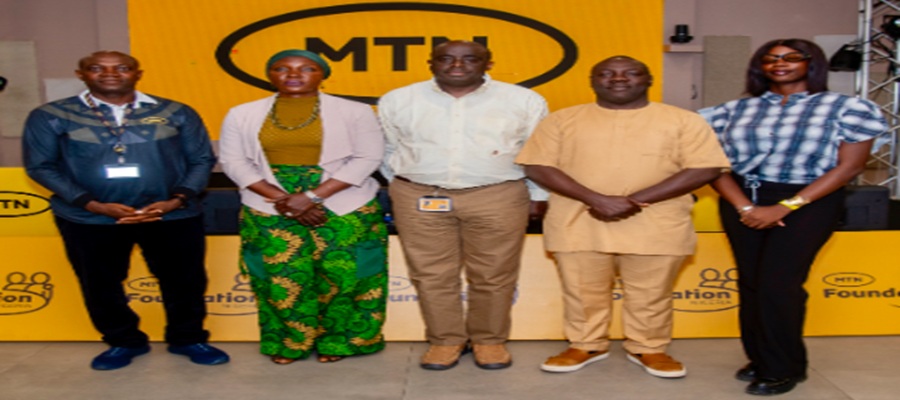
MTN Nigeria, leading technology company, recently hosted undergraduates from the University of Lagos (UNILAG) and Yaba College of Technology (YABATECH) for an immersive career engagement session, at the MTN Rooftop Plaza, Ikoyi, Lagos.

MTN
The event exposed students to career opportunities across cybersecurity, finance, internal audit and forensic investigations while providing practical insights into the skills required to succeed in today’s workplace.
The session was designed to bridge the gap between academia and industry by helping students better understand the diverse career paths available within the telecommunications and technology sector.
The engagement brought together students studying Economics, Banking and Finance, Cybersecurity and Accounting, providing an opportunity to interact directly with professionals from various business functions.
Through presentations and discussions, participants gained a deeper understanding of the competencies, experiences and continuous learning required to build successful careers in a rapidly evolving business environment.
The engagement comes at a time when technology-related roles, including cybersecurity specialists, are among the world’s fastest-growing occupations, according to the World Economic Forum’s Future of Jobs Report 2025.
During the visit, the students met with senior cybersecurity and forensic professionals who shared insights into their respective fields and discussed emerging trends shaping the future of work.
The sessions also highlighted the wide range of career opportunities available across different fields, demonstrating that success in the industry is not limited to any particular course of study.
Undergraduates were also introduced to the evolving nature of the audit profession, as data analytics, artificial intelligence and cybersecurity are becoming increasingly important areas of focus for internal auditors.
During a session on building a meaningful career in Internal Auditing, undergraduates were encouraged to approach their professional journeys with purpose, continuous learning and a commitment to personal growth.
The session emphasised that career success extends beyond securing employment and involves developing relevant skills, understanding one’s strengths and intentionally pursuing opportunities that align with personal values and long-term goals.
Speaking during the engagement, Chief Internal Audit and Forensic Services Officer, Ibe Kalu Etea, represented by the General Manager, Internal Audit and Forensics, Wasiu Ibrahim, encouraged the undergraduates to remain open to opportunities beyond their academic backgrounds and focus on developing transferable skills. “Students can take any career path they want to. You can upskill and transition into a different career, even if it is not what you studied in school.
“Do not let your course of study determine your career path. Focus on building relevant skills, staying curious and continuously learning because opportunities exist across many fields,” he said.
The Undergraduates also participated in an interactive question-and-answer session, where they sought guidance on career development, workplace expectations and professional growth.
The initiative reflects MTN Nigeria’s commitment to nurturing future talent by connecting young people with industry leaders and equipping them with the knowledge, exposure and confidence needed to navigate their career journeys.

NUPRC Warns of Counterfeit, AI-Generated Appointment Letters

KudiWave Asks for Clarification over N750m Transfer from PalmPay Account

NCC Reports over 5,000 Fibre Cuts in 6 Months

PalmPay Reinforces Commitment to Youth Empowerment on International Youth Day

ipNX Joins Calls for Innovation-Friendly Ecosystem and Stronger Local Opportunities at Regenesys AI Summit

EFCC Busts NIS Visa Overstay Racket, Uncovers N700m in an Account

Fact-Check: Elon Musk’s “Tesla Pi Phone” is Internet Rumor

NBC Tasks Broadcasting Stations over 2028 DSO Global Deadline

NBC Scraps Annual Digital Access Fee on DSO

Glo Sponsored African Voices to Feature Netflix’s “The Polygamist” Stars




 E-Business2 days ago
X Replaces Revenue Sharing wit New Creator Rewards Programme

 Telecom2 days ago
MTN Alerts Subscribers over Fake 25GB Anniversary MTN Data Giveaway

 E-Financial2 days ago
Interswitch, Temenos Commit to Advancing Nigeria’s Digital Banking Technology

 E-Financial2 days ago
FG Spent N3.1 Trillion on Domestic Debt Servicing in Q1- DMO

 General News2 days ago
Fake Agency: ICPC Indicts NITDA, Others over Inadequate Due Diligence

 General News2 days ago
UNESCO Taps Oguamanam,Nigerian Scholar to Advisory Body on Science, Tech Ethics

 General News2 days ago
Tax Reform Built on Taxing Prosperity, Not Poverty– Adedeji

 E-Business1 day ago
Microsoft to Unveil Next-generation AI Chip in September