

/home/kenneth/web/nigeriacommunicationsweek.com.ng/public_html/wp-content/themes/zox-news/parts/post-single.php on line 153
">
Warning: Undefined array key 0 in /home/kenneth/web/nigeriacommunicationsweek.com.ng/public_html/wp-content/themes/zox-news/parts/post-single.php on line 153
Warning: Attempt to read property "cat_name" on null in /home/kenneth/web/nigeriacommunicationsweek.com.ng/public_html/wp-content/themes/zox-news/parts/post-single.php on line 153
e-Business Will Drive the Industry in the Future-Ibekwe

Information and Communications Technology (ICT) development has constituted a restriction on one side to courier business but the same ICT is actually throwing up a major opportunity of the future for the industry. Mike Chukwuemeka Ibekwe, chief executive officer of Suvex Delivery Service and financial secretary, Association of Nigerian Courier Operators (Anco) disclosed this to Nigeria Communications Week in his office recently. Ibekwe says the real future of the industry in Nigeria is e-business which is already being practiced abroad where someone can stay in his bedroom and order what he wants from anywhere. In this process, Ibekwe says the shop doesn’t deliver these items but the courier. "That is the business of the future and that is what will determine or drive the industry in the future. That aspect of the market is grossly underdeveloped in Nigeria but time will come when the market in Nigeria will be e-driven", Ibekwe predicted.
To improve the services of the courier industry, Ibekwe says it will take the will power of the government to fast track action on the postal reform bill believing that once that bill is passed into law and the commission set up that the commission will then be able to define standard and ethics of the profession as well as measure operators and those that don’t measure up to those standards as he suggested, may be given a time frame either to measure up or fold up or join with some others. In addition, there is need for public enlightenment as Ibekwe expects that customers should also know what his or her rights are to courier service as well as recognize his responsibilities too.
Ibekwe emphasizes the need for training in the courier industry arguing that courier is a peculiar industry where there is no university or institution that offers courier as a course underlying the fact that the industry is vague to some extent. Therefore, to get the real quality and service according to Ibekwe, the industry has to come up with clear cut training programmes and packages, processes and procedures, standards and expectations which each organization will be involved in. Ibekwe says Suvex Delivey Service which provides domestic and international courier services, haulage, consultancy, in-house mail management has its own customized approach to doing business which the company does not compromise no matter what. He defines Suvex Courier as a company that observes honesty, integrity, character, relationship, value for money and respect for their customers as the core values of the organization especially this time around when there are a lot of sharp practices in the industry. "People don’t honour promises or honour their words but we go to any extent to keep our promise", Ibekwe said.
Ibekwe identifies the customer as the king and the reason for the existence of Suvex Delivery Service even as he says that it is a sacrilege for the organization to do anything against their clients and that the firm goes any mile to ensure customer satisfaction. Professional and efficient delivery of service within the budget of the customer is some of the selling points of the organization. Ibekwe believes it is one thing to deliver service and another for the service to fall within the budget of what the customer can afford.
He talks of Anco as a young organization that is still coming up compared to most of other trade groups. He says the biggest challenge in the organizations is trying to mobilize people who don’t believe in themselves not to talk of believing in an organization. Ibekwe says the truth of the matter is that the courier industry cannot get to its zenith without a proper organization and that that is what Anco is trying to do with the help and support of the Courier Regulatory Department (CRD). According to him, the association is looking forward particularly when the industry will be sanitized, when it will have a legal frame work that properly defines what should be and what shouldn’t. "You have an independent umpire there setting the standard and a professional organization that understands, believes and is willing to take all it has into the industry. We will then have a room to operate. That is the future we are looking at but right now Anco is using moral persuasion and every means possible to convince, mobilize, encourage and galvanize the multitude of people that are licensed to operate courier in the country," Ibekwe said.


Warning: Undefined array key 0 in /home/kenneth/web/nigeriacommunicationsweek.com.ng/public_html/wp-content/themes/zox-news/parts/post-single.php on line 493
Warning: Attempt to read property "cat_ID" on null in /home/kenneth/web/nigeriacommunicationsweek.com.ng/public_html/wp-content/themes/zox-news/parts/post-single.php on line 493

Justice Yellim Bogoro of the Federal High Court in Lagos has declared the N60 billion fine imposed by the Advertising Regulatory Council of Nigeria (ARCON) on Facebook Nigeria Operations Limited Illegal.

Justice Bogoro stated that ARCON regulator exceeded its legal authority and breached the company’s constitutional right to a fair hearing.
He, who made the declaration while delivering judgment in Suit marked, FHC/L/CS/2205/2024, declared ARCON’s Notice of Violation/Demand for Compliance dated 21 October 2024, unconstitutional, unlawful, null, and void, and barred the agency from taking further steps to enforce it.
The judge also held that ARCON lacked the statutory power to impose fines for alleged criminal violations under the Advertising Regulatory Council of Nigeria Act, 2022, without first obtaining a conviction from a court or other competent tribunal.
The dispute arose from ARCON’s claim that Facebook Nigeria displayed advertisements on Facebook and Instagram to Nigerian audiences without prior approval from the Advertising Standards Panel, contrary to provisions of the ARCON Act and the Nigerian Code of Advertising.
Following these alleged breaches, the regulator ordered the company to cease displaying the advertisements and imposed an N60 billion penalty.
Apparently dissatisfied with the development, Facebook Nigeria, through Mofesomo Tayo-Oyetibo (SAN), its lawyer, challenged the action, arguing that ARCON lacked the legal authority to determine criminal liability or impose punitive sanctions via an administrative notice without allowing the company to defend itself.
The company also argued that it does not own or operate Facebook or Instagram, claiming both platforms are owned and controlled by Meta Platforms Inc., a separate foreign entity.
But ARCON, represented by Akinlolu Kehinde (SAN), contended that Facebook Nigeria acts as Meta’s operation in Nigeria and should therefore be held responsible for regulatory violations related to advertisements on the platforms.
The regulator further argued that the notice was simply a compliance directive, allowing the company the option to comply, pay the specified violation fee, or face prosecution.
However, Justice Bogoro dismissed the regulator’s arguments.
The judge stated that Facebook Nigeria is a distinct legal entity from Meta Platforms Inc. and that ARCON failed to present credible evidence showing that the Nigerian company owns, operates, or controls Facebook or Instagram.
The court maintained that the argument that Facebook Nigeria represents Meta’s interests in Nigeria was insufficient to establish liability for the alleged advertising infractions.
Regarding fair hearing, the court ruled that ARCON violated Section 36 of the Constitution by accusing the company of misconduct and imposing a N60 billion fine without first hearing its defence.
Justice Bogoro also held that Section 57(4) of the ARCON Act explicitly requires the regulator to provide a fair hearing before imposing any penalty.
The court further found that the alleged violations were criminal because Section 34 of the ARCON Act designates the unlawful exposure of advertisements as an offence.
The judge also held that, since the Act stated that punishment can only be imposed “upon conviction,” ARCON had no authority to impose the N60 billion fine through an administrative process.
He insisted that, regardless of what ARCON called it, the demand was a fine that could only be imposed by a court following proper judicial procedures.
As a result, the court invalidated the Notice of Violation/Demand for Compliance.
It declared ARCON lacked authority to impose fines for breaches of Sections 34(3), 54, or other criminal provisions of the ARCON Act.
Justice Bogoro also issued a perpetual injunction preventing ARCON, its officers, agents, and associates from enforcing the October 21, 2024 notice against Facebook Nigeria.
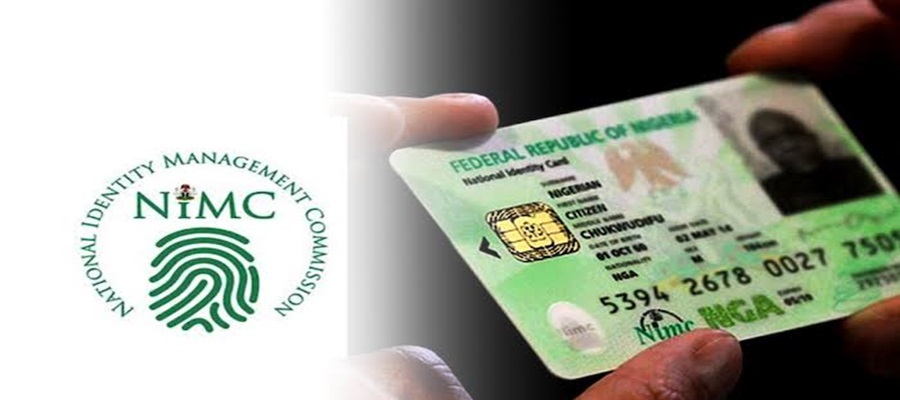
National Identity Management Commission (NIMC) has said thet more than 136 million Nigerians and legal residents have been enrolled in the National Identity Database (NIDB).

In a statement on Tuesday, Kayode Adegoke, head of corporate communications, NIMC, said Abisoye Coker-Odusote, chief executive officer (CEO) of the commission, announced the milestone during a courtesy visit to the ministry of budget and economic planning.
In April 2025, NIMC said over 117.36 million Nigerians had been enrolled as of February 28, 2025.
The visit was part of the commission’s ongoing stakeholder engagements with ministries, departments and agencies (MDAs) on the implementation of the NIMC Act 2026.
Presenting the new Act, Coker-Odusote said the legislation repeals and replaces the 2007 NIMC Act, modernising Nigeria’s digital identity ecosystem by positioning the national identification number (NIN) as the country’s foundational identity under the “one person, one identity” policy.
She said the law also establishes NIMC as the root certificate authority for the national digital infrastructure and introduces stronger data protection and cybersecurity measures, as well as digital credentials.
“The Federal Government remains committed to enrolling and issuing NINs to all Nigerians and legal residents within the shortest possible time,” Coker-Odusote said.
She added that NIMC is ready to collaborate with the ministry of budget and economic planning to leverage the NIN for economic planning and national development initiatives.
Speaking during the visit, Abubakar Atiku Bagudu, the minister of budget and economic planning, reaffirmed the federal government’s commitment to the implementation of the NIMC Act 2026.
Bagudu described the legislation as “a transformative milestone” that would strengthen Nigeria’s digital identity ecosystem and accelerate national planning and development.
He commended the NIMC director-general and the commission’s leadership for their efforts in securing the passage of the legislation, noting that it provides “a solid legal foundation for a trusted, secure, and inclusive national identity management system”.
The minister, however, said the true measure of the Act’s success would lie in its implementation and the benefits it delivers to Nigerians.
“The true measure of the Act’s success will lie in its effective implementation and the tangible benefits delivered to citizens,” he said.
Bagudu also called for stronger collaboration across the federal, state and local governments to build public confidence in the national identity system and eliminate the duplication of identity databases across government institutions.
He said the NIN should serve as Nigeria’s single, universally accepted identity standard, supporting efficient service delivery and good governance.
On June 26, President Bola Tinubu signed the NIMC Act 2026 into law, repealing the commission’s 2007 establishing Act.
At the time, Olubunmi Tunji-Ojo, minister of interior, said the legislation would strengthen Nigeria’s legal framework for digital identity management, cybersecurity and secure digital authentication, while reinforcing the NIN as the country’s foundational identity credential under the “one person, one identity” principle.
National Reading Culture (NRC), an online investment platform targeting Nigerians has collapsed, resulting in the loss of billions of Naira for investors.

The website unexpectedly shut down, blocking users from withdrawing their funds and locking in their investments.
Just like all other investment scams, victims were lured with promises of doubling their money in few weeks.
When National Reading Culture eventually crashed, the operators vanished with users’ funds, leaving investors devastated.
How the Platform WorkedTask-Based Earning:
According findings, National Reading Culture lured users with promises of making money by completing simple daily tasks like reading articles, clicking links, or inviting friends.
They also offered investment tiers to earn higher daily profits, where users had to deposit their own money into the platform.
Evidence showed the website previously operated as a Chinese job search platform before rebranding into an “earning” scheme.

Court Declares ARCON’s N60Bn Fine against Facebook Nigeria Illegal

NIN Enrollment Hits over 136m as New ID Law Takes Effect

NRC, Ponzi Scheme Collapses Resulting Loss of Billions of Naira

Plateau PCC Collects Nigerians’ Data without Privacy Policy – FIJ

FG Suspends New Internet Regulations to Prevent Overlapping Rules

Mobile Internet Gender Gap Widest in Africa – GSMA

NASENI Moves to Digitize CCB’s 5m Assets Declaration and Operations

Nigeria Launches FreeTV Nationwide

CANAL+ Partners Samsung to Pre-Load DStv Stream on New Samsung TVs In Nigeria, Other African Countries

UK, Nigeria Launch £15m Growth Programme to Accelerate Economic Transformation




 E-Financial2 days ago
Tokenization, Blockchain Technology will Transform Financial Institutions – IMF

 General News2 days ago
NIS Deploys Advanced Surveillance Masts, other Critical Infrastructure to Boost Border Security

 Broadcasting2 days ago
Obi, NDC Presidential Candidate Faces N50Bn Defamation Claim over Alleged Podcast Remark

 E-Business2 days ago
Weebly Websites to Shut Down for Nigeria, 66 Other Countries from September

 E-Financial2 days ago
FG Denies N8 Trillion ‘Shadow Budget’, Says IMF Quoted out of Context

 Telecom2 days ago
No Plans for Fresh Tariff Hike – MTN

 General News1 day ago
IHS Nigeria, FCT-HSES Concludes Clean Cooking Energy Campaign “Project Breathe Clean Air” in Abuja

 News2 days ago
World Bank Sounds Alarm: Low Revenue, Not Debt, Is Nigeria’s Biggest Fiscal Threat