

News
SCCI@10: Sidmach Welcomes Pupils On Software Dev ‘Hands-On’ Experience Tour

By peter oluka
Schools Computer Club Initiative’s (SCCI) has continued its bid to build up student/pupil experts as the workforce of future advancement for tomorrow’s information and computer technology.
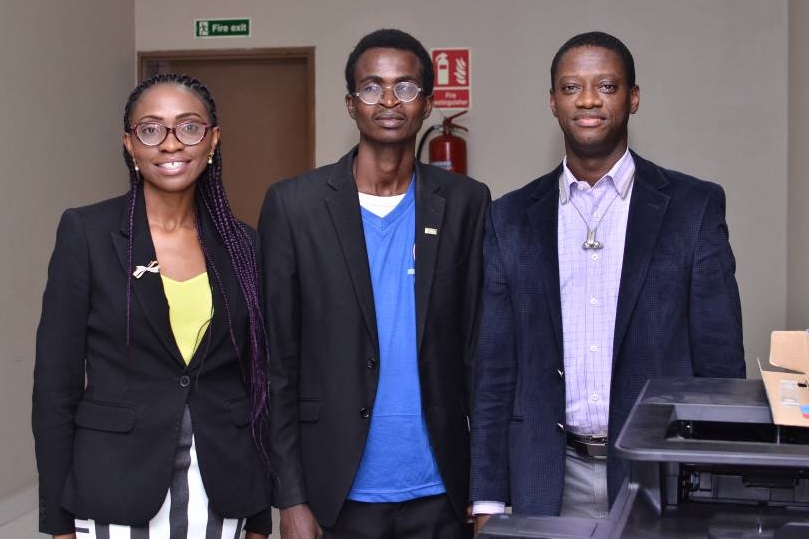
The team recently led pupils from different schools in Lagos on excursion at Sidmach Technologies Nigeria Limited as it seeks to ensure school pupils’ acquisition of computer skills, exposure to a real IT world through seminar, workshops, and exhibitions.
Speaking to Nigeria CommunicationsWeek while leading team to Sidmach, as part of activities to mark SCCI’s tenth anniversary, Mr. Adesina Adewale, the president, said that they are keen to ‘impose’ professional responsibilities on school IT team leaders, build self esteem for members, and motivate young growing children to embrace the appropriate use of the computer.
Adewale said that the big picture behind SCCI was to develop technology innovators ‘Technnovators’ who will eventually become technology entrepreneurs, developing solutions to solve the nation’s multifaceted challenges.

He said, “We hear about the likes of Bill Gates, Steve Jobs, Michael Dell, and other technnovators who today are big entrepreneurs. Today, Microsoft, for example has become a household name world over; people are using the products of Microsoft daily, ranging from the development of animation, games, office allocation to the point of using thee cloud.
“It is part of reasons we brought the students on tour of Sidmach Technologies. So, we are passionate about ‘catching them young’, right from primary and secondary schools, such that on graduation they don’t keep hoping on a non-existing white collar job. They are been positioned to develop the entrepreneurial mindset.
Speaking Achievements in the Last 10 Years:
“We started this advocacy in 2007. what inspired us was a speech by Professor Charles Uwadia, who happens to be the current President/Chairman in Council of CPN. At that year’s conference he charged us to develop the students at the secondary school levels to the point they can stand out and develop solutions/platforms that meet societal needs.
“Since then, we have been developing students in primary and secondary schools to the point many of them are interested in taking up careers in IT which is called the Nigerian Association of Computer Science Students (NACOSS).
“We have some who have passed through Sidmach Technologies either during industrial training/ attachment or internship programmes. We have some of them who can develop games, others- animations; we have others who can develop browsers and other solutions that can meet the need of the society.
Hopeful About the Future of the Students:
“Following our activities in the last 10 years, we are hopeful that technnovators and techpreneurs will be developed from these students. Invariably, we are reducing the problem of unemployment in the country. We are hopeful that these students will be able to meet the needs of our communities.
Why Choice of Sidmach
“Recently, we had training at the University of Lagos (Unilag); we had a ‘hands-on’ session. In IT, it is always imperative to marry the academic and the industry ideas to have a robust solution or platform. So, it is a combination of the gown and the town. At times we develop curriculum that fails to meet the needs of the society.
“Therefore, we have to find means of bringing the academic knowledge to bear in the industry practice. This excursion has accorded the students opportunity to meet software developers at Sidmach. The Company has done so much in the software for JAMB, WAEC, even in the oil and gas industry. They have the smart school solution too. So, we are here to let the students appreciate what is happening in the industry so that upon graduation it wouldn’t be all new terrain to them. That’s why we choose Unilag, representing the academic environment and now Sidmach Technologies, a leading indigenous software development firm.
Also, in a chat with Nigeria CommunicationsWeek, Mr. Jide Awe, chairman, Conferences at Nigeria Computer Society (NCS), said that such programmes that allow hands-on experience, are critical in building the future of the youths. “We are already in a knowledge-led economy showing more digital processes. We don’t want to continue as consumers, therefore, we must train our children on 21st Century skills- programming, application development, so they will not be disadvantaged. Already, a lot of countries (developed) are ahead of us. Thank God some of the kids have access to the resources they can use; what we now need are initiatives as Schools Computer Club Initiative (SCCI) to provide guidance. The essence is to ensure the students do no use those things for wasteful ventures”.
“The significance of exposing the students to industrial operations,” Awe added, “is that, it is one thing to learn to program or build software, however, it is important to know how it is being done; which is more encouraging to the students who have seen how this Company operates daily, especially in developing the software. It is a sort of career enlightenment to them. It gives them a practical feel of what it takes to be a programmer in a theoretical and practical sense. They were not on tour of a foreign firm and the reason was to inculcate the spirit of patriotism; we can develop solutions to the challenges we face in the country and even ship the solutions to other nations”.
He urged the students to make best use of knowledge acquired during the visit at Sidmach which was set up by entrepreneurs. “It must be stressed that Sidmach was established by entrepreneurs. They (the students) too can become IT entrepreneurs”, he charged them.
On Schools Computer Club Initiative (SCCI) at 10, the Chairman NCS Conferences, described the platform as a commendable initiative that should be encouraged; “that is why NCS and CPN have always been part of it. The Initiative has had its ups and downs, but it is here to stay. We really have to encourage them, because the issue at stake deals directly with the future of our children”.
Legacy Sidmach Is Leaving Behind For Next Generation,
Mr. Olayemi Oladiran, head, Sales & Marketing, Sidmach Technologies Nigeria Limited, while addressing the students, said he was quite impressed to see them, especially with the capabilities they have shown, even as younger ages. “They are already coding. It gives me the confidence the next generation will do better than we have done”.
“We don’t mind any one of them working for Sidmach. Obviously, we have a standard and of course it is going to be the best that will take in it. For those that have the vision, I will encourage them to work hard to excel in what they do. Importantly, they should not have employee mentality. Rather a mentality that can tell them- look I can develop a prototype software solution that I can take to the market. So, they should not limit themselves.
Partnership with OEMs
He said they are partnering with Original Equipment Manufacturers (OEMs) We do have such as HP, Microsoft and Sophos to build dependable solutions that address student’s e-learning challenges.
“We support them; to get them achieve their best. We support their dreams and aspirations. Whatever we need to do, that we shall do to provide encouragement and enabling environment to fan up their dreams”, he pledged.



Patience Okala, the National Coordinator and Chief Executive Officer of the Nigeria AfCFTA Coordination Office has urged African countries to stop exporting raw materials and instead focus on adding value to its natural resources if it is to fully harness the opportunities offered by the African Continental Free Trade Area.

She stated this on Thursday at the Streamsowers & Köhn 20th Anniversary Business Forum, where she stressed that value addition and beneficiation are essential to Africa’s industrialisation and long-term economic growth.
According to a statement issued on Friday by the Nigeria AfCFTA Coordination Office, she said the AfCFTA goes beyond the elimination of tariffs, serving as a framework for industrialisation, value addition, and job creation across the continent.
“AfCFTA is not only about tariffs; it is also about value addition. Africa has to stop exporting raw materials. We need to add value and ensure that beneficiation is done on the continent,” she said.
Okala also said Africa’s economic transformation would depend on the effective implementation of the AfCFTA rather than on the signing of trade agreements alone.
“We have moved beyond negotiations. The success of AfCFTA will be measured by the extent to which businesses can access new markets, trade seamlessly across borders, and benefit from the opportunities created by the agreement,” she said.
She noted that Nigeria had intensified efforts to implement the agreement under the leadership of the Minister of Industry, Trade and Investment, Dr Jumoke Oduwole, including the development of simplified AfCFTA guides in six languages to help businesses understand and take advantage of opportunities under the trade pact.
Okala called for stronger collaboration among governments, regulators, and the private sector to eliminate barriers to trade and investment and build a truly integrated African market.
“As we move from policy to implementation, our collective responsibility is to ensure that the opportunities created by AfCFTA become practical realities for businesses, particularly MSMEs, women-owned enterprises, and young entrepreneurs across the continent,” she said.

Cisco is exploring artificial intelligence (AI)-powered solutions to support smallholder farmers in Nigeria, as part of efforts to expand digital inclusion and technology adoption.

The initiative focuses on improving agricultural productivity through accessible, data-driven tools.
The move aligns with growing collaboration between Nigeria and the United States under the Commercial and Investment Partnership, which prioritises the digital economy, agriculture and infrastructure.
Speaking at the 2026 World Business Chicago, Brian Tippens, chief social impact and inclusion Officer at Cisco, said the company is assessing practical AI applications to help farmers combine local knowledge with data insights.
He said Cisco is exploring tools such as AI-enabled WhatsApp communities, geospatial mapping and weather intelligence to support day-to-day farming decisions.
The approach reflects a shift towards low-cost, mobile-first solutions suited to rural environments.
Tippens added that the Cisco Foundation is investing in early-stage startups developing technologies for local agricultural challenges.
Industry analysts note that AI adoption in emerging markets depends on locally relevant solutions, rather than large-scale enterprise deployments alone.
Beyond agriculture, Cisco plans to expand digital skills development in Nigeria through programmes such as the Cisco Networking Academy’s One Million Learners initiative.
Tippens said the programme also supports partnerships with organisations working with persons with disabilities, including those developing tools for people with visual impairments.
He added that Cisco’s social impact strategy aims to improve access to technology and promote inclusion, including in conflict-affected regions such as Borno State.
Cisco’s initiatives form part of broader efforts to link digital skills, connectivity and AI adoption to economic development in Nigeria.
Africa Prudential Plc has reaffirmed its commitment to sustainable growth and digital transformation after posting another strong half-year financial performance, driven by robust growth in its core registrar business, technology-driven solutions and increased activity in Nigeria’s capital market.

Speaking during the company’s H1 2026 Investor Call on Tuesday, the management outlined plans to deepen revenue diversification and accelerate innovation as part of efforts to reduce reliance on interest income and strengthen long-term profitability.
The company reported gross earnings of ₦4.28 billion for the first half of 2026, representing a 27 per cent increase from ₦3.34 billion recorded in the corresponding period of 2025.
Profit before tax rose by 22 per cent to ₦2.41 billion, while profit after tax climbed 18 per cent to ₦1.59 billion.
Net operating income also increased by 27 per cent to ₦4.21 billion, while total assets grew by 13 per cent to ₦46.53 billion. Shareholders’ funds similarly rose by 13 per cent to ₦12.52 billion.
According to the company, the impressive performance was driven by sustained growth in its registrar business, increased corporate actions across the Nigerian capital market, stronger treasury earnings supported by the prevailing interest rate environment and rising adoption of its technology-enabled products and services.African Mineral Wealth
Managing Director and Chief Executive Officer, Dr. Catherine Nwosu, said Africa Prudential is steadily evolving from a traditional share registrar into a diversified technology and business solutions provider serving the broader capital market ecosystem.
Addressing concerns from investors about the sustainability of earnings if interest rates decline, Nwosu said the company was deliberately expanding its non-interest income sources.
“Interest rates influence our treasury income positively, but that is why we are deliberately diversifying our revenue streams. Our strategy is to grow recurring fee-based business lines such as our digital solutions, Know Your Customer (KYC) services, AGM technology, probate services and the SabiVest mobile app. Over time, this will reduce our reliance on interest income and create a more balanced and resilient earnings mix,” she said.
She noted that increasing activity in the Nigerian capital market presents fresh opportunities for technology-driven solutions.
“With capital market activity nearly doubling over the past year, demand for seamless digital investor experiences, improved market efficiency and stronger compliance standards continues to grow. We are investing in technology-enabled solutions that position us to capitalise on these opportunities while delivering sustainable value to our shareholders,” she added.
Looking ahead, the company identified five strategic priorities for the second half of 2026, including driving sustainable growth through its core registrar business and new revenue streams, accelerating technology-led product innovation, strengthening brand leadership, investing in talent development and reinforcing corporate governance.
The investor call attracted institutional investors, shareholders, analysts, regulators and other capital market stakeholders, reflecting strong interest in Africa Prudential’s earnings outlook, revenue diversification strategy and long-term growth plans.

Police Uncover Fake Diplomatic Number Plate Syndicate in Abuja

Davido Shares Past Suicidal Thoughts, Drops Oriadé Album

Gavi Okays $500m for Vaccines, PHCs in Nigeria

82% of Organizations Concerned about AI Risks Even as Adoption Accelerates – Survey Reveals

The Journey to Financial Freedom: Priscilla, a PalmPay Agent Now Owns a Store

NRC, Ponzi Scheme Collapses Resulting Loss of Billions of Naira

EFCC Busts NIS Visa Overstay Racket, Uncovers N700m in an Account

From Scarcity to Scale: What Africa Can Learn from India’s Agricultural Transformation

Tokenization, Blockchain Technology will Transform Financial Institutions – IMF

BON Establishes Six Ad Hoc Committees to Modernize Broadcasting




 Telecom2 days ago
Clydestone Ghana Sues MTN Over Mobile Money

 News2 days ago
IHS Nigeria Donates Business-Support Equipment to Empower People with Disabilities in Abuja Community

 E-Business2 days ago
Kaspersky Uncovers New Mirage Kitten Malware Used in Cyber-espionage Campaign Across Africa, Others

 News2 days ago
Africa Prudential Unveils Digital Growth Strategy

 E-Financial2 days ago
Afreximbank Raises $1.5b in Largest-ever Bond Issuance

 E-Financial2 days ago
CBN Fines Banks N430m for Ignoring Customers’ Complaints

 E-Financial2 days ago
SEC Begins Full e-Registration for Capital Market Operators

 E-Financial2 days ago
Elon Musk Launches Invite-only X Money with Visa Debit Card