

News
SCCI@10: Sidmach Welcomes Pupils On Software Dev ‘Hands-On’ Experience Tour

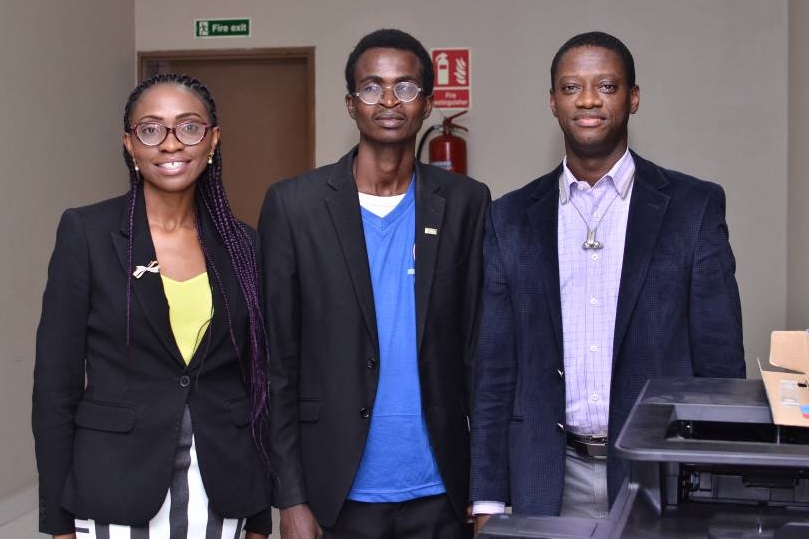
By peter oluka
Schools Computer Club Initiative’s (SCCI) has continued its bid to build up student/pupil experts as the workforce of future advancement for tomorrow’s information and computer technology.
The team recently led pupils from different schools in Lagos on excursion at Sidmach Technologies Nigeria Limited as it seeks to ensure school pupils’ acquisition of computer skills, exposure to a real IT world through seminar, workshops, and exhibitions.
Speaking to Nigeria CommunicationsWeek while leading team to Sidmach, as part of activities to mark SCCI’s tenth anniversary, Mr. Adesina Adewale, the president, said that they are keen to ‘impose’ professional responsibilities on school IT team leaders, build self esteem for members, and motivate young growing children to embrace the appropriate use of the computer.
Adewale said that the big picture behind SCCI was to develop technology innovators ‘Technnovators’ who will eventually become technology entrepreneurs, developing solutions to solve the nation’s multifaceted challenges.

He said, “We hear about the likes of Bill Gates, Steve Jobs, Michael Dell, and other technnovators who today are big entrepreneurs. Today, Microsoft, for example has become a household name world over; people are using the products of Microsoft daily, ranging from the development of animation, games, office allocation to the point of using thee cloud.
“It is part of reasons we brought the students on tour of Sidmach Technologies. So, we are passionate about ‘catching them young’, right from primary and secondary schools, such that on graduation they don’t keep hoping on a non-existing white collar job. They are been positioned to develop the entrepreneurial mindset.
Speaking Achievements in the Last 10 Years:
“We started this advocacy in 2007. what inspired us was a speech by Professor Charles Uwadia, who happens to be the current President/Chairman in Council of CPN. At that year’s conference he charged us to develop the students at the secondary school levels to the point they can stand out and develop solutions/platforms that meet societal needs.
“Since then, we have been developing students in primary and secondary schools to the point many of them are interested in taking up careers in IT which is called the Nigerian Association of Computer Science Students (NACOSS).
“We have some who have passed through Sidmach Technologies either during industrial training/ attachment or internship programmes. We have some of them who can develop games, others- animations; we have others who can develop browsers and other solutions that can meet the need of the society.
Hopeful About the Future of the Students:
“Following our activities in the last 10 years, we are hopeful that technnovators and techpreneurs will be developed from these students. Invariably, we are reducing the problem of unemployment in the country. We are hopeful that these students will be able to meet the needs of our communities.
Why Choice of Sidmach
“Recently, we had training at the University of Lagos (Unilag); we had a ‘hands-on’ session. In IT, it is always imperative to marry the academic and the industry ideas to have a robust solution or platform. So, it is a combination of the gown and the town. At times we develop curriculum that fails to meet the needs of the society.
“Therefore, we have to find means of bringing the academic knowledge to bear in the industry practice. This excursion has accorded the students opportunity to meet software developers at Sidmach. The Company has done so much in the software for JAMB, WAEC, even in the oil and gas industry. They have the smart school solution too. So, we are here to let the students appreciate what is happening in the industry so that upon graduation it wouldn’t be all new terrain to them. That’s why we choose Unilag, representing the academic environment and now Sidmach Technologies, a leading indigenous software development firm.
Also, in a chat with Nigeria CommunicationsWeek, Mr. Jide Awe, chairman, Conferences at Nigeria Computer Society (NCS), said that such programmes that allow hands-on experience, are critical in building the future of the youths. “We are already in a knowledge-led economy showing more digital processes. We don’t want to continue as consumers, therefore, we must train our children on 21st Century skills- programming, application development, so they will not be disadvantaged. Already, a lot of countries (developed) are ahead of us. Thank God some of the kids have access to the resources they can use; what we now need are initiatives as Schools Computer Club Initiative (SCCI) to provide guidance. The essence is to ensure the students do no use those things for wasteful ventures”.
“The significance of exposing the students to industrial operations,” Awe added, “is that, it is one thing to learn to program or build software, however, it is important to know how it is being done; which is more encouraging to the students who have seen how this Company operates daily, especially in developing the software. It is a sort of career enlightenment to them. It gives them a practical feel of what it takes to be a programmer in a theoretical and practical sense. They were not on tour of a foreign firm and the reason was to inculcate the spirit of patriotism; we can develop solutions to the challenges we face in the country and even ship the solutions to other nations”.
He urged the students to make best use of knowledge acquired during the visit at Sidmach which was set up by entrepreneurs. “It must be stressed that Sidmach was established by entrepreneurs. They (the students) too can become IT entrepreneurs”, he charged them.
On Schools Computer Club Initiative (SCCI) at 10, the Chairman NCS Conferences, described the platform as a commendable initiative that should be encouraged; “that is why NCS and CPN have always been part of it. The Initiative has had its ups and downs, but it is here to stay. We really have to encourage them, because the issue at stake deals directly with the future of our children”.
Legacy Sidmach Is Leaving Behind For Next Generation,
Mr. Olayemi Oladiran, head, Sales & Marketing, Sidmach Technologies Nigeria Limited, while addressing the students, said he was quite impressed to see them, especially with the capabilities they have shown, even as younger ages. “They are already coding. It gives me the confidence the next generation will do better than we have done”.
“We don’t mind any one of them working for Sidmach. Obviously, we have a standard and of course it is going to be the best that will take in it. For those that have the vision, I will encourage them to work hard to excel in what they do. Importantly, they should not have employee mentality. Rather a mentality that can tell them- look I can develop a prototype software solution that I can take to the market. So, they should not limit themselves.
Partnership with OEMs
He said they are partnering with Original Equipment Manufacturers (OEMs) We do have such as HP, Microsoft and Sophos to build dependable solutions that address student’s e-learning challenges.
“We support them; to get them achieve their best. We support their dreams and aspirations. Whatever we need to do, that we shall do to provide encouragement and enabling environment to fan up their dreams”, he pledged.



The Chartered Institute of Bankers (CIBN) and the Association of Corporate Communication and Marketing Professionals in Banks (ACAMB) have enjoined banks to further deepen and prioritize financial inclusion, women’s empowerment and sustained growth through strategic mandates and frameworks, aimed at closing the financial gap and empowering more small, and medium enterprise (MSME) owners.

Both organisations made this call during a courtesy visit to the newly invested 24th President and Chairman of Council of the Chartered Institute of Bankers of Nigeria (CIBN), Dr. Dele Alabi, Ph.D, FCIB, as part of plans to congratulate him on his investiture as well as seek a stronger alliance between both bodies.
The visit followed Alabi’s investiture where he unveiled his “IMPACT” Vision, themed “Consolidating Our Local Impact, Enhancing Our Global Relevance.”
The vision rests on six pillars: Inclusion across geographic, gender, and generational lines; Membership growth and quality; Professionalism and ethics; Accountability; Competencies and skills development; Technology, automation, and innovation. Other areas of shared interest, include women empowerment, financial inclusion and literacy, as well as MSME clinics, all of which are top on his agenda.
Alabi explained that under him, the institute will be prioritising financial inclusion and women empowerment, because of its realisation that women are often the primary financial managers and caregivers in families. Access to savings, micro-credit, and insurance acts as a safety net during crisis and allows them to significantly improve living conditions.
He added that CIBN would be happy to drive joint knowledge sharing and exchange sessions with CBN and ACAMB across various platforms. “Educating the public through public awareness programmes, with ACAMB as the rallying point, is central to what we do,” he noted.
ACAMB President, Jide Sipe, who led the delegation, spoke in unison with the CIBN president, as he noted that, closing the inbalances in financial access help economies grow faster, reduces inequality, and encourages greater civic participation by all.


Lagos State has become the first sub-national government in Nigeria to establish a comprehensive Greenhouse Gas Registry, a move aimed at strengthening climate governance, improving emissions accountability and accelerating the state’s transition to a low-carbon economy.

The Lagos State Greenhouse Gas Registry (LGHGR) was unveiled at the Central Business District, Alausa, Ikeja, at a ceremony attended by Prof. Akin Abayomi, commissioner for Health, members of the State Executive Council, representatives of the Federal Ministry of Environment, development partners, TPHG Technologies, the diplomatic and business communities, academics, civil society organisations and the media.
Describing the initiative as a landmark achievement in the state’s environmental sustainability drive, Dr. Babatunde Ajayi, general manager of the Lagos State Environmental Protection Agency (LASEPA), said the Registry marks a defining moment in Lagos’ climate action journey and reflects Governor Babajide Sanwo-Olu’s commitment to building a resilient, climate-smart and environmentally sustainable economy.
According to Ajayi, the digital platform will enable the state to accurately measure, monitor, report and verify greenhouse gas emissions across key sectors, providing credible data to guide environmental policies and climate interventions.
He said the Registry would strengthen evidence-based decision-making, improve transparency and accountability, support national and international climate reporting obligations, unlock carbon market opportunities and boost investor confidence in Lagos’ environmental initiatives.
Ajayi also commended TPHG Technologies for providing the technical expertise that made the pioneering project possible.
Delivering the keynote address, Prof. Abayomi described the Registry as a major milestone that positions Lagos at the forefront of climate governance and emissions accountability in both Nigeria and Africa.
He noted that climate change has evolved into a significant public health and governance challenge, stressing that access to reliable emissions data would enable the state to formulate evidence-based policies, attract climate financing, strengthen resilience and accelerate its transition to a low-carbon economy.
Providing insights into the technical framework of the project, Dr. Mofoluso Fagbeja, lead consultant and chief executive officer, TPHG Technologies, explained that the Registry was developed from the greenhouse gas inventory jointly undertaken by LASEPA and TPHG Technologies in 2022, using 2019 as the baseline year for emissions assessment.
He said the platform is designed to close critical emissions data gaps, particularly within the industrial sector, while supporting effective climate policy implementation, emissions management and sustainable development.
Fagbeja also disclosed that the greenhouse gas inventory estimated that poor air quality contributes to about 35,000 premature deaths annually in Lagos, underscoring the urgent need for stronger emissions control measures and cleaner environmental practices.
In a goodwill message, Balarabe Abbas Lawal, minister of Environment, represented by Mrs. Adenaike Olunimpe Oludunni, federal controller of Environment in Lagos, commended Lagos State for pioneering the initiative, describing it as a significant contribution to Nigeria’s climate commitments.
He said the Registry aligns with the country’s Nationally Determined Contributions (NDCs) under the Paris Agreement and supports the Federal Government’s Energy Transition Plan, while reaffirming the ministry’s commitment to deeper collaboration with Lagos State on climate governance and environmental sustainability.

A recently released Henley Passport Index 2026, showed that Nigerian citizens can travel to at least 20 destinations outside the African continent where entry is allowed either visa-free, with a visa on arrival (VOA) at no extra cost, or via an e-visa.

This expanded access opens doors for Nigerian travellers to experience countries in the Caribbean, Asia, and beyond with greater ease.
Below is a comprehensive guide to countries outside Africa which Nigerian passport holders can visit without a traditional visa.
Visa-Free Countries outside Africa for Nigerian Passport Holders:
Barbados
Cambodia – Visa on arrival
Comoros Islands – Visa on arrival
Cook Islands
Dominica
Fiji
Haiti
Iran – Visa on arrival
Kiribati
Lebanon
Maldives – Visa on arrival
Micronesia
Montserrat
Niue – Visa on arrival
Palau Islands – Visa on arrival
Samoa – Visa on arrival
St. Kitts and Nevis
Timor-Leste – Visa on arrival
Tuvalu
Vanuatuul

Fact-Check: Elon Musk’s “Tesla Pi Phone” is Internet Rumor

Dangote Plans to Donate One-Third of Wealth to Charity as Legacy

NDPC Directs DCPMIs to Register with Agency or Face Legal Consequences

Malpass, Ex World Bank Chief Raises Alarm over Nigeria’s Secretive Debt Structures

How and Why Apps Deplete Data – ALTON

NRC, Ponzi Scheme Collapses Resulting Loss of Billions of Naira

EFCC Busts NIS Visa Overstay Racket, Uncovers N700m in an Account

Tokenization, Blockchain Technology will Transform Financial Institutions – IMF

From Scarcity to Scale: What Africa Can Learn from India’s Agricultural Transformation

BON Establishes Six Ad Hoc Committees to Modernize Broadcasting




 News3 days ago
See Verified 20 Countries Nigerian Passport Holders Can Travel Visa-Free

 E-Business3 days ago
Report Says Cybercriminals Deploy Malware to Hijack Crypto Wallets, Monitor Browsers Telegram

 Telecom3 days ago
NCC, REA Partner to Cut Telecom Costs with Renewable Energy

 Telecom3 days ago
Subscribers, Telcos Warn FCCPC over Airtime Lending Enforcement

 E-Business3 days ago
NPC Opens 131 Births, Deaths Registration Centres in Anambra

 General News3 days ago
AfDB, Nigeria Urge African Control of Mineral Resources

 News2 days ago
History as Lagos Becomes First Nigerian State to Launch Greenhouse Gas Registry

 E-Business2 days ago
UNN to Partner Firm on AI, Smart Mobility Innovation Centre