

News
Shock as FG Recalls Pension Boss Wanted for Fraud


Lieutenant Gen Abdulrahman Bello Dambazau, (Rtd), minister of Interior, has confirmed the reinstatement of Abdulrasheed Maina, embattled former chairman of Presidential Task Team on Pension Reforms, into the civil service.
The recall of Maina, who was sacked for alleged fraud and still has a pending corruption trial, may have opened another window for some Nigerians who have continued to pick holes in the anti-corruption fight of President Muhammadu Buhari’s administration.
Dambazau, however, said he did not influence the posting of Maina, who had absconded from the service for years and had been on the wanted list of the Economic and Financial Crime Commission (EFCC), to the Ministry of Interior.
Ehisienmen Osaigbovo, press secretary to the Minister in a statement on Sunday, said Maina was posted a few days go to the Ministry on acting capacity.
The President Muhammadu Buhari administration has secretly reinstated fugitive former chairman of Presidential Task Team on Pension Reforms, Abdulrasheed Maina, into the civil service.
Maina was in 2013 dismissed by the Federal Civil Service Commission following a recommendation by the Office of the Head of Service
Reports have confirmed that Maina, who is wanted by EFCC, was secretly recalled by President Muhammadu Buhari administration.
It was also gathered that Maina, who was a Deputy Director, at the time he absconded from service, has now been promoted to the position of director in charge of Human Resources in the Ministry of Interior.
The statement by the Dambazau Press Secretary his attention has been drawn to a report with the underlined caption, published on October 20th, 2017 by Premium Times.
It said: “The publication, which queries the reinstatement of former Chairman of the Presidential Task Force on Pension Reforms, reportedly claimed that the Interior Minister was one of those behind the said reinstatement.
“It is observed that some insinuations as it concerns the Interior Minister were presented as facts, hence the compelling need to proffer some clarifications for reference purposes.
“The ex- Chairman of the Presidential Task Force Team on Pension Reforms, Abdulrasheed Maina, was posted few days ago to the Ministry of Interior by the Office of the Head of Service on an Acting capacity to fill a vacancy created following the retirement of the Director heading the Human Resources Department in the Ministry.
“For the avoidance of doubt, issues relating to Discipline, Employment, Re-engagement, Posting, Promotion and Retirements of Federal Civil Servants are the responsibility of the Federal Civil Service Commission and Office of the Head of Service of the Federation, of which no Minister exercises such powers as erroneously expressed in this publication.
“It is understood that Maina’s last posting was with the Ministry of Interior, and that is probably why he was re-posted back to the Ministry.
It is, therefore, improper for anybody to think that a Minister could exercise such powers or influence the process of Discipline, Re-engagement, and Deployment of any civil servant to his Ministry or any other Ministry for that matter.
“Again Such responsibility is that of the Federal Civil Service Commission and/or the Head of Civil Service.
“We, therefore, admonished journalists to cross check their facts before going to the press, as we see Nigerian media as dependable allies in our onerous task of nation building.
“In any case, the relevant institutions of government are alive to their responsibilities regarding the allegations confronting Mr Maina,” it said.
A source at the Office of the Head of Civil Service of the Federation, however, said Maina was never sacked or dismissed from service.
When asked if Abulrasheed Maina has been recalled into civil service, the source said: “Was he sacked before? In civil service if somebody is recalled, it is either that he had been suspended or sacked.
When insisted that he was declared wanted by the EFCC and allegedly absconded from service, the source said: “Maina was an Assistant Director, before he was seconded to Head of Service.
“I encourage journalists to make their findings very well. If Maina was not suspended then he is not under any punishment according to civil service rule. If one is dismissed or indicted or suspended, which one was applied to Maina?
“Secondment, according to the civil service rule is for 15 years subject to renewal. Has Maina exhausted the 15 years in the place he was seconded to?
“But if he was dismissed or suspended for any reason, there should be a panel that investigated him, according to the civil service rules and what was their recommendations, was he found guilty and what was the steps taken. There are procedures in service.
“You need to also go the Federal Civil Service Commission to really find out because they are in charge of recruitment and discipline of civil servants.
A source at the Federal Civil Service Commission, when contacted said it was the responsibility of the Head of Service to recommend disciplinary action on an administrative officer like Maina.
The source, even though was indicted, it was not the duty of the Commission to investigate the issue without due information from the Head of Service.
In 2012 Maina was accused of leading a massive pension fraud scheme amounting to more than N100 billion, when he was drafted by the Goodluck Jonathan administration in 2010 to sanitize a corrupt pension system.
Based on the allegation of corruption, Maina was invited by the Senate Joint Committee on Public Service and Establishment and State and Local Government Administration.
The Senate after completion of its investigation issued a Warrant of Arrest against Mr Maina.
Ignoring the panel, Maina went ahead to sue the Senate and then Inspector-General of Police, Mohammed Abubakar, and thereafter went into hiding after being declared wanted by the police.
Consequent upon this, Mr Maina was dismissed by the Head of Service for allegedly absconding from duty and attempting to evade arrest and charged to court.
He was on July 21, 2015 charged by the EFCC alongside Stephen Oronsaye and two others before a Federal High Court on a 24-count charge bordering on procurement fraud and obtaining by false pretence.
While Mr Oronsaye and the two other accused were in court and pleaded not guilty to the charge, Mr Maina was at large.
Mr Maina is said to have spent these past years in the United Arab Emirates, from where he kept lobbying to win pleasure of the Buhari administration.



Federal government has said that more than 32 million students have been captured on the Federal Government’s Digital National Education Information Management System (DNEMIS), ahead of the official launch of the platform on Wednesday, July 1.

The DNEMIS, is part of efforts to replace paper-based and fragmented education records with a single digital database.
Mr. Adebayo Onigbanjo, national project coordinator of the Special Programmes Operations and Implementation Unit in the Office of the Minister of Education, disclosed this on Monday in Abuja at a press conference.
Onibanjo said that the digital platform would transform education administration through technology and data-driven decision-making.
He said DNEMIS is the core platform of the Nigerian Education Data Infrastructure (NEDI), an initiative under the Nigeria Education Sector Renewal Initiative (NESRI), established to provide accurate, integrated and timely education data for planning, budgeting, policymaking and service delivery.
According to Onigbanjo, the platform replaces the fragmented data systems that have long constrained effective planning in the education sector.
“For many years, education planning relied on fragmented systems, inconsistent reporting structures and limited access to reliable data. DNEMIS changes that by ensuring that every learner, every school, every teacher and every investment in education is captured within a system that supports evidence-based decision-making,” he said.
He described education data as a strategic national asset, noting that the platform would strengthen transparency, accountability and governance across the sector.
Onigbanjo said the availability of reliable data would also support government efforts to tackle Nigeria’s out-of-school children challenge by enabling authorities to monitor enrolment, identify dropout patterns and target interventions where they are most needed.
“If you don’t measure, you can’t get a good sense of what the data is. Today, we already have 32 million students on the platform, and that gives us an indication of where learners are.
“We are also understanding their journey from when they start school and when they drop out. That gives us insight into their challenges and where investments need to go. Every school becomes visible, every student gets counted, every teacher is known, and every government expenditure in education becomes trackable. To a greater extent, this will stop wastage,” he said.
He added that the ultimate goal is to provide government with complete visibility into every learner’s educational journey, from enrolment through graduation, to improve learning outcomes and policy decisions.
Addressing concerns over data privacy, Onigbanjo said the platform was developed using globally recognised digital architecture with robust safeguards to protect personal information.
He explained that sensitive data would be masked while secure digital identity profiles would allow authorised users to access relevant information without exposing personal details.
Also speaking, Abubakar Isah, national coordinator, Nigerian Education Data Infrastructure (NEDI), said the system fully complies with Nigeria’s data protection regulations and international data security standards.
“We recognise the importance of data protection. We are complying with the country’s data protection rules and taking every necessary precaution to ensure that this data is secure,” he said.
Isah noted that while schools and state governments would have access to their respective data, communities, alumni associations and development partners would be able to access selected non-sensitive information to support school improvement and strengthen public accountability.
Earlier, Miss Mojoyin Adebajo, special adviser to the Minister of Education on Digital Communications and E-Learning, described DNEMIS as a major milestone in Nigeria’s digital education transformation.
She said the platform, developed on the globally recognised DHIS2 infrastructure, would digitise the Annual School Census and provide reliable information on schools, teachers, learners and education infrastructure across the country.
Adebajo added that Wednesday’s event would also witness the unveiling of the Public DNEMIS Portal, which will provide researchers, journalists, civil society organisations, development partners and members of the public with access to selected official education data through an interactive online platform.
She said the initiative underscores the Federal Ministry of Education’s commitment to promoting transparency, strengthening evidence-based planning and leveraging technology to improve educational outcomes nationwide.

President Bola Tinubu on Thursday urged Nigerians to pay their taxes, because the revenue is critical for his administration’s Renewed Hope Agenda to fund public infrastructure like roads, hospitals, and amenities across the country.

President Bola Tinubu
He spoke during the commissioning of interchange at Arterial Road N16 – Ring Road III Intersection linking Jahi District to Gwarimpa District of the FCT.
The project was among those earmarked to celebrate his third year anniversary and he was represented at the commissioning by Godswill Akpabio, Senate President.
He said: “I’m very proud to stand here to commission this Arterial road interchange N16 linking Jahi district to Gwarimpa District of the FCT.
“This is not just a bridge and slip roads, this is freedom of movement and time returned to the people, this is renewed hope that you can even drive on. This intersection used to choke the entirety of Abuja, gridlock stretched from Maitama to Gishiri, from Jahi to Gwarimpa; hours lost, fuel wasted, business were lost but today that story ends.
“This interchange opens up critical districts of the FCT and connects them smoothly to the rest of the FCT. Workers will get home earlier, security will improve because criminals strive when security stands still.
“Ladies and gentlemen, infrastructure is the foundation of prosperity which is the cardinal principle of this administration. Roads are the arteries of a nation, when we connect districts we connect destines and that is the logic of the renewed hope agenda, build the roads unlock the economy and let Nigerians strive.
“The Jahi-Gwarimpa interchange is prove that Nigeria is not beyond redemption. With focus, discipline, and political will, Nigeria will deliver and we are delivering, the FCT is delivering.”
The president also charged Nigerians and residents of the FCT to pay their taxes.
According to Tinubu, it would allow his administration to provide more infrastructural projects.
“Also pay your taxes and levies so that government can do even more for you,” he added.
News
MTN ASAP Enugu Stakeholders’ Conference Rallies More Action Against Youth Drug Abuse, Unveils N33Bn ASAP Impact

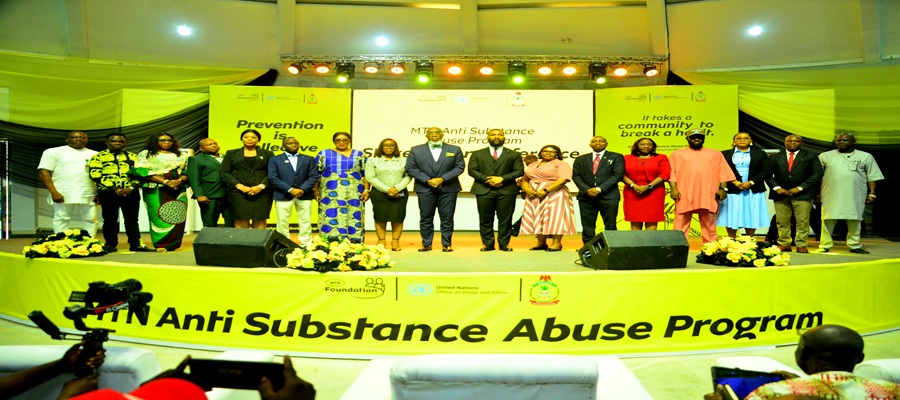
In a renewed push to confront the rising tide of drug abuse among Nigerian youth, stakeholders converged on Tuesday, June 9, 2026, at the ICC Dome, Enugu, for a State Stakeholders’ Engagement convened under the Anti-Substance Abuse Programme (ASAP).

The conference brought together government representatives, educators, development partners, and civil society actors to chart a unified path against substance abuse, with disclosures at the gathering revealing that an estimated ₦33 billion has so far been committed to developmental projects, programmes, and initiatives across the country, interventions that have impacted more than 33 million Nigerians directly and reached over 100 million through advocacy and awareness campaigns.
The Executive Governor of Enugu State, Barr. Peter Mbah, represented by the Secretary to the State Government, Prof. Chidiebere Onyia, commended the Foundation for its sustained investment in youth development and the fight against substance abuse.
He noted that the state’s transformation agenda is anchored in youth empowerment, education, healthcare, and human capital development – areas where the Foundation’s ₦33 billion commitment was already making a measurable difference.
“The MTN Foundation’s investment in youth development and the fight against substance abuse aligns directly with our administration’s transformational agenda. Initiatives like ASAP are exactly the kind of partnerships that move the needle on national development,” Prof. Onyia said.
He further urged other private sector players to emulate the Foundation’s example, stressing that the scale of Nigeria’s drug abuse demands sustained collaboration between government, the private sector, development partners, and civil society.
Addressing stakeholders, Odunayo Sanya, Executive Director of the MTN Foundation, said the Foundation, established in 2004 and fully funded by MTN Nigeria, was created to drive impact across health, capacity building, and economic empowerment, with deliberate focus on young people, who constitute the majority of Nigeria’s population.
She explained that the ASAP initiative, launched in 2019 in partnership with the National Drug Law Enforcement Agency (NDLEA) and the United Nations Office on Drugs and Crime (UNODC), was designed to reduce first-time drug use among young Nigerians through awareness campaigns and school-based interventions.
“We have reached over 50,000 students across the country and trained about 1,556 teachers as part of our efforts to create anti-drug ambassadors in schools and communities.”
“For us at the MTN Foundation, saving even one young person from substance abuse is a worthwhile achievement. The consequences go beyond the individual and affect families, communities, and the nation at large,” Odunayo said.
Looking ahead, she disclosed that the Foundation plans to reach more than 20,000 additional students in 2026 through expanded stakeholder engagements, school-based interventions, teacher training programmes, and community awareness campaigns.
She described substance abuse as a major threat to families, communities, and national development, stressing the urgent need for collective action to shield young people from addiction.
According to her, the Foundation’s mission is rooted not just in numbers, but in human outcomes – the lives, families, and futures it helps preserve.
The Executive Director, on her part, called on parents, educators, faith leaders, and community influencers to remain active partners in safeguarding the next generation from the dangers of substance abuse.
The intervention comes at a critical time. Fresh data presented at the conference indicate that over 360,000 youths in Enugu State – approximately 13.4% of the state’s young population – are actively involved in drug use.
Currently, the MTN Foundation (MTNF) and the United Nations Office on Drugs and Crime (UNODC) are conducting a comprehensive National Substance Use Survey to gather grassroots data on drug abuse, especially among secondary school students.

NDIC Says 281m Depositors Protected against Bank Failure

Wema Bank Suspends Telegram Operations over Scams

Akara Business Can Pay More than Bank Jobs – Governor Aide

OPay Unveils Emergency Lock, Safety PIN to Boost Customer Protection

FG Captures 32m Students DNEMIS ahead July 1 Rollout

London Strengthens Global Investment Ties with Africa @ First Ever London-Africa Business Summit

Mobile Internet Gender Gap Widest in Africa – GSMA

FG Targets Alleged N3tn Capital Flight, Opens Airtime Credit Market to Nigerian Fintechs

Japan, UNESCO Boost Digital Learning in 15 CoEs with Donation of ICT Equipment

Good News for DStv Users: Watch over 160 Channels Without Paying Extra




 E-Business2 days ago
LG Showcases AI-Powered Smart Living Innovations @ Africa Technology Expo 2026

 E-Financial2 days ago
UBA mobilises employees across Africa for environmental clean-up, wellness campaign

 Telecom2 days ago
OADC Reaffirms Abundant Capacity in Data Centres in Nigeria to Host Financial Data

 General News2 days ago
LASTMA Launches 3367 Toll-Free Hotline for Emergency Response, Traffic Management

 E-Financial2 days ago
PalmPay Calls for Trust, Infrastructure and Responsible AI to Drive Payment Ecosystem Innovation

 Telecom2 days ago
ALTON Backs NCC’s Local Smartphone Manufacturing Drive to Widen Digital Access

 E-Financial2 days ago
ngCERT Raises Alarm over Surge in Banks’ ATM Cyberattacks

 E-Business2 days ago
Want a Business Loan Without Interest? SMEDAN Launches N500m Fund