

E-Financial
Heavy Hitters Give Nigeria The Thumbs Up

By Lukman Otunuga, Research Analyst
October was certainly another positive month for the largest economy in Africa, which has yet again showcased its brawn and resilience on the global stage.
Annual inflation eased for the eighth straight month, while encouraging core economic metrics pointed to further signs of economic stability. Rising global oil prices and recovering domestic oil production has positively impacted government revenues and supported foreign exchange markets.
The overall outlook for Nigeria remains quite encouraging, especially when considering how heavyweights such as the World Bank and IMF have both recently expressed their optimism. As we head into the final trading months of 2017, there may be an increasing focus on the intentions of the Central Bank of Nigeria.
With inflation pressures easing and economic fundamentals stabilizing, speculation is likely to mount over the Central Bank of Nigeria taking action.
Investor confidence towards the Nigerian economy was stimulated in October, after the World Bank projected economic growth to reach 1% this year.
The IMF has also expressed optimism towards the nation by re-affirming its 0.8% growth forecast for the economy this year. According to the fund, growth in 2017 has been fueled by recovering oil production.
In addition to the improving oil outlook, Nigeria’s agricultural sector has also been performing; this is especially significant in view of the fact that the nation is currently on a quest for diversification. While the IMF stated that growth in 2018 may be subdued by population growth, the 1.9% prediction still remains encouraging and continues to highlight the resilience of the Nigerian economy.
Speaking of recovering oil production, Nigeria’s oil output hit 1.8 million barrels a day in August. While this is good news for the nation as oil prices are currently trading above $52 per barrel, production is likely to remain below this level. Although the nation could have the ability to pump more oil, the silent pressure radiating from OPEC’s production cut deal is likely to keep production capped.
While Nigeria is currently exempt from the cartels deal to cut production, there is a possibility that OPEC will request them to join in an effort to rebalance markets.
This poses an external risk to Nigeria, as the Federal government’s 2017 budget is based on a production of 2.2 million barrels per day, at $44.50 per barrel.
A scenario where Nigeria limits production and oil prices start to depreciate, could pose a threat to the nation’s current economic recovery.
While oil markets have found support from geopolitical tensions between the US – Iran and Iraq conflicts, the oversupply concerns are still lingering in the background. Technical traders will continue to observe how WTI Crude reacts above $50.
Although Nigeria’s macroeconomic environment continues to stabilize, there is still a strong need for a robust fiscal policy to complement growth.
It has been said on repeated occasions that the nation’s infrastructure needs a serious makeover. With major roads in poor condition, healthcare and education in need of a revamp, Nigeria has a lot of work on its hands.
It must be kept in mind that solid infrastructure creates a strong and healthy economy. President Muhammad Buhari has recently asked the National Assembly to approve a request to borrow $5.5 billion. With Buhari stating that the loan will be used to provide funding for capital projects, this is likely to improve investor sentiment as the money borrowed, is used for infrastructure developments.
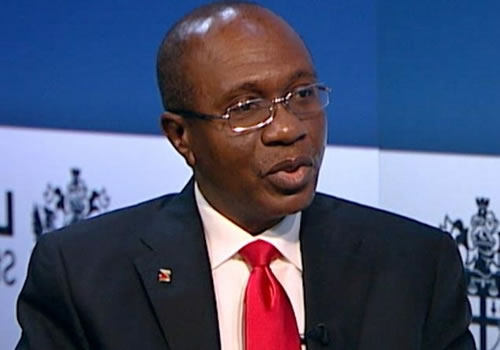
On the monetary side, Godwin Emefiele, the Governor of the Central Bank of Nigeria, is expecting inflation rates to ease rapidly and hit high single-digit rates in the middle of 2018. This sounds like a realistic and achievable prediction, especially when considering how inflation has cooled for the eighth straight month in September, to 15.98%.
The steady increase in foreign exchange supply from the usage of the flexible rate policy, has also played a role in the fall of consumer prices, with inflationary pressures slowing and becoming a theme of the past.
If the nation’s rate of inflation continues to decline and the economic environment improves further, the Central Bank of Nigeria may cut interest rates in an effort to support growth.
Focusing on the foreign exchange outlook, the Naira traded at N363 per Dollar on the parallel market on Friday, 27 October. With the Dollar roaring back on the back of optimism over Donald Trump moving forward with tax reforms, the Naira, like many other Emerging Market currencies, could feel the heat.
Overall, there is growing confidence over Nigeria’s economic outlook, with markets paying very close attention to domestic economic data and the CBN as the 2017 finish line draws near.
Lukman Otunuga is a Research Analyst at FXTM


Federal Capital Territory Internal Revenue Service (FCT-IRS) has launched Taxporta, a new digital tax management platform to simplify tax administration and enhance compliance.

Mr Michael Ango, executive chairman FCT- IRS, at a stakeholders’ engagement with MDAs at the National Assembly Library Trust Fund Complex, Abuja, on the implementation of Nigeria’s 2025 tax reforms to ensure voluntary compliance, reiterated the commitment of the Service to make filing of taxes easier for all taxpayers, Ministries, Department and Agencies (MDAs).
Ango described the new portal as an upgrade of the agency’s existing digital infrastructure to provide taxpayers with faster, safer and more efficient services.
He said the initiative is an end-to-end self-service platform through which taxpayers can register, file returns, calculate taxes, and generate receipts without third-party assistance.
He added that Taxporta is also designed to enable taxpayers complete virtually all tax-related transactions without visiting FCT-IRS offices.
“All the allowances provided under the law have been imputed into the system. Essentially, you are only going to have to put in your income, all of the rest of the work, things like tax clearance, payments of taxes, and all will be done on the portal,” Ango said.
He expressed confidence that the new platform would strengthen revenue collection and help the Service exceed its annual revenue targets, which is to generate the maximum tax.
On enforcement, he assured that the Service would continue to prioritize voluntary compliance over sanctions.
He further explained that collaboration with MDAs for revenue generation is key for the FCT-IRS, which occupies a unique position as both a Federal Government agency and an agency of the Federal Capital Territory Administration.
He said the stakeholder engagement was organized to ensure a seamless transition from the previous platform to the upgraded system while strengthening partnerships with government institutions, adding improved tax compliance would support the ongoing transformation of Abuja through increased funding for infrastructure and public services.
Ango stated that the FCT, as an institution, was funded, apart from the IGR, by one percent of the allocation to the federal government, with Value Added Tax and service accounting for the bulk of its revenue.
In his remarks, Executive Secretary of the National Assembly Library Trust Fund, Hon. Henry Nwauna, described the engagement as a strategic initiative aimed at strengthening collaboration between government institutions and tax authorities.
Galaxy Backbone (GBB) has engaged banks, fintech firms and other technology stakeholders in fresh discussions on strengthening digital trust, regulatory compliance and secure digital infrastructure in Nigeria’s financial sector.

The engagement took place during the organisation’s second-quarter webinar, which brought together Chief Information Officers (CIOs) and industry leaders to examine strategies for building resilient digital infrastructure as financial services become increasingly technology-driven.
The webinar, themed “Building Digital Trust in Nigeria’s Financial Sector: Navigating Regulatory Compliance and Infrastructure Performance,” comes amid the Central Bank of Nigeria’s (CBN) directive requiring banks, fintech companies, mobile money operators and other payment service providers to store payment transaction data generated within the country on local servers.
The CBN had said the policy is aimed at strengthening regulatory oversight, improving transparency, reducing concentration risks and ensuring that critical payment data remains within Nigeria’s jurisdiction.
Opening the webinar, GBB’s Executive Director, Finance, Ibrahim Sani, said the rapid transformation of the country’s financial services industry had made trusted digital infrastructure indispensable to the delivery of secure, reliable and future-ready financial services.
He noted that Galaxy Backbone already provides digital infrastructure supporting both public and private sector organisations, including several financial institutions that rely on its secure connectivity, cloud computing and data centre services.
According to him, “Galaxy Backbone continues to provide the digital backbone that supports both public and private sector institutions. We remain well positioned to support the industry’s compliance journey by delivering resilient infrastructure that meets evolving regulatory and business requirements.”
Also speaking, the Executive Director, Digital Exploration and Technical Services, Olumbe Akinkugbe, stressed that compliance with CBN directives and other regulatory frameworks was essential to strengthening transparency, accountability, consumer confidence and the security of financial data in an increasingly digital economy.
He maintained that regulatory compliance had become a key pillar in safeguarding Nigeria’s financial ecosystem as digital transactions continue to expand.
The webinar also featured a presentation by GBB’s Head of Automation and Integration, Thomas Oghenebhumhe, who showcased the organisation’s sovereign cloud platform and highlighted the importance of secure cloud adoption across the financial services industry.
He explained that resilient cloud infrastructure enables financial institutions to innovate more rapidly, improve operational efficiency, safeguard sensitive information and comply with evolving regulatory standards.
His presentation was followed by an interactive session during which participants sought practical insights on cloud migration, data sovereignty and regulatory compliance.
Head of Data Centre Operations, Samuel Olusola Oyeleke, later highlighted Galaxy Backbone’s globally certified Tier III and Tier IV data centre infrastructure, describing it as resilient enough to guarantee uninterrupted digital services, disaster recovery and business continuity for mission-critical financial operations.
Closing the webinar, Executive Director, Customer Centricity and Marketing, Olusegun Olulade, said building digital trust required sustained collaboration among regulators, technology providers and financial institutions.
“As Nigeria’s financial ecosystem becomes increasingly digital, organisations must invest in infrastructure that not only meets regulatory requirements but also guarantees resilience, security, business continuity and customer confidence,” he said.
Olulade reaffirmed Galaxy Backbone’s commitment to supporting the financial services industry with secure, resilient and globally aligned digital infrastructure that enables institutions to innovate with confidence while maintaining compliance with changing regulatory standards.
The organisation said its Uptime-certified data centres, Payment Card Industry Data Security Standard (PCI DSS) certification, sovereign cloud platform and nationwide fibre-optic network provide trusted platforms for secure data hosting, payment security, regulatory compliance, business continuity and disaster recovery.
According to GBB, the infrastructure also supports Nigeria’s growing data sovereignty agenda by ensuring that critical financial data is securely hosted, readily accessible and remains within the country’s jurisdiction in line with regulatory expectations.
With more than two decades of delivering shared ICT infrastructure and digital services, Galaxy Backbone said it has continued to support digital transformation across both the public and private sectors through secure connectivity, cloud services, cybersecurity, managed ICT services and enterprise-grade data centre solutions.
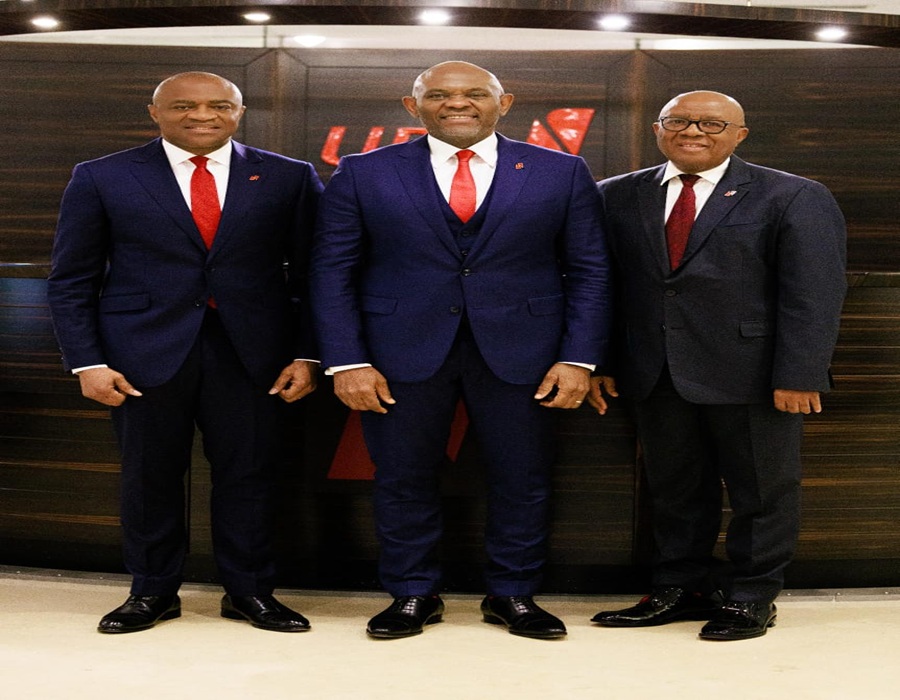
United Bank for Africa (UBA) Plc has announced that its Group Chairman, Mr Tony O. Elumelu, will retire from the Board of Directors on Aug. 21, 2026, upon completing the 12-year tenure limit for non-executive directors prescribed by the Central Bank of Nigeria (CBN).

The bank disclosed this in a statement issued following a meeting of its Board of Directors held on July 6.
According to the statement, the board accepted Elumelu’s retirement and elected Mr Emmanuel N. Nnorom, a Non-Executive Director of the bank, as his successor with effect from Aug. 21, 2026.
The board expressed appreciation to Elumelu for what it described as his visionary leadership and immense contributions to the growth and institutional development of the UBA Group.
It noted that under his leadership, UBA expanded into a leading pan-African financial institution with operations in 20 African countries and four global financial centres, serving more than 50 million customers.
The board described Elumelu’s tenure as a defining period in the bank’s history.
Nnorom, who will assume office as chairman upon Elumelu’s retirement, is a chartered accountant with more than 40 years of experience in banking, finance and auditing.
The statement said he brings extensive leadership experience and deep institutional knowledge of the bank to his new role.
Speaking on his retirement, Elumelu described serving UBA as one of the greatest privileges of his professional career.
“Serving United Bank for Africa has been one of the great privileges of my career.
“UBA has established a unique competitive position across Africa and globally, and I leave the Board with great confidence in UBA’s future.
“Emmanuel Nnorom is a leader of integrity, experience and sound judgement, and I am confident that the bank will continue to thrive under his leadership,” he said.
Responding to his appointment, Nnorom expressed gratitude to the board for the confidence reposed in him.
“I am honoured by the trust the Board has placed in me and deeply conscious of the legacy I inherit.
“I look forward to working with my colleagues on the Board, Management and our staff across all our markets to sustain UBA’s momentum and continue delivering long-term value to our shareholders, customers and stakeholders,” he said.
UBA operates in 20 African countries as well as the United Kingdom, the United States, France and the United Arab Emirates.
The bank provides retail, commercial and institutional banking services and serves more than 50 million customers globally, with a workforce of about 25,000 employees across its operations.

Court Declares ARCON’s N60Bn Fine against Facebook Nigeria Illegal

NIN Enrollment Hits over 136m as New ID Law Takes Effect

NRC, Ponzi Scheme Collapses Resulting Loss of Billions of Naira

Plateau PCC Collects Nigerians’ Data without Privacy Policy – FIJ

FG Suspends New Internet Regulations to Prevent Overlapping Rules

NASENI Moves to Digitize CCB’s 5m Assets Declaration and Operations

Mobile Internet Gender Gap Widest in Africa – GSMA

Nigeria Launches FreeTV Nationwide

CANAL+ Partners Samsung to Pre-Load DStv Stream on New Samsung TVs In Nigeria, Other African Countries

CredibleVoteNG Opens Free Access to all Polling Units in Nigeria after INEC Demanded N1.Bn for Register




 E-Financial3 days ago
Tokenization, Blockchain Technology will Transform Financial Institutions – IMF

 General News3 days ago
NIS Deploys Advanced Surveillance Masts, other Critical Infrastructure to Boost Border Security

 General News2 days ago
IHS Nigeria, FCT-HSES Concludes Clean Cooking Energy Campaign “Project Breathe Clean Air” in Abuja

 Broadcasting3 days ago
Obi, NDC Presidential Candidate Faces N50Bn Defamation Claim over Alleged Podcast Remark

 E-Business3 days ago
Weebly Websites to Shut Down for Nigeria, 66 Other Countries from September

 E-Financial3 days ago
FG Denies N8 Trillion ‘Shadow Budget’, Says IMF Quoted out of Context

 Telecom3 days ago
No Plans for Fresh Tariff Hike – MTN

 News3 days ago
World Bank Sounds Alarm: Low Revenue, Not Debt, Is Nigeria’s Biggest Fiscal Threat