

General News
IATA, AfDB sign MoU to Advance Africa’s Aviation


The International Air Transport Association (IATA) and the African Development Bank (AfDB) have signed a memorandum of understanding (MoU) to establish a framework for collaboration to boost the aviation sector in Africa.
The MoU was signed Tuesday in Abuja, Nigeria, on the sidelines of the International Civil Aviation Organization’s World Aviation Forum, “Financing the Development of Aviation Infrastructure” by IATA’s Director General and Chief Executive Officer, Alexandre de Juniac, and African Development Bank President Akinwumi Adesina.
The aviation industry in Africa currently supports US $72.5 billion in economic activity and 6.8 million jobs. Over the next 20 years, the industry is forecast to grow at nearly 6% per year.
“This creates significant opportunities. But achieving this potential will not happen by chance; strong partnerships are key. The MoU with AfDB will help facilitate the growth and development of Africa’s aviation industry. In so doing, it will expand prosperity and change peoples’ lives for the better in the continent’s 54 nations,” de Juniac told the African Aviation Ministers, Africa aviation industry experts, and airline executives present at the signing ceremony.
Under the MoU, IATA and the AfDB will work in partnership to further Africa’s economic and social development by helping build a safe, secure and efficient aviation industry. The two organizations commit to create and implement programs and projects, including technical cooperation for capacity building. Priority areas will include improving connectivity, safety and aviation infrastructure.
“The aviation sector is especially important as it opens up doors to investors,” said Adesina. “Very few invest where it’s difficult to travel to. That’s why ease of access via air travel is strongly correlated to economic growth. We must make regional aviation markets competitive and drive down costs, raise efficiencies and improve connectivity and convenience.”
“From Abuja, a new voice has arisen through this partnership: Africa’s aviation time has come! Together, let’s open up the skies of Africa, and together let’s integrate Africa. By so doing, we will build stronger and more resilient economies,” he said.
The African Development Bank has invested close to US $1 billion over the past decade in the construction and expansion of airport terminals, as well as aviation safety and aircraft financing. Additional Bank interventions in the aviation industry include grants for capacity building and coordination systems in 25 countries and 69 airports, that will help increase the number of International Civil Aviation Organization safety and security compliant airports from 3 to 20 by 2019.


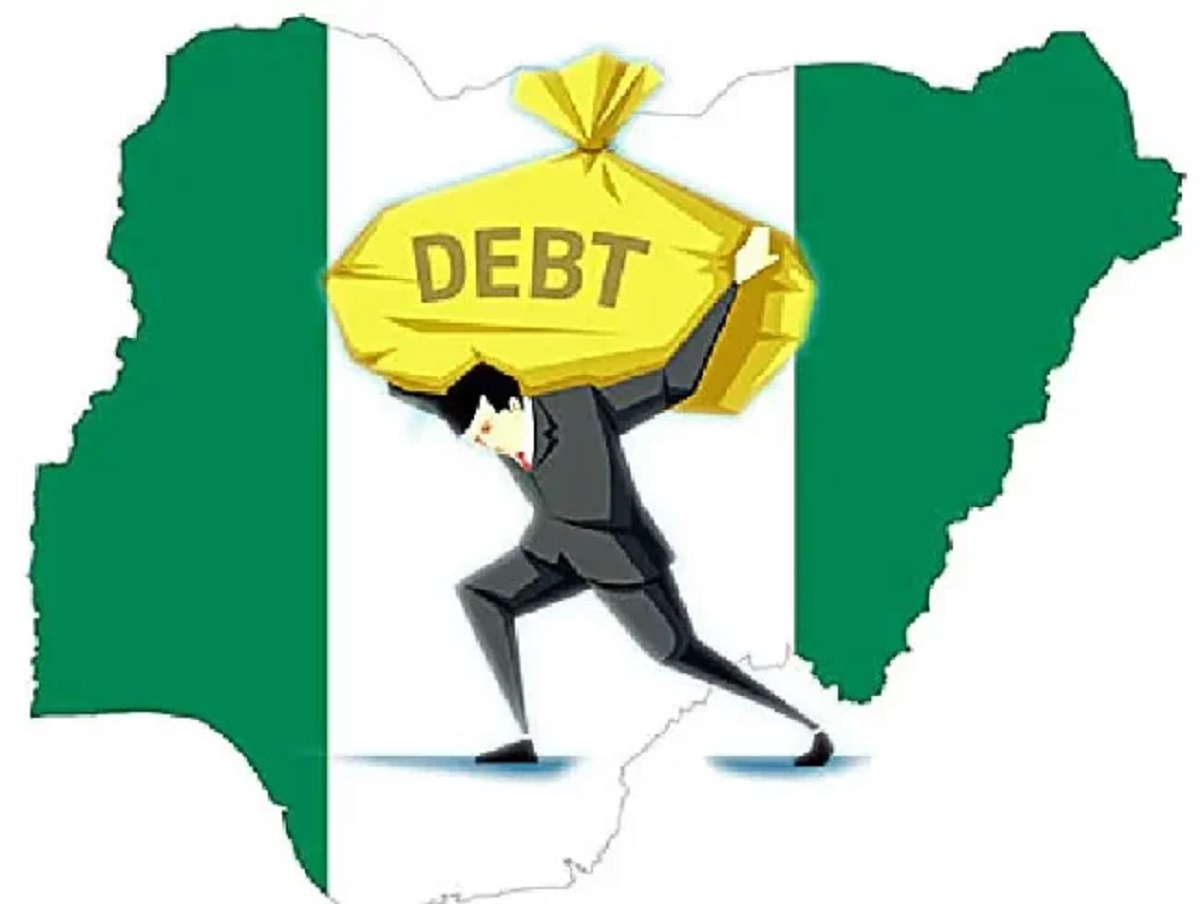
Nigeria has retained its position as the third-largest borrower from the International Development Association (IDA), the concessional lending arm of the World Bank, despite a slight decline in its debt exposure in the first quarter of 2026.

According to the IDA’s March 2026 financial statements, Nigeria’s exposure stood at $18.5 billion as of March 31, 2026, down marginally from $18.7 billion recorded at the end of December 2025.
The $200 million decline represents a 1.1 per cent reduction over the three-month period.
However, on a year-on-year basis, Nigeria’s debt exposure increased significantly by $1.2 billion, or 6.9 per cent, from $17.3 billion recorded in March 2025.
The latest ranking places Nigeria behind Bangladesh and Pakistan among the World Bank’s largest IDA borrowers.
Data from the report showed that Bangladesh remained the largest borrower with an exposure of $22.7 billion, followed by Pakistan with $19.2 billion, while Nigeria ranked third with $18.5 billion.
Other major African borrowers include Ethiopia with $14.4 billion, Tanzania with $14.3 billion, and Kenya with $13.2 billion in outstanding exposure.
The report also revealed that the IDA’s total loans outstanding stood at $230.8 billion as of March 31, 2026, slightly below the $231.1 billion recorded at the end of December 2025, reflecting a mild moderation in the institution’s lending portfolio.
According to the IDA, loans classified under non-accrual status represented only 0.4 per cent of the total portfolio, while provisions for potential loan losses amounted to $6.3 billion, equivalent to about 2.0 per cent of underlying exposures.
Nigeria’s exposure accounted for roughly eight per cent of the IDA’s total loan portfolio and approximately 13.3 per cent of the combined exposure represented by the institution’s ten largest borrowing countries.
The IDA noted that its ten largest country exposures collectively accounted for about 60 per cent of total portfolio exposure as of March 2026, highlighting the concentration of concessional lending among a relatively small number of developing economies.
Despite the slight quarter-on-quarter decline, Nigeria’s debt profile with the World Bank continues to trend upward over the longer term.
The report showed that Nigeria’s exposure rose from $17.3 billion in March 2025 to $18.5 billion in March 2026, underscoring the country’s increasing reliance on concessional financing to support development priorities and economic reforms.
Similarly, Ethiopia’s exposure increased from $13.2 billion to $14.4 billion over the same period, while Tanzania’s exposure rose from $12.6 billion to $14.3 billion.
Bangladesh’s debt exposure climbed from $21.2 billion to $22.7 billion, while Pakistan’s increased from $18.3 billion to $19.2 billion.
Ghana also recorded an increase from $7.1 billion to $7.4 billion.
Nigeria’s position among the top borrowers reflects the scale of its infrastructure, social investment, and reform financing needs under the World Bank’s concessional lending framework.
The Federal Government is also currently engaging the World Bank for additional financing support.


Nigeria Civil Aviation Authority has suspended plans to enforce its proposed “no pay, no service” policy against domestic airlines owing statutory charges, following consultations with operators and concerns over rising operational costs in the aviation sector.

Director-General of Civil Aviation, Chris Najomo, said the decision followed a review of prevailing challenges facing airlines, particularly the rising cost of Jet A1 aviation fuel.
The NCAA had earlier issued a memo on May 22 placing at least 11 domestic carriers on a “no pay, no service” list over outstanding debts owed to aviation agencies.
Affected airlines reportedly included Air Peace, Ibom Air, Overland Airways, Arik Air, United Nigeria Airlines, Max Air and Caverton Helicopters.
Industry sources said airlines immediately began discussions with the regulator after the directive was announced, leading to the temporary suspension of enforcement.
The NCAA clarified that the suspension did not amount to a cancellation or waiver of the debts, adding that all affected airlines remained responsible for settling their statutory obligations.
According to the authority, engagements with operators would continue to ensure compliance while avoiding disruptions to flight operations and passenger services.
The regulator also referenced earlier intervention measures approved by President Bola Tinubu, including a 30 per cent discount on outstanding charges owed by domestic airlines to aviation agencies.
The measure, it said, was introduced to cushion the impact of high aviation fuel costs and stabilise the sector.
The NCAA defended the five per cent Ticket and Cargo Sales Charge imposed on airlines, describing it as a statutory levy established under Nigeria’s Civil Aviation Act.
“The charge is not part of airline revenue or operating profit and should not be treated as such,” the authority stated.
It added that the agency operates largely on a cost-recovery basis and depends on remittances from operators to sustain regulatory oversight and aviation safety functions.
According to the NCAA, suspending the enforcement action was intended to balance regulatory compliance with the need to maintain operational stability in the aviation industry.
The authority reaffirmed its commitment to recovering all outstanding debts while supporting the long-term sustainability of domestic airline operations.
There is a particular genre of financial commentary that mistakes legal process for a factual verdict. A court delivers a first-instance ruling, procedural questions are raised, and before the ink is dry on the appeal filing, the narrative has already hardened: the regulator overreached, investor confidence is shattered, and Nigeria’s financial governance is on trial before the world.

Much of the commentary currently circulating about Union Bank of Nigeria belongs to that genre. It is not without merit on certain procedural questions. But it is, at its core, incomplete — and incompleteness in financial journalism carries costs that run well beyond the column.
The Acquisition That Started Everything
In 2022, Titan Trust Bank Limited, then chaired by Mr Tunde Lemo, acquired approximately 94 per cent of Union Bank of Nigeria through two Dubai-registered entities: Luxis International DMCC, promoted by Mr Rahul Savara, and Mr Cornelius Vink’s Magna International DMCC, both linked to the Tropical General Investments (TGI) Group.
The US$300 million transaction was financed predominantly through an Afreximbank facility. The CBN’s policy is unambiguous: borrowed funds may not be used to acquire shares in a licensed financial institution. That principle exists because debt-funded acquisitions hollow out the very capital base they purport to build.
That is precisely what happened. A forensic audit found that the Afreximbank loan was ultimately reflected in Union Bank’s own books, with no hedging arrangements against naira depreciation. As the currency weakened, revaluation losses intensified, the capital adequacy ratio deteriorated into negative territory, non-performing loan exposure increased significantly, and a substantial capital shortfall emerged.
Critically, as stated in the Bank’s own Notice of Appeal, a special examination was conducted, and its findings were formally presented to former Managing Director Mudassir Amray and the board then chaired by Farouk Gumel, who were confronted with the institution’s grave financial condition and continuing regulatory infractions. The claim that the CBN acted without evidence before dissolving the board is, on the record, simply not accurate.
The Legal Picture
The CBN acted under Section 34 of BOFIA 2020 and Section 52 of the CBN Act 2007 — broad discretionary executive powers that do not require a special examination as a condition precedent. The Federal High Court’s characterization of those powers as quasi-judicial is itself among the central questions now on appeal. Both the CBN and Union Bank have filed formal appeals.
Union Bank’s own Notice of Appeal, filed the day after judgment on thirteen grounds and argued by Olaniwun Ajayi LP, challenges the ruling on several fronts: that the respondents may never have had locus standi to sue in the first place, under the rule in Foss v. Harbottle; that the application was filed nearly two years after the January 2024 events, well outside the prescribed three-month limitation window; and that the CBN-supervised recapitalisation exercise, mandated under Section 9
of BOFIA, cannot constitute evidence of bad faith. These are not technicalities. They are substantive questions of law that the Court of Appeal must now determine.
The Human Stakes and the Real Question
Behind the legal arguments sit approximately 7.8 million depositors and around 6,450 employees across 281 branches. Union Bank’s own affidavit describes it as a systemically important institution in a precarious financial situation, continuing to rely on CBN forbearance for its existence — a frank admission that validates, rather than undermines, the case for intervention. Meanwhile, critics argue the dispute damages investor confidence. The wider evidence does not support that conclusion.
By April 2026, thirty-three Nigerian banks had raised N4.65 trillion under the CBN’s recapitalisation framework — over ten times the 2004 to 2005 consolidation figure. The Nigerian Exchange All-Share Index rose approximately 29 per cent in the first quarter of 2026 alone. The market has read the CBN’s resolve as stability, not recklessness. Conflating this case with a systemic confidence crisis runs the risk of misleading the very international investors the commentary claims to be protecting.
The structural vulnerability at the centre of this dispute originates not with the regulator but with an acquisition financed with borrowed funds, loaded onto the acquired institution’s balance sheet, and left unhedged against exchange-rate risk. When the CBN stepped in, it was doing what central banks everywhere are expected to do. When Union Bank’s own legally constituted board subsequently filed its own appeal, it was signalling what a properly constituted governance structure recognises as being in the institution’s best interests. Nigeria’s appellate courts — not the court of commentary — are the appropriate arena for resolution.
Union Bank of Nigeria is a 109-year-old institution serving nearly eight million depositors. It is not being dismantled. It is being stabilised under active regulatory supervision, with operations intact and depositors protected. In the language of institutional governance, that is called stewardship. The commentary that mistakes it for anything else does the institution, its depositors, and Nigeria’s financial governance narrative a disservice that will outlast the headlines.
*Bala Rabiu, writes from Kano

Pope Calls for ‘Disarming’ of AI, Warns of “New Forms of Slavery”

NITDA Raises Alarm over Fake ‘CPM’ Platform Extorting Victims Using Agency’s Name

NBC Sets 2028 Deadline for Full Digital Switch-Over

NIBSS Blames System Glitch for Disappearance of N13.66Bn, Seeks Court Nod for Recovery

Nigeria is World Bank’s Third-Largest Borrower with $18.5Bn – IDA

MTN, VDT, Zoracom, Digital Realty Back 2026 Girls in ICT Campaign

Vitel Wireless Partners Fintechs to Expand Access to Services

FG Okays 112 as Toll-Free National Emergency Response Number

Opay Plans IPO in US, Targets $4Bn in Valuation

Elon Musk Launches XChat with Video Calling to Take on WhatsApp, Messenger




 Telecom1 day ago
NITDA Inaugurates Regulatory Sandbox Team to Drive Digital Innovation

 Telecom1 day ago
Meet the 25 Media Professionals Chosen for MTN’s Elite Innovation Programme

 E-Financial19 hours ago
Transfers Fail as Banks Suffer USSD Glitches

 General News18 hours ago
Court Orders FG to Reveal Identity of Local Contractors in $460m Abuja CCTV Project

 General News18 hours ago
FG Classifies Ebola Importation into Nigeria as High Risk

 General News18 hours ago
NCAA Suspends Services to Air Peace, Others over Debts

 News18 hours ago
Legend Internet Repays N10Bn Commercial Paper

 News2 hours ago
Moniepoint Group Commits to Boost Hands-on, Entrepreneurship in Three Nigerian Universities with ₦3B Innovation Hubs