

Telecom
Nigeria in 2018: Emerging Tech, Cybersecurity Growths; Increased Investments in Startups & ICT– Mike Oljide

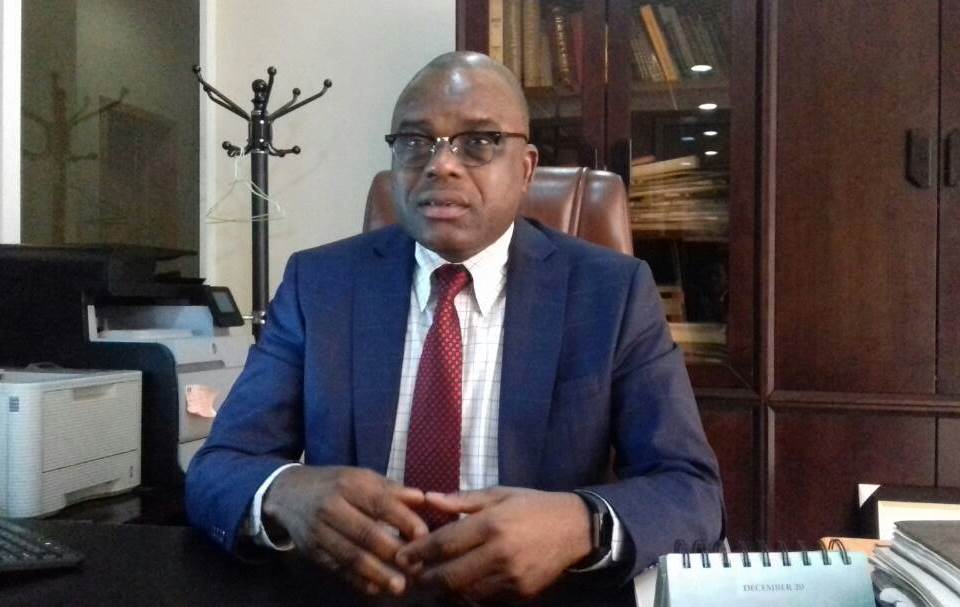
Internet of Things (IoT), Artificial Intelligence (AI) and Advanced Machine Learning (AML), Cloud Computing (CC), Cybersecurity, Block-chain & Bitcoin and Enterprise Mobility are technologies that will receive major focus in Nigeria in 2018, Mr. Michael Olajide, executive director, Finance and Administration at Sidmach Technologies Nigeria Limited, said during an interview with peter oluka, Nigeria CommunicationsWeek Correspondent.
The man Mike Olajide:
Mr. Mike Olajide is also the Executive Chairman, WaveTek Nigeria Limited. He is a 1981 graduate of Computer Science from the University of Lagos. He is a distinguished Data System Analyst with over 35 years in the IT industry.
He was a Programmer/Analyst in the Statistics and Planning Division of the Niger State Ministry of Education (NYSC), before he joined the services of the Joint Admissions and Matriculation Board (JAMB) immediately after his service year in 1982 and was the deputy leader of the team that developed a new Pre and Post Examinations Processing System that was used to process the University Matriculation Examinations (UME) locally for the first time in 1986. This led to his rapid promotion by the Board. In 1989, he resigned from JAMB as Assistant Chief Analyst to venture into the private sector where he joined ABICS Nigeria Limited, a foremost software development company at that time.
He was briefly with the Shell Petroleum Development Company (SPDC) as a Senior Consultant from ABICS, before he joined Data Sciences Nigeria Limited in 1990 as a Manager, Software Development. While in Data Sciences, he led the team that developed the National Payroll System and Vote Accounting System for the Office of the Accountant General of the Federation (OAGF), among other projects. He left Data Sciences in 1994 to join SIDMACH as a co-founder and Pioneer Staff. In the year 2012, Mike also co-founded WaveTek Nigeria Limited and presently serves as the Executive Chairman of the company.

He has served in SIDMACH as Executive Director, Managing Director and Chairman of the Board of Directors at various times. He is also a member of the Board of Directors of some organizations and companies.
Mike is a visionary and an information technology expert described by his colleagues as inspirationally cerebral. He is passionate about education and capacity development. This love and passion for education made him to develop a number of IT Solutions to enhance teaching, learning and educational assessment. His core is to employ the use of Information Technology to improve lives and enhance business outcomes.
He has in the past 35 years attended many IT trainings and conferences locally and abroad to improve his professional and leadership skills. He is well-grounded in Software Development, Leadership, Management and Selling Skills.
He is a Fellow of the Nigeria Computer Society (FNCS), a Member of the Computer Professional Registration Council of Nigeria (MCPN), a Fellow of the Chartered Institute of Local Government and Public Administration of Nigeria (FCILGPAN).
He has served as the Chairman, Publicity, Events and Trade Services Committee in the National Executive of the Nigeria Computer Society (NCS). He is presently the NCS South-West Representative on the Board of the CPN and also doubles as a member of the National Executive of the NCS.
Sidmach’s Technology Trends 2018 (Predictions) in Nigeria
Internet of Things (IoT): Internet of Things (IoT) is simply the network of physical devices, vehicles, home appliances, and other items embedded with electronics, software, sensors, actuators, and network connectivity, which enable these objects to connect and exchange data. On a preliminary level, we currently have applications on our smartphones we can use to switch off our electronics at home or in the office e.g. Televisions, Audio Systems, Air Conditioners, etc. The level of interconnectivity with electronic devices is gradually increasing and this is an indication that we are gradually gravitating towards the full adoption of IoT.
Internet of Things (IoT) will grow to create smarter solutions that will be programmatically adjusted to be in sync with human behaviour. AI and machines will enable these things to operate autonomously or semi-autonomously, and the driving forces will be efficiency and convenience. As businesses are adapting to the emerging era of the digital world, companies will strive to find innovative ways of delivering their products and services. Thus, there will be more adoption of IoT by corporate organizations and individuals in 2018.
Artificial Intelligence (AI) and Advanced Machine Learning: Simply put, Artificial Intelligence is intelligence exhibited or shown by machines. AI is continuously pushing the limits of science and technology and helping us achieve the unimaginable. 2018 will see a lot of startups utilising AI technologies to create revolutionary solutions that are going to solve real-life and complex business challenges. Be rest assured that AI is something to look forward to this year as a simple voice search is gaining its prominence already in Nigeria. Apple’s Siri, Google Assistant and Microsoft Cortana are examples of simple AI technologies that will be leveraged on in 2018.
Microsoft for example is already using AI to build more intelligent tools so we can put technology to work on increasingly complex tasks. They have partnered with Adaptive Technologies to bring together an AI platform and their biotech research to decode the human immune system, diagnose and treat diseases.
AI and Advanced Machine Learning will lead to the emergence of more intelligent apps virtually in all sectors. For us at Sidmach, we are going to leverage on AI and Advanced Machine Learning technologies to solve real-life problems in both the Health and Education sectors in Nigeria.
Cloud Computing: Many businesses are adopting cloud computing already. 2018 will witness more cloud adoption from businesses and individuals. It is obvious most businesses are now gravitating towards cloud computing. “Mobile first Cloud First” world is a Microsoft slogan that is a reality in the world today. In Nigeria today, the cloud has become the standard for the Enterprise and SMBs. Cloud computing and storage is extremely efficient and cost-effective. From Fintech to transportation and manufacturing, most of the industries in Nigeria are migrating to the cloud. This trend will continue in 2018 in Nigeria. The issue of hosting data locally will also be in focus as the Nigerian government will try to enforce the policy. Companies that have invested in providing data center services locally will take advantage of this government policy to grow their business in 2018.
Blockchain& Bitcoin: The blockchain is a shared, distributed, de-centralized and tokenized ledger that removes business friction by being independent of individual applications or participants. Fintech startups in Nigeria will start leveraging the foundation of blockchain to create disruptive and innovative business solutions. Bitcoin, on the other hand, is a form of digital currency. It’s a type of cryptocurrency used for transactions on a digital payment system.
Blockchain and Bitcoin are gradually gaining more popularity in Nigeria. Attentions are gradually shifting to the inherent benefits of these seemingly new technologies in Nigeria. The current hype of Blockchainis around financial services industry particularly with bitcoin, but there are many other possible applications including music distribution, identity verification, title registry and supply chain. We will start seeing real usage and deployment in Nigeria in 2018.
Enterprise Mobility: Enterprise mobility describes the trend of a great number of employees working outside the office and using mobile devices and cloud services to perform business tasks. The waves of technology in Nigeria is gradually moving to where Enterprise Mobility and business applications will no longer be mere tools that are good to possess, but they will evolve into indispensable instruments that will provide better productivity and increased security. 2018 will drive a wider scale adoption of serious business applications that will cater beyond communication and collaboration, and this will be an opportunity for many startups to create innovative enterprise.
Enterprise Mobility will bring about increased speed or tempo of operations to gain a competitive advantage; efficient data collection so better and faster decisions can be made; quicker reporting of events and KPIs to a wider audience to provide full situational awareness and promote good decision making and issue resolution and so on.
Cybersecurity: The new technology trends come with new security challenges for professionals. Security solutions will therefore continue to receive great attention in 2018.
Sidmach Cloud, Others: The Developments So Far
In March 2017, we launched our Microsoft Cloud platform, this makes us a Microsoft Tier-1 Cloud Solution Provider (CSP), one of the selected few in the country. This affords us the opportunity to serve our clients and prospective customers better with cloud solutions. We also now have the privilege of selling Microsoft products at wholesale prices directly to our customers. Thereby, lowering their current cost. It avails us the opportunity to meet the different needs of our clients from a single point. This provides scalability, affordability, accessibility, efficiency, speed and security. We take full responsibility for the cloud services and solutions that we deploy.
In the almost one year of the CSP launch, we have been able to open new vistas and new grounds. We have also expanded our clients’ base while we helped businesses achieve their goals. We believe firmly that year 2018 will bring in more opportunities to serve businesses and organisations more.
At the same period of March 2017, we also launched our ‘SmartSchool’ solution. It is a solution designed for School Management and Administration. This was developed from our more than 2 decades’ experience in the Nigerian Educational System. SmartSchool is designed to address all aspects of School Management System from registration, attendance, lecture notes, curriculum, fees payment through to result checking; and it has recorded considerable adoption in schools. We are happy for the progress recorded in the current session.
In the first quarter of 2018, we will launch the All Purpose Medical Information System (APMIS) for public use. This is a strategically developed solution to address the challenges in the delivery of health services to patients. APMIS is developed to serve as a link between the patient and the medical practitioners on one side and the hospital management on the other side. APMIS is easy to use and flexible. The free trial is ongoing in many hospitals in the country. At present, Hospitals can use it at no cost for a period of three months after which payment will commence. The adoption rate is currently high.
Market Penetration Strategies
We are collaborating with the various stakeholders in both the health and education sectors to drive adoption.
Sidmach Appears not Involved in Computer Based Test (CBT) Facilities? Any plans for that?
Who says we are not providing CBT solution? Indeed, we have a robust CBT solution that is in the market.
Investment in the Nigerian ICT Sector Seems Stagnant
I don’t agree that investment in the ICT sector is stagnant, it is not stagnant. If you look at the Telecoms sub-sector, yes you can say things have slowed down but in the IT sector a lot is going on right now especially with the Start-ups. I believe that 2018 will bring more investments in the IT sector. The focus has shifted to Nigeria by the big international players such as Facebook, Microsoft, Google, etc. The fairly big players in Nigeria are also focusing on investing in the Start-ups. I tell you this trend will continue in 2018.
The Nigerian Software Industry, What Has Gone Wrong?
Just like in every other sectors, we failed as a nation to do what we need to do to develop the software industry. It was a deliberate policy of the Indian government and people to develop the software industry for both local and international consumption. We have not developed and implement such a policy even now. What you are seeing today in the software industry is a product of private initiatives. Young people decided to move the industry on their own. Even the local content policy is not enforced for the MDAs not to talk of Private Enterprises. Government only reacts to what people are doing in the industry.
I can tell you that the Nigerian Software industry is innovative, virile and versatile but the management and support from the government is still very low. Indians have grown their homemade software and are exporting them to the world while Nigeria still depends on imported. We pride ourselves in imported products than homegrown products. The time has come to have a change of attitude.
Software development costs time and money. No developer can survive without requisite expertise, experience, financial clout/support and patronage. For more than two decades now, Sidmach have been engaged in software development, which are deployed to our clients’ sites and they have performed optimally without fail. We pride ourselves in software development and we have engaged many young people through this.
Lack of patronage of local software companies is one of the greatest problems confronting the industry in Nigeria, a situation that is not applicable in India. Due to non-patronage or low-patronage of local software in Nigeria, the country loses much in foreign exchange. The payment made in dollars and euros for subscriptions and annual software maintenance fee could be reduced and retained in the country through the purchase of local software.
For example, let us imagine what we would have gained if, at least, just one Nigerian bank decides to use an indigenous software rather than the prevailing situation where they all use foreign software or if the software used by the National Identity Management Commission (NIMC) or the one installed at the Office of the Accountant General of the Federation [OAGF], Federal Inland Revenue Service [FIRS], NIBSS and the Central Bank of Nigeria [CBN] are powered by indigenous software companies. This is possible today but it is requires government policy. WAEC, JAMB and NYSC are not using foreign software and they have continued to do very well in carrying out their functions.
Is the Country Making Progress with Local Content in ICT?
Honestly, I cannot say we are making any headway. It appears to me that NITDA does not have the enabling authority to enforce the local content policy or it does not have the capacity. Let us say clearly here that software professionals are not asking for reserved seats. No, we are saying give local software houses the opportunity. Our guys can and are bringing out solutions with global standards. I can also tell you that some of our solutions are superior to the foreign solutions. For example, I can vouch for Sidmach’s Insurance solutions namelyIndemnityPro and IndemnityProLife, as meeting global standards.
Don’t you think lack of professionals at the helms of affairs, is affecting the growth of the ICT industry?
As a practitioner, I will like to see one of my colleagues as the Minister but I cannot say for sure that such a person may perform better than any other person in managing the industry. It is a perception that we may see better policies.
NCS ICT Personality of the Year Award at NITMA 2017, How Do You Feel?
I feel great and I thank God for His mercies. The award is a call to service. It is a call to more work, more innovation, more quality work and more service to the people. At Sidmach, we innovate and develop solutions to make people work smarter and make life better, this is our core and we shall continue.
The award is dedicated to the entire staff of Sidmach Technologies Nigeria Limited, who were committed to innovation and quality, without whom it would not have been possible to win this. I also thank all those who believed in us and voted for us.


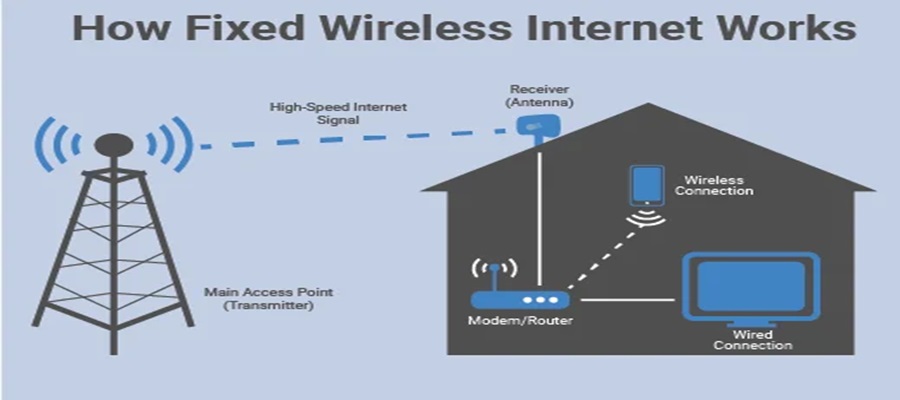
Nigeria has exactly 156,662 active fixed wired internet subscriptions as of mid-2026.

This is a tiny fraction compared to mobile GSM networks, which dominate the market with over 154 million subscribers.
The fixed wired market primarily consists of homes and offices using direct physical cables like fiber optics.
Fixed wired services use physical cables, like glass fiber or copper wire, to bring internet directly into a building.
It is like a dedicated, private water pipe for your home. It provides very fast speeds, unlimited data, and is reliable.
In contrast, mobile GSM uses radio waves transmitted from tall towers to phones, acting more like a sprinkler that sprays a signal across an entire neighborhood.
Because laying physical cables across cities is expensive and hard to do, these subscriptions are very rare.
However, the market has seen recent growth, driven largely by Fiber-to-the-Home (FTTH) services.
The top players are: MTN FibreX with 110,564 subscribers, which is roughly 88.7 per cent of the entire market.
SWIFTNG accounts for about 13,945 connections.
The others are ipNX and 21st Century Technologies which make up the number.

Nigerian Communications Commission (NCC) has said that it was strengthening collaboration with state governments and industry players to develop a transparent, cost-based pricing framework for sharing telecom ducts as part of efforts to speed up broadband expansion across Nigeria.

Ayuba Shuaibu, director of Policy, Competition and Economic Analysis, NCC, disclosed this at the Stakeholders’ Forum in Abuja.
Shuaibu said the initiative was designed to build consensus among all parties.
“The primary purpose of this forum is to ensure seamless synergy between the Commission and all stakeholders,” he said.
The director said the consultation was prompted by longstanding complaints over permits, levies and other charges imposed by different levels of government.
He said bringing together state commissioners, telecom operators, tower companies and representatives of the Nigeria Governors’ Forum had helped improve understanding of the issues.
“This engagement is a work in progress. We expect more input from stakeholders before presenting the outcome to the Nigeria Governors’ Forum,” he added.
Dr Helen Adeneye, commissioner for Innovation, Science and Technology, Kogi State. welcomed the consultation, saying Nigeria needs a harmonised policy that clearly defines the responsibilities of both the federal and state governments.
“We need a harmonised policy that allows states to collaborate better with telecom operators and creates a more business-friendly environment,” she said.
Dr Adeneye added that adopting the Dig-Once policy would establish a uniform pricing system and help resolve disputes over charges for telecom infrastructure deployment.
Chidi Ajuzie, chief executive officer, WTES Projects Limited, whose firm is conducting the consultancy study, said the proposed framework would introduce a common cost structure for duct sharing to support broadband investment and economic growth.
“The study is designed to create a uniform pricing model that will drive broadband growth, economic development and wider adoption across the country,” he said.
Ajuzie explained that the consultants had developed preliminary floor and ceiling prices to guide operators while allowing flexibility within the approved range.
He added that the recommendations remain open to industry input before the NCC finalises the framework.
The Dig-Once Policy is designed to reduce the cost and disruption of deploying broadband infrastructure by requiring fibre ducts to be installed whenever roads are constructed or rehabilitated.
The NCC is developing a cost-based pricing framework for sharing these ducts to promote fair pricing, reduce duplication of infrastructure and encourage investment.
The proposed model is expected to support the Federal Government’s broadband expansion targets while improving collaboration between telecom operators and state governments.
Telecom
MUSON Graduates Shine at 2026 Concert as MTN Foundation Celebrates 20 Years of Music Scholarships

Emeka Nwodike, acting director of the MUSON School of Music, conducted the institution’s graduating class in a grand finale performance, bringing the 2026 graduation concert to a memorable close. The concert took place on July 7 at the Shell Hall of the MUSON Centre, Onikan, Lagos.

The event celebrated students who successfully completed the MUSON Diploma Programme through the MTN Foundation Scholarship Programme.
The graduating students delivered a rich choral repertoire that reflected the breadth of their musical training, performing Italian Salad by Richard Genee, My Song by Eriks Esenvalds, Obi Dimkpa by Laz Ekwueme, and an ABBA Medley arranged by Goran Bejstam. Under the Acting Director’s baton, the choir demonstrated technical precision, vocal maturity and artistic expression before an audience of family members, music enthusiasts and industry stakeholders.
The concert formed part of the long-running partnership between the MTN Foundation and the Musical Society of Nigeria (MUSON), which has, since 2006, provided scholarships for hundreds of talented young Nigerians to receive formal music education through the MUSON Diploma School. The programme continues to serve as one of the country’s foremost platforms for developing professional musicians and strengthening Nigeria’s creative economy.
Speaking at the close of the concert, Nwodike expressed appreciation to the MTN Foundation for its sustained support of the scholarship programme over the past two decades. He also thanked the Director of the MUSON Centre, faculty members, mentors and other stakeholders whose dedication has contributed to the school’s continued success.
“For nearly 20 years, the MTN Foundation has remained a steadfast partner in our mission to nurture young musical talent. We are deeply grateful for that commitment. I also want to thank the Director of the MUSON Centre, our faculty, mentors and everyone whose dedication has helped the MUSON School of Music continue to grow and thrive. Their support has made this programme what it is today, and our graduates are a testament to that collective effort,” he said.

Court Adjourns Alleged Binance Tax Evasion Case over Settlement Talks

Fixed Wired Internet Market Lags as Mobile Gains Ground

Xenophobic Attacks: OYC Threatens to Picket MTN Nigeria Offices

New NIMC Act Strengthens Data Protection, Privacy – Director

BON Establishes Six Ad Hoc Committees to Modernize Broadcasting

NASENI Moves to Digitize CCB’s 5m Assets Declaration and Operations

Mobile Internet Gender Gap Widest in Africa – GSMA

Nigeria Launches FreeTV Nationwide

CANAL+ Partners Samsung to Pre-Load DStv Stream on New Samsung TVs In Nigeria, Other African Countries

Lebara Nigeria Launches Lebara Play, Africa’s First Telecom-Owned Micro-Drama Platform




 News2 days ago
NRC, Ponzi Scheme Collapses Resulting Loss of Billions of Naira

 News2 days ago
NSITF Partners South African Insurer on Digital Transformation

 General News2 days ago
KPMG Urges Africa’s Most Innovative Tech Entrepreneurs to Enter the Global Tech Innovator 2026 Competition

 E-Financial2 days ago
FCT-IRS Unveils New Digital Platform, Taxporta

 E-Business2 days ago
FG Suspends New Internet Regulations to Prevent Overlapping Rules
 E-Business2 days ago
NIN Enrollment Hits over 136m as New ID Law Takes Effect

 E-Business2 days ago
Plateau PCC Collects Nigerians’ Data without Privacy Policy – FIJ

 General News2 days ago
Court Declares ARCON’s N60Bn Fine against Facebook Nigeria Illegal