

Telecom
5G Radio Dot: How Ericsson Gives Big Boost To Indoor Coverage

By peter oluka
With mobile data traffic surging by eight times and 1 billion 5G subscriptions expected by the end of 2023, mobile operators must meet consumer and enterprise demand for applications such as 4K/8K video streaming, virtual reality/augmented reality, and immersive media.
This puts out a strong call for indoor coverage, which cannot be easily addressed by outdoor radio deployments as modern building materials can block outdoor radio signals.
Ericsson is meeting this challenge by introducing the 5G Radio Dot, a small cell radio designed to satisfy the advanced indoor mobile broadband performance requirements demanded by 5G.
Building on the elegant design of previous generations, the 5G Radio Dot takes less than half the time to install compared to other indoor solutions, and will support the new 5G mid-bands (3-6GHz) with speeds up to 2Gbps.
NishantBatra, Head of Product Area Network Infrastructure at Ericsson, says: “Adding small cell solutions to our 5G portfolio is a natural part of the network evolution. Enterprises have been asking for first-rate connectivity indoors, as well as higher speeds and capacity to serve advanced use cases that cannot be addressed by traditional indoor systems. Our 5G portfolio, bolstered by small cells, will enable operators to meet these demands.”
Daryl Schoolar, Practice Leader, Ovum, says: “Now that first 5G standards are here, vendors are going to need multiple radio solutions to help operators roll out their new 5G networks. Ericsson takes an important initial step in this direction by adding indoor small cell 5G solutions to its already existing outdoor 5G RAN portfolio.
“This new indoor solution from Ericsson is going to be attractive for operators wanting to offer enterprises good indoor performance for enhanced mobile broadband and new industrial applications that can’t be met by Wi-Fi or 5G base stations deployed outdoors.”
Deputy Head of China Mobile Research Institute, Huang Yuhong, says: “The Ericsson Radio Dot System is already widely deployed in our 4G networks. As an innovative small cell solution, it further enhances our indoor solutions and will continue to play a key role in the 5G era. We’re happy to see Ericsson evolving the Radio Dot to 5G technology.”
As a natural evolution of the Ericsson Radio Dot System, operators will be able to deploy 5G Radio Dot next to 4G solutions using the same cabling infrastructure, same network architecture and dot locations. This innovative small cell solution provides a simple upgrade path for existing Radio Dot System deployments, adding 5G technology capabilities. It is easy to add frequency, capacity, and technologies.
Feng Yi, Director of Wireless Technology Department, China Unicom Network Technology Research Institute, says: “Our users enjoy excellent indoor coverage in thousands of buildings in China, including shopping malls, thanks to Ericsson Radio Dot solution. As a scalable system, it enables us to meet the growing demand for seamless indoor connectivity. It is great to see Ericsson evolve the solution to 5G as we prepare for the next-generation mobile technology.”
The Radio Dot System has been successfully deployed for many indoor applications used in large areas such as office buildings, shopping malls, hospitals, and airports. Over time, the small cell solution will also support 5G industrial applications from connected factories to more extreme cases such as connected mining. Ericsson is a pioneer on this front. Its collaboration with Boliden shows how Radio Dot technology can improve safety and efficiency through the remote control of machines that keep people out of the most dangerous areas of the mine at the most dangerous times.
The 5G Radio Dot will undergo trials in late 2018 and will be commercially available in 2019.
Meanwhile, recent Ericsson ConsumerLab reports, show 60 percent of mobile subscribers are unhappy with their indoor cellular connectivity.
In January 2018 report, smartphone users rate better indoor and outdoor coverage among the top expectations from 5G



Nigerians lost about N12.5 billion to telecom-related financial crimes from 2019 to January 2023, underscoring the scale and persistence of this threat to the telecommunications industry, PwC Nigeria has said, citing data from the Nigerian Communications Commission (NCC).

PwC, in its latest report, ‘AI’s Dual Role in Telecom Fraud: Why Artificial Intelligence is Both a Threat and a Shield for Telcos’, said the growing adoption of AI by fraudsters is amplifying the frequency and impact of fraud.
The report said fraud has long been a persistent challenge in the telecoms landscape, leading to substantial financial losses for customers and reputational damages for telecommunication companies (telcos).
PwC’s latest report, ‘AI’s dual role in telecom fraud’, highlights global trends in how AI is reshaping both the threats and defences in telecommunications.
The publication examined what these shifts mean for operators in the local market and how they can stay ahead by adopting proactive, AI driven fraud management strategies.
It offered insights into how AI is enabling more sophisticated fraud schemes, from deepfake social engineering to automated attacks; the emerging role of AI powered detection and monitoring tools in strengthening fraud prevention frameworks.
The report also gave practical steps for telecom operators to balance innovation, resilience, and customer trust in an AI driven fraud ecosystem.
PwC noted that the impact of fraud on telecommunications companies is far-reaching, resulting in financial losses, reputational damage, and compliance issues.
The report said for instance, that in 2023, global telecom fraud was estimated at $38.95 billion.
It, however, stated that in Nigeria, where telecom acts as a key gateway to financial services through Unstructured Supplementary Service Data (USSD) and some are moving into fintech, these evolving risks place added pressure on operators.
The report stated that while operators have developed systems and controls to manage these risks, the sector’s expansion into adjacent domains (such as mobile money and payment service banking) is blurring the traditional boundaries of telecom fraud.
“The result is a more complex and interconnected risk environment, where both the frequency and impact of fraud are escalating. Adding to this complexity is the rapid pace of technological advancement.
For instance, Russian cybersecurity firm F6 reported a rise in SIM swapping incidents, particularly related to the shift to eSIM technology. These fraudsters are hijacking phone numbers and bypassing security measures to access bank accounts,” the report said.
The report, authored by Udochi Muogilim, Partner and Technology, Media and Telecommunications Leader, PwC Nigeria, and Adeola Adekunle, associate director, Forensic Services, however, said as AI continues to mature, it is reshaping the fraud landscape—introducing heightened threats and powerful new tools.
“On one hand, AI can be exploited to scale and automate fraud schemes with unprecedented sophistication. On the other, it equips telcos with advanced capabilities for fraud detection, prevention, and response.
“This dual role—AI as both a tool and a target—underscores the urgent need for Nigerian telecom players to adopt AI thoughtfully and strategically.
“Navigating this evolving landscape requires more than just investment in technology; it demands a deep understanding of what’s happening today in the world of technological disruption, and what’s to come,” the experts stated.
The report reiterated that telecom fraud affects a wide range of stakeholders, from individual consumers facing unauthorised charges to large corporations suffering reputation damage.
“The combination of AI and various fraud types significantly increases the success rate of these schemes.
“Furthermore, the global nature of telecommunications networks allows fraud to swiftly cross borders, complicating efforts to investigate and prosecute offenders, thus presenting a pressing concern for telecom companies and their regulators,” PwC said.
The firm, however, emphasised that AI has the potential to revolutionise how telecom companies and regulators combat fraud while enhancing the quality of service, ultimately fostering greater trust among consumers.
To fully harness this potential, PwC said it is crucial for industry players to stay informed about evolving technology trends and anticipate future challenges.
This awareness, it added, will empower them to leverage AI’s capabilities for more effective fraud prevention and the proactive management of emerging fraud types, all while adhering to responsible AI principles.
“A well-coordinated combination of the right resources and strategic alliances will enable the industry to make a significant impact in the fight against telecom fraud and build a safer, more efficient telecommunications ecosystem,” PwC affirmed.
The firm even went a notch higher by offering to help industry players and stakeholders turn fraud-related friction into forward movement, powered by the right technology.
“We bring trust and transparency to the heart of your decision-making, helping you use AI, data and tech to reduce the risk of fraud, respond swiftly to breaches, and emerge stronger—so you can prepare your business for what’s next,” PwC offered.
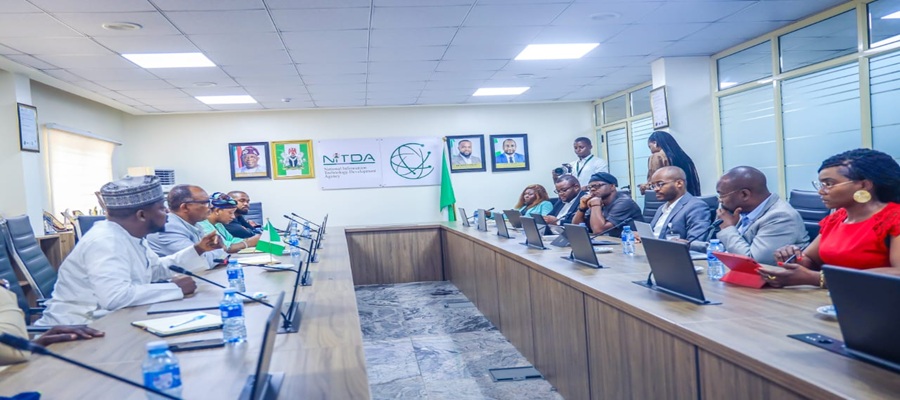
National Information Technology Development Agency (NITDA) has reaffirmed its commitment to building a coordinated and inclusive digital ecosystem in Nigeria, further strengthening its role as an ecosystem orchestrator.

NITDA
This was disclosed during a working visit centred on Nigeria’s startup ecosystem framework, where the Director General of NITDA, Kashifu Inuwa, was represented by the Director of Stakeholders Management and Partnerships, Dr Aristotle Onumo.
Speaking during the visit, the DG said NITDA was established to drive coordinated and sustainable information technology development in Nigeria, leveraging both its regulatory and developmental mandates, serving as an ecosystem orchestrator that fosters collaboration, innovation, and growth across the digital economy.
He stated that these reforms are aligned with the Federal Government’s Eight-Point Agenda and reflected in NITDA’s Strategic Roadmap and Action Plan (SRAP 2.0), which is built around eight strategic pillars designed to accelerate the growth of Nigeria’s digital economy.
According to him, a key objective of the roadmap is to position Nigeria as a technologically driven nation that promotes inclusive economic development through innovation. He highlighted digital literacy as a major priority, with NITDA targeting 70 percent digital literacy by 2027 under the National Digital Literacy Framework, with a long-term goal of achieving 95 percent by 2030.
Other priority areas, he said, include ecosystem development, IT talent advancement, expansion of digital infrastructure, policy implementation, and research-driven innovation.
The visiting delegation from Angola’s National Institute of Support for Micro, Small and Medium Enterprises (INAPEM), led by Chairman of the Board of Directors (PCA) and Chief Executive Officer, Bráulio Augusto, commended Nigeria’s progress in implementing the Nigeria Startup Act and described the country as a valuable model for shaping Angola’s own startup legislation.
Augusto disclosed that Angola’s Startup Law has received initial parliamentary approval and is now entering the implementation stage. He expressed interest in understanding how Nigeria transitioned from legal adoption to practical execution, particularly in areas such as startup labelling, incentive management, ecosystem mapping, investor registration, and the operation of the Nigeria Startup Portal.
According to him, Angola is currently developing the Startup Angola Programme under its Digital Entrepreneurship Support Programme, aimed at building a structured and integrated startup ecosystem rather than isolated interventions.
The programme will focus on institutional strengthening, startup funding, support for business development service providers, expansion of innovation hubs, and partnerships with international accelerators.
He added that Nigeria’s experience is especially relevant as Angola seeks solutions to challenges including informality, limited access to finance, youth unemployment, digital inclusion gaps, and restricted market access for small and medium-sized enterprises.
The INAPEM chief also requested further technical insights into Nigeria’s National Startup Council, its member selection process, and the governance structure of the Nigeria Startup Portal.
The visit highlights growing collaboration among African nations in digital policy development and further reinforces Nigeria’s position as a reference point in shaping startup ecosystem frameworks across the continent.

Kashifu Inuwa, National Information Technology Development Agency (NITDA), has reaffirmed the Agency’s commitment to deepening collaboration with the Federal Ministry of Communications, Innovation and Digital Economy (FMCIDE) to accelerate Nigeria’s digital transformation and strengthen policy alignment across the sector.

The Director General of the National Information Technology Development Agency (NITDA), Kashifu Inuwa, taking the Permanent Secretary of the Federal Ministry of Communications, Innovation and Digital Economy, Mr. Nadungu Gagare, on a tour of the newly commissioned Innovation Space during the Permanent Secretary’s working visit to the Agency’s corporate headquarters.
Speaking during a courtesy visit by the Permanent Secretary of the Ministry of Communications, Innovationand Digital Economy, Mr. Nadungu Gagare, to NITDA headquarters, Inuwa described the engagement as a significant demonstration of the Ministry’s support and leadership, noting that sustained collaboration between both institutions is essential to delivering Nigeria’s digital economy agenda.
The NITDA Director General recalled previous engagements with the Ministry, including a familiarisation visit during which the Agency shared its strategic roadmap and ongoing initiatives, noting that continuous dialogue has strengthened alignment between both institutions.
He highlighted key policy areas requiring continued collaboration, including the development of a national sovereign cloud infrastructure and a comprehensive cybersecurity policy framework.
“We are awaiting the Ministry’s guidance on how to move forward, particularly on the national cloud and cybersecurity policies,” he said, while emphasising the importance of clear institutional boundaries and mutual respect in enhancing operational effectiveness and inter-agency cooperation.
Inuwa also revealed that NITDA has been at the forefront of implementing the Performance Management System (PMS), having introduced the framework internally several years before its adoption across the Federal Civil Service.
“We started PMS about four years ago. What we have now at the national level actually originated from our internal reforms,” he disclosed, adding that initiatives such as Project NEXT have strengthened accountability, role clarity, and measurable outcomes across the Agency.
“If you perform well, you are rewarded. If not, there are consequences. Even promotions are tied to performance,” he added.
The Director General further highlighted NITDA’s transformation from a traditional regulatory institution into a dynamic ecosystem enabler focused on innovation, inclusion, and national development.
“We are building a high-velocity organisation—one that is agile, inclusive, and driven by innovation,” he said, explaining that the Agency is embracing a more flexible and entrepreneurial culture that empowers staff to contribute ideas and drive institutional growth.
In his remarks, the Permanent Secretary of the FMCIDE, Mr. Nadungu Gagare, reaffirmed the Ministry’s commitment to strengthening collaboration with its agencies, describing partnership as fundamental to achieving sustainable progress in Nigeria’s digital transformation journey.
“If there is no partnership, there is nothing that can be achieved. But with partnership and collaboration, a lot can be accomplished, and that is exactly what we are seeing now,” he stated.
Gagare explained that the visit forms part of the Ministry’s ongoing engagement with agencies under its supervision to strengthen policy coordination, assess progress, and address operational challenges requiring higher-level intervention.
He commended the management and staff of NITDA for their dedication to advancing Nigeria’s digital innovation ecosystem, acknowledging the Agency’s contributions to digital literacy, innovation, cybersecurity awareness, and the creation of opportunities for startups and young innovators.
“NITDA has continued to play a pivotal role in shaping Nigeria’s digital future through the promotion of information technology development, digital literacy, innovation, and regulatory standards,” he said.
The Permanent Secretary also stressed the importance of policy coherence among institutions within the Ministry, noting that agency mandates are interconnected and must be implemented seamlessly.
“Your mandates are inputs into one another. That is why we need tight collaboration so implementation can go smoothly,” he said, while assuring NITDA of the Ministry’s continued guidance and institutional support.
He further highlighted ongoing Federal Civil Service reforms, particularly the adoption of the Performance Management System, which promotes accountability, clear target-setting, and measurable performance outcomes.
“When everything needed for performance is made available and targets are not met, consequence management follows. Where targets are exceeded, there is reward. This is how we drive performance in the service,” he noted.
The visit showcases the shared commitment of both FMCIDE and NITDA to advancing Nigeria’s digital economy through stronger collaboration, innovation, and effective governance, with the strengthened partnership expected to play a critical role in delivering inclusive growth, improved service delivery, and sustainable national development.

World Bank Blocks Social Media Comments from Nigerians over Loan Backlash

Nigerians Lose N12.5bBn to Telecom-Related Financial Crimes – PwC

Jumia Nigeria Records Strong Q1 2026 Growth as Technology-Led Strategy Drives Market Expansion

Lagos Plans New Cybersecurity Centre

LG Electronics Strengthens Household Energy Efficiency in Nigeria with Advanced Inverter Refrigerator Solutions

MTN, VDT, Zoracom, Digital Realty Back 2026 Girls in ICT Campaign

Vitel Wireless Partners Fintechs to Expand Access to Services

Kaspersky Discovers Vulnerability in Qualcomm Snapdragon Chips that can Lead to Data Loss & Device Compromise

Bank Customers to Pay N1,500 for ATM Card Issuance, Replacement – CBN

FCCPC Licenses 5 Firms for Airtime, Data Lending as Telcos Step Aside




 News2 days ago
The Nigeria Prize for Science & Innovation Records New Height as 2026 Edition Attracts 237 Entries

 Telecom2 days ago
Firm Shares 5-step Safety Action Plan on What to Do When You Discover Your Phone is Missing

 General News2 days ago
Cross-Border Payments Startup Chimoney Closes Shop After 4 Years

 Telecom2 days ago
Chamber Raises Alarm over Increasing Telecoms Infrastructure Vandalism

 General News2 days ago
Tribest Corporate Support Group Appoints Fadebi as Group Executive Director

 E-Financial2 days ago
NDIC Drags Wema Bank to Court over N125.38Bn Banana Island Assets

 General News2 days ago
FCMB, REA Others Launch $188M Fund to Finance 191mw Solar Capacity

 General News2 days ago
Gozi-Anyaokei, Bank MD Arraigned over Alleged N19m, $30,000 Fraud