

Broadcasting
Unreliable Power Not Constraint for Our Data Center Operations – MDXI Boss


Mr. Gbenga Adegbiji, General Manager, MainOne Data Center subsidiary, MDXI, said notwithstanding that power availability in Nigeria may be the bane for other data centers and enterprises, they will not be deterred.
In fact, he said that the MDXI data center is achieving almost 100% power uptime availability, with a surmountable over 90% of that power coming directly from the national grid.
He stated this while reacting to a recent report published in the media where an operator in the industry complained that power is a key problem across Africa and Nigeria’s power issues are on a larger scale and more constant than experienced globally.
But, to Adegbiji debunked the believe that power hungry industries such as data centers cannot successfully operate in Nigeria, claiming its company has enjoyed 90+% power uptime since 2015 and is poised to achieve 95% availability in 2018, based on a growing partnership with a local power distribution company.
During an interview at the data center recently, Adegbiji stressed that the MDXI facility was purpose-built to mitigate all challenges that global businesses may have in a Nigerian data center.
He mentioned that before constructing the data center, the company realized 24×7 power supply was a critical challenge for businesses requiring high availability colocation infrastructure within Nigeria and invested in a direct private connection to the National grid through newly privatized Eko Electricity Distribution Plc.
“We recognized the crippling impact of downtimes, the peculiarities of the Nigerian power environment as an albatross that had forced many companies to relocate outside Nigeria and ensured MDXI was established with the most robust electricity power and back-up arrangements, in line with the Telecommunications Industry Association (TIA) ANSI/TIA-942, the leading Telecommunications Infrastructure Standard for Data Centers.
“Though we made provision for the full complement of generators and diesel tanks with capacity of over 100,000 liters to secure the data center’s operations and guarantee 99.995% availability, we also partnered with Eko Disco and co-invested in a dedicated 33KV feeder and line connection to the National Grid through the Ajah sub-station.
“Connecting directly to the grid provides us access to multiple power generating plants and guarantees backup in the event that one power plant goes down.
“This was a capital investment of hundreds of millions in substation equipment and dedicated power lines which bypass all ‘last-mile’ challenges encountered in electricity distribution.
“This has guaranteed an increase in power availability at the data center from 50% average commercial power availability to between 95% and 98%,” Adegbiji said.
Aside the steady state of operation and the attendant reliability of equipment and systems that the public power provides, MDXI has been able to guarantee a significant cost savings which is passed on to its numerous customers which include Banks, Government parastatals, international financial organizations and the large over-the-top operators.
The data center’s performance and service delivery has earned the company an Impact Award during the Presidential Enabling Business Environment Council (PEBEC) Impact Awards for its contribution to improving Nigeria’s rank in the “Ease of Doing Business” index through its colocation of critical server infrastructure for the Federal Government.
Mr. Adeoye Fadeyibi, Chief Executive Officer, Eko Disco, highlighted MDXI as a stellar example of how privatization of the power sector is making a positive contribution to the Nigerian economy by guaranteeing a higher level of power availability.
“With MDXI’s significant investment in last mile transmission and distribution infrastructure, EKEDC has been able to provide an average of 88% uninterrupted uptime to the data center on a monthly basis since its launch in January 2015.”


International Air Transport Association (IATA) has identified Nigeria as one of the most expensive countries in the world for airline operations, citing high taxes, charges and operational costs that continue to weigh heavily on local carriers.

IATA’s Regional Vice President for Africa and the Middle East, Kamil Al-Awadhi, disclosed this during the association’s Annual General Meeting held in Rio de Janeiro.
Al-Awadhi said that although Nigeria’s Minister of Aviation and Aerospace Development, Festus Keyamo, had been pursuing reforms aimed at improving the aviation sector, airlines operating in the country still faced enormous cost pressures.
According to him, the high-cost operating environment has continued to affect the profitability and competitiveness of Nigerian airlines, making it difficult for the industry to realise its full potential.
He noted that excessive taxes, regulatory charges and other operating expenses remained major obstacles to airline growth across the region, with Nigeria ranking among the most challenging markets from a cost perspective.
Al-Awadhi urged member states of the Economic Community of West African States to adopt a proposed 25 per cent reduction in aviation taxes and charges to ease the burden on airlines and passengers.
According to him, lowering taxes and charges would reduce airfares, stimulate passenger traffic and strengthen the competitiveness of carriers operating within West Africa.
He stressed that a more supportive policy environment was critical to unlocking the economic benefits of aviation, including increased trade, tourism and regional integration.
Industry stakeholders have consistently advocated lower taxes and regulatory fees, arguing that the current cost structure makes air travel less affordable and limits the growth of the sector.
IATA’s latest remarks add to calls for governments in West Africa to implement policies that will promote a more sustainable and competitive aviation industry across the region.
Broadcasting
NASENI Trains 50 Women in Kano on Renewable Energy Technologies Under She-Powers Initiative
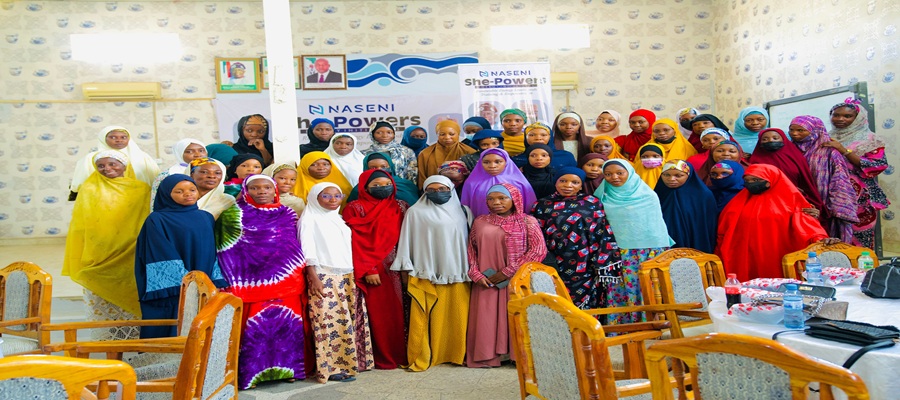
The National Agency for Science and Engineering Infrastructure (NASENI), under the leadership of its Executive Vice Chairman/CEO, Khalil Suleiman Halilu, has trained 50 women in Kano State on inverter and battery technologies through its She-Powers Energy Initiative.

The three-day programme, held at the Technology Incubation Centre, Farm Centre, Kano which ended yesterday, was designed to equip participants with practical renewable energy skills, promote women-led enterprises, and enhance sustainable livelihoods.
The initiative forms part of NASENI’s broader commitment to empowering women, creating economic opportunities, and expanding participation in Nigeria’s growing clean energy sector. It also aligns with the Renewed Hope Agenda of President Bola Ahmed Tinubu by supporting job creation, entrepreneurship, and inclusive economic development.
Through targeted interventions such as the She-Powers Energy Initiative, NASENI continues to demonstrate its commitment to leveraging technology and innovation to improve lives and drive sustainable development across the country.
Photos: Participants at the She-Powers Energy Initiative training organised by the National Agency for Science and Engineering Infrastructure (NASENI) held at the the Technology Incubation Centre, Farm Centre, Kano yesterday.
MultiChoice Nigeria has launched a month-long promotional campaign tagged “Open Time”, offering eligible DStv subscribers access to higher viewing packages at no additional cost.

The promotion, which runs from June 1 to June 30, 2026, is aimed at rewarding existing customers, reconnecting subscribers and attracting new users across Nigeria.
Under the initiative, active subscribers on selected lower-tier packages, including Compact and Compact+, will automatically be upgraded to higher viewing tiers, with some customers gaining temporary access to Premium content during the promotional period.
According to the company, eligible subscribers will not be required to register or manually activate the offer, as upgrades will be applied automatically once subscription payments are confirmed.
In a statement announcing the campaign, MultiChoice said the initiative was designed to provide customers with access to a wider range of entertainment content and enhance viewing experiences.
“The Open Time initiative is a simple way for our customers to enjoy more of the stories they love and discover new content across genres, as long as their accounts remain active during the period,” the company stated.
The DStv Premium package, which currently costs N44,500 per month, offers access to more than 160 channels, including sports, movies, documentaries, children’s programming, news and lifestyle content.
MultiChoice said the offer applies to subscribers who maintain active accounts throughout the campaign period.
The company added that the promotion forms part of efforts to enhance customer value by providing broader access to entertainment content, including drama, sports, action and children’s programmes.
To participate, subscribers are required to make payments through approved channels such as the official DStv website, the MyDStv mobile application, USSD banking platforms and authorised payment agents.
The company clarified that all promotional upgrades would automatically expire at the end of June, after which subscribers would revert to their original subscription packages.
Industry analysts say the campaign comes amid increasing competition within Nigeria’s pay television and streaming market, where service providers are introducing incentives and value-added offerings to attract and retain customers.
MultiChoice said the initiative reflects its commitment to delivering quality entertainment and ensuring subscribers enjoy greater value from their subscriptions.

CBN to Deploy AI in Fight Against Payment Fraud

NDPC, Meta Launch 2-Year M-SIDP after Regulatory Settlement

Report Faults Banks over N91.1 Trillion Sterilised at CBN

Telcos Fault Data of FDI Flow, Claim Investment of N1.86 Trillion on Service Expansion

NRS Accredits Afri Invoice as Access Point Provider to Drive Nigeria’s Mandatory e-invoicing

CBN Extends PoS Geo-Fencing Enforcement Deadline to August 2026

FG to Launch Nationwide Free Digital TV Platform June 17

MTN, Airtel, Glo Under Pressure as FG Demands Better Service Delivery

Jumia Nigeria Records Strong Q1 2026 Growth as Technology-Led Strategy Drives Market Expansion

Metro Digital, Nigerian Firm Accuses Multichoice Of Refusal to Obey Court Judgements




 Telecom2 days ago
Price of Data in Nigerian Mobile among Top Four Cheapest Globally – MTN CEO

 E-Financial2 days ago
BOI Wins Dual Honours @ EMEA Finance Awards for Sustainability and Social Impact Leadership

 E-Financial2 days ago
CBN Imposes N100m Penalty on Dealing Bank Inadequate Processing of Forex Documents

 E-Business2 days ago
NITDA Okays NiRA’s Annual, Business Report

 Telecom2 days ago
NAIFF Returns for 2026, Expands Focus on AI-Powered Storytelling in Africa

 Telecom2 days ago
FCCPC Refutes Airtime Market Takeover Claims

 General News2 days ago
SSDC Warns Businesses against Cyber, Election-Related Risks

 General News2 days ago
Moniepoint DreamDevs Bootcamp Graduates Second Cohort to Strengthen Homegrown Talent Pipeline