

General News
UBA Appoints Four New Board Members

Board of Directors of the United Bank for Africa is pleased to announce the appointment of four new members to its board, subject to the approval of the Central Bank of Nigeria(CBN).
The new board members are Mrs. Erelu Angela Adebayo, Ms. Angela Aneke, Alhaji Abdulqadir Jeli Bello and Mr. Isaac Olukayode Fasola.
These appointments follow the retirement of Mrs. Rose Okwechime, Mr. Adekunle Olumide, OON, Alhaji Ja’afaru Paki and Mr Yahaya Zekeri, with effect from August 30, 2018.
“I am pleased to welcome Erelu Adebayo, Angela Aneke, Abdulqadir Bello and Kayode Fasola to the Group Board” said Tony O. Elumelu, the Group Chairman of the Bank. “These men and women bring a wealth of experience in their fields and will be tremendous assets, as we deliver on our mission to become the leading Pan-African financial institution in all our countries of operation.”
‘I am particularly pleased that two of the newly appointed Non-Executive Directors are women, bringing the total number of women to four, a further demonstration of our commitment to ensuring equality for both men and women,’ added the Group Chairman.
Mr. Elumelu thanked the retiring directors for their contribution, hard work and commitment to UBA, “I would like to express my appreciation to our retiring Directors for their leadership and dedication to UBA and for their contribution to an already impressive 2018. I wish them the very best in their future endeavours”.
This announcement comes on the heels of the Bank’s strong H1 2018 performance with a PBT of $58.1billion.
With the successful expansion of its retail operations, UBA now operates in 20 countries in Africa, following its recent acquisition of a licence in Mali and the United Kingdom. The bank also has offices in New York City and in Paris.
About the Directors

Erelu Angela Adebayo who graduated with an M.Phil in Land Economy from Cambridge University, is the former First Lady of Ekiti State in Nigeria.
Mrs Adebayo previously served on the boards of several organisations, including the Dangote Foundation, DN Meyer Plc, Wemabod Estates.
Mrs. Adebayo is a council member of the Nigerian Stock Exchange and has worked extensively on real estate development and She is the Chairman of the Erelu Adebayo Foundation for the underpriviledged.

Ms. Angela Aneke is a board advisor, banker and a strategic thinker with over 30 years’ experience in financial services, in the areas of financial control, strategy, transaction banking, corporate banking, retail banking and governance.
Ms. Aneke has held executive management and board positions in several international and regional institutions, including Ecobank Transnational Incorporated and the United Bank for Africa.

Mr. Isaac Olukayode Fasola is a consummate professional with over 30 years’ cognate experience obtained from Management and Board positions covering banking operations, risk management, credit analysis, insurance, asset management, business strategy/development, performance management and corporate governance.
Mr. Fasola previously served as an Executive Director of a commercial Bank in Nigeria. Mr. Fasola holds 2 MBAs and is pursuing a Ph.D. in Business Administration.

Mr. Abdulqadir J. Bello, a Chartered Accountant, has over 30 years’ corporate experience in the banking sector, during which period he held several senior Management positions in various Banks.
He also previously served as the Group Chief Credit Officer of UBA and thereafter as the Executive Director in charge of Risk Management for UBA Group.


General News
PalmPay Strengthens Data Protection Culture with Employee Privacy Workshop and Privacy Champions Programme

PalmPay has reinforced its commitment to responsible data governance and customer information protection through a specialised two-day data protection workshop for employees and the launch of its internal Privacy Champions Programme, an initiative designed to strengthen awareness, accountability, and responsible data handling across the organisation.

The initiative comes at a time when data protection is increasingly critical following recent reports of recorded 281,500 compromised user accounts in the first quarter of 2026, ranking 34th among the world’s most breached countries, according to a new quarterly data breach analysis by cybersecurity firm, Surfshark.
Facilitated by the Nigeria Data Protection Commission (NDPC) and leading Data Protection Compliance Organisation (DPCO) TechHive Advisory, the two-day workshop equipped employees with practical knowledge on privacy governance and data protection obligations, incident awareness, and the role each employee plays in protecting personal data.
The initiative forms part of PalmPay’s ongoing efforts to advance compliance with the Nigeria Data Protection Act (NDPA) 2023. It also reflects the company’s continued investment in safeguarding customer information and fostering a culture where privacy remains everyone’s responsibility.
The Privacy Champions Programme establishes a network of employee representatives across business functions who will support awareness, promote best practices and help strengthen the organisation’s privacy culture. By integrating privacy considerations into day-to–day activities the initiative aims to further enhance accountability and reinforces customer trust.
Speaking on the initiative, Managing Director of PalmPay, Chika Nwosu, stated: “At PalmPay, protecting customer information is fundamental to maintaining the trust our customers place in us everyday, and remains central to our operations. Statistically, 10 out of 100 Nigerians have been affected by data breaches.
Hence, we have a greater responsibility to ensure that personal information is collected, processed, stored, and protected responsibly. This specialised training reflects our continued investment in strengthening internal awareness and ensuring our teams remain equipped to uphold the highest standards of data privacy and protection.”
As a digital financial services platform serving millions of users, PalmPay reaffirmed that privacy and data protection remain embedded in its operational culture, with continuous investments in data governance practices.
PalmPay also encourages customers to remain vigilant and adopt safe digital practices, including protecting account credentials, exercising caution when sharing personal information online, and reporting suspicious activities promptly. The company maintains that building a secure digital ecosystem requires a shared commitment from organisations, regulators, and users alike.


The Gathering on 100 made its latest stop in Enugu over the weekend, bringing together hundreds of young Nigerians for a day of networking, fun, entertainment, and business opportunities.

The event, previously held in Lagos and Aba, arrived in Enugu as the city gains recognition as one of Nigeria’s emerging innovation and startup hubs. Recent ecosystem reports rank Enugu among the country’s leading startup cities. The South-East region now accounts for more than half of identified startups across the South-East and South-South, highlighting the region’s growing role in Nigeria’s entrepreneurial landscape.
A major highlight of the Enugu edition was the Pitch-a-thon competition, where three entrepreneurs received a combined ₦5 million in grants to support their business growth. More than 100 entrepreneurs applied for the competition, with 10 finalists selected to pitch before a panel of judges. At the end of the contest, Velas Global Nutrition Limited emerged as the overall winner, securing ₦2.5 million. Werxio, founded by Donatus Prince, received ₦1.5 million, while Whipcare Company was awarded ₦1 million.
These grants address a persistent funding challenge. According to the Small and Medium Enterprises Development Agency of Nigeria (SMEDAN), the country is home to over 39 million MSMEs, contributing nearly half of Nigeria’s Gross Domestic Product and accounting for about 84 per cent of employment nationwide. Despite this, access to finance remains a significant obstacle to business growth.
For Chizoba Osuji, founder of Velas Global Nutrition Limited, the funding facilitates the expansion of a business built on years of research. Her company processes indigenous crops into shelf-stable blends, supporting nutrition and local women smallholder farmers. “This is motivation to keep making Nigerians healthier through better food,” she remarked, noting the grant will fund semi-automated equipment to increase production capacity to 20 tonnes monthly.
She added that the ₦2.5 million grant would be used to acquire semi-automated equipment capable of increasing production capacity to about 20 tonnes monthly. Beyond increasing output, the expansion is expected to create additional opportunities for women smallholder farmers across the South-East who supply many of the raw materials used by the company.
Speaking on the initiative, MTN’s Regional General Manager (Sales), Callima Inino, represented by Peter Kajovo, said The Gathering on 100 was designed to provide young Nigerians with platforms to connect, learn, showcase their talents and access opportunities that can help them grow.“We want to encourage youths to live their best lives and have fuller expressions of themselves,” he said.
As the Enugu edition concludes, the energy of the South-East’s startup scene remains evident. The Gathering on 100 continues its nationwide tour, connecting more young founders with the visibility and support they need. Stay tuned to discover where the tour will land next as it moves to its next exciting location.
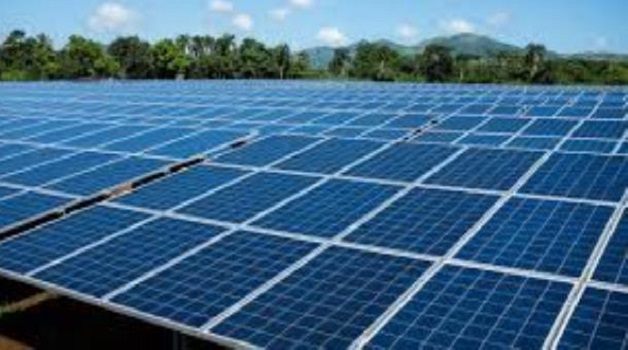
Renewable energy firm Daystar Power Group has expanded its installed solar capacity across West Africa through a partnership with Nestlé, bringing total deployments to 6,884 kilowatt-peak (kWp), or nearly 7 megawatts (MW), in what the company describes as one of the largest commercial and industrial solar partnerships in the region.

Four manufacturing facilities across Nestlé sites in Côte d’Ivoire, Ghana and Senegal are now operational, with installations located in Abidjan, Tema and Dakar.
Daystar Power has installed 3,447 kWp across two sites in Abidjan, Côte d’Ivoire. In Ghana, a 2,547 kWp system powers Nestlé’s Tema factory, while in Senegal an 890 kWp installation operates at the Dakar facility.
The company said each system is designed to deliver measurable environmental impact, including reduced greenhouse gas emissions and improved energy resilience.
The installations are tailored to local operational and grid conditions to ensure reliable renewable energy supply while supporting Nestlé’s net-zero ambitions and its commitment to reducing greenhouse gas emissions.
“Nearly 7MW across four Nestlé facilities is a number we are proud of, but what it represents matters more than the figure itself. It means that one of the world’s most demanding manufacturers has tested our model, trusted it, and come back. Our job now is to keep earning that across every market where industry needs energy it can count on,” said Yischai Beinisch, CEO of Daystar Power Group.
Samer Chedid, CEO of Nestlé Central and West Africa Region, said: “This investment reflects our commitment to building a business that not only grows but does so responsibly.
“By advancing solar energy projects in Ghana, Côte d’Ivoire and Senegal, we are embedding sustainability into our growth, reinforcing our role as a force for good, creating long-term value for communities and ensuring that our footprint actively contributes to a cleaner, more resilient future.”

Despite Warnings, FG Draws Down $1.5Bn as First Tranche of FAB $5Bn Loan Deal

PalmPay Strengthens Data Protection Culture with Employee Privacy Workshop and Privacy Champions Programme

Paystack Unveils AI-powered Payments Tools

NRS, CITN Deepen Partnership to Strengthen Tax Awareness

Fidelity Bank Wins DBN Award for Expanding First-Time Credit Access to MSMEs

CBN Extends PoS Geo-Fencing Enforcement Deadline to August 2026

London Strengthens Global Investment Ties with Africa @ First Ever London-Africa Business Summit

FG Targets Alleged N3tn Capital Flight, Opens Airtime Credit Market to Nigerian Fintechs

Mobile Internet Gender Gap Widest in Africa – GSMA

Japan, UNESCO Boost Digital Learning in 15 CoEs with Donation of ICT Equipment




 Broadcasting3 days ago
Lebara Nigeria Launches Lebara Play, Africa’s First Telecom-Owned Micro-Drama Platform

 E-Business2 days ago
Privacy Crisis May Undermine Local Hosting of Data by Banks, Fintechs

 Telecom2 days ago
NITDA Unveils Bold Vision to Make Nigeria an AI Powerhouse

 E-Financial3 days ago
SEC Bars Dangote Refinery IPO Adverts

 Telecom2 days ago
GSMA Launches Global Satellite Regulatory Playbook to Help Policymakers Build Future-Ready Connectivity Frameworks

 E-Business2 days ago
How to Build a Safer Cyberworld for People, Business, and Society

 General News2 days ago
NCGC, SMEDAN Partner on MSME Financing Support

 General News2 days ago
Nestlé Commits to Boosting West Africa Solar Rollout Through Partnership