

General News
Schneider Electric Launches White Paper For Mobile Apps


Schneider Electric, a global specialist in energy management, has launched a white paper for mobile app for Apple iOS (iPhone, iTouch, iPad) and Android-supported tablets and devices.
Anne Ezeh, communications manager at Schneider Electric Nigeria said the app will give users free, mobile access to Schneider Electric’s 150+ white paper library built from $90 million of research, the popularity of which garnered close to eight million downloads
in 2011.
As the next step in the evolution of this expansive knowledge base, the app’s availability comes in conjunction with the release of one of Schneider Electric’s much-anticipated research papers on the newly emerging field of Data Center Infrastructure Management (DCIM).
The paper, titled “Avoiding Common Pitfalls of Evaluating and Implementing DCIM Solutions,” addresses how to prevent the loss of ROI when choosing, installing, and maintaining DCIM solutions – a technology which has been lauded among IT and data centre professionals as the cornerstone to achieving optimal electrical and operational efficiencies, slashing energy costs and reducing time to execute data centre changes and resolve problems.
However, due to common mistakes made when choosing and implementing DCIM, many managers are under-realizing the value these solutions can deliver.
Kevin Brown, vice president, Data Centre Global Offer, Schneider Electric said “to help create the most sustainable and reliable data centers, we invest heavily in data centre research to help guide our strategy and product development. We make much of this research freely available through our white papers in order to help others understand the industry technologies and their challenges such as DCIM.”
He added that “we’ve listened to our customers who have been asking for easier access to the white papers via tablets and other mobile devices. We are excited to provide this capability via our new mobile application which enables convenient offline access to the entire library published by our Data Centre Science Centre.”
Leveraging advances in mobile technology, Schneider Electric hopes to empower customers, such as those using or thinking about DCIM solutions, to keep the latest knowledge at the forefront of their management strategies and equipping them to realize the highest ROI while achieving the lowest environmental impact possible.
Additionally, Schneider Electric’s white paper library holds a wealth of educational material on other industry topics – such as studies around the debate of AC vs. DC power, the benefits of modular data centres, the effectiveness of the latest cooling technologies, applications of different data centre designs, the latest research around physical and software infrastructure technologies, and more.


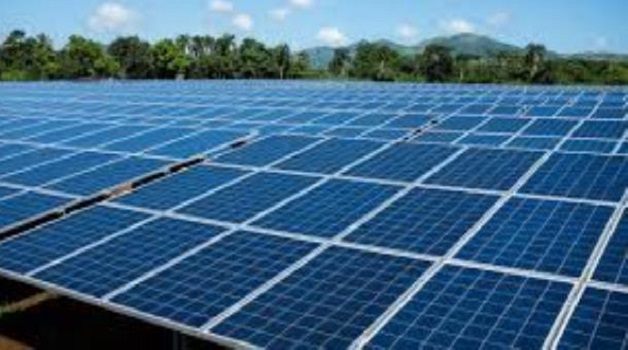
Renewable energy firm Daystar Power Group has expanded its installed solar capacity across West Africa through a partnership with Nestlé, bringing total deployments to 6,884 kilowatt-peak (kWp), or nearly 7 megawatts (MW), in what the company describes as one of the largest commercial and industrial solar partnerships in the region.

Four manufacturing facilities across Nestlé sites in Côte d’Ivoire, Ghana and Senegal are now operational, with installations located in Abidjan, Tema and Dakar.
Daystar Power has installed 3,447 kWp across two sites in Abidjan, Côte d’Ivoire. In Ghana, a 2,547 kWp system powers Nestlé’s Tema factory, while in Senegal an 890 kWp installation operates at the Dakar facility.
The company said each system is designed to deliver measurable environmental impact, including reduced greenhouse gas emissions and improved energy resilience.
The installations are tailored to local operational and grid conditions to ensure reliable renewable energy supply while supporting Nestlé’s net-zero ambitions and its commitment to reducing greenhouse gas emissions.
“Nearly 7MW across four Nestlé facilities is a number we are proud of, but what it represents matters more than the figure itself. It means that one of the world’s most demanding manufacturers has tested our model, trusted it, and come back. Our job now is to keep earning that across every market where industry needs energy it can count on,” said Yischai Beinisch, CEO of Daystar Power Group.
Samer Chedid, CEO of Nestlé Central and West Africa Region, said: “This investment reflects our commitment to building a business that not only grows but does so responsibly.
“By advancing solar energy projects in Ghana, Côte d’Ivoire and Senegal, we are embedding sustainability into our growth, reinforcing our role as a force for good, creating long-term value for communities and ensuring that our footprint actively contributes to a cleaner, more resilient future.”
The National Credit Guarantee Company Limited (NCGC) and the Small and Medium Enterprises Development Agency of Nigeria (SMEDAN) have signed a Memorandum of Understanding (MoU) aimed at supporting access to finance for Micro, Small and Medium Enterprises (MSMEs) in Nigeria.

The agreement was signed at the NCGC headquarters in Abuja and outlines areas of cooperation between the two agencies, including financial literacy programmes, credit guarantee support, capacity building, and other initiatives targeted at small businesses.
Speaking at the signing ceremony, NCGC Managing Director and Chief Executive Officer, Dr. Bonaventure Okhaimo, said the partnership is intended to provide a framework for expanding financing opportunities available to MSMEs.
According to him, small and medium-sized enterprises play a significant role in economic activity and employment generation across the country.
Okhaimo said NCGC has facilitated ₦32.78 billion in credit and provided over ₦13.09 billion in guarantees through its partnerships with financial institutions. He added that 1,478 businesses and entrepreneurs have benefited from the financing interventions, with 1,682 jobs reportedly created or sustained.
Also speaking, SMEDAN Director-General, Charles Odii, said the collaboration would enable the agency to connect more small businesses with available financing opportunities, particularly Nano and Micro enterprises that often face challenges accessing credit.
The two organisations said the partnership would also involve stakeholder engagement and awareness campaigns to provide information on financing options and the use of credit guarantees in lending arrangements.
The agreement forms part of ongoing efforts by both agencies to support enterprise development and improve access to financial services for small businesses across the country.
Observers say access to finance remains one of the major constraints facing Nigerian MSMEs, making collaborations between public institutions an important aspect of broader economic development initiatives.

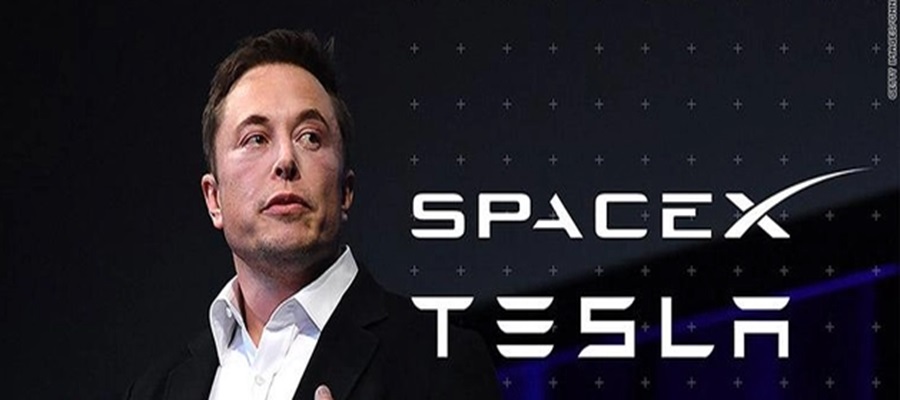
Elon Musk is no longer a trillionaire after a sharp global sell-off in technology stocks wiped an estimated $500bn (£379bn) from his personal fortune.

Elon Musk
The billionaire entrepreneur Elon Musk had recently become the first individual to reach the trillion-dollar milestone following a record-breaking listing surge for his rocket company SpaceX earlier this month.
However, shares in SpaceX have since fallen by around 30% from their peak, while Tesla was also caught in a broader technology market downturn on Tuesday, June 23.
His net worth now stands at $957.1bn, according to analysis by Bloomberg, while calculations by Forbes suggest his fortune previously peaked at $1.45tn last week.
The drop in Musk’s wealth over the past week exceeds the total fortune of Larry Page, whose estimated net worth stands at just under $297bn.
The decline comes amid two consecutive days of losses on Wall Street, with more than $89bn wiped from Tesla’s market value after its shares fell 5.8% on Tuesday. Chipmaker Nvidia also dropped 4.1% during the same session.
Traders have warned that further volatility may follow after memory-chip producer Micron Technology prepares to release its third-quarter results, amid concerns that artificial intelligence valuations may be overheating.
Investment bank Goldman Sachs cautioned that AI-linked stocks could be vulnerable if there are signs of slowing investment from major tech firms.
Ben McKeown, an investment manager at Dowgate Wealth, said Musk’s fortune remains highly exposed due to its concentration in two major holdings.
He said: “The old adage is, you concentrate to build wealth and diversify to keep it. Musk is the most extreme example of this.
Almost his entire net worth sits in Tesla and SpaceX, which have been extremely volatile, especially SpaceX as the shareholder base starts to be unlocked and becomes free to sell.”
Musk had briefly become the world’s first trillionaire on June 12 following the listing surge of SpaceX, which saw its shares jump as much as 67% in its first three days of trading after an IPO that valued the company at more than $1.8tn.
However, the stock later fell for three consecutive sessions, erasing around $928bn in market value from a peak of $2.9tn to just over $2tn, before a slight recovery.
The scale of his recent wealth decline is now considered the largest on record, surpassing his previous loss in 2022 when his fortune fell by an estimated $165bn amid a slump in Tesla shares.
Another billionaire affected by recent market turbulence is Larry Ellison, whose net worth peaked at around $400bn last September before falling to approximately $210bn following a major sell-off in Oracle shares.

Privacy Crisis May Undermine Local Hosting of Data by Banks, Fintechs

AI-Powered Scams are Biggest Payment Fraud Threat -Visa Report

How to Build a Safer Cyberworld for People, Business, and Society

Nestlé Commits to Boosting West Africa Solar Rollout Through Partnership

Airtel Africa Foundation Launches Airtel Green Schools to Promote Sustainability Education in Nigeria

CBN Extends PoS Geo-Fencing Enforcement Deadline to August 2026

London Strengthens Global Investment Ties with Africa @ First Ever London-Africa Business Summit

FG Targets Alleged N3tn Capital Flight, Opens Airtime Credit Market to Nigerian Fintechs

Mobile Internet Gender Gap Widest in Africa – GSMA

Japan, UNESCO Boost Digital Learning in 15 CoEs with Donation of ICT Equipment




 E-Business3 days ago
Kaspersky Discovered a Malware Campaign Targeting Steam Users Through Infected Wallpaper

 Telecom3 days ago
Big Tech Shake-Up: Zuckerberg Announces Sudden WhatsApp Leadership Change

 Broadcasting3 days ago
CANAL+ Partners Samsung to Pre-Load DStv Stream on New Samsung TVs In Nigeria, Other African Countries

 General News3 days ago
Fiona Ahimie Launches LEADHER Mentorship Session to Inspire the Next Generation of Female Leaders

 News3 days ago
NESREA Defends Plastic Waste Rules, Says Policy Targets Pollution

 E-Financial3 days ago
FG Engages Banks on RevOp, New Digital Platform for Revenue Generation

 News3 days ago
CredibleVoteNG Opens Free Access to all Polling Units in Nigeria after INEC Demanded N1.Bn for Register

 News3 days ago
Arridex Floats West Africa’s First Multi-tech 3D Industrial Omnifactory in Lagos