

Telecom
CBN May Be Shooting Itself with MTN Witch-Hunt- Expert

Tunji Andrews, a Lead Economist at Time, Trade and Commodities (TTAC), has said that the Central bank of Nigeria (CBN) may not be making the best decision after all with the harassment and heavy fines on MTN Nigeria.
Andrews was reacting in a letter as the debate over the tax compliance of MTN and the alleged illegal transfer of equity through four banks continued to dominate the tabloids.
He wrote “The findings were brought to public knowledge when the letters sent by CBN to the four banks in question were released to the public.
These accusations have caused serious turmoil for MTN and its operations, so much so that Paul Theron – Veteran TV host and CEO of Vestact, a financial asset management company, has called out the Nigerian government in a statement saying “You could expect this kind of behavior from really third-string countries, but Nigeria is supposedly a country that takes itself seriously — it doesn’t seem to be consistent at all.”
The letters revealed by the CBN detailed a number of transactions which may have violated foreign exchange laws, especially those regarding the repatriation of MTN assets via what has been called “illegal” CCIs (Certificates of Capital Importation).
What this means in layman’s terms is that MTN transferred some of its assets from its country of origin to Nigeria, courtesy of a couple of banks and CBN is looking into the situation to validate if this process complied with its foreign exchange policies.
These accusations have seriously hurt the market share of the telco giants, as recent reports show a plunge in the company’s share price with about $3 billion knocked off from its market capitalisation, after tumbling by 14 percent to a nine-year low of 2,030.76 NGN.
It is safe to say the last 2 weeks have been less than pleasant for MTN Nigeria, and CEO Rob Shuter has decried the “peculiar and coincidental timing” of what appears to be a regulatory assault on its business in the country, but also reinforced MTN’s stance in proving its innocence of all allegations.
The first part of this bizarre saga is how such high-level information has been able to become so public. Considering the media coverage that has followed this story, one may have confused this for a gossip feature. The “confidential” letters sent to these banks were rather unusually released to the public and the CBN further corroborated the story by tweeting about the investigations.
The second interesting aspect of this story is how quickly the story has developed. From rumors and leaks to outright fines and even debiting of bank accounts, the speed with which this story has taken a turn for the worse, particularly for the banks, has been rather uncharacteristic of our usual tepid government.
To provide a quick retrospective look and to put this into proper context, let’s look back at how the story has evolved since the CBN released those letters.
The regulator immediately asked MTN to refund the sum of $8.1 billion dollars which it claims may have been illegally repatriated by the telecommunication company. While the 4 banks (Stanbic IBTC, Diamond Bank, Standard Chartered and CitiBank) were slapped with hefty fines ranging from NGN 250 million to NGN 2.4 million dollars.
MTN on its part expressed its innocence explaining that the MTN Group and the original shareholders injected a total of $402, 625,419 into MTN Nigeria between 2001 and 2006 in the form of loans and equity. These initial inflows were the basis for the issuance of various legacy CCIs obtained from Authorized Dealers in accordance with regulations. All of these, including the inflow of capital, has long been confirmed by the CBN.
The subject of “illegally” obtained CCIs has also been addressed. The reality is that the CCI process is essentially in place both for the protection of investors as well as to provide the CBN with documentary evidence for monitoring capital inflows and outflows.
Although over time the CCIs have been reissued, consolidated and reconstituted to reflect the changing MTN capital and shareholding structure, the amount of NGN 402,625,419, has remained the same.
One aspect of the changing capital structure was the conversion of shareholder loans to preference shares, meaning the latest transfer of equity is in no way a violation of the law.
Section 15 (5) of the Foreign Exchange (Monitoring and Miscellaneous Provisions) Act 1995, states that, “The repatriation referred to in subsection (4) – which deals with foreign exchange imported into Nigeria and its remittance – of this section shall be communicated by an authorized dealer to the Central Bank, within fourteen days of the repatriation and the Central Bank shall furnish same to the Minister on a monthly basis for information and statistical purposes only.”
According to this law, this means that the dispute should be between the four banks and the CBN, not MTN, but once again, the brand’s name has been dragged through the mud without a proper investigation into the issue.
Even after all parties expressed their innocence and provided substantial proof, the attorney general, reprimanded MTN again and slapped the company with $2.0 billion fine.
The fine is due to alleged lack of tax compliance by the telco and this comes after the company has revealed its books detailing an assessment of the full period in question. The numbers indicate that the total payments made to the tax authorities in regard to these foreign imports and payments in aggregate are $700 million and also detailed the valid reasons for the differences between the actual payments and the Attorney general’s assessment.
Through it all, the brand has remained calm and consistent with CEO Rob Shuter quoted by Bloomberg as saying that, “We have a proud history of being a major partner to the people of Nigeria and notwithstanding our current difficulties are firmly resolved to continue to do so”.
One of the key talking points about this story is how MTN has once again become the scapegoat in yet another episode of what many are calling a witch-hunt. The banks who were involved in this saga have been relegated to a sub-plot in a story which MTN is front and center and continually being labeled a villain.
This would have been somewhat justifiable if the facts actually added up; but all indications suggest that the CBN may not have done proper investigations before name-dropping these brands.
On MTN’s side of the story, the telecommunications giant has been open with their books, revealing their tax payments over the course of their operations in Nigeria, and even detailing their $18 billion-dollar investment in the country since it began operations. This is in addition to the N2 trillion paid in taxes and levies since it began operation in Nigeria.
This is particularly worrying considering the latest revelations of dwindling foreign investment in Nigeria. In recent years, Nigeria’s FDI has been struggling. It reached a mediocre $981mn in 2017, a far cry from its previous peak of $5bn in 2008.
The plummeting FDI situation is worsened by a poor investment climate characterized by overly stringent or impromptu government policies, bureaucratic bottlenecks for securing permits, and a weak legal framework.
MTN is one of our most successful foreign investors and instead of encouraging the multi-national company, it seems like the government is hell-bent on frustrating the company.
MTN has been slammed with fine after fine for some rather ludicrous reasons. Such punishments cannot be encouraging for would-be investors, many of whom already hold the notion that they are regarded as cash cows for exploitation by African governments.
It is also noteworthy that Nigeria’s GDP hasn’t been impressive of late; the country has suffered a yearly dip since 2014 when it peaked at $568.5 billion. Even with the 0.82 percent increase 2017, the nation’s gross domestic output is still suffering from the inconsistency of oil prices. The real take away from these numbers is, looking at how much MTN has paid in taxes and levies (in excess of 2 trillion Naira), and realising just how big a contributor they are to Nigeria’s GDP.
MTN has directly and indirectly, provided 500,000 jobs in Nigeria and has contributed immensely to the economy and it’s somewhat bizarre that such a huge company is being dragged in the mud before an appropriate investigation is even carried out.
If MTN is guilty of these crimes then, by all means, they should face the penalty, but considering just how much facts have been provided by the telecom giant, they seem pretty convinced of their innocence.
Furthermore, neither the CBN nor the attorney general has provided a direct response to the facts provided by MTN, making this whole ordeal even more worrisome.
The reasoning for this inexplicable witch-hunt is up for anyone’s guess. This may be due to a lack of oversight by the government or to protect private interests. However, the fact still remains, if the government and its policies continue to deter foreign investors, it is only a matter of time before we lose these multinationals.
In a bid to protect its assets and investors against further action from the Attorney General of the Federation and the Central Bank of Nigeria, MTN on Monday, September 10th filed for an injunctive relief with the Federal High Court in Lagos.

In a statement issued by the company, Tobe Okigbo, MTN Nigeria’s Corporate Relations Executive was quoted as saying;
“MTN Nigeria Communications Limited (MTN Nigeria) continues to categorically and unequivocally deny all charges related to the Central Bank of Nigeria (CBN) and Attorney General of the Federation (AGF) investigations into the company’s CCIs and unpaid taxes respectively.
“The simple reality is that MTN Nigeria has never repatriated dividends on the CCIs referenced by the CBN and that MTN is fully compliant with Nigerian tax law.
“In order to protect MTN Nigeria’s assets and shareholder rights within the confines of the law, we have applied today in the Federal High Court of Nigeria for injunctive relief restraining the CBN and the AGF from taking further action in respect of their orders, while we continue to engage with the relevant authorities on these matters.”
Only time will tell how this story will eventually end; but if history has taught us anything, it is that MTN will persist through this just like they have in previous occasions or maybe, just maybe this may be the straw that breaks the camel’s back.
* Tunji Andrews, a Lead Economist at Time, Trade and Commodities (TTAC), writes from Lagos.



Irvine Partners, the woman-led, African-born creative communications agency operating across Nigeria, has cemented its position as a disruptive force on the global stage following a landmark week of international industry recognition for its CEO and founder, Rachel Irvine.

Rachel-Irvine-CEO-Irvine-Partners
Irvine has been named to Campaign UK’s prestigious 40 over 40 list for 2026, while simultaneously earning a place on PRovoke Media’s Innovator 25 EMEA index – two of the communications industry’s most closely watched honours, secured in the same week. The achievement places her among the most influential and progressive communications leaders across Europe, the Middle East, and Africa.
For Nigeria – Africa’s largest economy and one of its most competitive and complex communications environments – the recognition speaks directly to something the local industry has long understood: that the strategic thinking, cultural intelligence and executional precision forged in African markets is not a regional advantage. It is a global one.
Irvine Partners brings this philosophy to some of the world’s most prominent digital and consumer brands in the Nigerian market, including TikTok, Spotify, Uber and Google – organisations that demand communications work of the highest international calibre, delivered with genuine local understanding.
An African agency rewriting the global narrative
Campaign UK’s 40 over 40 celebrates individual excellence, leadership and lasting impact within the British media and marketing landscape. PRovoke Media’s Innovator 25 spotlights those who are dismantling traditional PR structures, advancing data-led practice, and reshaping how the industry operates. To earn both in a single week is rare by any measure.
What underpins both honours is a story that begins not in London but in Africa – in the dynamic, high-stakes communications environments of markets like Nigeria, where agencies must be sharper, faster and more culturally precise than anywhere else in the world.
“These accolades are less about my own journey and far more about where Irvine Partners is going as a collective,” says Rachel Irvine. “For a long time, the global communications industry treated African agencies as local executors of global strategies. What we’ve proven over the past few years is that the technical craft, cultural capital, and data frameworks built within our agency are not just scalable for the continent; they are world-class.”
Built on the same ethos that works in Lagos
The recognition follows the agency’s strong performance at the IN2 SABRE Awards EMEA, where Irvine Partners took major wins for Unicorn School – its proprietary internal talent development programme – and for its advanced data analytics capability, alongside notable shortlists for global clients including Spotify and Uber.
Nigeria’s communications market is one of the most demanding in the world. Consumer audiences are sophisticated and discerning. The media environment is layered, fast-moving and deeply attuned to authenticity. Brands that succeed here do not do so through generic messaging – they do so through precision, cultural credibility and strategic consistency. These are precisely the competencies that Irvine Partners has built its international reputation on.
“The PR landscape has fundamentally shifted,” Irvine adds. “Clients no longer want siloed regional strategies; they want intelligent, culturally intuitive storytelling backed by bulletproof analytics that move the business needle. We built our foundations on that exact ethos in highly dynamic markets, and bringing that specific DNA to the UK and EMEA regions is why we are winning.”
The agency’s agile, borderless model – deliberately structured to move at the speed of modern brands rather than the pace of legacy networks- is one that Nigerian communications professionals will recognise as a natural evolution of how the best African agencies have always operated: lean, sharp and built for impact.
Underlying both honours is Irvine’s sustained commitment to talent development and cultural diversity across all of the agency’s wholly owned offices – a principle as central to its Lagos work as to any other market in its growing global footprint.

Mark Zuckerberg, Meta Chief Executive Officer, has announced a major leadership change at WhatsApp, confirming that Will Cathcart will step down as head of the messaging service after seven years in office.

Zuckerberg made the announcement in a post shared on Facebook on Monday, June 22, 2026, praising Cathcart’s contributions to the growth of the platform.
According to him, Cathcart played a key role in expanding WhatsApp’s global user base to over three billion people while promoting privacy-focused communication across its services.
“Will’s been one of Meta’s most important and effective leaders, helping to bring WhatsApp to over 3 billion people and championing privacy for our community,” Zuckerberg stated.
The Meta CEO also announced that Kunal Shal will take over leadership of WhatsApp.
He described Shal as a “builder” with strong international experience, adding that his leadership style aligns with Meta’s long-term vision for the messaging platform.
Meta said the transition is aimed at strengthening WhatsApp’s role in both personal and business communication globally, as the platform continues to expand its services across markets.
Industry observers say the leadership change marks a significant transition for WhatsApp, which has grown rapidly under Cathcart’s stewardship, particularly in areas of privacy, encryption, and enterprise messaging solutions.
However, Meta has not disclosed the exact timeline for the leadership handover or further structural changes within the messaging division.
The company reaffirmed its commitment to maintaining WhatsApp’s security standards and continued innovation under the new leadership.

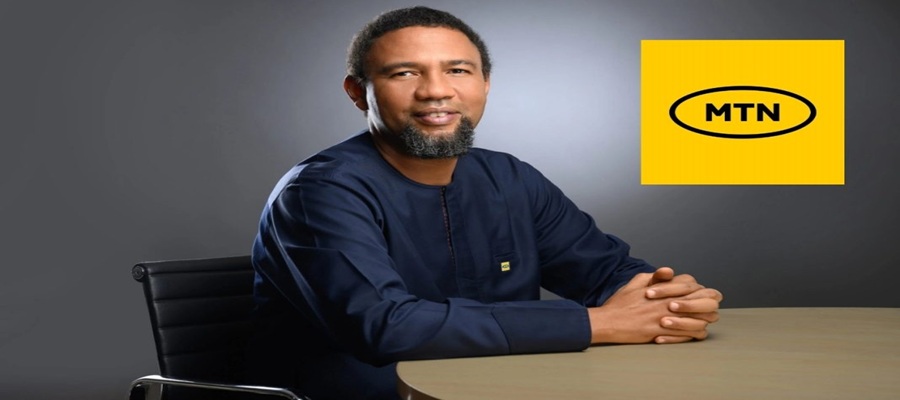
MTN Nigeria has raised the bar for corporate disclosure in Africa after publishing its 2025 sustainability report in full compliance with International Financial Reporting Standards S1 and S2.

Dr. Karl Toriola, CEO of MTN Nigeria,
The report, independently assured by Ernst & Young, marks the telecom operator’s seventh consecutive annual sustainability publication and third year as an early adopter of the global framework ahead of its mandatory implementation.
Dr. Karl Toriola, CEO of MTN Nigeria, said, “strong governance and ethical conduct are foundational to our sustainability strategy. We reinforced compliance through our Conduct Passport Framework and robust internal controls.”
He added that “in May 2025, we became the first telecommunications company in Nigeria to publicly present a sustainability report on the Nigerian Exchange Group platform, an important milestone in our commitment to IFRS S1 and S2- aligned disclosure and accountability.”
The company also secured Carbon Disclosure Project ratings of ‘B-’ for climate change and ‘C’ for water security.
Under the IFRS S2 framework, the telecoms operator disclosed climate-related risks linked to flooding, heat stress, regulatory changes and possible future taxes or charges on carbon emissions, following a climate scenario analysis completed in 2024.
The report also showed that MTN Nigeria now uses a digital reporting format – XBRL. This makes its sustainability and governance data easier for investors and ESG rating agencies to access and analyse through automated systems.
The Company also carried out assessments to understand how sustainability issues affect both its business operations and society at large, while measuring its overall economic, environmental and social impact from 2021 to 2024.
In addition, over one-third of MTN Nigeria’s biggest suppliers (based on spending) have committed to supporting the company’s net-zero emissions goals, although these commitments have not yet gone through an independent audit or verification process.

CredibleVoteNG Opens Free Access to all Polling Units in Nigeria after INEC Demanded N1.Bn for Register

NESREA Defends Plastic Waste Rules, Says Policy Targets Pollution

FG Engages Banks on RevOp, New Digital Platform for Revenue Generation

Kaspersky Discovered a Malware Campaign Targeting Steam Users Through Infected Wallpaper

Fiona Ahimie Launches LEADHER Mentorship Session to Inspire the Next Generation of Female Leaders

CBN Extends PoS Geo-Fencing Enforcement Deadline to August 2026

London Strengthens Global Investment Ties with Africa @ First Ever London-Africa Business Summit

FG Targets Alleged N3tn Capital Flight, Opens Airtime Credit Market to Nigerian Fintechs

Japan, UNESCO Boost Digital Learning in 15 CoEs with Donation of ICT Equipment

Mobile Internet Gender Gap Widest in Africa – GSMA




 Telecom1 day ago
MTN Nigeria Commits to Ethical Conduct with IFRS S1, S2 Compliance

 E-Financial1 day ago
FG Moves to End Double Taxation

 News1 day ago
BoI’s EIB-Backed Financing Accelerates Fidson’s Pharmaceutical Manufacturing Growth

 General News1 day ago
ALTON Backs CBN on Local Data Hosting Rule for Banks, Fintechs

 E-Business1 day ago
NDPC to Review Data Law to Address AI, Privacy Concerns

 Telecom1 day ago
NCC, CAC Move to Block Unapproved Ownership Changes in Telecom Sector

 E-Business1 day ago
Galaxy Backbone @ 20, Unveils New Identity

 General News1 day ago
Nwanegbo Bags Africa Digital Award in Applied Artificial Intelligence and Data Science