

Telecom
Microsoft fortifies security, brings AI to the masses @ Ignite 2018

Microsoft Corp, at Ignite 2018 underscored the need for increased IT security and released an array of security programs and products.
Among them are Microsoft Secure Score, a dynamic report card that assesses Microsoft 365 customer environments and makes recommendations that can reduce breaches up to thirty fold, and Microsoft Authenticator, which helps make secure sign-on easier for workers with features like password-free login.
The company also advanced its commitment to democratize access to AI through a new AI for Humanitarian Action program aimed at harnessing the power of AI for disaster recovery, helping children, protecting refugees and displaced people, and promoting respect for human rights.
Satya Nadella, CEO of Microsoft said, “In this era of the intelligent cloud and intelligent edge, businesses in every industry are looking for a trusted partner to help them transform.

. “We are pushing the bounds in AI, edge computing and IoT, while providing end-to-end security to empower every organization to build its own digital capability and thrive in this new era.”
According to the company, Cybersecurity is the central challenge of the digital age. Every day organizations take precious time and resources away from their core business mission to defend against, and recover from, cyberattacks.
They operate dozens of complex, disconnected tools, yet the gaps between those tools remain and threats get through.
As the nature of the threats and the profile of the attackers continue to evolve, security teams struggle to keep up, and skilled expertise is scarce.
Microsoft is uniquely positioned to help, and today the company shared ways it is empowering IT to unlock the security capabilities of the intelligent cloud.
To tip the scales in the cyberwar, Microsoft has a unique focus on three things: security operations at global scale that work not just for us but also for our customers, enterprise-class technology, and broad cybersecurity partnerships for a heterogeneous world.
Security operations at a global scale that work for our customers: At Microsoft, more than 3,500 full-time security professionals work with leading AI tools to analyze more than 6.5 trillion global signals each day.
The company’s global security infrastructure protects customers by securing datacenters, running a Cyber Defense Operations Center, hacking its own defenses (red-teaming), hunting down attackers, and blocking more than 5 billion distinct malware threats each month.
Just recently, Microsoft’s cloud-based machine learning models detected — with only 200 discrete targets — a stealthy and highly targeted attack aimed at small businesses across the United States. The company neutralized the threat, called Ursnif, in seconds.
Also, Microsoft’s Digital Crimes Unit, focused on advanced disruption and deterrence, has worked with global law enforcement agencies to take down 18 criminal bot-nets and rescue nearly 500 million devices from secret bot-net control.
Enterprise-class security technology: Microsoft is using the cloud to secure organizations broadly with new security features in its products that protect against a wide range of threats, secure the network and protect sensitive information:
- Nearly all data breaches start with compromised passwords. Today, Microsoft declared an end to the era of passwords, delivering new support for passwordless login via the Microsoft Authenticator app for the hundreds of thousands of Azure AD connected apps that businesses use every day. No company lets enterprises eliminate more passwords than Microsoft.
- Microsoft Secure Score, the only enterprise-class dynamic report card for cybersecurity, now includes EMS and Azure Security Center. By using Secure Score, organizations get assessments and recommendations that typically reduce their
- chance of a breach up to thirtyfold with steps like enforcing multifactor authentication for both administrators and end users and ensuring trusted access to the right applications. The Secure Score expansion also includes a broader set of controls from products like Microsoft Cloud App Security and Azure Active Directory to further harden defenses and help IT understand and improve their organization’s security position.
- Microsoft Threat Protection, announced today, is a comprehensive end-to-end solution that can help protect, detect and remediate cyberthreats, bringing together advanced threat protection and auto-remediation across email, PCs, identities and infrastructure into a single integrated experience in Microsoft 365. The service uses AI and human research to speed up investigations to eliminate threats faster, saving thousands of hours for overstretched security teams.
- Data breaches often stem from cybercriminals accessing data in use for computation, analysis and other functions. This deters many organizations from putting sensitive data into cloud workloads. Microsoft announced its public preview of Azure confidential computing, making Azure the first cloud service to provide a secure platform for protecting the confidentiality and integrity of data in use.
Cybersecurity partnerships in a heterogeneous world: It takes more than the right technology and operations to make the world as secure as possible. It takes work to strengthen the broad ecosystem, bring the entire tech sector together, and partner directly with governments and democratic institutions. In close partnership with others, Microsoft recently made significant advances in this work.
Microsoft is working with tech companies, policymakers and institutions critical to the democratic process on strategies to protect our midterm elections. The company’s Defending Democracy program aims to protect political campaigns from hacking, increase security of the electoral process, defend against disinformation and bring greater transparency to political advertising online. Part of this program is the AccountGuard initiative, which provides state-of-the-art cybersecurity protection at no extra cost to all candidates and campaign offices at the federal, state and local level, and other organizations critical to the democratic process.
In the first month, Microsoft has onboarded more than 30 organizations into AccountGuard, focusing initially on large national party operations, and the initiative now includes committees representing both major U.S. parties, as well as high-profile campaigns and think tanks. Microsoft is developing plans to extend the Defending Democracy program to democracies around the world.
Since the establishment of the Cybersecurity Tech Accord, an agreement to bring the entire technology sector together in defending all customers everywhere from malicious attacks by cybercriminal enterprises and nation-states, the group has nearly doubled in size. With 27 new organizations joining from around the globe since its launch, including Panasonic, Swisscom and Rockwell Automation, to name a few, the total number of signatories is now 61 companies, strengthening the broad ecosystem needed to keep the world secure.
In partnership with security teams across the company, the DCU has also combatted nation-state hackers. Using innovative legal approaches 12 times in two years, the DCU has shut down 84 fake websites often used in phishing attacks that were set up by a group known as Strontium, which is widely associated with the Russian government.
Around the world, the company is advocating for effective public policy by governments including stronger international rules, accountability through attribution, and the adoption of concepts like the Digital Geneva Convention.
Data and AI transform the intelligent enterprise
Furthering the company’s commitment to democratizing access to AI and ensuring that the benefits are widely shared, the company today launched AI for Humanitarian Action, a new $40-million, five-year program aimed at harnessing the power of AI to aid efforts such as disaster recovery, protecting children, refugees, and displaced people, and promoting respect for human rights. The company will do this by working deeply with select nongovernmental and
humanitarian organizations through grants, investment of technology and shared expertise. This is the third program in Microsoft’s AI for Good initiative, launched in July 2017.
Microsoft is also continuing to deliver AI-infused products and services that will be available to billions of people through the next generation of applications, experiences and personal assistants. Today, Microsoft is announcing new products and services to help enterprises get the most value from their data:
- Azure Machine Learning helps data scientists and developers build and train AI models faster, then easily deploy to the cloud or the edge. Significant new updates to the service include automated machine learning to identify the most efficient algorithms and optimize model performance, additional hardware-accelerated models for FPGAs, and a Python SDK that makes Azure Machine Learning services accessible from popular IDEs and notebooks.
- SQL Server 2019 preview redefines the relational database with new big data capabilities that enable users to take on any data project — from OLTP, Data Warehousing and Business Intelligence (BI) to AI and advanced analytics. With these enhancements, SQL Server becomes a hub for data insights that breaks down silos between database management systems, providing faster insights without moving or copying data. Spark and Hadoop Distributed File System (HDFS), now built-in, enable data scientists to ingest, store and analyze vast amounts of data. New connectors enable the query of other databases like Oracle, Teradata and MongoDB directly from SQL Server, removing barriers to insights everywhere.
- Azure SQL DB hyper scale is a new, highly scalable service tier that adapts to your workload’s needs, auto-scaling up to 100 TB per database. Available Oct. 1, it provides a high-performance storage system that expands the potential for app growth without being limited by storage size.
- Azure Data Explorer public preview accelerates discovery and insight from large volumes of event data. It enables users to interactively explore and analyze the data in near real time to quickly spot patterns and anomalies, determine the root causes, diagnose issues, and analyze performance for improved business insights and outcomes. Azure Data Explorer is a lightning-fast indexing and querying service optimized for ad-hoc data exploration and analytics of log and telemetry data from websites, applications and IoT devices.
- Updates to Azure Cosmos DB Multi-master enable customers to easily build their mission-critical, globally distributed apps. Multi-master support in Azure Cosmos DB provides high levels of availability and single-digit millisecond latency, with built-in flexible conflict resolution support to significantly simplify development of globally distributed applications. The Cassandra API expands Cosmos DB’s value prop as a multimodel, multi-API database, giving customers the flexibility to use the data model and API of their choice.
And Reserved Capacity reduces barriers to entry, enabling customers to get up to 65 percent off the cost of their Cosmos DB usage.
Microsoft also unveiled new AI experiences in Microsoft 365 that make it easier for people to find information, create content, analyze data and collaborate with others:
- Microsoft introduced a new cohesive search capability, Microsoft Search, that makes it easier to find a variety of documents and data from both inside and outside the organization without leaving the flow of work. The search box is in a consistent, prominent place throughout Microsoft 365 apps so that search is always one click away. Under the hood, Microsoft is pulling together the power of the Microsoft Graph and AI technology from Bing to deliver experiences that are more relevant to what people are working on. Customers can preview the Microsoft Search capability on Sept. 24 as it rolls out on Bing.com and to Office.com, including app start pages and in the SharePoint mobile app, with many more endpoints to come including in Microsoft Edge, Windows and Office.
- Ideas in Office help people tap into the power of AI with one click of a mouse to launch intelligent recommendations in Office applications. Rolling out first for Excel and PowerPoint, the Ideas engine simplifies the user experience and helps people save time performing everyday tasks. Simply click the lightning bolt icon in Excel or PowerPoint to launch the Ideas pane, which provides actionable, app-specific suggestions for designs, layouts and images customized to what the user is working on.
- Today, new intelligent enhancements in Excel are generally available, giving users the ability to turn data into insights. In addition, Insert Data from Picture, a new feature that’s available in public preview on Android, allows users to take a picture of a table from their phones and quickly convert those pictures into an Excel file that can be edited, analyzed and shared. Enhancements also include major improvements to the performance of existing Excel functionality. For instance, lookup-type functions will now take seconds instead of minutes.
- With the ability to connect Office 365 and LinkedIn accounts, users can send emails and share documents with LinkedIn first-degree connections directly from Outlook, Word, Excel and PowerPoint. Microsoft also announced that, later this year, customers will be able to see LinkedIn information about the people they’re meeting with directly in meeting invites.
- New AI-powered capabilities in Microsoft Teams are now generally available, showcasing Microsoft’s ongoing commitment to transform business meetings. Background blur uses facial detection to blur your background during video meetings, and meeting recording provides speech-to-text transcription generating a searchable transcript and automatically applying captions to the recording. And with generally availability of the new live event capabilities beginning to roll out worldwide in Microsoft 365 later this year, customers will be able to create and stream live and on-demand events in Teams, Microsoft Stream and Yammer.
- Microsoft is bringing customizable Cortana experiences and skills with the new Cortana Skills Kit for Enterprise. The end-to-end solution allows enterprises to build custom skills and agents, test them with users, and fully manage deployment to their organization. Developed with the Microsoft Bot Framework and Azure Cognitive Services Language Understanding service, the platform will help enterprises effectively use Cortana to improve workforce productivity. This is currently available by invite only and more broadly in the near future where companies and developers will be able to request an invitation.
Capturing value from IoT and edge computing
Computing is becoming more ubiquitous and simultaneously more distributed across the edge — connected devices, endpoints and geographies. With the power of AI, these devices can predict, learn, speak and more. This is all driving the next wave of innovation at the intelligent cloud and intelligent edge. Microsoft is delivering powerful IoT and edge solutions that unlock new opportunities for customers to bring cloud intelligence to new scenarios and to areas where connectivity is unreliable:
- Azure Digital Twins, announced today, is a new offering in our IoT platform that enables customers and partners to create a comprehensive digital model of any physical environment. As the world enters the next wave of innovation in IoT where the connected objects such as buildings, equipment or factory floors need to be understood in the context of their environments, Azure Digital Twins provides a complete picture of the relationships and processes that connect people, places and devices. Azure Digital Twins leverages the full power of the Intelligent Cloud and Intelligent Edge to provide a foundation for partners to build custom digital solutions that stay up-to-date with the physical world, as well as use advanced analytics to understand the past and predict future states for scenarios such as predictive maintenance, energy management and more.
- Azure Sphere, the first holistic solution designed to secure and power IoT devices at the intelligent edge, is now available in public preview. Azure Sphere is designed to secure connected microcontrollers — of which there are 9 billion shipping every year — from the silicon to the cloud. Development kits are now universally available.
- With Azure Data Box Edge public preview, now available, Microsoft is adding even more products to the Azure Data Box family to help customers analyze, process, and transform data before uploading it to the cloud. Azure Data Box Edge is a physical network appliance, shipped by Microsoft, that sends data in and out of Azure with AI-enabled edge capabilities. It uses advanced FPGA hardware natively integrated into the appliance to run machine learning algorithms efficiently at the edge. The size and
- Portability enables customers to run Azure Data Box Edge as close to users, applications and data as needed.


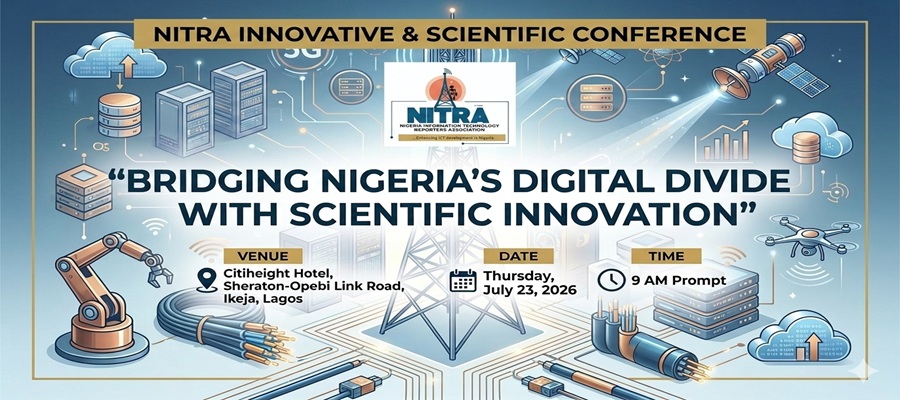
The need for Nigeria to think outside the box in its need to drive towards global relevance with innovations and scientific developments will be on the front burner at the NITRA Innovative & Scientific Conference scheduled to hold on Thursday July 23, 2026 in Ikeja, Lagos.

NITRA
The Nigerian Communications Commission (NCC) will lead other delegates to discuss and take far-reaching decisions at the event, which has its theme as “Bridging Nigeria’s Digital Divide With Scientific Innovation”.
Other companies that have indicated interest in partnering with NITRA include mobile communications company, Tecno; Africa’s premier end-to-end AI solutions company, Hyperspace; and telecommunications data infrastructure company, Digital Realty.
Speaking on the proposed event, the Chairman, Nigeria Information Technology Reporters Association (NITRA), Chike Onwuegbuchi noted that the event will seek to create a platform for government and private organisations to deliberate on policies around scientific innovations in Nigeria, challenges, place of indigenous and foreign collaboration, roles of each stakeholder, and grassroots development in that regard, among others.
According to him: “The Federal government, with series of programmes and partnerships, has established the urgent need to create an ecosystem that thrives on scientific innovation, breeding institutions and individuals with a target of placing the country at the fore-front of Next-Gen development.
It is a known fact that digital and scientific innovations are crucial, not only to the survivability of a nation, but also to the sustainability of its growth and development, with significant effect on economic strength, global image, defense and security, government capabilities to function, and public health and safety, communication and digital footprint, among others.
The federal government is actively driving scientific innovation to foster economic diversification and build a $1 trillion economy by 2030. Efforts are heavily focused on commercializing research, establishing massive research funds, and funding strategic infrastructure, particularly in technology, biotechnology, and healthcare. Core government initiatives and policies include the newly instituted National Research and Innovation Development Fund (NRIDF), which aims to mobilize about $500 million annually to support research and the commercialization of scientific outputs; and the Nigeria Genomic City, a multi-ministerial initiative aimed at transforming Nigeria into a leading hub for genomics, precision medicine, and biotechnology. It is designed to protect indigenous data, stimulate artificial intelligence in health, and develop a highly skilled scientific workforce.
According to the General Secretary of NITRA, Mr. Chidiebere Nwankwo, the forum will also be a vehicle to propagating the views of decision makers to the public, thereby furthering the cause of public awareness and information dissemination on the topic.
The focus, he said will be on how Nigeria can sustain digital innovative growth and scientific development in Nigeria

The board of global payments company, PayPal, says a 53 billion dollars takeover offer from financial technology firm, Stripe, and private equity company, Advent International, does not adequately reflect the company’s long-term value.

PayPal
According to reports, the proposed acquisition, valued at 60.50 dollars per share, remains under consideration, with the board yet to formally respond to the offer.
The directors are said to be evaluating not only the financial value of the proposal but also the structure of the financing, the timeline for completing the transaction and the likelihood of obtaining regulatory approvals.
They are also considering the possibility of competing bids emerging.
Although the offer represents a premium of about 28 per cent above PayPal’s recent share price, the board believes the company could deliver greater value to shareholders if its ongoing turnaround strategy succeeds.
Following reports of the bid, PayPal shares gained about two per cent to close at 56.73 dollars.
Sources familiar with the discussions said Stripe and Advent have secured approximately 50 billion dollars in debt financing from JPMorgan and Morgan Stanley, while both firms would jointly contribute 17 billion dollars in equity.
Under the proposal, the two companies would jointly own PayPal instead of dividing its operations.
PayPal, Stripe, Advent International, JPMorgan and Morgan Stanley have all declined to comment on the proposed transaction.
The discussions come as PayPal seeks to strengthen its business after years of increasing competition from rivals including Apple Pay, Google Pay and emerging financial technology firms.
The company, which was valued at about 360 billion dollars in 2021, now has a market capitalisation of approximately 36 billion dollars.
Since assuming office as Chief Executive Officer in March 2026, Enrique Lores has embarked on a restructuring programme aimed at improving operational efficiency and restoring growth.
The restructuring includes the creation of three business divisions comprising Checkout, Venmo and Consumer Financial Services, and Payments and Crypto.
The company is also targeting 1.5 billion dollars in cost savings through the deployment of artificial intelligence technologies.
PayPal’s latest financial results indicated signs of recovery, with first-quarter revenue rising seven per cent year-on-year to 8.35 billion dollars, while total payment volume increased by eight per cent to 464 billion dollars.
If approved, the transaction would combine two of the world’s largest digital payments companies.
The combined business would process an estimated 3.7 trillion dollars in annual payment volume, significantly strengthening its position in the global online payments market.
However, analysts expect the proposed acquisition to face intense regulatory scrutiny because of the companies’ combined market share in merchant payment services.
To address possible antitrust concerns, the bidders have reportedly considered options, including separating PayPal’s Braintree business or other assets if required by regulators.
Sources said Stripe and Advent remain interested in pursuing the acquisition despite the board’s reservations, although negotiations are expected to continue.
Market observers are also awaiting PayPal’s earnings report scheduled for July 28 for further indications of the company’s financial recovery and future growth prospects.
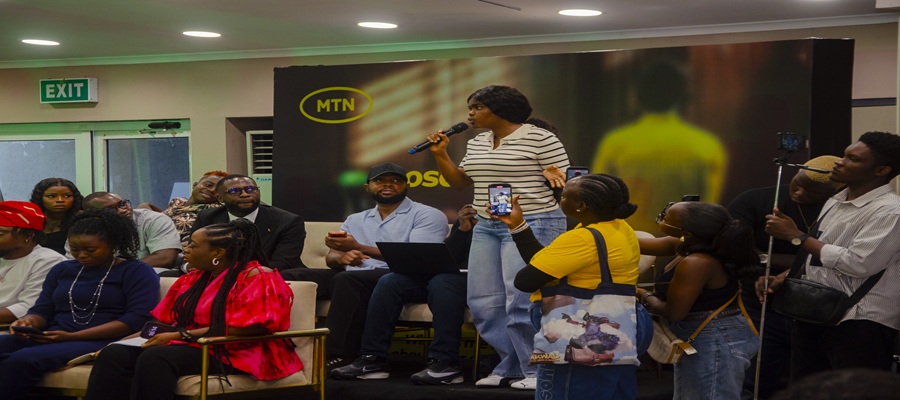
Concerns over network reliability and its impact on Nigeria’s growing creator economy took centre stage at MTN Nigeria’s Data on Trial event, where content creator and streamer, Jarvis, challenged telecommunications operators to improve connectivity for digital creators.

Speaking during the event, Jarvis asked whether there were locations in Nigeria where uninterrupted internet connectivity could support real-life (IRL) streaming without network disruptions.
“Are there places where there is no breakage when streaming IRL?” she asked.
Her question highlighted the challenges faced by content creators who depend on stable internet services for live streaming, content uploads and real-time engagement with audiences.
Responding, MTN Nigeria’s Chief Technical Officer, Mr Yahaya Ibrahim, said network performance depends on several factors, including location, network coverage, device capability and the number of users connected to a particular base station.
He noted that operators continue to invest in expanding network capacity to meet the growing demand for data services.
Earlier, MTN’s General Manager, Network Performance and Quality Assurance, Mr Michael Ndukwe, explained the evolution of mobile network technology in Nigeria, from first-generation (1G) services to the current fifth-generation (5G) technology.
According to him, each phase of technological advancement has significantly increased network capacity and enabled new digital services.
Ndukwe cited Nigerian Communications Commission (NCC) data showing that Nigerians consumed about 13.2 million terabytes of data in 2025.
He added that data usage reached approximately 4.06 million terabytes in the first quarter of 2026, reflecting the country’s increasing reliance on digital platforms and online services.
According to him, the growth is being driven by wider adoption of 4G and 5G networks, increased smartphone penetration, the proliferation of smart devices and expanding use of social media platforms.
Participants at the event noted that as more Nigerians build businesses and careers around digital content, access to reliable and high-speed internet has become critical to sustaining the country’s digital economy and creator ecosystem.

Dangote Refinery’s Private Placement Reportedly Hits $2.5Bn

FG, UNODC Plan National Strategy against Organized Crime

EFCC Busts NIS Visa Overstay Racket, Uncovers N700m in an Account

CBN to Monitor Every Dollar with FXBT, Forex Tracker

NCC, NDLEA Partner to Fight Piracy and Drug Trafficking

NRC, Ponzi Scheme Collapses Resulting Loss of Billions of Naira

NASENI Moves to Digitize CCB’s 5m Assets Declaration and Operations

Lebara Nigeria Launches Lebara Play, Africa’s First Telecom-Owned Micro-Drama Platform

CANAL+ Partners Samsung to Pre-Load DStv Stream on New Samsung TVs In Nigeria, Other African Countries

Tokenization, Blockchain Technology will Transform Financial Institutions – IMF



 News2 days ago
EFCC Busts NIS Visa Overstay Racket, Uncovers N700m in an Account
 News2 days ago
NCC, NDLEA Partner to Fight Piracy and Drug Trafficking

 News3 days ago
FAAN to Replace Physical ID Check with V-Pass Biometric Verification
 General News2 days ago
Dangote Refinery’s Private Placement Reportedly Hits $2.5Bn

 News3 days ago
CBN Introduces Digital Tracker to Monitor BDC Forex Transactions

 News3 days ago
CAC Begins Removing 100,000 Companies from Register Over Regulatory Non-Compliance

 Telecom3 days ago
Airtel Delivers Free Employability Training to Young Nigerians @ World Youth Skills Day

 Telecom3 days ago
ntel Plays Down Calls and Data Services, Moves to BET Agenda