

News
From Brazil to Nigeria, a Trail of Samsung’s Graft Inclination

Samsung Heavy Industries, SHI, the South Korean ship builder, has been in the news in Nigeria, since January this year following the arrival into the country of the multi-billion dollar Egina Floating Production Storage and Offloading, FPSO, vessel, built by it for Total and partners in the Egina oilfield project.
The arrival of the vessel at the Ladol shipyard in Lagos for the integration of its topsides was ceremonious being that the vessel is regarded as one of the biggest in the world and also because it would be the first time the nation would be witnessing the integration of the topsides of an FPSO locally.
Samsung’s good deed in delivering the vessel is however over-shadowed by its corruption history, which has become well-known in Brazil as in Nigeria. Indeed, in Nigeria, like in Brazil, Samsung Heavy Industries has its name etched in a history of graft.
Samsung’s graft story in Brazil is represented by the drillerships, Petrobras 10000 and Vitoria 10000. In Nigeria, its corrupt inclination blew open with the award of the Egina FPSO contract and the company’s manipulation of the government and NNPC officials to land the multi-billion dollar deal.
Organised bribery

In Brazil. a judge had in 2015 sentenced Nestor Cervero, former international chief of state-run oil firm Petrobras, to over 12 years in prison on charges of corruption and money laundering related to a bribe allegedly paid to the speaker of Brazil’s lower house of Congress.
Cervero and two other defendants were accused of organising bribes from Samsung Heavy Industries in exchange for two drillship contracts, the Petrobras 10000, which was leased jointly by Petrobras and Mitsui in 2006, and the Vitoria 10000, hired by Petrobras in 2007.
Consultant Julio Camargo, who said in a plea bargain testimony that the then speaker of Brazil’s lower house of Congress, Eduardo Cunha, asked him for a $5 million bribe, was given a 14-year sentence that was reduced to reporting to police twice monthly and doing community service because he collaborated.
Lobbyist Fernando Soares, accused of funneling bribes to Cunha’s Brazilian Democratic Movement Party, PMDB, was sentenced to over 16 years in jail.
Cunha, who quitted former Brazilian President, economist and politician Dilma Rousseff’s ruling coalition a few years back, had accused her government of framing him in the broadening scandal focused on Petroleo Brasileiro SA or Petrobras.
He was not a defendant, but the sentences handed down by federal judge, Sergio Moro, gave federal prosecutors in Brasilia more ammunition to bring charges against Cunha and other politicians thought to have benefited from the price-fixing and political kickback scheme.
Cervero’s 12 years and three-month sentence was the second he had received from Moro.
In May 2015, he was sentenced to five years in prison for using a front company to launder money stolen from Petrobras and buy a luxury apartment in Rio de Janeiro. He was fired from Petrobras in 2014 and arrested in January as he stepped off a plane from Europe.
Despite the degree of graft uncovered in the case, executives at Samsung Heavy Industries were not charged, neither were they investigated in the corruption and bribery case. Its officials, therefore, walked away unscathed.
Corruption at home
Prior to the Brazil event, a corruption scandal broke out at the Samsung Group in 2007, leading prosecutors to open a formal investigation into charges that its chairman, Lee Kun Hee, masterminded a broad scheme of bribery and illegal transactions.
Prosecutors had investigated three major accusations of criminal behaviour: the creation of a slush fund; the bribery of prosecutors and government officials; and an effort by the chairman, and his aide to illegally help his son take over control of Samsung.
“We are ready to unveil the truth through a stern, fair and thorough probe,” The New York Times had reported, quoting Kim Kyong Soo, a prosecution spokesman, then as saying.
In previous scandals that have plagued Samsung, several executives were convicted of illegally trying to help Mr. Lee’s son, Jae Yong, take control of management, and of bribing politicians. But Mr. Lee’s family had escaped largely unscathed. This had led critics to charge that Samsung runs a vast network of bribery and influence-peddling through the government, the judicial branch and the media, making the Lee family untouchable — a claim vehemently rejected by Samsung.
A whistle-blower: Kim Yong Chul, Samsung’s former chief lawyer, had also confessed to having been personally involved in bribing and fabricating court evidence on behalf of Mr. Lee and Samsung.
*Again, Samsung denied all of Mr. Kim’s allegations Tuesday, saying that he was turning against Samsung out of “personal grudges.”
However, in a legal complaint filed with prosecutors Mr. Kim, who worked as an internal lawyer for Samsung for seven years until 2004, said that Mr. Lee and his top aides illegally ordered transactions that allowed his son to acquire Samsung shares from Samsung affiliates at unfairly low prices.
When prosecutors investigated one transaction in 2003, Mr. Kim said lawyers in his legal division at Samsung trained Samsung executives to serve as scapegoats to protect Mr. Lee, even though those executives were not involved.
Two of the executives were found guilty in a court ruling in October 2005.
In interviews with South Korean media, Mr. Kim said he was “sidelined” by Samsung after he refused to pay 3 billion won, or $3.3 million, in a bribe to the judge presiding over the case.
Mr. Kim’s accusations later took on a new drama when he gave a nationally televised news conference in a Catholic church in Seoul.
“Samsung instructed me to commit crimes,” he said at the news conference. “A basic responsibility for all Samsung executives is to do illegal lobbying, buying people with money.”
Samsung later issued a 25-page rebuttal denying all major accounts of Mr. Kim’s allegations. It noted that Mr. Kim did not provide evidence to support his claims.
Samsung in Nigeria
An independent investigation by the leading energy publication SweetcrudeReports in 2013 and this month had uncovered how Samsung Heavy Industries was handed over the Egina FPSO project after heavy bribing of corrupt government officials, who have also promised it other juicy upcoming contracts such as Shell’s Bonga and Zaba-Zaba led by Agip.
SweetcrudeReports gathered that Samsung bribed its way to land the Egina FPSO contract award, as another South Korean company which participated in the bids tender processes, Hyundai Heavy Industries, HHI, emerged preferred bidder, and was subsequently recommended by the National Petroleum Investment Management Services, NAPIMS, the investment arm of the Nigerian National Petroleum Corporation, NNPC, making the circumstances in which Samsung was selected appear inexplicable.
Checks revealed that Samsung had entered into a partnership with Intels for execution of the Egina FPSO packages and that the Nigerian company had deployed its immense political clout to pressure the NNPC management into breaking its own tendering processes, and rules of engagement.
It was gathered that at a meeting which took place after a Group Executive Committee meeting, held a few days before 2013 Christmas, Mr. Andy Yakubu, the NNPC group managing director, Abiye Membere, the NNPC group executive director and Mr. Tony Madichie, the NNPC secretary and legal adviser, decided to select Samsung for the FPSO package.
The Group Executive Committee, GEC, of the NNPC at the time explained that the rationale behind the award to Samsung Heavy Industries was that the company gave a 5 percent discount on the bid advanced by HHI for the Egina FPSO package. Strangely, HHI was neither invited by the GEC nor afforded the same opportunity to match or best the SHI offer lending credence to talk of bribery.
Subverting Nigerian Content scope
The selection of SHI for the Egina FPSO award ran against the grain of due process, the Nigerian Content scope was completely muddled up, putting in jeopardy the possible gains derivable thereof, and the aspirations of the federal government.
Before the Egina FPSO award, Samsung had never executed any project in Nigeria neither did it have any presence in the country.
An NNPC staff who pleaded anonymity had told SweetcrudeReports as far back as 2013, that “Obviously, no aspect of the FPSO package will be executed in Nigeria if Samsung gets the endorsement of the NNPC Board”.
Continuing efforts to obtain a reaction from executives of Samsung have so far proved abortive.


National Population Commission (NPC) has commenced the nationwide digital registration of births and deaths under the Electronic Civil Registration and Vital Statistics (E-CRVS) system to strengthen legal identity management and improve demographic data.

Speaking at a press briefing in Lokoja on Tuesday, Mr Afolabi Yori, federal commissioner representing Kogi, said the initiative became operational nationwide on July 1, through the VitalReg platform.
Yori described the development as a landmark in Nigeria’s civil registration system, noting that it would modernise birth and death registration through a technology-driven platform that meets international standards.
He said the digital platform would improve service delivery, strengthen data integrity and ensure that every birth and death occurring in Nigeria was accurately documented and securely stored.
According to him, civil registration is more than an administrative process, as it provides reliable statistics that support public policy formulation, resource allocation and national development planning.
“Nigeria records an estimated five million births annually, yet millions of births and deaths remain unregistered.
“Birth registration coverage currently stands at about 57 per cent nationwide, while death registration remains below 20 per cent,” he said.
The commissioner said that the commission had established 4,011 functional registration centres across the country’s 774 local government areas and was working to expand the number to about 8,000.
He added that the commission was strengthening collaboration with stakeholders to improve the capacity of registration personnel and ensure prompt documentation of vital events through the VitalReg platform.
Yori said the platform would provide faster registration services, 24-hour online access, digital certificate issuance where applicable, and reduce paperwork, waiting time and unnecessary travel.
He disclosed that the platform was being operated under a Public-Private Partnership with Barnks-forte Technologies Ltd. as the commission’s technical partner to ensure system availability, cybersecurity and continuous technological improvement.
He called on parents, healthcare institutions, traditional and religious leaders, civil society organisations, development partners and the media to support the initiative by encouraging the prompt registration of births and deaths.
Earlier, Samuel Omonakpeme, director in Kogi, NPC State, described the commencement of the digital registration system as another milestone in efforts to strengthen Nigeria’s Civil Registration and Vital Statistics system.
Omonakpeme stated that the initiative aligns with the Federal Government’s digital transformation agenda and the Sustainable Development Goals, particularly Goal 16.9, which seeks to provide legal identity for all.
He appreciated the Federal Government, the leadership of the commission, UNICEF and other development partners for supporting the implementation of the initiative.
The state director also urged parents, guardians, health institutions, community leaders, religious organisations and the media to mobilise public support for the timely registration of all births and deaths.
The News Agency of Nigeria (NAN) reported that ICT personnel of the commission, led by Ehimoni Kolawole, conducted a live demonstration of the digital birth registration process using the VitalReg platform.
The demonstration showed that the registration process captures the biodata of both parents, while at least one parent must possess a valid National Identification Number (NIN) to complete the registration of a newborn.
Yola Electricity Distribution Company (YEDC) has alerted its customers to a fraudulent message circulating on social media, falsely claiming that electricity consumers can receive an additional 20 per cent bonus units when recharging their prepaid meters through unofficial channels.

In a statement issued by the company’s management on Monday, YEDC described the claim as false and urged customers to disregard the misleading information, stressing that it did not originate from the company.
According to the statement, YEDC does not offer bonus electricity units through individuals, agents, personal bank accounts, phone numbers, or social media contacts.
The company advised customers to purchase electricity tokens only through approved cashless payment platforms, including the YEDC Pay App, OPay, Interswitch, and other authorised vending channels, or to visit the nearest YEDC office for assistance.
YEDC also cautioned customers against sharing their meter details or personal information, or making payments to unauthorised persons claiming to represent the company.
The company further urged customers to rely exclusively on information disseminated through its official communication channels to avoid falling victim to fraud.
The management thanked customers for their continued cooperation and reaffirmed its commitment to serving them.
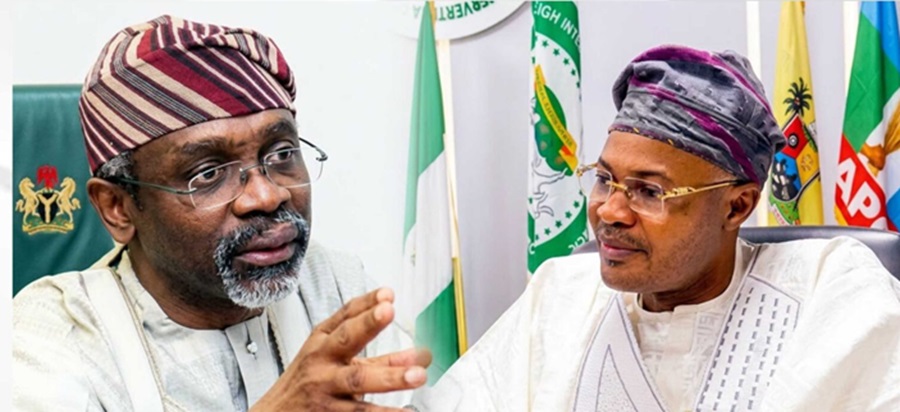
Central Bank of Nigeria (CBN) has disclosed that two foreign currency accounts opened in connection with the controversial Presidential Foreign Investment Promotion Council (PFIPC) have remained inactive since their creation, with no funds deposited and no transactions recorded.

The revelation emerged on Monday during the ongoing investigation by the House of Representatives Ad-hoc Committee probing the circumstances surrounding the establishment and operations of the council.
Lawmakers are investigating allegations that the PFIPC was created and operated without a valid legal framework and outside the established procedures required for government agencies and institutions.
Appearing before the committee, representatives of both the Central Bank of Nigeria and the Office of the Head of the Civil Service of the Federation (OHCSF) distanced their institutions from the establishment of the council.
The Office of the Head of the Civil Service of the Federation stated that it neither created the council nor possessed the constitutional authority to establish federal agencies.
Representing the office, officials explained that the OHCSF is only responsible for approving administrative structures of government agencies after all necessary requirements have been fulfilled.
According to the office, records showed that the council submitted a request on August 6, 2025, seeking approval for its organisational structure.
However, the application was not approved because the required supporting documents were not attached.
The committee heard that despite the rejection of the request, officials linked to the Presidential Economic Advisory Council (PEAC)/PFIPC later appeared during the 2025 manpower budget defence exercise and sought approval for staffing and recruitment arrangements.
The office disclosed that the council informed government officials that its activities were being carried out largely through personnel seconded or deployed from other institutions.
Lawmakers were told that the council requested approval for a total of 314 positions. The figure consisted of 14 existing officers and an additional 300 proposed positions.
The Office of the Head of the Civil Service further revealed that concerns later arose regarding documents presented by the council as evidence of its legal backing.
Officials told the committee that upon examination, the documents failed to display essential features expected of an enabling law or valid legal instrument establishing a government body.
Mrs. Didi Esther Walson-Jack, head of the Civil Service of the Federation, also rejected claims that her office deployed civil servants to work for the council.
She maintained that the office did not assign personnel to the body and did not provide office accommodation for its operations.
According to her, matters relating to the creation, supervision and oversight of government agencies fall under the responsibilities of other relevant institutions, including the Office of the Secretary to the Government of the Federation.
The Central Bank of Nigeria also provided details regarding accounts linked to the council.Nigerian current events
Hamisu Abdullahi, director at the apex bank, who represented the CBN Governor before the committee, explained that the bank opened two foreign currency accounts following a formal request from the Office of the Accountant-General of the Federation.
He told lawmakers that the request was received on July 30, 2025, and instructed the bank to create a United States dollar domiciliary account and a Pound Sterling domiciliary account.
Abdullahi stressed that the CBN only opens accounts for government agencies after receiving official authorisation from the Accountant-General’s office.
However, he disclosed that the accounts never became operational because the council failed to provide authorised signatories required for activation.
As a result, both accounts remained dormant from the day they were opened.
He informed the committee that neither account had received deposits nor processed withdrawals. The accounts also recorded no foreign exchange allocations, remittances, inflows or outflows.Governor election news
According to him, the balances in both accounts remain at zero.
The CBN official further stated that the council did not engage directly with the apex bank regarding the management or operation of the accounts after they were created.
Following the submissions, members of the committee demanded more information as part of efforts to determine the full scope of the council’s activities.
Hon. Abdulmalik Danga, chairman of the committee, directed the Central Bank to submit comprehensive records relating to both the Presidential Foreign Investment Promotion Council and the Presidential Economic Advisory Council.
The committee requested details covering the opening of the accounts, their operational history and any information connected to related banking activities.
Lawmakers also instructed the CBN to work with commercial banks to identify and provide records of any accounts linked to the entities under investigation.
However, the committee is expected to continue its hearings as more government agencies and officials appear before lawmakers to provide explanations on the controversial council and the circumstances surrounding its operations.

NPC Opens Nationwide Digital Birth, Death Registration Platform

FG Launches C.L.I.C.K.D., Consumer Credit Scheme for Tech Devices

Airtel Nigeria Expands Retail Footprint to Strengthen Customer Access Nationwide

Ovaloop Technologies Unveils Digital Tools to Formalize SMEs Operations Across Africa

Kaspersky Survey Highlights the Need for Smartphone Security

NRC, Ponzi Scheme Collapses Resulting Loss of Billions of Naira

NASENI Moves to Digitize CCB’s 5m Assets Declaration and Operations

Lebara Nigeria Launches Lebara Play, Africa’s First Telecom-Owned Micro-Drama Platform

CANAL+ Partners Samsung to Pre-Load DStv Stream on New Samsung TVs In Nigeria, Other African Countries

Tokenization, Blockchain Technology will Transform Financial Institutions – IMF




 News2 days ago
Adebutu, PDP Chieftain Accuses Nigerian Governors of Embezzling LG Allocations

 E-Financial2 days ago
Access Holdings Sells 7.44% Stake in Ghana Unit

 E-Financial2 days ago
NDIC Urges Youths to Shun Ponzi Schemes, Embrace Savings

 News2 days ago
NIMASA Unveils Accelerator Scheme to Drive Innovation, Sustainable Growth

 E-Business2 days ago
SERAP to Sue NASS over Bill Empowering NDPC to Regulate Social Media

 E-Financial2 days ago
NRS Issues July 31 Deadline for e-Invoicing Compliance

 News2 days ago
ICPC Secures Final Forfeiture of N941m Linked to IPPIS Fraud

 News2 days ago
eBusinessLife Advocates Greater Support for Girls in ICT as Students Showcase AI Innovations