

Broadcasting
UNILAG TV Goes Live

University of Lagos Akoka, Yaba, Lagos, has launched the first campus television station, expected to deepen campus journalism.
Its broadcast is not only restricted to Nigeria, but across West Africa.
It is called UNILAG TV, which aims towards the creation of premier local, national and international contents from all sectors to educate, inform and entertain Nigerians.

The station is part of the university’s efforts to achieve excellence and creating a better Nigeria where young ones can thrive and reach for the sky.
The launch, which took place at the Senate building of the institution, was a gathering of academics, students, media managers and others of like minds, who were pleased to be a part of a unique project – UNILAG TV.
It has since commenced test transmission on January 17 on StarTimes digital broadcasting platform, channel 184.
Professor Oluwatoyin Ogundipe, Vice Chancellor, said it has been the dream of the institution to have a campus TV after it pioneered Campus Radio Broadcasting in Nigeria on December 14, 2004.
According to Ogundipe, Nigeria’s president, Muhammadu Buhari, approved the institution’s TV license on Thursday, November 9, 2017, noting, “To see to the actualisation of the noble dream of having a functioning TV station, I constituted the University of Lagos Multi-Media Ventures Board in April 2018 to mid-wife the speedy actualisation of the project. I am happy that the dream has been actualised.
UNILAG TV will fly on the platform of StarTimes on Channel 184 with state-of-the-art equipment and technical facilities in place.
“The TV station would deliver premier local, national and international news as they unfold and become a trusted news source by being impartial, creative, factual, credible, timely, and innovative. Our team of world-class professionals would inject fresh ideas and energies that would take broadcasting to the next level in Nigeria.”
He further said that the TV station would serve as a reference point in sports, documentaries, quality entertainment, and instrument of educational advancement, stating, “Most importantly, the TV station will have a time belt for our Distance Learning Teaching Packages to serve as an instructional facility for our Distance Learning students.
The station would also promote the culture of our immediate communities by regularly highlighting the ideas, languages, customs, folklores and social behaviours of our immediate communities in line with the provision of National Broadcasting Commission’s (NBC) Codes.
“Just as teaching hospitals are indispensable to those studying medicine, while laboratories are useful to students of natural and applied sciences, TV is strategic to students of journalism, broadcasting, advertising, marketing, creative art, languages, electronics engineering and computer science in the acquisition of technical skills before graduation.
The TV channel would be deployed to keep our students and wider communities informed of developments in the university through the dedication of one hour to UNILAG news.”
Ogundipe, however, commended Buhari for the confidence reposed in the institution and his kind gesture. He also praised members of management board and team who had who worked tirelessly to ensure the realisation of the dream for UNILAG TV.
Professor Muyiwa Falaye, chairman UNILAG Media Ventures said the institution chose StarTimes platform for the TV station because it is still a start up and it is better to start at a point where progress can be made to avoid making mistakes.
“We got our best incentives and best conditions for start ups from StarTimes,” he said. “The demands for other platform are enormous. Also, the markets we intend to serve are those, which can afford the subscription to StarTimes, which is quite affordable. Our performance will be great by the time viewers tune in to UNILAG TV on January 17. I want to assure the VC and the community that the TV will be run professionally and we can only do this if we get assistance from management and the community. We will be guided by NBC codes; we are not going to engage in running other people’s programmes without license. We are producing local contents and in the next one-year we will have 60 per cent local contents that would come from our students and staff.”
Falaye noted that a few weeks back, the institution placed advert for presenters for UNILAG TV amongst staff and students, noting that over 400 applications were received.
“We eventually shortlisted to about 10 people who would commence work in addition to those who have been there since the inception of the TV station,” he informed.
“We have some of the best TV studios and facilities in Nigeria; even the big stations that have visited us have acknowledged that fact and the level of our preparation to commence transmission is amazing.
We are set to become an active player in the market and other stations should be ready for a challenge, as UNILAG TV would give them a run for their money. We are going to challenge the existing order in the TV market.”
He, however, advised Nigerians, who do not have StarTimes decoder to get one, saying it is not expensive and even students could afford to subscribe.
“Also, you can get StarTimes mobile app to watch UNILAG TV anywhere in the world,” he added. “Though what we have now is transitional within Lagos, we are streaming within Lagos for now and maybe in future we would extend beyond Lagos. We have also embarked on aggressive staff training for them to be ready and competitive in the modern day market, as it is quite challenging. As we commence transmission, viewers would see that we may just be starting work, but we will be working hard.”


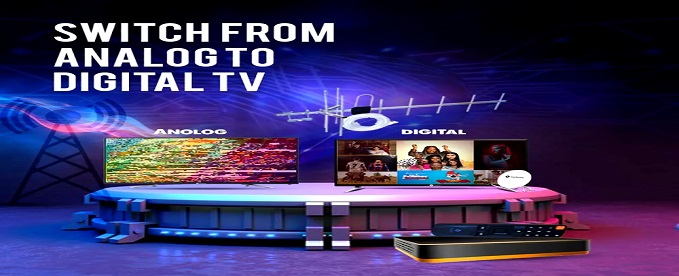
National Broadcasting Commission (NBC) has said that Nigerians will no longer pay annual Digital Access Fees under the renewed Digital Switch Over (DSO) project.

Charles Ebuebu, director-general, NBC, disclosed this in an exclusive interview with the News Agency of Nigeria (NAN) on Wednesday in Abuja,
Ebuebu said viewers only need to purchase an approved decoder and satellite dish which cost below N20,000 to enjoy free television permanently.
“Previously, users paid an annual digital access fee of about N1,500, described as an administrative charge.
“The new system removes that annual fee. It provides free access to free-to-air television channels without any payment.
“Premium channels will be introduced later. Viewers who want those additional channels will be able to access them through paid services.
“Nigerian content on free-to-air channels remains free to watch. Unlike Pay TV, this platform does not require monthly subscriptions for its basic service,” he said
Ebuebu said approved decoders for the FreeTV will cost less than N20,000 and authorised sales outlets will soon be announced.
He urged Nigerians to wait for official information on approved dealers for the DSO decoders, warning that unauthorised sellers are exploiting growing public demand.
He reiterated that people only need a free-to-air decoder, along with a satellite dish instead of the old antenna system to receive the DSO signal.
“Once the equipment is installed, viewers can access all available channels across the country without paying any subscription fees,” he stressed
The DG dismissed claims by some retailers that there are different categories of decoders sold at varying prices, stressing that such sellers are not authorised by the commission.
According to him, the NBC will soon publish the list of approved dealers, official prices, and locations where genuine decoder boxes and accessories can be purchased.
The NBC boss said the DSO project is designed not only to improve television broadcasting but also to stimulate economic growth by creating jobs, attracting investment, and opening up opportunities for businesses that support the broadcasting industry.
Ebuebu noted that content producers and broadcasters stand to benefit significantly from the nationwide reach of the DSO platform.
Unlike the previous system, where many stations had limited regional audiences, he said the new platform will make their channels available to viewers across Nigeria.
He added that the introduction of audience measurement technology will provide scientific and reliable data on television viewership.
Ebuebu added that audience measurement technology will give advertisers greater confidence in placing adverts and enable broadcasters to demonstrate the true size and reach of their audiences nationwide.
Uchenna Mbunabo, Nigerian filmmaker, has raised concerns over the alleged unauthorised broadcast of Nollywood films by some Ghanaian television stations, calling on Ghana’s National Film Authority (NFA) to strengthen the enforcement of copyright laws.

Uchenna Mbunabo, Nigerian filmmaker
Mbunabo made the remarks during a conversation with James Gardiner, deputy CEO of the National Film Authority (NFA) of Ghana.
He questioned whether it was permissible for television stations in Ghana to download Nigerian movies from YouTube and air them without obtaining permission from the producers.
“I noticed that Ghanaian TV stations, the way they are stealing our films and showing them for free with impunity. Is it legalised in your country for TV stations to go on YouTube, download people’s sweat and show it for free?”
According to Mbunabo, some Ghanaian television stations have been downloading newly released Nollywood films from YouTube and broadcasting them without authorisation, depriving producers of revenue generated through the platform.
He also stated that he had not witnessed Nigerian television stations engaging in similar practices and questioned what measures Ghana was taking to protect filmmakers’ intellectual property.
Responding to the concerns, Gardiner acknowledged that the issue exists and said the National Film Authority had begun engaging relevant stakeholders to address it.
He disclosed that the NFA has held discussions with the Ministry of Communications, the National Communications Authority (NCA) and the National Media Commission (NMC) on improving copyright enforcement.
Gardiner explained that while Ghana has copyright laws, enforcement remains challenging because many television stations now operate digitally and may not have physical offices within the country.
“There are copyright laws, but they are not effective because a lot of the TV stations don’t have offices. Most of them are now digital, so they operate from anywhere. They can even have a Ghanaian TV station but be operating from Austria simply because it is digital.”
He added that authorities are considering a new licensing framework that would require broadcasters to undergo a fresh licensing process to improve monitoring and enforcement.
According to Gardiner, television stations found guilty of illegally broadcasting copyrighted content would be required to compensate affected producers through fines.
He added that repeat offenders could face suspension of their broadcasting licences, while a third violation could result in the revocation of their licences.
Although he did not provide a specific timeline, Gardiner said the reforms were already underway and expressed hope that significant progress would be seen next year.
Mbunabo welcomed the proposed measures but urged the National Film Authority to expedite the process, stating that unauthorised broadcasts continue to affect filmmakers’ ability to recover production costs through legitimate distribution channels such as YouTube.
He also stressed that his comments were not directed at Ghana’s film industry, noting that he has worked with several Ghanaian actors over the years and supports collaborations between Nollywood and Ghallywood.



FAAN to Replace Physical ID Check with V-Pass Biometric Verification

World Bank Says 79 Percent of Nigerians Still Trapped in Poverty despite Reforms

SEC Begins Drive to Recover Unclaimed Dividends

ntel Plays Down Calls and Data Services, Moves to BET Agenda

Nigeria Facing Rising Cybercrime Losses – Report

NRC, Ponzi Scheme Collapses Resulting Loss of Billions of Naira

Nigeria Launches FreeTV Nationwide

NASENI Moves to Digitize CCB’s 5m Assets Declaration and Operations

Lebara Nigeria Launches Lebara Play, Africa’s First Telecom-Owned Micro-Drama Platform

CANAL+ Partners Samsung to Pre-Load DStv Stream on New Samsung TVs In Nigeria, Other African Countries




 E-Business3 days ago
TD Africa Sponsors Check Point Secure 360 Summit to Boost Cybersecurity in Nigeria

 Telecom3 days ago
MTN Foundation, MUSON Celebrate Emerging Music Talents at 2026 Graduation Ceremony

 News3 days ago
Guinness Rolls Out Nationwide Consumer Rewards Promotion

 Telecom3 days ago
NITDA Calls for Digital Infrastructure Expansion to Drive Nigeria’s Industrialisation

 E-Financial3 days ago
Next Currency Crisis May Turn $300Bn in Stablecoins into National Currencies

 E-Financial3 days ago
Gigbanc Nigerian Fintech Startup Closes Shop after 3 Years

 General News3 days ago
First Trustees Advocates Estate Planning as an Essential Tool in Every Wealth Creation Strategy

 Broadcasting3 days ago
Mbunabo, Nigerian Filmmaker Accuses Ghana TV Stations of Pirating Nollywood Films