

Telecom
Fast and Furious Mobility Hands End-Users More Power


Enterprise mobility, cloud computing, bring your own device (BYOD), the consumerisation of IT, collaboration, social media… the list of ICT trends is large.
But while the vast array of devices and capabilities at the fingertips of end-users has redefined the way we live, work and connect, the current megatrend in IT departments is that they’re overwhelmed, overburdened and struggling to enable and support users in this era of pervasive mobility.
However, with proper capacity, coverage and performance optimisation, organisations can begin to ride the mobility wave rather than get dragged under it.
Who’s in charge of procurement?
According to Nadeem Ahmad, Dimension Data’s Global Technology Director for Network Integration, when it comes to new devices on their networks, many organisations are playing catch up.
“IT teams can’t stop the proliferation of consumer devices accessing their networks, even if they wanted to. The days when the IT department dictated what you work on and where you work are over. The end-user has more power than ever before.

In fact, BYOD is one of the most influential trends to hit IT, and has literally redefined the way devices are used in the workplace,” added Ahmad. Employees want to integrate their personal and professional lives using their mobile devices and leverage the productivity gains that anywhere, anytime, any device connectivity provides.
Organisations are being forced to adapt quickly to the consumer device phenomenon or lose their relevance in what is now a world ‘on the go’.
Recent statistics indicate that on average, employees have 2.5 devices each. What’s more, they expect to use the advanced functionality and applications these devices offer – whether watching videos or Voice over WLAN – anywhere, anytime.
In addition, Cisco predicts that by 2016, mobile connected tablets will generate almost as much traffic as the entire global mobile network does today.
Tablets are just the latest bandwidth hogs, and – according to industry analyst firm, Gartner – “just the tip of the mobility iceberg”.
“When you consider that the media tablet market didn’t even exist two years ago, the only thing you can plan for when it comes to mobile innovation is more, more, and more,” said Ahmad who points out that a well-designed, pervasive WLAN infrastructure used to be a ‘nice to have’ but it’s now rapidly become a ‘must have’ necessity.
“The good news is that there’s much that organisations can do to help with the coverage and capacity of their wireless network and meet user requirements around service, performance and seamless mobility,” he said.
Let’s talk infrastructure
In particular, *802.11n enables optimal coverage, reliability and performance across the corporate network infrastructure for data, voice, video and other services vital to supporting mission critical mobile applications and services so if you’re still nursing along a legacy 802.11 a, b or g infrastructure, it’s time to upgrade.
And in many instances, connectivity plans need to include mesh topology to support communication in emergency situations, outdoors or in harsh environments.
When designing a high-density WLAN, it’s also important to consider the performance implications of all the tablets, smartphones and other Wi-Fi devices in a small area and that the integration of these multiple devices occurs with ease.
Today’s newer mobile devices all use 802.11n, but IT needs to make sure that other users with older devices and older technology – still common in the workplace – don’t suffer.
In reality, many IT departments have been looking at this from the wrong end.
“They’ve been so busy making sure the executives or the sales guys have the latest tablets they want and trying to cater to end users bringing in their own devices that they haven’t given enough thought to the fact their WLAN wasn’t designed for all these devices,” explains Ahmed. “But if you don’t optimise your technology and infrastructure, your network will simply not be able to withstand this uncontrolled explosion of new devices.”
Heavy traffic forecasted – expect delays Gary Middleton, Dimension Data’s Business Development Manager for Network Integration believes we only need to look at the traffic forecast to understand the magnitude of the problem.
According to a recent Cisco report, between 2011 and 2016, there will be an 18 fold increase in mobile data traffic. This translates to a compound annual growth rate of 78% over five years.
“That’s huge”, explains Middleton. “It’s almost doubling the amount of traffic per year that will be handled on global networks. Of course, not all of that will be on the enterprise network: much of it will be on the service provider networks.
However, – any way you slice it – it’s massive growth and organisations need to prepare the networks for this,” he said.
According to Middleton, it is one thing getting these devices connected to the network: the challenge is managing how all this new traffic affects network performance.
“A smart phone now generates 35x more traffic, and a tablet 121x more than a regular cell phone. This amount of traffic – and the rich content, graphic data and ingenious applications that make these devices so attractive – are extremely tough on the network, and if not addressed, will affect performance,” he warns.
Intelligent networking
He says this is where intelligent networking becomes so important. “Organisations need to apply the concept of context. What is being connected; who is connecting; where they are connecting; from and what are they doing? This form of meaningful context is important when handling the network traffic and applying network resources in an appropriate way.”
With the ability to set policy on the prioritisation of traffic, organisations can make sure that, when the network is flooded with traffic, the business critical applications will get the bandwidth they need first.
A ‘free for all’ BYOD policy could come at the cost of mission critical applications. If an employee is at a client and cannot access the information he needs to close a deal because a training seminar is being transmitted to 50 users, then mobility could be getting in the way, and as a result, will stop enabling business.
Middleton said there are many technologies that can be applied to the network to improve performance and manage traffic better.
“For example, it’s possible to load-balanced users across applications using the context information we have – and even make sure that an iPad receives a more mobile version of an application, so as not to cause bottlenecks on the network.”
Planning for progress
Historically, organisations planned and budgeted around a seven year depreciation of their network.
However, with (just) mobile traffic growing at such exponential rates, that seven year depreciation period will not apply anymore.
The pace of technology innovation means that the usable life of the capital asset is much shorter. Clients that are holding out for calendar driven refresh over business-agility driven refresh are at risk of falling behind their more ‘mobility conscious’ competitors and losing their appeal to tech-savvy talent.
What we know for sure is the ever-increasing number and type of employee-owned devices in the workplace will be more bandwidth and information hungry than ever before.
And secondly, without proper consideration and future-proof planning, the IT headache is going to get bigger, particularly when network performance really begins to suffer.
“Failing to plan is certainly planning to fail when it comes to enterprise mobility,” said Ahmad.
“Today, IT departments take a reactive approach, which is understandable given the speed at which all this is happening. However, it’s critical they become more proactive and put a plan in place. When it comes to the various disciplines of enterprise mobility, we are helping more and more clients map the current stage of where they are today, where they want to be in the future and put together a clear development path to ensure they achieve these objectives,” concludes Ahmad.
*802.11n wireless networks let you create a seamless working environment by combining the mobility of wireless with the performance of wired networks.



Samsung Electronics has laid off hundreds of employees in its United States consumer electronics business as part of a headquarters relocation from New Jersey to Texas, amid mounting pressure on its mobile and home appliance divisions.

The South Korean technology giant said Samsung Electronics America (SEA) would relocate its headquarters to Texas, a move affecting 739 positions in Englewood Cliffs, New Jersey.
The company said most affected employees had been offered relocation packages, while others were laid off.
In Plano, Texas, about 100 employees, including workers in Samsung’s mobile division, were also dismissed, according to a source familiar with the development.
Samsung said the relocation could lead to workforce changes involving employees unable to relocate and the restructuring of certain functions to align with business priorities.
Documents cited by Reuters indicated that affected employees were informed on June 30 of an enterprise-wide workforce reduction that would have a significant impact on staff.
Several employees also disclosed their departures through posts on LinkedIn, including senior sales and marketing executives based in Texas and New Jersey.
The layoffs come despite Samsung’s semiconductor division recording strong growth driven by rising global demand for artificial intelligence (AI) chips.
The company recently projected a 19-fold increase in second-quarter profit, supported by booming AI-related chip sales, and announced plans to invest hundreds of billions of dollars in expanding chip manufacturing.
However, Samsung’s consumer electronics business continues to struggle with higher semiconductor costs and increasing competition.
Its mobile division is expected to record its first-ever operating loss as it faces stiff competition from Apple, while Chinese brands, including TCL and Hisense, continue to gain market share in the television and home appliance segments.
Industry observers say the contrasting performance highlights Samsung’s growing reliance on its semiconductor business as consumer electronics revenues weaken.
Samsung denied reports of a broader global restructuring, insisting there was no company-wide overhaul of its consumer products division.
According to the company, relocating its U.S. headquarters is intended to improve collaboration and strengthen operations within Texas’ expanding technology and AI ecosystem.
Texas has increasingly attracted major technology companies due to its lower taxes and business-friendly environment, with firms such as Tesla and Oracle also relocating significant operations to the state.
Samsung already operates semiconductor manufacturing facilities in Texas, alongside its mobile operations hub in Plano.
As of the end of 2025, Samsung Electronics employed about 11,770 workers across the United States, including staff in its semiconductor business.
Meanwhile, Samsung SDS America, the company’s IT services affiliate, has also notified authorities that 179 positions could be affected by the relocation of its North American headquarters, although Samsung said the move was unrelated to layoffs or corporate restructuring.
Telecom
NCC Urges African Unity Ahead of ITU 2026 Conference, Calls for Stronger Telecom Collaboration

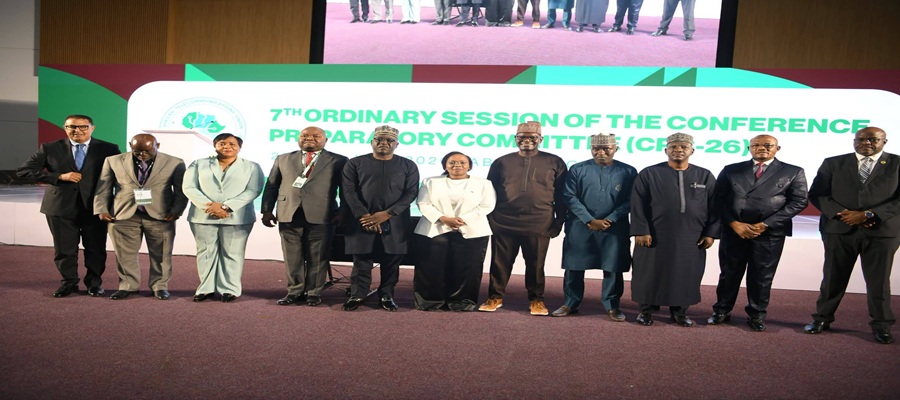
Nigerian Communications Commission has urged African countries to adopt a unified and technically coordinated position ahead of the 2026 International Telecommunication Union Conference, saying stronger regional collaboration is essential for the continent to influence global telecommunications and digital economy policies.

The Executive Vice-Chairman of the NCC, Dr Aminu Maida, made the call on Monday in Abuja while declaring open the African Telecommunications Union Conference Preparatory Committee meeting.
Maida said Africa must strengthen cooperation to shape global telecommunications and digital economy policies, noting that the two-day meeting was expected to produce greater continental alignment ahead of ITU 2026, establish practical collaboration mechanisms between conferences and sustain Africa’s technical participation in ITU processes.
“Preparation is not a procedural step; it is the place where coherence is built,” he said. “Africa must prepare together, work together and arrive at global forums with solutions that are both coherent and technically compliant.”
He said the committee would review the ATU’s activities between 2023 and 2026 and prepare agenda items, resolutions, decisions and recommendations for the 18th Conference of the Union.
According to him, while the forthcoming ATU conference will determine the direction of the continental body, the ITU conference will shape global telecommunications leadership and priorities.
Maida stressed that Africa’s influence at international forums would depend less on the size of its delegations than on the quality of its preparation, the coherence of its positions and consistency in advancing them.
He identified spectrum management, artificial intelligence governance, data protection, universal access, cybersecurity and digital infrastructure development as priority areas requiring stronger collaboration among African countries.
“No administration can address these challenges effectively in isolation. Our regulatory cooperation must therefore become more continuous, more technical and more institutionalised,” he said.
The NCC boss also called for greater support for African experts to participate actively in technical discussions where international standards and frameworks are developed.
“Our objective in Africa is not to resist global standards. It is to help shape standards that are globally sound and sufficiently informed by African realities,” he added.
He commended the leadership of the African Telecommunications Union for strengthening the coordination of Africa’s positions at the ITU and other international platforms.
Maida reaffirmed Nigeria’s commitment to supporting the ITU process through technical expertise, regulatory experience sharing and peer learning among African administrations.
Earlier, the Permanent Secretary of the Federal Ministry of Communications, Innovation and Digital Economy, Nadungu Gagare, described the meeting as critical to advancing Africa’s digital transformation agenda.
He said the committee’s recommendations would provide the foundation for decisions at the forthcoming ATU Conference of Plenipotentiaries and expressed confidence that the deliberations would strengthen the union’s capacity to promote inclusive and sustainable digital development across the continent.
“As we navigate an era of rapid technological advancement and digital innovation, the importance of collaboration among member states has never been greater,” Gagare said.
Also speaking, the Secretary-General of the ATU, John Omo, said the Conference Preparatory Committee plays a vital role in processing documents and proposals ahead of the main conference to enable member states to adopt common positions.
Omo disclosed that the union’s membership had increased from 49 to 52 countries, while associate membership had risen from 50 to 56, with 18 African academic institutions now participating in its activities.
He said the ATU had recorded progress in broadband development, satellite communications, spectrum coordination, internet governance, rural broadband, standardisation and digital infrastructure resilience.
However, he expressed concern over irregular financial contributions by some member states, warning that predictable funding remained essential for implementing the union’s programmes effectively.
Omo added that the forthcoming conference would elect members of the Administrative Council and a Secretary-General for the 2027–2031 tenure.
He commended the Federal Government, the NCC and the Ministry of Communications, Innovation and Digital Economy for hosting the preparatory meeting, which brought together representatives of African countries, academia, sector members and development partners to discuss the continent’s telecommunications and digital future.
News
NITDA Communications Director Hadiza Umar Named in 2026 PR Power List, Graces Glazia Magazine Cover

Mrs. Hadiza Umar, Director of the Corporate Communications and Media Relations Department at the National Information Technology Development Agency (NITDA), has been officially recognised as one of Nigeria’s top public relations professionals in the prestigious 2026 PR Power List.

The definitive annual list, compiled by GLG Communications in partnership with The Guardian, was unveiled to commemorate World PR Day.
It celebrates 50 outstanding professionals within Nigeria and the diaspora whose strategic communication strategies have significantly shaped organisations, influenced public discourse, and advanced the profession over the past 12 months.
Adding to the momentous milestone, Mrs. Umar was hit with a major surprise at the exclusive PR Power List Soirée and Awards ceremony held at the Alliance Française in Ikoyi, Lagos, where she was unveiled as a front-cover personality for the Glazia Magazine PR Power List Special Issue.
The double recognition highlights her exceptional distinction and impact in public sector communications and narrative management.
Speaking on the dual achievement, Mrs. Umar expressed profound gratitude for the honours, describing the magazine cover appearance as a breathtaking surprise.
“I am deeply humbled and honored to be recognized on the 2026 PR Power List and to feature on the cover of Glazia Magazine alongside other exceptional industry titans,” Umar said.
“This milestone is a testament to the enabling environment and visionary leadership of the Director General of NITDA, Kashifu Inuwa Abdullahi, CCIE, which has allowed us to strategically drive the narrative of Nigeria’s digital economy and technological innovation.”
Mrs. Umar, a highly respected corporate communications strategist, holds professional fellowships in the Nigerian Institute of Public Relations (Chartered), the African Public Relations Association (APRA), and the Institute of Corporate Administration (CICA).
Under her supervisory role, NITDA’s media relations have consistently projected national information technology frameworks, start-up support frameworks, and digital literacy initiatives, to position Nigeria competitively on the global stage.
The 2026 PR Power List selection process involved a rigorous, independent evaluation led by a distinguished international jury.
The organisers noted that the class of 2026 represents professionals raising the standard of strategic communications and introducing new ideas to the industry.

YEDC Warns Customers, Says 20 Percent Electricity Bonus is Scam

FG to Support 12 Tech Startups with N482m under iDICE

NBC, INEC, Plan Joint Broadcast Monitoring Framework ahead of 2027 Elections

No Going Back on July 31 Deadline for Insurance Firms’ Recapitalisation – NAICOM

Court Affirms FCCPC’s Power to Regulate Digital Lending

NRC, Ponzi Scheme Collapses Resulting Loss of Billions of Naira

NASENI Moves to Digitize CCB’s 5m Assets Declaration and Operations

Lebara Nigeria Launches Lebara Play, Africa’s First Telecom-Owned Micro-Drama Platform

CANAL+ Partners Samsung to Pre-Load DStv Stream on New Samsung TVs In Nigeria, Other African Countries

Tokenization, Blockchain Technology will Transform Financial Institutions – IMF




 News1 day ago
NIMASA Unveils Accelerator Scheme to Drive Innovation, Sustainable Growth

 E-Financial1 day ago
NRS Issues July 31 Deadline for e-Invoicing Compliance

 E-Financial1 day ago
Access Holdings Sells 7.44% Stake in Ghana Unit

 E-Business1 day ago
SERAP to Sue NASS over Bill Empowering NDPC to Regulate Social Media

 E-Financial1 day ago
NDIC Urges Youths to Shun Ponzi Schemes, Embrace Savings

 News1 day ago
Adebutu, PDP Chieftain Accuses Nigerian Governors of Embezzling LG Allocations

 News1 day ago
ICPC Secures Final Forfeiture of N941m Linked to IPPIS Fraud

 News1 day ago
eBusinessLife Advocates Greater Support for Girls in ICT as Students Showcase AI Innovations