

News
Dangote, Adenuga Lead Black Billionaires List

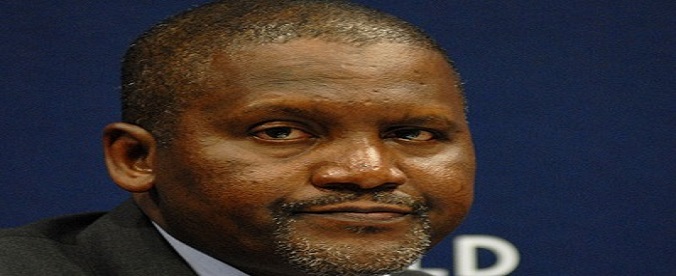
Aliko Dangote, business mogul and Mike Adenuga, oil and telecoms mogul are the richest black people in the world, according to by Forbes, the influential American business magazine.
Dangote and Adenuga were among the 13 persons named by Forbes as the richest black people on earth along with two other Nigerians; Abdulsamad Rabiu, who made his fortune in cement, flour, edible oils and real estate; and Folorunsho Alakija, the oil and gas tycoon.
The 13 richest black people on earth and fortunes they control were listed by Forbes as follows:
Aliko Dangote, $10.9 billion
Nigerian, Sugar, Cement, Flour
The Cement and commodities tycoon retains his title as the world’s richest black man this year. After building his fortune in sugar, flour and cement, the Nigerian tycoon is embarking on his most ambitious project to date- a private oil refinery in Nigeria which will have a refining capacity of 6500,000 barrels a day and is expected to reduce Nigeria’s dependence on oil imports.
Dangote started out in business more than 3 decades ago by trading in commodities like cement, flour and sugar with a loan he received from his maternal uncle and went on to build the Dangote Group, the largest industrial conglomerate in West Africa.
Mike Adenuga, $9.1 billion
Nigerian, Oil, Telecoms
Mike Adenuga, the world’s second richest black person, built his fortune in oil and mobile telecoms. His Conoil Producing Company was one of the first indigenous Nigerian companies to be granted an oil exploration license in the early 90s.
The company is the operator of six blocks in the Niger Delta and also owns a25% stake in the Joint Development Zone (JDZ) Block 4. He is also the founder and sole owner of Globacom, a Nigerian mobile phone network that has more than 40 million subscribers in Nigeria and neighbouring African countries. His property company, Cobblestone Properties, owns hundreds of prime residential and commercial property all over Nigeria.
 Mike Adenuga
Robert Smith, $5 billion
American, Private Equity
Robert Smith, a former Goldman Sachs executive, is the founder of private equity firm Vista Equity Partners that focuses exclusively on investing in software companies. The firm has more than $30 billion in assets and is one of the best-performing private equity firms, posting annualized returns of 22% since inception.
David Steward, $ 3 billion
American, Tech
David Steward is the co-founder and chairman of IT provider World Wide Technology, World Wide Technology, an $11.2 billion (sales) IT provider, whose customers include Citi, Verizon and the federal government.
Oprah Winfrey, $2.5 billion
American, Television
Oprah is still the richest African-American person in the world thanks largely to the 25 years of her profitable daytime TV show and earnings from her Harpo production company.
Her cable channel, OWN (Oprah Winfrey Network) is also cash flow positive for the first time and is enjoying favorable ratings as a result of securing exclusive TV interviews with headline-grabbers like disgraced cyclist Lance Armstrong, Beyonce and gay NBA player Jason Collins. One of America’s most generous philanthropists, Oprah continues to give to education causes and has spent about $100 million on the Oprah Winfrey Leadership Academy for Girls in South Africa.
Strive Masiyiwa, $2.4 billion
Zimbabwean, Telecoms
Masiyiwa, who is worth $2.4 billion, is the founder of Econet, one of the leading mobile telecoms companies in Africa. It has more than 10 million subscribers spread across Zimbabwe, Botswana, Burundi and Lesotho. In February, he pledged the sum of $100 million to establish a fund to invest in rural entrepreneurs in Zimbabwe.
Isabel Dos Santos, $2.3 billion
Angolan, Investments
The oldest daughter of Angola’s former president, Isabel dos Santos has built an impressive investment portfolio that includes a 25% stake in Angolan mobile phone company Unitel and a 25% stake in Angolan bank Banco BIC SA. Other holdings include a substantial stake in Nos SGPS, a Portuguese cable TV company and just under 20% of Banco BPI, one of Portugal’s largest publicly traded banks.
Patrice Motsepe, $2.3 billion
South African, Mining
South Africa’s first and only black billionaire is the founder of African Rainbow Minerals (ARM), a Johannesburg Stock Exchange-listed mining company that has in platinum, nickel, chrome, iron, manganese, coal, copper and gold. He also owns a large stake in African Rainbow Capital, a private equity firm focusing on investments in the financial services sector.
Michael Jordan, $1.9 billion
American, Basketball
Basketball’s greatest player is the majority shareholder of Charlotte Bobcats and enjoys lucrative deals with the likes of Gatorade, Hanes and Upper Deck. His biggest pile comes from Brand Jordan, a $1 billion (sales) sportswear partnership with Nike.
Michael Lee-Chin, $1.9 billion
Canadian, Investments
Lee-Chin, a Canadian of Jamaican origin, made a fortune investing in financial companies. He owns a 65% stake in National Commercial Bank Jamaica, which makes up the bulk of his fortune.
Abdulsamad Rabiu, $1.6 billion
Nigerian, Cement, Sugar
Abdulsamad Rabiu is the founder of BUA Group, a Nigerian conglomerate with interests in sugar refining, cement production, real estate, steel, port concessions, manufacturing, oil gas and shipping. BUA Group’s annual revenues are estimated at over $2 billion. Abdulsamad got his start in business working for his father, Isyaku Rabiu, a successful businessman from Nigeria’s Northern region. He struck out on his own in 1988, importing rice, sugar, edible oils as well as steel and iron rods.
Folorunsho Alakija, $1.1 billion
Nigerian, Oil
Nigeria’s first female billionaire is the founder of Famfa Oil, a Nigerian company that owns a substantial participating interest in OML 127, a lucrative oil block on the Agbami deep-water oilfield in Nigeria. Alakija started off as a secretary in a Nigerian merchant bank in the 1970s, then quit her job to study fashion design in England. Upon her return, she founded a Nigerian fashion label that catered to upscale clientele, including Maryam Babangida, wife to Nigeria’s former military president Ibrahim Babangida.
Mohammed Ibrahim, $1.1 billion
British, Mobile Telecoms, Investments
Sudanese-born Mohammed “Mo” Ibrahim founded Celtel International in 1998, one of the first mobile phone companies serving Africa and the Middle East. He sold it to Kuwait’s Mobile Telecommunications Company for $3.4 billion in 2005 and pocketed $1.4 billion. In 2007 he founded the Mo Ibrahim Foundation which promotes good governance in Africa.


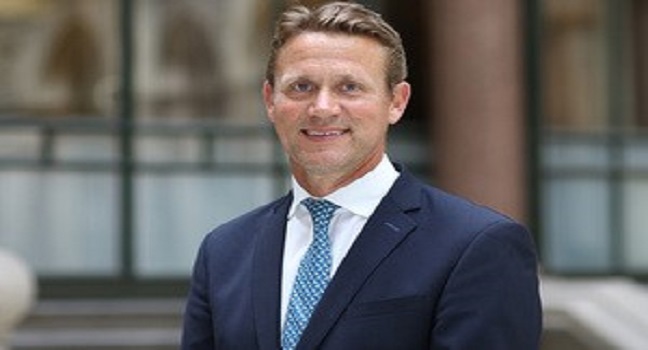
The UK Government has announced the appointment of Mr Peter Vowles as the next British High Commissioner to the Federal Republic of Nigeria.

Mr Vowles succeeds Dr Richard Montgomery CMG and is expected to take up his post in Abuja in September 2026. Dr Montgomery remains in post until that time.
Mr Vowles brings extensive diplomatic and development experience to the role, having served as His Majesty’s Ambassador to Zimbabwe from 2023 to 2026 and previously as Ambassador to Myanmar from 2021 to 2022.
He has held senior leadership positions across the FCDO and its predecessor department DFID, including as Transformation Director and Director for Asia, Caribbean and Overseas Territories.
Earlier in his career, Mr Vowles worked in international development across South Asia, Central Africa and East Africa, including postings in Bangladesh, India, the Democratic Republic of Congo and Kenya. He began his career in Zimbabwe, where he worked in education and development.
Peter Vowles said: “I am honoured to be appointed as British High Commissioner to Nigeria. Nigeria is a country of immense importance to the United Kingdom, and I look forward to working closely with Nigerian partners to strengthen our relationship across trade, development and security.”

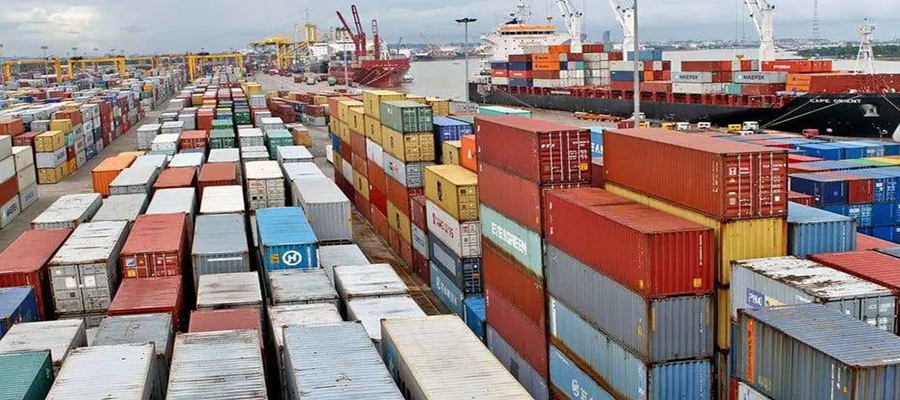
World Bank has ranked the Apapa and Tin Can Island Port complexes in Lagos among the world’s 20 most improved ports in its 2025 Container Port Performance Index (CPPI), released in June 2026.

The ranking places both ports in the “Top 20 Port Improvement Since 2020” category, reflecting significant gains in operational efficiency and vessel turnaround time.
The CPPI is a global benchmark used to assess the efficiency of container ports based on factors such as cargo handling speed, ship turnaround time and overall logistics performance.
According to the report, the improvement highlights ongoing reforms and modernization efforts within Nigeria’s maritime sector.
The Managing Director of the Nigerian Ports Authority (NPA), Mr Abubakar Dantsoho, attributed the recognition to ongoing policy reforms and infrastructure upgrades in the sector.
He said the development reflects the impact of economic policies of President Bola Tinubu and the support of the Minister of Marine and Blue Economy, Mr Adegboyega Oyetola.
“With the investor-friendly policies of President Bola Ahmed Tinubu providing the impetus for increased investment to drive our port infrastructure and equipment modernisation programme, coupled with the unflinching support of the Honourable Minister of Marine and Blue Economy, Adegboyega Oyetola, we have all it takes to further enhance trade facilitation, improve competitiveness and boost the national economy,” he said.
The NPA said the recognition is expected to strengthen investor confidence in Nigeria’s maritime sector and enhance the country’s position as a regional trade and logistics hub.
It noted that improvements in port operations are already contributing to increased efficiency in cargo movement and reduced delays at key terminals.
The authority also pointed to ongoing efforts to modernise port infrastructure and expand digital systems aimed at improving service delivery.
Earlier in February 2026, the NPA said the federal government had intensified efforts to position Nigeria as a leading maritime destination through port rehabilitation and modernization projects.
It also highlighted public-private partnership initiatives, including developments at the Lekki Deep Sea Port, as part of broader reforms aimed at improving efficiency and attracting investment.
The CPPI ranking is expected to further boost Nigeria’s maritime profile and encourage additional investment in the sector.
As digital payment adoption continues to grow across Nigeria and emerging markets, the next phase will depend not just on innovation, but on the strength, reliability, and trustworthiness of the infrastructure behind it.

While the ecosystem has made clear progress in recent years, trust remains a critical issue for users, businesses, and operators alike. Questions around resilience, security, interoperability and transaction reliability continue to shape how the market evolves and how confidently digital payments can scale.
These issues will be central to the deliberations at Digital Pay Expo 2026, where fintech leaders, payment operators, and other ecosystem stakeholders will gather under the theme, “Seamless Digital: Fostering Pan-African Market Expansion in the Era of AI.”
PalmPay’s participation reflects its continued commitment to building trusted and scalable payment infrastructure, while contributing to the broader industry efforts to strengthen systems, standards, and partnerships needed to support long-term ecosystem growth.
Speaking ahead of the event, Olorunfemi Hanson, Head of Marketing and Communications at PalmPay Nigeria, said: “As the financial services ecosystem continues to grow, trust and reliability become even more important.
“The industry’s next phase will be shaped not only by innovation, but by the strength of the infrastructure supporting it. Digital Pay Expo provides an important platform to address the resilience, interoperability, and trust issues that will shape the future of digital payments growth across Africa.”
The event, scheduled to be held from the 17th to the 18th of June, 2026, will feature Chika Nwosu, Managing Director of PalmPay Nigeria, alongside other distinguished guests, including the Director-General, Payment System Management Department (PSMD), Central Bank of Nigeria. The event will examine how the industry can balance innovation, regulation, and scalability while strengthening trust across the digital payments value chain.
For PalmPay, this event reinforces its role in supporting a more resilient, secure and scalable payments ecosystem for Nigeria and emerging markets more broadly.

FG Bans Use of Gmail, Other Personal Emails for Civil Service Operations

Indwelt Studios Seeks Increased Awareness @ World Sickle Cell Day

Standard Bank Targets $15.4b SME Growth in Nigeria, Others with Trade Expansion Drive

Payaza Launches AI-powered Storefront Platform to Drive Cross-border Commerce

NAICOM’s 18 Months Management Spill @ African Alliance Ends

CBN Extends PoS Geo-Fencing Enforcement Deadline to August 2026

FG Targets Alleged N3tn Capital Flight, Opens Airtime Credit Market to Nigerian Fintechs

NCC Drafts New Rules for Virtual Mobile Operators

London Strengthens Global Investment Ties with Africa @ First Ever London-Africa Business Summit

Japan, UNESCO Boost Digital Learning in 15 CoEs with Donation of ICT Equipment




 E-Business2 days ago
NIPOST Plans Digital Postcodes for Every Building in Nigeria

 Broadcasting2 days ago
Nigeria Launches FreeTV Nationwide

 Telecom2 days ago
Enugu to Host The Gathering on 100 as MTN-Backed Youth Movement Expands Across Nigeria

 E-Financial1 day ago
FG Issues Transition Guidelines for Tax Acts 2025

 Telecom2 days ago
FG Debunks Claims of Plans to Introduce Telecoms, Fuel Taxes

 Telecom2 days ago
First Lady Expands Digital Inclusion Drive With New ICT Centre in Benue

 Telecom2 days ago
Prof. Dzidonu Urges Universities to Produce Deep Thinkers for AI Age

 Telecom1 day ago
Telecom Regulator, NCC, Digital Encode, AfriGoPay Support eBusinesslife Girls In ICT Campaign