

E-Business
Data Centres Connecting to IXPN will Assist to Localise Traffic – Coker

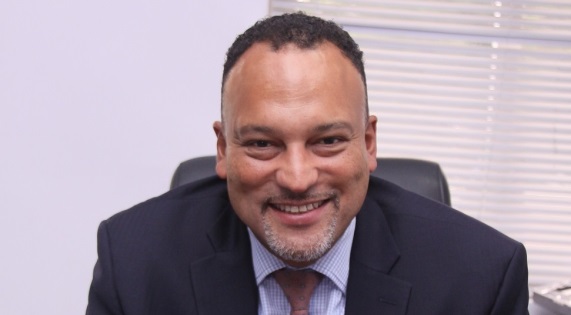
Ayotunde Coker is the managing director of Rack Centre a Data centre operator. He spoke to Chike Onwuegbuchi on the importance of data centres interconnecting through Internet exchange point of Nigeria (IXPN),
What is the value proposition in Data Centre collocation?
Capital in millions of Dollars is needed to build a data centre, but that is not the core area of, it is better to put that resources in the front end of the business and collocate. In fact, it is difficult for those who choose to have their datacentres to have the expertise to execute. But, this is what I do every day. I wake up in the morning thinking of how best to offer services to the customers who are hosted with us. But that is not the core-competence of that company down the road that wants to build a datacentre.
They are not likely to achieve the right standard of operating it. Sometimes, it ends up as a big project that slows the system due to budget and maintenance – you have to think of 24/7 diesel availability. Some board meetings end up discussing datacentre downtime or lack of diesel; it should not be so. Make the right selection for the company and focus on transforming the company with technology.
When you have an option to collocate and it is proven to be secured, reliable and available, then, you can sleep at night. Of course, there are other services you may need to manage such as customer relationship and so on, but you get more credit from transforming the business and the customer experience will be top notch.

On the other hand, we have 32 carriers here. If you build your datacentre you need to worry about how many carriers would want to bring their fibre to you. Now, when you do not have high quality datacentres, then, your excuse for building a data centre is cogent. But, it is capital intensive. When I was the CIO of a bank, I looked everywhere for quality data centre but could not find any in the country. Today, the sub-sector has changed. That is the value proposition of taking on colocation.
Are all Data centres in Nigeria interconnected through iXPN?
Are all data centres in Nigeria hosting on IXPN? No, but there are quite a number of them that are hosted at IXPN. We run the IXPN here and we are pleased with our relationship. iXPN is strategically located in the country to localize and optimize content/traffic as much as possible. The growth is really significant in terms of the volumes we are seeing through the IXPN.
Now, talking about interconnectivity, it is very important. Let’s look at carrier neutrality: a carrier is an operator that provides fibre connectivity, radio or satellite. They carry data from A to B. Telcos like MTN, Glo, Airtel and so on, are carriers. If you are neutral it means you are not a carrier and the carriers are comfortable connecting to you because there is no competition between you and them. They don’t feel that any of their data or information will be used against them.
Every major carrier in the country is here in Rack Centre. If you want to get to Maiduguri or anywhere in the country, you will get there.
In fact, if you want to get to anywhere in Africa or around the world, you will; somehow. The reason is simple: we have the key Tier1 customers and pan-African facilities that cross-connect. We also have the added value of high quality carrier neutral environment at scale. So, it attracts the carriers. If you want to connect to Kaduna, Damaturu or anywhere else you can pick from the whole range of carriers and we will work out how to get there. Every bank here (in Lagos) connects to their branches in those far end States.
In terms of cost, what you will find is that, with time, hubs will start to emerge in some of the geo-political zones to deliver services closer to the point of use. We are going to witness that over the next three to four years, especially where you find more economic activities. It will allow us to optimise our footprints, nationally.
How is Rack Centre penetrating the West African Market?
Right now, we have customers that are located across different countries in West Africa. There are others who see the value of partnering with us. However, with the strength of brand we have now, we see the benefit of locating elsewhere in West Africa. A francophone kind of location is a good option. May people would think, ‘Oh, Ghana should be the next place’. Well, we reach Ghana through many options here. Do you want to go by Main One, Glo, MTN; we will take you to Ghana through any of them.
The benefit of being in a francophone is due to the synergy to address the needs around the West African area. We take a step at a time. In some of those countries are our competition, but competition is healthy. We have built ourselves to the market-leading position. The main thing is that the prepositions we take to those markets are real. We are going there with credibility and track record that is known.
Microsoft unveiled datacentre services in South Africa, recently. The likes of Facebook, Google, and even Microsoft offer services in Nigeria. Do you think we are going to see enough Foreign Direct Investment in datacentres infrastructure in Nigeria?
The fact that Microsoft hasn’t announced they are opening something in Nigeria doesn’t mean they won’t be coming here. So, there will definitely be Foreign Direct Investments to Nigeria. Our location is fantastic. The statistics shows that Facebook has over 24million daily users in Nigeria. That is the about half the population of South Africa. Let’s not worry, they will come.
Domestic investments in Data Centres, are they adequate?
The potential market is significant and we are working hard to secure the investments to meet the market demands as efficiently as possible. It is up to us to make sure we attract the right investments. Our fundamentals indicate the fact that the demand is there. We are going to double capacity this year. After that, we are looking at even doubling that, and another location.
What is the next phase for Rack Centre?
The next thing for us is get the scale doubled. We are already a megawatts company. That is a good psychological step to scaling. We are doing very exciting thing with the infrastructure we got here. We are not standing still; we are moving up and upgrading because there are challenges and opportunities and we are continuously looking out for ways to innovate and be prepared for the new frontiers.


E-Business
Kaspersky Uncovers New Mirage Kitten Malware Used in Cyber-espionage Campaign Across Africa, Others

Kaspersky Global Research and Analysis Team (GReAT) has discovered a previously undocumented malware set used by Mirage Kitten APT. The findings were revealed at its annual Kaspersky Cyber Security Weekend for the Middle East, Turkiye and Africa (META).

The malicious tools were used in a targeted campaign aimed at maintaining long-term access to victim networks and stealing sensitive data.
The company’s researchers have identified victims of this campaign across the Middle East and Africa, including organisations in Egypt, small and medium-sized businesses and government entities in Jordan and Tanzania, aviation organisations in Pakistan, telecommunications companies in Ethiopia and financial-sector entities in Burkina Faso.
The toolset consists of three custom programs. At its core is NightLedger, a newly discovered Windows backdoor attributed to the group based on code and behavioural similarities to its previously known malware, which gives the attackers remote control over infected machines: they can run commands, explore and transfer files and capture screenshots.
It is complemented by two covert tunneling tools, ArcBridge and BridgeHead, which effectively turn a compromised computer into a relay node: the attackers run their tools on their own servers, while all the resulting traffic is quietly funneled through the victim’s machine, as if it originated from inside the victim’s network.
This lets them slip past network defences and preserve long-term access without drawing attention. The first of these tools was identified in April 2026 in activity targeting victims in the Middle East.
While the initial access vector remains unclear in most cases, Kaspersky GReAT researchers observed BridgeHead being deployed during post-compromise activity in victim environments in Egypt and at an aerospace and aviation organisation in Pakistan. In those cases, the intrusion activity followed targeted spear-phishing attempts consistent with the group’s known methods.
The lures were highly tailored including recruitment-themed messages impersonating trusted brands and hiring platforms, as well as fake videoconferencing pages that redirected victims to malicious archive files hosted on third-party file-sharing services.
“Based on our latest findings, we conclude that Mirage Kitten continues to evolve its malware arsenal in support of targeted cyber-espionage operations across the Middle East and Africa.
“Another notable aspect of the campaign is the group’s continued reliance on tunneling utilities as part of its operational toolkit: in practice this enables attackers to bypass network controls, maintain covert access to compromised environments and significantly complicate detection efforts.
“Given the persistence and sophistication of these techniques, organisations and defenders should incorporate these findings into their threat assessments and strengthen their detection and response capabilities accordingly,” says Omar Amin, senior security researcher at Kaspersky GReAT.

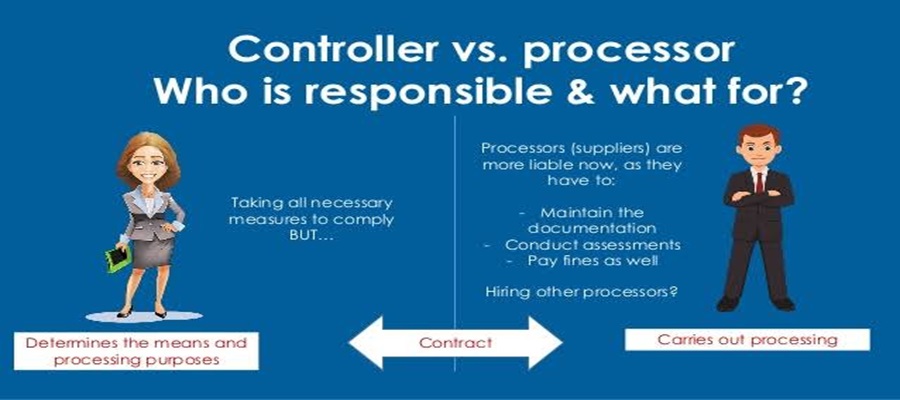
Nigeria Data Protection Commission (NDPC) has directed all Data Controllers and Data Processors of Major Importance (DCPMIs), yet to register with the commission to do so immediately.

This followed a Federal High Court judgment affirming NDPC statutory powers to designate and register such entities.
DCPMIs are entities operating in Nigeria that handle sensitive personal data or large volumes of information, requiring mandatory registration with the NDPC under the Nigeria Data Protection Act (NDPA).
In a statement issued on Tuesday by Babatunde Bamigboye, head of Legal, Enforcement and Regulations at the NDPC, described the judgment as a major milestone for data accountability and regulatory oversight in Nigeria.
The commission said the ruling arose from a suit filed by Emmanuel Harunna against the NDPC in Emmanuel Harunna v. NDPC (FHC/L/CS/1116/2024), in which the applicant sought a declaration that Point of Sale agents were not Data Controllers or Processors of Major Importance under the Nigeria Data Protection Act and requested a perpetual injunction restraining the commission from registering them.
According to the statement, Justice F.N. Ogazi examined the commission’s Guidance Notice on Registration alongside Sections 5(d), 6(c), 44, 45 and 65 of the Nigeria Data Protection Act before concluding that the commission acted within its statutory powers in designating entities under the Major Data Processing – Ordinary High Level category as Data Controllers and Processors of Major Importance.
Quoting the judgment, the statement read, “The Nigeria Data Protection Act was enacted to promote accountability, transparency and responsible data governance. Registration enables the Respondent to identify entities engaged in significant data processing activities, monitor compliance.”
It added that the court held that, “Far from undermining the constitutional right to privacy, the registration framework is one of the statutory mechanisms designed to safeguard that very right by subjecting data controllers and data processors to effective regulatory oversight.”
The statement further quoted the court as saying, “Looking at the recitals of the Guidance Notice, there is every indication that the Guidance Notice is also aimed at protecting the privacy and security of data subjects, thus bringing the registration requirement of the Guidance Notice within the protective shield of Section 45 of the 1999 Constitution.”
According to the commission, the court also held that, “Remarkably, Section 63 of the Data Protection Act provides that the provisions of the Act shall prevail over any other law inconsistent with its provisions on matters relating to the processing of personal data.”
Reacting to the judgment, the commission described the decision as a significant boost to Nigeria’s data protection regime.
“The Commission appreciates the ground-breaking efforts of the court towards the advancement of the jurisprudence relating to data accountability in Nigeria, as eloquently demonstrated in this case,” the statement read.
Following the ruling, Vincent Olatunji, national commissioner and chief executive officer, had directed every Data Controller and Processor of Major Importance that had yet to comply with the registration requirement to register without delay.
The commission warned that entities failing to comply with the registration requirement could face legal consequences.
“Failure to register creates serious legal liabilities under the law, while compliance with registration requirements builds public trust and safeguards the fundamental rights and freedoms of data subjects in Nigeria,” the statement added.

The University of Nigeria (UNN) is set to partner with The Roxettes Group to establish a research and innovation centre focused on artificial intelligence (AI), smart and green mobility, and digital technologies, in a move aimed at strengthening research, entrepreneurship and technology-driven industrial development.

Chairman of The Roxettes Group, Arc. Dr. Kaycee Orji-Kelechi, announced the proposed partnership while delivering his acceptance speech after receiving an Honorary Doctor of Business Administration (Honoris Causa) during the university’s convocation ceremony.
The proposed facility, to be known as the Dr. Kaycee Orji Centre for Artificial Intelligence, Smart/Green Mobility and Digital Innovation, is expected to provide a platform for research, innovation and collaboration between academia and industry, with a focus on developing commercially viable solutions to local and continental challenges.
Orji-Kelechi said the initiative was conceived as a long-term investment in human capital and technological advancement rather than simply another physical infrastructure project.
He said the vision was to position the University of Nigeria among Africa’s leading institutions in artificial intelligence, smart mobility and digital innovation through research, entrepreneurship and technology development.
According to him, the centre will house five specialised laboratories covering artificial intelligence and machine learning, smart and green mobility, robotics and the Internet of Things (IoT), digital finance and financial technology, as well as cloud computing and advanced data centre technologies.
He also announced plans for the proposed Kaycee Orji Founders Innovation Challenge, an annual programme intended to identify, mentor and support innovative ideas from students, researchers and academic staff with the potential to become scalable businesses.
“Every student of this University should know that a great idea conceived in a classroom should have a pathway to becoming a patent, a startup, a global enterprise, and a solution that transforms society,” he said.
Orji-Kelechi disclosed that preliminary conceptual work on the project had commenced, with architectural and engineering designs being prepared by K.KH Contractors Ltd., a subsidiary of The Roxettes Group.
He added that discussions with the university would begin on identifying a suitable site for the project, while a comprehensive proposal containing architectural drawings, engineering designs and an implementation framework would be submitted after completion of the design phase.
Reflecting on his career, Orji-Kelechi said Africa must move beyond consuming innovation to creating it through investment in manufacturing, technology and entrepreneurship.
“We have pursued one simple vision: that Nigeria and Africa must move from consumption to production; from importing innovation to creating it; and from waiting for opportunities to building them,” he said.
He urged graduating students to see their education as a foundation for solving societal challenges through innovation, leadership and enterprise, adding that he remained committed to promoting industrial development, youth empowerment and sustainable economic growth.
The proposed collaboration forms part of broader efforts to strengthen university-industry partnerships, which are increasingly seen as critical to improving research commercialisation, innovation capacity and technology-led economic development in Nigeria.

Nwokolo, Nollywood Actor Claims Internet Fraud is “Keeping Economy Afloat’

SEC Begins Full e-Registration for Capital Market Operators

Elon Musk Launches Invite-only X Money with Visa Debit Card

CBN Fines Banks N430m for Ignoring Customers’ Complaints

Kaspersky Uncovers New Mirage Kitten Malware Used in Cyber-espionage Campaign Across Africa, Others

NRC, Ponzi Scheme Collapses Resulting Loss of Billions of Naira

EFCC Busts NIS Visa Overstay Racket, Uncovers N700m in an Account

From Scarcity to Scale: What Africa Can Learn from India’s Agricultural Transformation

Tokenization, Blockchain Technology will Transform Financial Institutions – IMF

BON Establishes Six Ad Hoc Committees to Modernize Broadcasting




 Telecom2 days ago
Fact-Check: Elon Musk’s “Tesla Pi Phone” is Internet Rumor

 News3 days ago
History as Lagos Becomes First Nigerian State to Launch Greenhouse Gas Registry

 E-Business3 days ago
UNN to Partner Firm on AI, Smart Mobility Innovation Centre

 Telecom3 days ago
AI Investment Gap Threatens Africa’s Future Growth

 Telecom3 days ago
AMCON Puts ntel Up for Sale, Seeks Investors

 E-Financial3 days ago
Remita Raises Alarm Over Nigeria’s Digital Divide, Calls for More Investment

 E-Financial2 days ago
Malpass, Ex World Bank Chief Raises Alarm over Nigeria’s Secretive Debt Structures

 Telecom2 days ago
How and Why Apps Deplete Data – ALTON