

Telecom
Experts at IIM Africa Information literacy week harp on proper data management

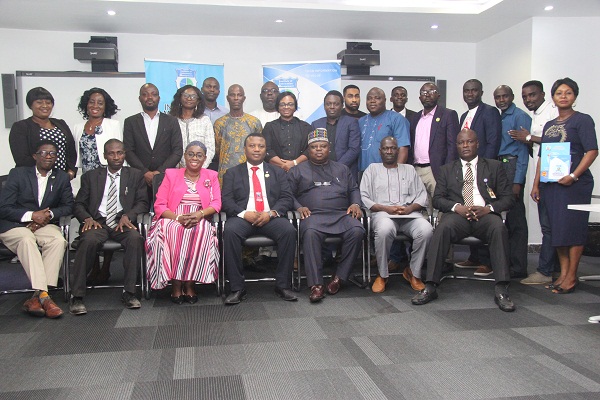
Information and data management experts have called on government at all levels to initiate policies and measures to ensure proper management of information and data in the country.
The experts gave the advice at an event organised by the Institute of Information Management (IIM Africa) to mark the Information Management and Literacy Week 2019 in Lagos.
The theme of the event was: “A reformed and renewed society through information Literacy”.

The Information Management and Literacy Week were convened to provide several opportunities in finding out about a wide range of services that information management offers.
The 2019 edition highlighted and identified various information gaps, information management needs, and also proffered required framework for effective data/information governance in regulatory agencies across the Country.

IIM Africa members on walk-out exercise
The literacy week also set the parameters for data/information management, usage, creating processes for resolving data/information issues aimed at enabling regulatory bodies and other stakeholders make decisions based on high-quality data and well-managed information assets.
Several speakers and activities lined up for the week-long programe also pin-pointed the vital role which information management services play for research and education.
Speaking at the event, Dr Oyedokun Oyewole, President, Institute of Information Management (IIM), Africa, said that government had a role to play in ensuring the existence of enabling laws, and providing adequate enlightenment to citizens on the need for proper data and information management.
Oyewole said that government could educate citizens by organising workshops, seminars and radio shows in form of jingles that would enlighten citizens on dangers involved when data and information are not properly managed.
”In other climes like America, dissemination of information by journalist is handled ethically and responsibly considering the sensitivity of such information to national security and its importance.
Simply because there are known and established principles, standards, procedures, systems and policies in place to effectively handle such. Such principles, guidelines and policies should also be encouraged and promoted in the African society for balanced reporting by journalists,” Dr. Oyewole said.
He urged government regulatory agencies and private organisations to implement/imbibe policies, laws, systems and best practices that would enhance proper management of data and information.

Launch of IUIM and RIMA founder’s Day award
Emphasising on Information governance (IG) being the overall management of the availability, usability, integrity and security of information used in an organisation.
And the need for regulatory authorities in Nigeria to ensure sound information governance program within their individual agencies with good governing body, charged with defining the set of procedures and plans to execute those procedures.
As Information Governance is required to ensure that organization’s information assets are formally, properly, proactively and efficiently managed throughout the enterprise to secure its trust & accountability, for the ultimate improvement in productivity and efficiency of an organization in meeting regulatory, legal, risk and operational requirements.
The president also commended the National Information Technology Development Agency (NITDA) for recent introduction of data privacy regulations to protect Nigerians and also sensitize them on the need to protect their personal data and information.
In a presentation titled, ‘Best Practices and the Role of the Press in Disseminating Sensitive Information to the Public’,John Montana, a renowned Information Management Expert, said that press occupy a conspicuous position to influence proper information dissemination.
“Our liberty depends on the freedom of the press, and cannot be limited without being lost”, he quoted former US President Thomas Jefferson.
He further quoted Hugo Black who said, “The Government’s power to censor the press was abolished so that the press would remain forever free to censure the Government.
“The press was protected so that it could bare the secrets of the government and inform the people.
“Only a free and unrestrained press can effectively expose the deceptions in government”.
Montana added that the role of the press is to keep the government in power in check, but must be done in accurate and objective manner.
He further cautioned against ‘careless’ reportage of sensitive information such as personal information – financial data, health data, etc; embarrassing information about a crime victim – for example rape; information that may be valuable to criminals, terrorists and other bad actors.
On his part, the Executive Director, Numeric Technologies, Mr Alexander Anago, said that there was need for the government to put in place information protection life cycle strategy to effectively protect, detect, respond and monitor hackers.
“The government needs to provide national gateway for information processing transmission to improve intelligence.
“The government should also implement cross border information security policies, cyber law and information processing policies for proper management of data.
“To effectively manage the data of citizens and the country as a whole the government needs to find a lasting solution to Advanced Persistent Threats.

Cross Section of attendees at IIm Africa Information Literacy workshop
“Advanced Persistent Threats (APT) is a network attack in which unauthorised persons gain access to a network and stay there undetected for a long period of time.
“The intention of an APT attack is to steal data; so, the government needs to adopt sophisticated techniques for early detection of such attacks before it happens,”Anago said.
He said that besides the government, the citizens also needed to stop putting all their personal information, which includes signatures, pictures of their house, cars, children and other private data on social media platform.
Anago also advised people to desist from using public WiFi as it was the easiest way for hackers to gain access to their personal details.
Dr Isa Pantami, the Director-General of NITDA, who was represented by Mr Seyi Ogunseye, a consultant in the Strategic Operations Department, said that the Agency had been creating awareness on the need for proper management of information and data.
He said that Section 6 of NITDA Act 2007 mandates the agency to create a framework for planning, research, development, monitoring, evaluation and regulation of information technology practices and systems in Nigeria.
The Information Management Literacy Week also featured important programmes like Data and Governance Forum/Exhibition; Information Management Session for schools; Novelty Football Match; Founder’s Day/RIMA Awards and official presentation of International University of Information Management (IUIM), United States.


MTN Nigeria is accelerating investments in network expansion and modernization to address rising demand for mobile and data services across the country.

The operator is deploying additional base stations, upgrading existing infrastructure, and expanding fiber connectivity to improve network capacity, coverage, and service quality.
The investments are designed to support increasing smartphone adoption, higher data consumption, and the growing use of digital services by consumers and businesses.
MTN said the expansion aligns with its long-term strategy to enhance customer experience while strengthening Nigeria’s digital infrastructure.
The company expects the ongoing upgrades to improve connectivity, support economic growth, and enable broader access to reliable telecommunications services as demand for high-speed broadband continues to increase.

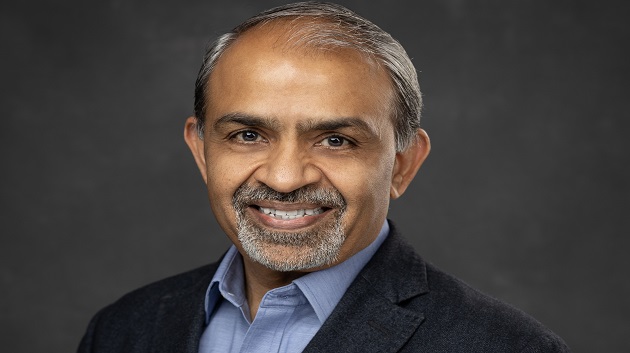
Airtel Africa’s CEO, Sunil Taldar, has announced the telco’s commitment to connecting 5,000 schools across its operating countries in Africa to the internet by 2027 through its philanthropic arm, Airtel Africa Foundation, in partnership with the United Nations Children’s Fund (UNICEF).

So far, the $57m partnership, which was launched in 2021, has cumulatively connected 3,296 schools and provided access to over 2 million learners and about 40,000 teachers. 64 digital learning platforms have been zero-rated thereby enabling more than 11m users to access educational content at no cost.
Speaking during a visit to St. Monica’s Girls School in Lusaka, which is one of the 300 schools already connected to the internet in Zambia, the Airtel Africa CEO stated that the initiative is having a profound impact on the quality of education by expanding access to digital learning resources for African children, in collaboration with governments.
Mr Taldar added: “Students are accessing best-in-class education from the curriculum developed by UNICEF in partnership with various Ministries of Education and provided through Airtel’s connectivity.
“We are also training teachers, so that they deliver digital education effectively. We aim to continue deepening meaningful connectivity in schools by providing free internet access, zero‑rated platforms and training teachers across the continent”.
Expressing her appreciation, the Headmistress of St. Monica’s Girls’ School, Sr Matilda Soloko said: “Being among the first schools connected in the initial stage, our learners have been able to study using the learning portal and their studies have been intensified. We remain grateful to Airtel and UNICEF.”
UNICEF’s Country Representative for Zambia, Dr Saja Farooq Abdullah said: “What this partnership has brought is really bridging the equality gap and the digital divide. It is making sure that every child learns wherever they are. It was exciting and interesting to see and hear from the girls how they can learn at their own pace, how they can review the materials, and how they do their homework with comfort.
The Director of Secondary Education in Zambia’s Ministry of Education, Yvonne Mwemba Chuulu lauded UNICEF and Airtel for the partnership saying: “At the Ministry of Education, we cannot do it alone, and we are grateful for the partnership that we have today.
“Our children are able to learn in a blended fashion, where we have a teacher who is also employing digital devices. We have also heard from the learners that they are able to access the portal when they are at home, which is a good thing because our learners continue to learn in the comfort of their homes”.
The School Connection programme is expanding digital learning to learners in 13 countries: Chad, Congo, Democratic Republic of Congo, Gabon, Kenya, Madagascar, Malawi, Niger, Nigeria, Rwanda, Tanzania, Uganda, and Zambia. By equipping these schools with internet connectivity and training teachers on using the digital tools, it is providing children, particularly in underserved and remote regions, with the digital tools and skills they need to thrive.
Airtel Africa Foundation is advancing inclusive development across four strategic pillars, Financial Inclusion, Education, Environmental Sustainability and Digital Inclusion.

MultiChoice has officially become a wholly owned subsidiary of French media company Canal+, marking the completion of one of the largest acquisitions in Africa’s media and entertainment industry.

The integration brings the South Africa-based pay television operator under the full ownership of Canal+, a global media group with operations in 70 countries.
Announcing the completion of the transaction on Thursday, Chief Executive Officer of Canal+ Africa and MultiChoice, David Mignot, described the development as the beginning of a new phase of growth for the broadcaster.
“MultiChoice is now a full subsidiary of a truly international media group operating in 70 countries.
“The group was founded in France, is listed in London and Johannesburg, and has a strong African presence with operations in more than 45 countries,” Mignot said.
The acquisition combines Canal+’s international operations with MultiChoice’s extensive footprint across sub-Saharan Africa, where it serves millions of households through its DStv and GOtv platforms, as well as the Showmax streaming service.
According to Canal+, the integration will strengthen MultiChoice’s competitive position by giving it access to broader financial resources, technology, content partnerships and operational expertise.
The company said the combined business would increase investment in local content production, sports broadcasting and streaming services as competition intensifies from global platforms such as Netflix, Amazon Prime Video and Disney+.
The transaction is also expected to provide MultiChoice with greater access to international markets at a time when traditional pay television operators are adapting to changing consumer viewing habits and the rapid growth of digital streaming platforms.
Canal+ has expanded steadily across Africa over the past decade and now assumes full control of a business operating in more than 45 African countries, further strengthening its position in the continent’s media and entertainment sector.
The acquisition followed Canal+’s gradual increase in its shareholding in MultiChoice, which began in 2024.
After exceeding the regulatory threshold, the company launched a mandatory offer in April 2024 to acquire the remaining shares of the Johannesburg-listed broadcaster.
Following regulatory approvals and shareholder acceptance, Canal+ secured control of MultiChoice in 2025 before completing the process that has now made the company a wholly owned subsidiary.
Industry observers describe the acquisition as one of the most significant media transactions involving an African company, reflecting a broader trend of consolidation as global entertainment firms seek greater scale to compete in the streaming era.

Police Busts Syndicate Who Allegedly Stole N3Bn from Financial Institution

MTN Accelerates Network Expansion to Meet Surging Telecom Demand

Court Remands Akujobi, Ex Access over alleged Theft of N294.5m

TeKnowledge, Equinix Partner to Advance Nigerian Digital Infrastructure

NSIB Faults Runway Identification, Reveals Cockpit Disagreement in Asaba Jet Incident

NASENI Moves to Digitize CCB’s 5m Assets Declaration and Operations

Mobile Internet Gender Gap Widest in Africa – GSMA

Nigeria Launches FreeTV Nationwide

CANAL+ Partners Samsung to Pre-Load DStv Stream on New Samsung TVs In Nigeria, Other African Countries

Lebara Nigeria Launches Lebara Play, Africa’s First Telecom-Owned Micro-Drama Platform




 Telecom3 days ago
NCC Seeks Cost-Based Pricing Framework for Ducts

 E-Financial3 days ago
CBN Warns against Rejection of N100 Banknotes

 Telecom2 days ago
Fixed Wired Internet Market Lags as Mobile Gains Ground

 News3 days ago
Flutterwave Secures Circle Ventures Investment to Deepen USDC Payment

 Telecom3 days ago
Meta Introduces Muse Image With Advanced AI Image Editing Across WhatsApp and Instagram

 News3 days ago
How EFCC Turned Recovered Loot Into School Supplies for Thousands of Nigerian Students

 E-Financial3 days ago
BVN Enrollments Hit 69.55m- NIBSS

 News2 days ago
Study Reveals How Moniepoint is Powering Nigeria’s $11Bn Food Service Sector