

News
Social and Global Impact: Engaging for Growth

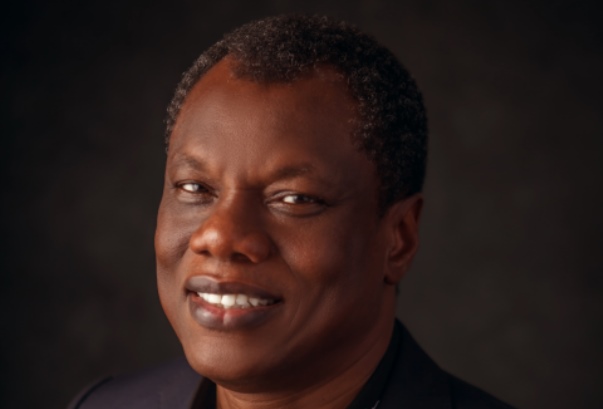
By Austin Okere
The leadership challenge is clear. It will be impossible to achieve true social and economic development without collaborative action by business, government, NGOs and civil society, while Effective governance creates frameworks for stronger institutions, transparency and respect for rule of law.
After Founding and listing CWG as the largest Security in the Technology sector on the NSE, I turned my effort towards enabling shared prosperity through mentoring Businesses to scale geometrically to optimize the jobs they create through the Ausso Leadership Academy.
Being a Consultant at the SDG Africa Centre in Rwanda has opened my eyes to the global framework for economic growth that protects the fundamental pillars of humanity and the planet. The SDGs are about People, Planet, Prosperity and Peace – and about driving development in an inclusive way that leaves no one behind.
I am pleased to announce that I will be using this platform to launch the new model that I have developed called Austin’s five forces model for analyzing sustainable growth (A5F) – You will be the first to see it (of course besides my son, Omimi Okere who helped me with the artwork of the diagram).

I see Five Forces driving sustainable growth as follows – Organisations, Population, Enablers, Infrastructure, Socio-Political Environment. I will use the A5F to talk through my presentation and end with a short video on Champion testimonies at the Ausso Leadership Academy.
Organizations
The more and of scale in the polity, the more jobs they can provide, and the better for social mobility and sustainable growth
Many of those in a society stuck at the wrong end of the Gini-coefficient is majorly locked out of the ‘consumption pool’ for a variety of reasons; including affordability, availability and awareness.
According to Efosa Ojomo, a research fellow at the Clayton Christensen Institute for Disruptive Innovation, the way we define competition, and the method employed by companies to assess the competitive landscape leaves out the most important competitor of all – non-consumption.
And nowhere is this feisty competitor more prominent than in emerging markets. While companies compete for the few people in the consumption pool, their fiercest competition is the huge segment of society that is not consuming.
Finding ways of including this large demography will not only boost production, sales and distribution but will also provide additional jobs to meet the increased demand. This sets off a self-sustaining cycle of growth and further inclusiveness.
Entrepreneurs, investors, and managers can invest in what Harvard Business School Professor, Clayton Christensen calls ‘market-creating innovation to transform complicated and expensive products into simpler and less expensive products, making them accessible to significantly more people in society, for instance, Indomie Noodles
Market-creating innovations pull people from non-consumption into the consumption pool. Companies that engage in these types of innovations are the engines of economic growth in an economy.
A perfect example of a market-creating innovation is Henry Ford’s Model T car. Henry Ford was able to manufacture a car that was inexpensive enough for an American with a modest income to purchase.
He also made the car easier to drive so that owners would not have to hire a driver or need special expertise. Some of Ford’s innovations were the assembly line which reduced the Model T chassis assembly from 12.5 hours to 1.5 hours.
Ford passed on the cost savings to the new class of consumers of automobiles such that by 1925 the price of his car had plummeted from $825 to $260.
Most developed economies are built of the back of the deep entrepreneurial activity
Just imagine if we could mentor each of the 36,994,578, micro-business to scale to the point of adding just one more employee – this will absorb all the 21m unemployed in the working-age population with much more leftover for immigrants
Population
While society in the past was split between the haves and have nots, society today is split more along the lines of those who are included and those left behind. This inequality is most heavily felt in emerging markets, where 80% of the world resides.
Take for instance, fast developing India. While globalisation has significantly increased GDP, it has also expanded the already wide chasm between the rich minority and poor majority.
For instance, seven companies on Fortune’s 2016 Unicorn List were in India, mostly in the e-commerce sector. That’s more than South Korea, the Netherlands and Canada combined.
However, the 12.5m employed directly and indirectly by the ICT sector and contributing 25% of India’s export revenue, accounts for only 2.5% of the national labour force.
The bottom line is that India is an agrarian society with more than half the population engaged in agriculture and allied industry. By cutting subsidy on irrigation and other rural needs and switching farm output from food crops to fertiliser intensive cash crops, the poor have gotten poorer.
On the other end of the chasm, dollar billionaires in India have jumped to 110 in 2015; the third-largest after the US and China, while dollar millionaires have crossed the 250,000 marks.
This is what the Canadian political philosopher, Crawford Macpherson describes as the ethic of possessive individualism.
In his book, Innovation and Entrepreneurship, famed author Peter Drucker wrote about an entrepreneurial society and its impact on economic development. An entrepreneurial society is one that it is either prosperous or on a path to prosperity; different from mere growth.
Economies can grow without becoming prosperous. We saw this happen in the 2000s when many African economies, such as Nigeria, Angola, and Equatorial Guinea, were the fastest growing in the world but failed to create prosperity for millions of their citizens
A close examination of those left behind shows that they are mostly the youth of our society. For example, while the unemployment/underemployed rate in Nigeria is 32.6%, the rate among the age bracket of 15-24 years is as high as 58.3%.
The sheer size of unemployed youths is surely a time bomb waiting to explode, as they are left to be seduced by terrorist ideals or other antisocial proclivities out of desperation.
A highly engaged Labour Force earn salaries for an expanding stable middle class, that ensures purchasing power, and they pay taxes for Infrastructure development and social welfare
By 2050, Africa’s population will double, reaching 2.5b people – just about the current combined population of India and China. In Nigeria, the working-age population increased from 111.1 million in 2017 to 115.5million in 2018
What is worrisome is that while the population was growing at a rate of 2.6%, the GDP growth rate was just 1.9 %, lower than that of the USA 3.1% in Q1 2019 and 6.9% and 6.6% China and India respectively
Enablers
Enablers refer to Regulators, Technology, Education, Healthcare, Financial Institutions and Social Impact Organisations
While Regulators can either be a source of tailwind or headwind depending on your clime, Technology such as Artificial intelligence, Machine Learning, Virtual, Augmentation, Virtual Reality and Big Data has drastically disrupted the landscape, with the most impact felt in technology platforms
The biggest impact of technology has been in Platforms, such as Facebook, Google, Amazon, Uber and Airbnb. There is hardly an area of economic and social interaction that is left untouched by these Platforms in some way or form.
Two major areas in which the Platform Czars have riled the establishment are in transportation and hospitality; the major ‘culprits’ being Travis Kalanick of UBER and Brian Chesky of Airbnb.
UBER, until recently a relatively unknown company out of Silicon Valley in California, employs 3m drivers and 75m riders globally today. This transport services disrupter is now valued at $82.4b and operates in many major cities across the globe.
Airbnb, a previously obscure company with similar roots, has over 5m listings worldwide and is now valued at $35b.
These Platforms provide a means of significantly extending services at low-cost efficiencies, and as a result draw many people into the consumption pool, while also creating many jobs along the value chain which would otherwise simply not exist
The ubiquity of broadband and the proliferation of smartphones has extended the life of Platforms and made services that were hitherto unavailable to a large section of the population possible.
This heralds an era of unprecedented inclusiveness. For instance MPESA today has more than 60% of Kenya’s 33 million mobile users and in 2015 transacted $28m on her platform – equivalent to a whopping 44% of their GDP. Similar applications have metamorphosed across Africa, and Mobile Money services are today generating 6.7% of Africa’s GDP.
While Platforms will bring inclusiveness and bring a lot of people into the consumption pool, there are major regulatory challenges that have to be surmounted as a result of issues that were not foreseen when the governing statutes and regulations were enacted.
To fill the regulatory gaps these Platform behemoths have resorted to what could be referred to as spontaneous deregulation, which has arisen as a result of Platform disrupters ignoring laws and regulations that appear to preclude their business model.
Believing in the efficacy of their utility model and its appeal to pent-up global demand, these disrupters seem to see many rules and regulations as belonging to the past and impractical for today’s innovative clime.
They therefore simply ignore them, opting for their own version of self-regulation, usually based on a mutual rating system between service providers and consumers. Facebook has had to face Regulators in the US and Europe over this, while it has claimed UBER Founder Travis Kalanick
A bigger dilemma perhaps is the placement of regulation. For instance, who should regulate the plethora of Fintech companies springing up globally and providing Platforms for financial inclusion; should it be Central Banks or the Communications Commissions? The jury is still out on this.
Another major worry is the issue of the Platform provider having an undue advantage by also being players on their Platform. This makes them the judge and jury in their own case. A glaring example will be Facebook and her Libra Cryptocurrency which is threatening to replace the US Dollar as the global reserve currency
Education one area where there is a need to reach far more than our traditional schools can cater to. Here again, leveraging on online learning Platforms to provide Massive Open Online Courses (MOOCs) are coming to the rescue.
Research and Markets forecasts that e-learning will grow to $325 Billion by 2025 from $107b in 2015; perhaps becoming the future of education
Infrastructure
Infrastructure speaks to Power, Ports, Transportation, Communication and Housing. By 2050…the infrastructure needed for the for 2.5b Africans will be unprecedented in the history of humankind.
700m housing units, 300k schools, and 100k health centres. Can you imagine Nigeria without a significant network of Rail or a functional underground transport system in 2050?
The UK has Underground Tube system moves 1.35b people annually and has been operating for about 150 years. African countries such as Ethiopia and Kenya are making strident advances in rail transportation
Socio-Political Environment
Nothing impacts the attraction of Capital and rapid Economic Development like a stable socio-pollical environment. Nigeria is a classic example of a nation rich in-laws but weak in enforcement. The blind application of the law without regard to status, colour or creed is what enshrines deterrence and increases the value of the real estate of the postcode.
There is no doubt that the recent imposition of a hefty $15b fine by the US Government on German carmaker, Volkswagen, for emission results falsification will cause contemporaries to think twice before yielding to any similar yearnings for shortcuts.
It is the pursuit of deterrence that drives developed countries from sparing any high ranking members of the society who fall foul of the law, not least their Presidents, who are held to a higher account. The celebrated case of former American President, Richard Nixon in the Watergate scandal is a good example.
On this score, we have a lot to do to change the negative perception of the Nigerian (and indeed African) postcode. The rule of law is more about enforcing existing rules than creating new laws. Any society that does not abide by some code of conduct whether in public or private matters tend to become chaotic, and virtually ungovernable.
The whole society eventually descends into a macabre dance of impunity. Conscience is thrown out, and justice is on sale to the highest bidder. According to Yury Fedotov, Executive Director, United Nations Office on Drugs and Crime,
“Corruption represents a major threat to the rule of law and sustainable development the world over. It has a disproportionate, destructive impact on the poor and most vulnerable, but it is also quite simply bad for business”
CONCLUSION
Notice that I have not included natural resources such as Oil and Gas or other commodities as a significant factor in sustainable development. These are a bonus that the state can capitalize on to accelerate growth but are no means a necessity
There are many successful nations with no significant natural resources that have done very well, such as Singapore and Dubai, and some with significant natural resources that have also done well such as Norway
The difference between the poor and rich nation does not depend on the available natural resources, there is, therefore, no substantiation to the notion of substantial natural resources as a curse – otherwise, why is Norway not cursed?
Japan has limited territory, 80% mountainous, unsuitable for agriculture or farming, but is the second in the world’s economy. The second example is Switzerland, it does not grow cocoa but produces the best chocolates in the world
Executives from rich countries who interact with their counterparts from poor countries show no significant intellectual differences. The good news is that racial or colour factors also do not evince importance: migrants heavy in laziness in their country of origin are forcefully productive in rich European countries.
What then is the difference? The difference is the attitude of the people, moulded for many years by education and culture.
When we analyse the conduct of the people from the rich and developed countries, it is observed that a majority abide by the following principles of life: Ethics, as basic principles, Integrity, Responsibility, The respect for Laws and Regulations, The respect of the majority of citizens for the rule of law, The love for work and pride in their work, the effort to save and invest, The will to be productive and Punctuality.
In poor countries, a small minority follow these basic principles in their daily life. We are not poor because we lack natural resources or because nature was cruel towards us. We are poor because we lack the right attitude
According to the ancient Greeks, the founders of modern civilization, there are three kinds of people in any society
Idiots – all out for his personal pleasures and his personal treasures
Tribesmen – does not necessarily mean belonging to a certain tribe; which is not bad in itself, but people with a tribalistic mentality; their primary, only and ultimate allegiance is to their tribe. Their tribe is their god and their religion is tribalism
Citizens – the ideal person, they called the citizen; someone who has the skills and the knowledge to live a public life, who is able to live a life of civility.
The citizen recognizes that he or she is a member of a commonwealth and thus strives for the common good. The citizen knows his right in society but also knows his responsibility to society
The citizen can fight for his right but always with an awareness of, and with the respect for the rights and interest of others. Of their neighbours, of the smallest minority and of the worst of his enemies
Indeed, no sovereign can make any significant advancement when the number of idiots and tribesmen far outnumber the number of citizens… take a guess at what percentage of Nigerians behave like idiots, tribes people and citizens. Do the results shock you?
“Law of Sovereign Advancement”
Nigeria is her people; If we want to see change, we have to start by being citizens of our country.
Let me end with a quote from Maria Robinson that says, “Nobody can go back and start a new beginning, but anyone can start today and make a new ending.”
Austin Okere is the Founder of CWG Plc, the largest ICT Company on the Nigerian Stock Exchange & Entrepreneur in Residence at CBS, New York.



Glovo, a multi-category tech company, has announced its integration into the generative AI ecosystem with the launch of its “Shopping Assistant” for ChatGPT and Claude. Users can now discover retail products, compare prices, and seamlessly order any item using natural conversational language with the AI systems.

The Glovo experience inside such platforms introduces a conversational commerce model that shifts from a search-based web to an intent-based web. Rather than navigating traditional app menus and filters, users can express needs, such as asking for a “last-minute gift for a coffee lover under ₦50,000”, and the assistant handles semantic search, location validation, and product curation.
A Seamless, Concierge-Like Experience
Once both platforms have been connected through either ChatGPT or Claude apps, the user will be able to have a multi-turn dialogue where the assistant remembers context and constraints, such as budget caps. Users receive a visual carousel of up to five highly customised product options available at local stores. Each product displays its image, name, store details and ratings, and price. While the search and discovery experience takes place directly on the Generative AI platforms, selecting a product via the “view on Glovo” button takes the user to the Glovo mobile or web app, where the payment and final purchase are exclusively completed.
Strategic Focus on Retail and Growth
Glovo is prioritising the retail and grocery sectors for this initial launch, capturing the established habit of using AI for product research. Generative AI has driven a significant jump in retail traffic globally, so this first-mover advantage aims to meet customers where they are meeting Gen AI daily, and ensure it captures high-intent organic traffic as search behaviours evolve.
“We’re always looking for ways to meet our customers where they already are. Being available on Claude and ChatGPT means people can discover what Glovo has to offer as part of a natural conversation, with no friction. Glovo has always been about being the everyday app that provides choice and convenience, and this is another step in that direction”, said Shiro Theuri, Chief Technology Officer at Glovo.
How to look for products in the Glovo app through ChatGPT or Claude
- The user must sync ChatGPT or Claude with the Glovo app with the plug-in.
- Once synced, the user must type in @glovo followed by their request.
- The AI platform displays a carousel with 5 available options for the user.
- If the user wants to purchase any of the products or continue searching within the Glovo app, they must click “View on Glovo”, which will redirect the user to the Glovo app or website.
- After the order is confirmed, the store will prepare the item(s) and the courier will head up to the pick-up location. The user will receive the order in minutes.

Southeast Asia cybercrime networks are expanding operations into Africa as crackdowns intensify in the subregion, according to a recent report from the United Nations Office on Drugs and Crime (UNODC).

The massive, unintended geographic shift triggered by intense pressure from international task forces in Myanmar and Cambodia,have seen highly sophisticated criminal networks now establishing footholds in major tech hubs across Kenya and Nigeria, transforming local technical talent into accomplices for industrial-scale digital theft as reported by https://streamlinefeed.co.ke/
This strategic migration represents a critical evolution in the $17 billion crypto scam economy.
Transnational scam syndicates are organized criminal networks that run industrial-scale online fraud using trapped or trafficked labor.
The UNODC has documented this diversification, noting that African nations are increasingly targeted as operational bases due to robust internet infrastructure and a surplus of unemployed tech workers.
In response, local authorities are engaged in a frantic game of catch-up against well-funded foreign cartels.
Recall that in 2025, UNODC, described the shift as part of a broader trend in which crime “spreads like a cancer,” into regions with weaker enforcement and limited digital safeguards.
The report pointed to the rapid proliferation of online fraud operations, including cryptocurrency scams and phishing schemes, moving from countries like Myanmar and Cambodia into new footholds in Africa—particularly Nigeria.
A recent case publicized June 12, 2025 by the WeChat public account West Africa Chinese Voice illustrates the trend: Nigeria’s Economic and Financial Crimes Commission (EFCC) arrested 177 Chinese nationals in Lagos and Abuja between December 2024 and January 2025.
The suspects were allegedly running scam centers under the guise of corporate offices, where local Nigerians were trained to carry out online investment frauds—many following the “pig-butchering” model, which builds trust with victims before luring them into fraudulent crypto investments.
Authorities seized hundreds of SIM cards, high-performance computers, and prewritten scam scripts during the raids
Ugochukwu Eze, a 47 year-old man, was on Thursday arraigned before a Federal High Court in Lagos for allegedly hacking into the server of SunTrust Bank to steal a total of N800m.

Ugochukwu also known as Amazon, was arraigned before the court by the operatives of the Department of State Security (DSS).
DSS accused Ugochukwu of fraudulently hacking into the server of SunTrust Bank to remove and divert the sum of N800 million into several accounts in other financial institutions.
M. Bajela,prosecuting counsel, DSS, in the charges filed before the court alleged that the defendant and others now at large, between 2023 and 2026, conspired among themselves and unlawfully and seriously hindered the function of Suntrust Bank Plc’s computer system server and in the process fraudulently diverted over N800 million belonging to the bank.
Ugochukwu was also accused of concealing and transferring various sums of money traced to the unlawful cyber-attacks to some account in some financial institutions.
The offences alleged to have been committed by the defendant according to the prosecutor contravened sections 5; 6(1) and 8 of Cybercrimes (Prohibition, Prevention etc) Act, 2024. And Sections 10, 20 and 18(2)(D) of the Money Laundering (Prevention and Prohibition) Act, 2022.
The defendant pleaded not guilty to the allegations.
Based on his plea of not guilty, the prosecutor asked the court for a trial date, and prayed the court to remand the defendant in the facility of the correctional services pending the time trial will commence.
However, E. Afrogha, defendant’s lawyer, told the court that she has filed her client’s bail application. adding that her client has been in the DSS custody for over a month.
But the prosecution counsel told the court that he has not been served with the bail application, not withstanding that his witnesses are available.
Based on the counsels’ submissions, Justice Friday Ogazi, presiding judge, adjourned the matter to August 24,2026 for hearing of the bail application.
The judge also ordered that the defendant be remanded in the custody of the Nigerian Correctional Services (NCS) pending the hearing of the bail application.
One of the counts against the defendant reads: “That you UGOCHUKWU EZE (AKA AMAZON) (M) (47 YEARS) sometime between 2023 and 2026 in Lagos, and other places within the jurisdiction of this honourable court, unlawfully seriously hindered the function of SunTrust Bank Plc’s computer system, and in the process fraudulently diverted over N800, 000,000.00 (Eight Hundred Million Naira) belonging to the said SunTrust Bank thereby committed an offence contrary to and punishable under Section 8 of the cybercrime (prohibition, prevention etc.) Act, 2024.”

Glovo Pioneers AI Quick-Commerce

Fleeing Southeast Asia Scam Syndicates Find New Homes in Nigeria, Kenya- Report

DSS Arraigns Eze for Allegedly Hacking, Stealing N800m from SunTrust Bank

SEC Unveils Probate/Unclaimed Monies Clinic to Help Families Recover Inherited Investments

We have Multiple Layers of Protection for 281m Accounts in Nigeria – NDIC

From Scarcity to Scale: What Africa Can Learn from India’s Agricultural Transformation

EFCC Busts NIS Visa Overstay Racket, Uncovers N700m in an Account

BON Establishes Six Ad Hoc Committees to Modernize Broadcasting

How EFCC Turned Recovered Loot Into School Supplies for Thousands of Nigerian Students

BVN Enrollments Hit 69.55m- NIBSS




 E-Business3 days ago
Kaspersky Reveals a New Malicious Framework Targeting Cryptocurrency Users with the Use of OkoSpyware

 E-Business3 days ago
CMS T&M Launches TMO Rides to Enable a Faster & Cashless Transport Experience for CMS – Ajah Passengers

 E-Business3 days ago
Nigeria Tightens Data Privacy Compliance as FG Issues Directive to MDAs

 E-Business3 days ago
Firm to recruit over 100 professionals to boost NRS e-Invoicing compliance

 Telecom3 days ago
FG Commences 90,000km Fibre Optic Rollout within Weeks

 E-Financial2 days ago
Access Holdings Deepens Sustainable Finance Impact, Expanding Green Assets to ₦92.14 Billion

 Telecom3 days ago
Dimension Data to Channel Funds to Support Nigerian Fibre Expansion

 E-Financial3 days ago
Zenith Bank Confirms Cyberattack, Says Hackers Accessed Limited Customer Data