

E-Business
IDC Expects Blockchain Solutions Spending to Reach $2.7B by Year End


Global spending on blockchain solutions is expected to reach $2.7 billion by year-end – an increase of 80% over 2018, according to global technology research and consulting firm International Data Corporation (IDC).
In its Worldwide Semi-annual Blockchain Spending Guide, IDC forecasts the figure will be close to $15.9 billion in 2023, driven by spending led by the banking industry, which will account for roughly 30% of the worldwide total.
Discrete manufacturing and process manufacturing will be the next largest industries, with a combined share of more than 20% of overall spending. Process manufacturing will also have the fastest spending growth of a 68.8% compound annual growth rate (CAGR), enabling it to become the second largest industry for blockchain spending by the end of the forecast period.
Four other industries (discrete manufacturing, professional services, retail and utilities) will grow faster than the overall market.
IDC says the banking industry will drive spending on two of the largest blockchain use cases – cross-border payments and settlements, and trade finance and post-trade/transaction settlements.

From a technology perspective, IT services and business services (combined) will account for nearly 70% of all blockchain spending in 2019, with IT services receiving slightly more investment over the forecast period.
Blockchain platform software will be the largest category of spending outside of the services segment and the second fastest growing technology category overall with a five-year CAGR of 65.2%, following IT services with a CAGR of 66%.
James Wester, research director at Worldwide Blockchain Strategies, says: “Behind the sometimes heated public discussions and debates over blockchain, enterprise adoption of the technology has quietly reached a tipping point across multiple use cases. Companies are recognising value from initial pilot programmes and moving those projects into production.
“As the data in the spending guide indicates, the growth and adoption of blockchain by enterprises is accelerating as the benefits of using blockchain to increase efficiency and improve processes are understood. There is still some uncertainty regarding the technology, specifically in the areas of governance and regulation, but adoption of blockchain for financial services, identity, trade and other markets is encouraging.”
The Worldwide Semi-annual Blockchain Spending Guide quantifies the emerging blockchain market by providing spending data for 10 technologies across 19 industries and 17 use cases in nine geographic regions. IDC defines blockchain as a digital, distributed ledger of transactions or records.
“While the debate continues as to whether crypto-currencies are a solution in search of a problem, many organisations and enterprises have realised blockchain solves many current and impending business problems. Many blockchain projects are gaining steam as players across the value chain realise the significant progress blockchain brings, launching much-needed transformation within and across industries and use cases,” says Stacey Soohoo, IDC research manager, customer insights and analysis.
“With enterprises moving past the proof-of-concept phase, it’s not a matter of whether blockchain is here to stay but rather the scope of blockchain’s adoption.
“Sharing data between institutions, simplifying outdated processes, and bringing transparency to business processes while also encouraging collaboration and partnerships – these are the tangible benefits blockchain brings to the table.”


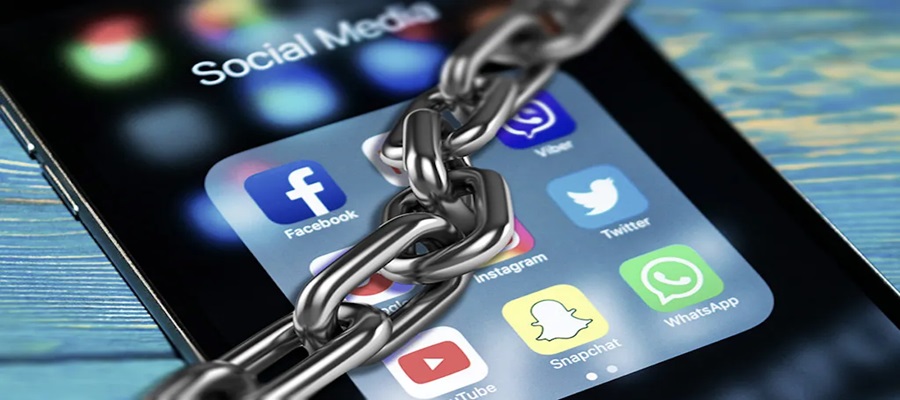
Human Rights Writers Association of Nigeria (HURIWA) has opposed a bill seeking to compel major global social media companies to establish physical offices in Nigeria.

The rights advocacy group urged the National Assembly to discard the proposed legislation, warning that it could become a tool for censorship and undermine citizens’ constitutional right to freedom of expression, despite being presented as a measure to strengthen Nigeria’s digital economy and improve corporate accountability.
The position was contained in a presentation submitted yesterday by Emmanuel Onwubiko, national coordinator, HURIWA, to the chairman of the Senate Committee on ICT and Cyber Security.
The bill, sponsored by Senator Ned Munir Nwoko, has already passed second reading in the Senate and is before the committee for further legislative consideration.
HURIWA said it carefully reviewed the proposed legislation and concluded that compelling global technology companies to establish offices in Nigeria was unnecessary and potentially counterproductive.
The organisation argued that while the firms generate substantial revenue from Nigeria’s vast digital market, they already engage Nigerians through existing structures, including paying eligible content creators, working with local technology professionals and participating in legal proceedings whenever required.
According to the group, appointing local representatives where necessary would adequately address concerns about engagement with regulators and users without forcing the companies to maintain physical offices.
It also dismissed claims that mandatory country offices would significantly improve consumer complaint resolution, technology transfer or employment generation.
HURIWA maintained that the platforms already have effective feedback mechanisms for resolving users’ complaints and routinely appear before Nigerian courts through their representatives whenever litigation arises.
The group, however, said its greatest concern was the potential for the proposed law to be used as an instrument for restricting freedom of expression.
It argued that establishing local offices could expose global social media companies to pressure from government authorities to remove online content considered critical of those in power.
According to the rights group, the presence of social media companies in Nigeria could become an avenue for authorities to pressure them into abandoning internationally recognised digital rights standards in favour of politically motivated content moderation.
It recalled previous attempts to regulate social media in Nigeria that generated widespread concerns over possible restrictions on free speech, stressing that any legislation affecting the digital space must contain clear safeguards against abuse.
The organisation warned that the proposed law should never become “a backdoor mechanism for government surveillance, arbitrary content removal or political censorship.

Nigeria has emerged as one of Africa’s most regulated online gambling markets, even as illegal operators continue to dominate the continent, according to a new report by Gaming Compliance International (GCI).

The report, the first comprehensive assessment of online gambling across all 54 African countries, showed that Africa’s online gambling Gross Gaming Revenue (GGR) reached $23 billion in 2025.
However, only $5.2 billion (23 per cent) was generated by licensed operators, while $17.8 billion (77 per cent) remained in the unregulated market.
In West Africa, total online gambling revenue rose to $4.8 billion in 2025 from $4.3 billion in 2024. Of the 2025 figure, regulated operators accounted for $1.5 billion (31 per cent), while $3.3 billion (69 per cent) flowed to unlicensed platforms, highlighting the region’s persistent enforcement challenges.
Nigeria stood out as the region’s strongest performer, recording the lowest unregulated market share at 56 per cent, compared with the West African average of 69 per cent and the African average of 77 per cent.
The study also found that online gambling participation across Africa increased from 198 million people (13 per cent of the population) in 2024 to 215 million (14 per cent) in 2025.
Despite this growth, GCI estimated that illegal operators deprived African governments of about $3.55 billion in tax revenue in 2025. The number of unlicensed gambling platforms targeting African consumers also rose to 4,129, up from 3,644 in 2024.
Commenting on the findings, Matt Holt, chief executive officer, GCI, said the report provides regulators with the first continent-wide benchmark for strengthening oversight and consumer protection.
Ismail Vali, president, GCI, urged governments to develop competitive and well-regulated markets that encourage consumers to patronise licensed operators, boost public revenue and attract greater investment.
Online gambling in Nigeria is regulated by the Nation Lottery Regulatory Commission.
At the height of the Northern Hemisphere tourist season, demand for communications and mobile Internet services rises sharply. Kaspersky’s security experts have uncovered scams that target anyone purchasing mobile connections or SIM cards worldwide.

Fraudsters create counterfeit websites that look like the portals of major regional and international telecom providers to trick users into revealing their phone numbers, personal details or banking information.
Kaspersky is sharing several examples of these fake login pages that mimic legitimate telecom operator sites and giving recommendations on how not to be deceived.
In the first case, scammers exploit the brand name of an international telecommunications company operating services in Asia, Africa and Europe. Fake authentication pages encourage users to put in their phone number and credentials.
While the first example shows the different design, the second scam site closely mimics the original log in page, making it hard for users to tell the difference and spot a fake. Entering authentication or payment data on fraudulent web sites may result in money or data loss and become a reason for more frequent spam and fraudulent calls.
Another example is a scam page which poses as another international communications company, working in North Africa, the Middle East and Southeast Asia. In this scheme scammers encourage users to top up their mobile data/Internet plans by entering their personal information and bank cards details.
Kaspersky experts have also identified a scam when cyber criminals suggest users enter their personal data to check and pay a bill inquiry. Such scam schemes are usually aimed at gaining victims’ personal data for further fraud or account hacking and stealing money.
“Because of the active use of AI, scammers can now create fake pages with ever increasing accuracy and speed, targeting the most popular user interest areas. We constantly see scams revolving around sports events, music concerts, seasonal sales and holidays. Unfortunately, the telecoms industry is no exception.
To keep your data and money safe, be vigilant when purchasing mobile or Internet plans online. Using an eSIM – purchased through an official app – is one way to avoid fake telecom sites, as it eliminates the need to enter personal details on questionable web pages.
If you’re unsure about a site’s legitimacy, search for the brand name directly in a search engine and enable a security solution that blocks phishing links for you,” comments Tatyana Kulikova, cybersecurity expert at Kaspersky.

HURIWA, CLO Protests Bill Asking Social Media Firms’ to Open Shops Nigeria

Anambra Govt Bans Graduation Ceremonies in Anambra Schools

Airtel Secures Another 10-year Spectrum Renewal in Nigeria

Moniepoint as a Key Driver in Expanding Financial Access for Businesses in Nigeria

Nigeria, Israel Strengthen Research, Technology Collaboration

NRC, Ponzi Scheme Collapses Resulting Loss of Billions of Naira

EFCC Busts NIS Visa Overstay Racket, Uncovers N700m in an Account

Tokenization, Blockchain Technology will Transform Financial Institutions – IMF

From Scarcity to Scale: What Africa Can Learn from India’s Agricultural Transformation

Spotify partners Afro Nation Portugal to expand African music experience




 E-Business2 days ago
Kaspersky Warns Mobile‑data Buyers about Scammers Posing as Telecoms Operators

 General News2 days ago
Three Entrepreneurs Secure ₦5 Million at The Gathering on 100 Pitchathon

 E-Financial2 days ago
ChatPay Unveils Public Waitlist for WhatsApp-Based Banking Platform

 News2 days ago
African Judges Pledge Support for AfCFTA’s Success

 Telecom2 days ago
Airtel Africa Backs London Listing

 Telecom2 days ago
GSMA Says High Smartphone Costs Threatens Africa’s AI Future

 E-Business2 days ago
Nigeria Leads Africa in Online Gambling Regulation – GCI

 News2 days ago
How 21 Former Almajiri Children Learned to Build Computers and Drones in Months