

E-Financial
Rethinking Agency Banking with New Innovations in Nigeria

Emmanuel Okoegwale
Few weeks ago, I attended a national financial services agency forum, organized by one of the leading industry players in Nigeria with very impressive attendance from agents, nationwide.
The venue was filled up with enthusiastic agents but with significantly eroded transactional abilities, due to operational challenges that is affecting their service delivery at the last mile and causing significant friction, with customers.
It was a complains galore for the agents as they churn out different negative experiences, disappointments linked to poor support arising from failed transactions, delayed and inadequate reconciliation processes, poor support from providers etc.
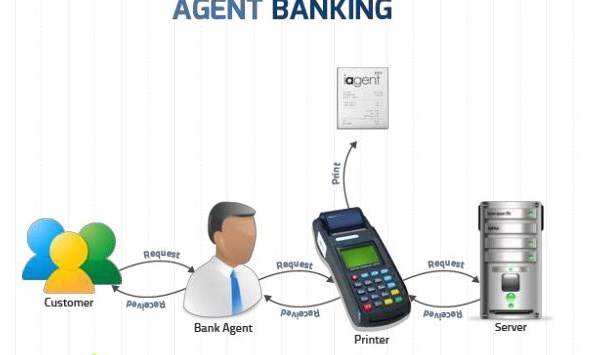
Agency banking is provisioning of basic financial services such as cash deposit, cash withdrawal, fund transfer, bills payment etc through third party agents within communities. They deploy their own resources like cash, outlets etc while the service provider, will provide items such as branding materials etc. Point of sale devices are provided by service providers and in some instances, paid for by the agents but recently, some providers are issuing them at no cost.
The agency network is the distribution network, front-end and customer facing entities which require significant resources to build, manage and cultivate.
Cost of building these networks can be significant for many operators if the overall strategy of the provider, is not well defined and it becomes more complex as they reach new geographies, requiring diverse implementation plans.
While the ultimate for service providers, is to unlock the customer value, by enabling them convert cash to electronic value and use the services themselves but the agent as the middle-Man, wants to keep the customers locked into over-the-counter transactions so that, they can continuously, earn fees.
The agent has no compelling reason to educate the customer to acquire and learn how to use the wallet. It’s a loss for the agent whereas the Banks are banking on this front-end partner to provide that education and conversion. There might be value for the agents if the providers can rethink their commissioning strategy that gives the agent some long-term value for converting customers to wallet users with consideration for residual commissions strategies etc.
Shared Agency
Shared agency is visible at the front-end but disaggregated at the back-end with locked-in, float accounts. At the front end, the POS will accept any Bank card issued in Nigeria seamlessly but at the back end, the agent may have multiple agency agreements, so the agent keeps multiple float accounts with multiple providers which fragments His total e-float inventory and its, inefficient. The agent may need to keep switching transaction devices, re-balancing different float accounts, frequently.
Agents are Working, Blindly
From the various complaints of the agents at the event, it was evident that the agents had not been well equipped aside the almighty Point of sale device which most providers think as the ultimate, in setting up, equipping and activating agents.
Operational issues had to be reported through telephone or email to back-office, transaction reconciliation issues must back with POS prints-out which might have faded, missing etc.
Delayed resolution period to resolve agent transaction issues, leading to customer dissatisfaction and sometimes intervention by security personnel and sometimes, loss of agent funds.
A well-equipped agent will save the provider significant time and resources by using digital and innovative tools provided by the provider to manage day -to-day operations in an innovative manner, that adds value to the entire value chain.
The Agent Dashboard
Agency dashboard provides actionable transaction data, which is used to manage customer transaction outcomes, identify and isolate issues which will then increase efficiency and performance of the agents.
The dashboard will enable agents to have simple, intuitive and secure interaction with all their transactions channels like POS, Mobile money transaction data etc via a single interface. It provides critical operational functional that will enable the agent to transact effectively and securely which will then improve the customer trust and overall experience.
Some customers will never sign up for wallets services because of trust issues, they need someone they can hold accountable when things do not work and that is the agent, who should be well equipped to address operational challenges, adequately.
Benefits
The dashboard reduces the agent’s support cost with agents having visibilities on some transaction data via their dashboard and increase uptime and performance.
Agents will be able to report suspicious transaction timely for flagging by the service providers thereby reducing losses, arising from fraud etc.
It will help the providers to reach agents in a timely and efficient manner if there is a ‘run’ on the system.
Agents can deliver improved services which reduces agent and customer friction and improves the customer experiences.
It’s a major win for agents to be able to work more effectively and efficiently in stressful, street-level “Ojuelegba” environments.
Conclusion
For agent banking to prosper in Nigeria, forward thinking and innovative providers, can deliver innovative directions that can empower the agent network with effective tools (front and bank-end) that can drive Nigeria’s match into the digital financial services era.



Federal government has started new efforts to improve tax collection in the Federal Capital Territory (FCT) and stop the problem of multiple taxation.

Mr. Taiwo Oyedele, minister of Finance and coordinating minister of the economy, disclosed this after a meeting with Nyesom Wike, minister, FCT, on Sunday.
According to Oyedele, the meeting focused on strengthening cooperation between the Ministry of Finance and the FCT Administration to support development projects in Abuja.
A major part of the discussion was how to improve tax administration in the territory.
He explained that the proposed tax harmonisation would create a more coordinated tax system, reduce the burden of multiple taxes on residents and businesses, and improve government revenue collection.
Oyedele said the plan is in line with the new tax reform law and is expected to help accelerate development across the FCT.
“The two ministers also reviewed plans to harmonise tax administration within the FCT,” he said.
He added that the initiative would eliminate multiple taxation while ensuring that government revenue is collected more efficiently.
The meeting also examined ways to strengthen collaboration on infrastructure projects across Abuja.
According to Oyedele, discussions centred on supporting the FCT’s ongoing infrastructure renewal programme.
He commended Wike’s approach to development, noting that the minister has focused on completing long-abandoned projects rather than starting new ones.
Oyedele said this strategy is helping to unlock economic and social benefits for residents by bringing stalled public projects back into use.
The proposed tax harmonisation is expected to make tax administration easier for individuals and businesses operating in the FCT while aligning Abuja’s revenue system with the provisions of the new tax reform law.
Standard Bank Group has identified Nigeria and four other markets as strategic growth hubs as it seeks to tap into $15.4 billion revenue opportunity driven by expanding small and medium-sized enterprises (SMEs) and rising intra-African trade.

The bank disclosed the plan through Bill Blackie, the Chief Executive Officer of its Business and Commercial Banking (Standard Bank Group) division, who outlined the lender’s growth strategy in an interview with Bloomberg.
Under the strategy, Standard Bank will deepen its presence in Nigeria, Ghana, Kenya, Uganda and Tanzania while consolidating its dominance in South Africa. The five markets account for about 85 per cent of the estimated revenue opportunity available to the group’s BCB operations.
The expansion forms part of the lender’s broader ambition to accelerate earnings growth through 2028, leveraging increasing demand for banking services among businesses across the continent.
According to Blackie, the BCB division has recorded robust growth over the past five years, supported by rising business activity and greater demand for financial services across Africa.
He said the division doubled both headline earnings and return on capital between 2020 and 2025, with return on capital increasing from 19 per cent to 38 per cent during the period.
Earnings from operations across the continent also expanded at an average annual rate of 30 per cent.
Building on this performance, the bank is targeting compound annual growth of between eight and nine per cent through 2028, although Blackie expressed confidence that growth could reach double-digit levels as the strategy gains traction.
A key pillar of Standard Bank’s growth strategy is expanding support for SMEs and mid-sized businesses, which account for most enterprises across Africa.
The bank is particularly positioning itself to benefit from opportunities created by the African Continental Free Trade Area (AfCFTA), which is expected to accelerate economic integration and cross-border commerce across the continent.
According to the International Trade Centre, nearly half of Africa’s small businesses export to other African countries, compared with only 14 per cent of larger firms, underscoring the critical role of SMEs in driving regional commerce.
The lender is also leveraging its extensive African footprint and strategic partnership with the Industrial and Commercial Bank of China (ICBC) to attract businesses seeking access to international markets, particularly China.

The National Insurance Commission (NAICOM) has handed over the management of African Alliance Insurance Plc to a newly constituted board nominated by shareholders.

The move ends a regulatory intervention that rescued the troubled insurer from the brink of collapse.
The development marks a major milestone in the insurance industry’s efforts to strengthen policyholders’ protection and restore confidence in the sector, following months of intensive regulatory oversight aimed at stabilising the company.
NAICOM had stepped into the affairs of African Alliance Insurance in October 2024 after the insurer was hit by severe liquidity constraints, mounting annuity payment arrears, unresolved claims obligations, regulatory infractions and reputational challenges that threatened its survival and eroded public trust.
Speaking at the handover ceremony, Commissioner for Insurance, Olusegun Omosehin, said the intervention had achieved its primary objectives of restoring operational stability, settling outstanding liabilities and protecting the interests of shareholders and annuitants.
Omosehin said a successful turnaround demonstrates the regulator’s commitment to safeguarding the insurance industry while ensuring that policyholders do not bear the consequences of corporate distress.
He also highlighted the significance of the newly enacted Nigerian Insurance Industry Reform Act (NIIRA) 2025, describing it as a game-changer for the sector.
The Commissioner observed that had the fund been in existence before the African Alliance’s crisis, it would have helped to cushion the impact on policyholders by facilitating the timely settlement of legitimate claims and annuity obligations.
He charged the new board to uphold high standards of corporate governance, transparency and regulatory compliance, while prioritising prompt claims settlement, sound solvency management and prudent business practices.
Industry stakeholders view the successful rehabilitation of African Alliance as a test case for regulatory intervention in Nigeria’s insurance sector, particularly at a time when operators are under pressure to strengthen their capital base, improve governance standards and rebuild public confidence.
During its tenure, the NAICOM appointed an interim board to restore liquidity through the recovery of trapped dividend funds and other inflows, settled a significant portion of annuity arrears and legacy claims, facilitated the transfer of the company’s annuity portfolio, completed forensic and actuarial reviews and addressed several regulatory and operational challenges.

Galaxy Backbone @ 20, Unveils New Identity

ALTON Backs CBN on Local Data Hosting Rule for Banks, Fintechs

MTN Nigeria Commits to Ethical Conduct with IFRS S1, S2 Compliance

NDPC to Review Data Law to Address AI, Privacy Concerns

FG Moves to End Double Taxation

CBN Extends PoS Geo-Fencing Enforcement Deadline to August 2026

London Strengthens Global Investment Ties with Africa @ First Ever London-Africa Business Summit

FG Targets Alleged N3tn Capital Flight, Opens Airtime Credit Market to Nigerian Fintechs

Japan, UNESCO Boost Digital Learning in 15 CoEs with Donation of ICT Equipment

African Electric Vehicle Platform Raises $215m to Scale Electric Mobility in Nigeria, Others




 Telecom3 days ago
TikTok, ICC Gather Nigeria’s Entrepreneurs to Drive Small Business Growth and Digital Transformation

 E-Business3 days ago
Payaza Launches AI-powered Storefront Platform to Drive Cross-border Commerce

 Telecom3 days ago
Nigeria Moves to End Solar Imports as NASENI, REA Seal Major Renewable Energy Deal

 Telecom3 days ago
How a New NITDA-TikTok Partnership Could Transform Thousands of Nigerian Businesses

 E-Business3 days ago
FG Bans Use of Gmail, Other Personal Emails for Civil Service Operations

 E-Financial3 days ago
NAICOM’s 18 Months Management Spill @ African Alliance Ends

 E-Financial3 days ago
Standard Bank Targets $15.4b SME Growth in Nigeria, Others with Trade Expansion Drive

 General News3 days ago
Indwelt Studios Seeks Increased Awareness @ World Sickle Cell Day