

E-Financial
Rethinking Agency Banking with New Innovations in Nigeria

Emmanuel Okoegwale
Few weeks ago, I attended a national financial services agency forum, organized by one of the leading industry players in Nigeria with very impressive attendance from agents, nationwide.
The venue was filled up with enthusiastic agents but with significantly eroded transactional abilities, due to operational challenges that is affecting their service delivery at the last mile and causing significant friction, with customers.
It was a complains galore for the agents as they churn out different negative experiences, disappointments linked to poor support arising from failed transactions, delayed and inadequate reconciliation processes, poor support from providers etc.
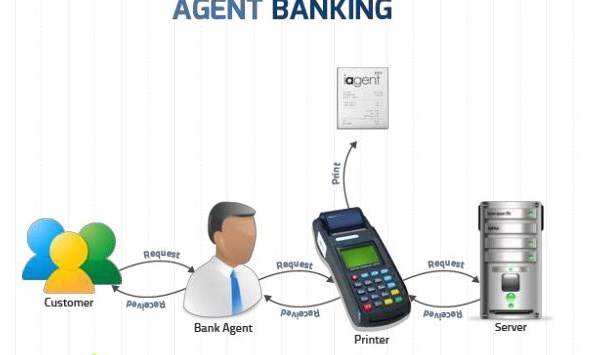
Agency banking is provisioning of basic financial services such as cash deposit, cash withdrawal, fund transfer, bills payment etc through third party agents within communities. They deploy their own resources like cash, outlets etc while the service provider, will provide items such as branding materials etc. Point of sale devices are provided by service providers and in some instances, paid for by the agents but recently, some providers are issuing them at no cost.

The agency network is the distribution network, front-end and customer facing entities which require significant resources to build, manage and cultivate.
Cost of building these networks can be significant for many operators if the overall strategy of the provider, is not well defined and it becomes more complex as they reach new geographies, requiring diverse implementation plans.
While the ultimate for service providers, is to unlock the customer value, by enabling them convert cash to electronic value and use the services themselves but the agent as the middle-Man, wants to keep the customers locked into over-the-counter transactions so that, they can continuously, earn fees.
The agent has no compelling reason to educate the customer to acquire and learn how to use the wallet. It’s a loss for the agent whereas the Banks are banking on this front-end partner to provide that education and conversion. There might be value for the agents if the providers can rethink their commissioning strategy that gives the agent some long-term value for converting customers to wallet users with consideration for residual commissions strategies etc.
Shared Agency
Shared agency is visible at the front-end but disaggregated at the back-end with locked-in, float accounts. At the front end, the POS will accept any Bank card issued in Nigeria seamlessly but at the back end, the agent may have multiple agency agreements, so the agent keeps multiple float accounts with multiple providers which fragments His total e-float inventory and its, inefficient. The agent may need to keep switching transaction devices, re-balancing different float accounts, frequently.
Agents are Working, Blindly
From the various complaints of the agents at the event, it was evident that the agents had not been well equipped aside the almighty Point of sale device which most providers think as the ultimate, in setting up, equipping and activating agents.
Operational issues had to be reported through telephone or email to back-office, transaction reconciliation issues must back with POS prints-out which might have faded, missing etc.
Delayed resolution period to resolve agent transaction issues, leading to customer dissatisfaction and sometimes intervention by security personnel and sometimes, loss of agent funds.
A well-equipped agent will save the provider significant time and resources by using digital and innovative tools provided by the provider to manage day -to-day operations in an innovative manner, that adds value to the entire value chain.
The Agent Dashboard
Agency dashboard provides actionable transaction data, which is used to manage customer transaction outcomes, identify and isolate issues which will then increase efficiency and performance of the agents.
The dashboard will enable agents to have simple, intuitive and secure interaction with all their transactions channels like POS, Mobile money transaction data etc via a single interface. It provides critical operational functional that will enable the agent to transact effectively and securely which will then improve the customer trust and overall experience.
Some customers will never sign up for wallets services because of trust issues, they need someone they can hold accountable when things do not work and that is the agent, who should be well equipped to address operational challenges, adequately.
Benefits
The dashboard reduces the agent’s support cost with agents having visibilities on some transaction data via their dashboard and increase uptime and performance.
Agents will be able to report suspicious transaction timely for flagging by the service providers thereby reducing losses, arising from fraud etc.
It will help the providers to reach agents in a timely and efficient manner if there is a ‘run’ on the system.
Agents can deliver improved services which reduces agent and customer friction and improves the customer experiences.
It’s a major win for agents to be able to work more effectively and efficiently in stressful, street-level “Ojuelegba” environments.
Conclusion
For agent banking to prosper in Nigeria, forward thinking and innovative providers, can deliver innovative directions that can empower the agent network with effective tools (front and bank-end) that can drive Nigeria’s match into the digital financial services era.



Securities and Exchange Commission (SEC) has commenced the implementation of a fully electronic registration system for capital market operators, marking a major milestone in its digital transformation drive aimed at improving regulatory efficiency, reducing processing time and strengthening oversight of Nigeria’s capital market.

The new electronic registration (e-Registration) platform, deployed through the Commission’s ePortal, allows designated regulatory services to be completed entirely online, eliminating manual processes for services covered in the current phase.
The initiative comes as the SEC intensifies reforms to modernise the Nigerian capital market, enhance the ease of doing business and leverage technology to improve service delivery to market participants.
In a statement issued on Wednesday, the Commission said Capital Market Operators (CMOs) can now complete designated post-registration processes electronically, from application submission and regulatory review to approvals and the communication of regulatory decisions.
According to the regulator, the platform is designed to simplify interactions between operators and the Commission, reduce administrative bottlenecks, shorten processing timelines and give applicants real-time visibility into the status of their applications.
The SEC said the transition to a fully digital registration process would also improve operational efficiency by introducing standardised workflows, electronic documentation, secure digital record management and stronger audit trails, while enhancing regulatory oversight.
“The new platform represents a major step towards creating a seamless digital regulatory ecosystem that enhances operational efficiency while strengthening regulatory effectiveness,” the Commission stated.
Beyond improving efficiency, the regulator said the platform would reinforce the integrity of regulatory processes by minimising delays associated with paper-based documentation and improving the quality of regulatory data used for supervision and decision-making.
It added that the digital system would provide a stronger foundation for regulatory analytics and future technology-driven innovations aimed at enhancing market oversight.
The Commission explained that the implementation is being rolled out in phases to ensure a smooth transition for market participants while safeguarding the stability and integrity of regulatory processes.
For now, the e-Registration platform is limited to post-registration services for existing Capital Market Operators.
entrants seeking registration in the Nigerian capital market are not yet covered under the current phase, adding that electronic processing for new registrations will be introduced at a later date.
The Commission urged all licensed operators to familiarise themselves with the new platform and comply with implementation timelines to ensure a seamless migration to the digital system.
The latest move forms part of the SEC’s broader reform agenda to modernise market infrastructure, improve transparency and strengthen investor confidence as Nigeria seeks to deepen its capital market and enhance its competitiveness in the global financial system.
Market observers believe the digital registration initiative is expected to reduce compliance costs, improve regulatory turnaround time and support a more efficient operating environment for licensed operators, while reinforcing the Commission’s push towards a technology-driven capital market ecosystem.

Elon Musk’s social media company X, formerly known as Twitter, launched its own bank account-like product where users can send money to one another.

The service, known as X Money, is not a new bank.
X Money is using technology and banking services provided by Cross River Bank, and branding that backbone as X Money.
It is common for new financial companies to use a traditional bank’s backbone to launch its services, as chartering a new bank is a timely and costly process.
Currently X Money is invite only, and users will receive a “X”-branded Visa debit card that is useable at any ATM.
Users of X will be able to send money to other X users in real-time, the company said. Invitations are only available to X’s paying members presently
In order to attract customers, X Money is offering a 6% yield on deposits and 3% cashback on eligible purchases.
In order to earn the 6% yield, a customer would need to deposit at least $1,000 into an account.
Customers would also have to be signed up for X’s premium services, which is at least $8 a month. It would require at least a deposit of $1,600 in order to cover X’s premium services cost.
Musk has long talked about turning X into an “everything app” that would include financial services.
Musk has his origins in financial services, creating one of the first online banks under the brand X.com. That company was later bought and merged into what is now known as PayPal.
It’s still early for X Money, but the company is entering into a competitive market, dominated by PayPal’s Venmo money transfer service and other peer-to-peer money transfer services like Zelle and Cash App.

Central Bank of Nigeria (CBN) imposed N430 million in penalties on financial institutions in 2025 over delays in resolving customer complaints and failure to comply with its directives, underscoring a tougher regulatory stance on consumer protection in the banking sector.

The sanctions were disclosed in the apex bank’s 2025 Annual Report, which showed that 21 penalties worth N430 million were imposed on financial institutions during the review period for infractions linked to complaints management.
According to Nairametrics, the report stated that the affected institutions were sanctioned for “delays in resolving customer complaints to failure to comply with the Bank’s directives.”
The report read, “the Bank imposed 21 penalties on financial institutions to the tune of N430.00 million, for infractions ranging from delays in resolving customer complaints to failure to comply with the Bank’s directives.”
The latest enforcement action comes as the CBN recorded a rise in the number of complaints lodged by users of financial services, suggesting greater reliance on the regulator’s consumer protection framework.
According to the report, the CBN received 23,129 complaints from consumers of financial services in 2025, representing a 10.53% increase from the 20,925 complaints recorded in 2024.
The apex bank attributed the increase to growing public awareness and stronger confidence in its complaint resolution process rather than a deterioration in banking services.
The report stated, “The Bank received a total of 23,129 complaints from consumers of financial services in 2025, a rise of 10.53%, above the 20,925 in 2024. The trend reflected increased awareness and improved confidence in the Bank’s consumer complaint resolution process.”
It added that 18,824 complaints were successfully resolved during the year, representing a 9.36% increase from the 17,213 complaints resolved in 2024.
The report also showed a sharp increase in the value of claims handled by the regulator.
Claims denominated in local currency rose to N40.61 billion in 2025 from N17.13 billion a year earlier, while foreign currency claims climbed to $344.2 million from $1.06 million.
consumers recovered N19.12 billion and $329.3 million in refunds during the year, compared with N9.66 billion and $0.67 million refunded in 2024.
Beyond the N430 million sanctions relating to customer complaints, the CBN disclosed that it imposed another 11 penalties worth N1.26 billion on financial institutions for regulatory breaches and failure to respond to regulatory queries.
The report indicates that complaints management formed part of a wider overhaul of the CBN’s supervisory and market conduct framework in 2025.
In 2022, the CBN issued a guide on how aggrieved customers can complain about financial institutions such as commercial banks.
The regulator established a dedicated Compliance Department to strengthen oversight of financial crime, market conduct, complaints management, advertising standards, cybersecurity, data protection and corporate governance across CBN-regulated institutions.
Olayemi Cardoso, governor, CBN, recently said that the CBN and deposit money banks are reviewing excessive transaction alerts and customer charges amid complaints from bank users over confusing debit notifications and deductions.
Cardoso said the apex bank had set up a quarterly engagement structure involving its consumer protection team, deposit money banks and the top 10 microfinance banks to address unresolved customer complaints.

Nwokolo, Nollywood Actor Claims Internet Fraud is “Keeping Economy Afloat’

SEC Begins Full e-Registration for Capital Market Operators

Elon Musk Launches Invite-only X Money with Visa Debit Card

CBN Fines Banks N430m for Ignoring Customers’ Complaints

Kaspersky Uncovers New Mirage Kitten Malware Used in Cyber-espionage Campaign Across Africa, Others

NRC, Ponzi Scheme Collapses Resulting Loss of Billions of Naira

EFCC Busts NIS Visa Overstay Racket, Uncovers N700m in an Account

From Scarcity to Scale: What Africa Can Learn from India’s Agricultural Transformation

Tokenization, Blockchain Technology will Transform Financial Institutions – IMF

BON Establishes Six Ad Hoc Committees to Modernize Broadcasting




 News2 days ago
History as Lagos Becomes First Nigerian State to Launch Greenhouse Gas Registry

 Telecom1 day ago
Fact-Check: Elon Musk’s “Tesla Pi Phone” is Internet Rumor

 E-Business2 days ago
UNN to Partner Firm on AI, Smart Mobility Innovation Centre

 Telecom2 days ago
AI Investment Gap Threatens Africa’s Future Growth

 Telecom2 days ago
AMCON Puts ntel Up for Sale, Seeks Investors

 E-Financial2 days ago
Remita Raises Alarm Over Nigeria’s Digital Divide, Calls for More Investment

 Telecom2 days ago
Court Affirms NDPC’s Powers to Register Major Data Controllers, Processors

 E-Financial1 day ago
Malpass, Ex World Bank Chief Raises Alarm over Nigeria’s Secretive Debt Structures