

E-Business
NITDA Investigates True caller over Privacy Rights Infraction

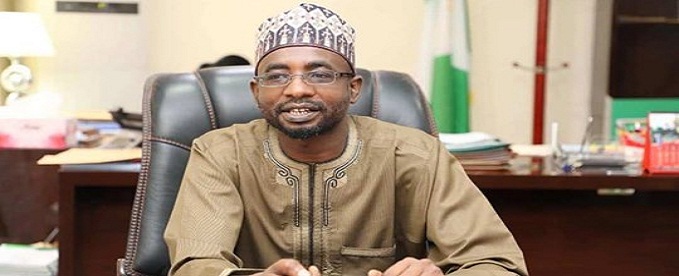
The National Information Technology Agency (NITDA) has commenced investigation into a potential breach of privacy rights of Nigerians by the Truecaller Service.
In a statement released by Mr. Kashifu Abdullahi Inuwa, director general/CEO, National Information Technology Agency, said that the investigation is in accordance with Section 6(f) of the NITDA Act 2007.
The section (as referred to) empowers NITDA to render advisory services in all information technology matters to the public and private sectors,
NITDA therefore, said it “wish to inform the public that it commences investigation of the potential breach”.
“Initial findings revealed that the Truecaller Privacy Policy is not in compliance with global laws on data protection and the Nigeria Data Protection Regulation (NDPR) in particular.
“The findings also revealed that there are over seven million Nigerians who are active users of the Service, hence the need to enlighten the public on some of the areas of non-compliance as well as guide those affected.
“The Truecaller Privacy Policy, available HERE, is made of two sets – one for those in the European Economic Area (EEA) and the other for those outside the EEA. Nigeria falls under the second category. Furthermore, every Nigerian user is contracting with Truecaller India.
There are marked differences between both policies.
Critical assessment of the policy revealed non-compliance with the NDPR. Examples of these are outlined below:
- Article 1.1 states that ‘Truecaller may supplement the information provided by You with information from third parties and add it to the information provided by You.’
This provision contravenes Article 2.1(b) of the NDPR which requires data collection and processing to be accurate and Article 1.3(iii) which requires that valid consent must be specific. By supplementing the personal information of Nigerians without specific consent and accuracy, they are susceptible to serious invasion of their privacy. This has encouraged unscrupulous persons to continue using Nigerian identities to perpetuate fraud.
- Article 1.2 states that ‘When You install and use the Services, Truecaller will collect personal information from You and any devices You may use in Your interaction with our Services. This information may include e.g.: geo-location; Your IP address; device ID or unique identifier; device manufacturer and type; device and hardware settings; SIM card usage; applications installed on your device; ID for advertising; ad data, operating system; web browser; operator; IMSI; connection information; screen resolution; usage statistics; default communication applications; access to device address book; device log and event information; logs, keywords and meta data of incoming and outgoing calls and messages; version of the Services You use and other information based on Your interaction with our Services such as how the Services are being accessed (via another service, web site or a search engine); the pages You visit and features you use on the Services; the services and websites You engage with from the Services; content viewed by You, content You have commented on or sent to us and information about the ads You see and/or engage with; the search terms You use; order information and other usage activity and data logged by Truecaller’s servers from time to time’.
The above provision of the Truecaller Privacy Policy is clearly excessive and invasive of the privacy of its users. Article 2.3(2)d of the NDPR provides – when assessing whether consent is freely given, utmost account shall be taken of whether the performance of a contract, including the provision of a service, is conditional on consent to the processing of Personal Data that is not necessary (or excessive) for the performance of that contract.
Contrary to the expectation of many users, the Truecaller service collects far more information than it needs to provide its primary service.
- Article 3 states that ‘Truecaller may also share personal information with third party advertisers, agencies and networks. Such third parties may use this information for analytical and marketing purposes.’
It is global best practice for Users to be informed of the possible third-party processors’ information may be shared with and for what purpose. This Policy flaunts this rule which is also enunciated in the NDPR.
“The foregoing are samples of the many illegitimate provisions found in the Truecaller Privacy Policy and Terms of Service. The implications of these are far-reaching.
“The provisions of the policy can be exploited to put many Nigerians in unsavoury conditions. In view of this, we urge all Nigerians to take advantage of Article 4 of the Truecaller Privacy Policy which provides – “If any persons do not wish to have their names and phone numbers made available through the Enhanced Search or Name Search functionalities, they can exclude themselves from further queries by notifying Truecaller via its website at www.truecaller.com or as set forth in the contact details below…” Members of the public may also decide to delist themselves from the Truecaller Service completely.
“NITDA would like to assure Nigerians that it will continue to monitor the activities of digital service providers with a view to ensuring that the rights of Nigerians are not unduly breached while also improving the operational environment to support ethical players in their bid to get maximum benefit from Nigeria”, the statement reads.



LG Electronics has reaffirmed its commitment to advancing innovation and smart living across Africa by participating as a supporting sponsor at the Africa Technology Expo (ATE) 2026, where the company is showcasing its latest portfolio of premium consumer electronics and home appliance innovations.

The two-day expo, themed around strengthening Africa’s enterprise technology ecosystem through collaboration and innovation, has brought together industry leaders, technology innovators, multinational companies, policymakers, and entrepreneurs to explore opportunities for cross-border partnerships and digital transformation across the continent.
As one of the supporting sponsors of this year’s event, LG’s interactive exhibition booth has become a major attraction, offering visitors firsthand experience of the company’s latest AI-powered technologies designed to enhance everyday life while delivering greater comfort, convenience, energy efficiency, and connectivity.
Among the innovations on display are the latest LG QNED TV, delivering exceptional picture quality and immersive entertainment; the iconic MoodUP™️ Refrigerator, which combines intelligent cooling with customizable LED door panels; the innovative LG WashTower™️, an all-in-one premium laundry solution that maximizes space and efficiency; the energy-efficient LG ARTCOOL Air Conditioner and LG Air Tower, designed to provide smarter climate control; alongside LG’s advanced Dehumidifier and other intelligent home solutions.
Speaking on LG’s participation, Mr. H.S. ji, Managing Director, LG Electronics West Africa, said: “Africa Technology Expo provides an excellent platform to engage with innovators, businesses, and consumers who are shaping the future of technology across the continent. At LG, innovation goes beyond creating advanced products, it is about developing meaningful solutions that improve everyday life.
“Our participation reflects our commitment to supporting Africa’s digital transformation while introducing intelligent technologies that make homes and workplaces smarter, healthier, and more energy-efficient.”
The Africa Technology Expo was established to foster stronger collaboration among African businesses, emerging enterprises, and multinational organisations. During the opening ceremony, the organisers emphasized the need for deeper continental collaboration to unlock Africa’s innovation and economic potential, noting that previous editions of the expo have facilitated approximately $192 million in business deals among participating companies.
LG’s presence at the event aligns with this vision by demonstrating how cutting-edge consumer technology can support economic growth, digital inclusion, and sustainable development across Africa.
Visitors to the LG booth are participating in live product demonstrations, interactive experiences, and expert consultations, gaining valuable insights into how LG’s AI-powered ecosystem seamlessly connects home appliances and entertainment products to deliver a smarter lifestyle.
As technology continues to reshape industries and everyday living, LG remains committed to driving innovation that empowers consumers, supports enterprise growth, and contributes to Africa’s evolving digital economy.
Small and Medium Enterprises Development Agency of Nigeria (SMEDAN) has secured a 12 million-dollar commitment from the South Korean Government to establish a Skills Acquisition Centre in Abuja to boost entrepreneurship and strengthen Nigeria’s Micro, Small and Medium Enterprises (MSMEs).

SMEDAN
The Director-General of SMEDAN, Mr Charles Odii, disclosed this in a statement on Sunday to commemorate the 2026 World MSME Day with the theme: “Empowering MSMEs through Innovation and Sustainable Industrial Development.”
Odii said the proposed centre would provide vocational and entrepreneurial training for thousands of young Nigerians and improve the productive capacity of small businesses across the country.
He said the agency was awaiting the allocation of land by the Federal Capital Territory Administration (FCTA) to commence the project.
According to him, SMEDAN is determined not to allow Nigeria to lose the opportunity presented by the South Korean Government’s intervention.
“We need land in the FCT to build the Skills Acquisition Centre. If the FCT Administration is unable to provide one, we will use our office premises in Idu, Abuja, because we do not want Nigeria to miss this 12 million-dollar commitment and opportunity offered by the Korean Government to support skills and vocational training,” he said.
Odii described MSMEs as the backbone of Nigeria’s economy, noting that the agency’s interventions were aimed at empowering small businesses to drive employment and economic growth.
“Small businesses are the heartbeat of Nigeria’s economy. They contribute significantly to employment generation and economic growth.
“By providing infrastructure, skills and financing, we are creating an enabling environment for them to grow, thrive and contribute meaningfully to national development,” he said.
The SMEDAN boss also announced the launch of a N500 million zero-interest Grow Fund to improve access to affordable finance for MSMEs.
He said the facility would be disbursed through cooperative societies, trade associations and business membership organisations under a revolving loan arrangement.
Odii explained that the association-based lending model was designed to improve accountability, ensure effective monitoring and guarantee that funds reached genuine entrepreneurs.
“We visited traders at the market because it is not enough to sit in offices and formulate policies without understanding the realities of the people we are meant to serve.
“We met with butchers, pepper sellers, vegetable traders, provision store owners and market leaders, and they all said one thing: they need access to affordable finance.
“That was why we immediately decided to launch the N500 million Grow Fund. We are not giving the money directly to individuals. We are giving it to associations that know their members and can monitor how the funds are used,” he said.
According to him, beneficiaries will access loans ranging from N250,000 to N500,000, depending on their business needs, without paying interest.
“The funding is meant to support and improve businesses. It should be used for working capital, workspaces, tools and other productive business needs.
“It is a revolving fund. When one beneficiary repays, another entrepreneur can access the same money. This way, the impact of the intervention continues to expand and more small businesses can benefit,” he added.
Odii said the agency planned to expand the fund through partnerships with state governments, development partners and financial institutions willing to provide matching funds.
He also disclosed that SMEDAN had commenced consultations on a new National MSME Policy, expected to be relaunched in November, to strengthen the policy framework for the sector.
He reaffirmed the agency’s commitment to supporting small businesses through skills development, access to finance and policies that would enhance their competitiveness and contribution to Nigeria’s economic development.

Nigeria’s weak data protection guardrails may undermine the recent directive by Central Bank of Nigeria (CBN) to banks, fintech firms, and other payment service providers to store payment transaction data generated within the country local servers.

CBN said that the new rule will start from January 1, 2027, as part of new measures to strengthen oversight of the fast-growing digital payments ecosystem.
This will also provide the country greater control over critical data infrastructure, allowing authorities to easily access records, conduct audits, enforce compliance, and investigate, especially in cases where criminal offenses are involved, reducing delays often caused by intermediation between local and foreign entities.
Apart from data sovereignty, the CBN added that moving transaction records from foreign servers will help drive investments in local data centers and cloud storage capacity.
Though reliable estimates are hard to come by, it is believed that Nigeria loses over N60 billion in hosting data in foreign servers.
But a coalition of civil society organizations (CSOs), has raised concerns over safety measures in place to protect data of Nigerians, despite having data protection laws in place.
The coalition, comprising Media Rights Agenda, Paradigm Initiative, Digital Rights Lawyers Initiative, and Accountability Lab Nigeria, among others, released the “Protected From the State, Not By It: Nigeria’s Data Protection Crisis Is a Crisis of Implementation,” where they criticized regulators’ failure to effectively enforce data protection laws, which led to rising cases of digital fraud and rampant illegal sale of sensitive information.
There have been leaks of sensitive voter, financial, and personal records.
For instance, there was alleged unauthorized access to the Continuous Voter Registration (CVR) database of the Independent National Electoral Commission (INEC) during a nationwide CVR exercise.
INEC earlier released the preliminary findings of its investigation into the matter, saying that it found no external breach of its systems and that the personal information of over 90 million registered voters was not compromised.
Despite this, CSOs argued that the incident underscored the lack of oversight, adding that it showed that while data privacy laws are in place, sensitive information can be easily moved from a secure government database and into the hands of private political entities.
The coalition also pointed out regulators’ failure to conduct human rights impact assessments on public surveillance systems before related programs were deployed, urging the government to act on these issues by subjecting public institutions to the same compliance requirements as private organizations.
“This is the asymmetry at the heart of the crisis: citizens are under-protected from data abuse and over-exposed to state monitoring and punishment,” the CSOs stated.
Additional report by coingeek

FCCPC Dismisses Report Claiming Approval of 48 New Loan Apps

ALTON Backs NCC’s Local Smartphone Manufacturing Drive to Widen Digital Access

LASTMA Launches 3367 Toll-Free Hotline for Emergency Response, Traffic Management

PalmPay Calls for Trust, Infrastructure and Responsible AI to Drive Payment Ecosystem Innovation

OADC Reaffirms Abundant Capacity in Data Centres in Nigeria to Host Financial Data

London Strengthens Global Investment Ties with Africa @ First Ever London-Africa Business Summit

Mobile Internet Gender Gap Widest in Africa – GSMA

FG Targets Alleged N3tn Capital Flight, Opens Airtime Credit Market to Nigerian Fintechs

Japan, UNESCO Boost Digital Learning in 15 CoEs with Donation of ICT Equipment

Good News for DStv Users: Watch over 160 Channels Without Paying Extra




 General News3 days ago
Tinubu appoints Adigwe to head National Health Technology, Data Analytics Office

 E-Financial3 days ago
Paystack Unveils AI-powered Payments Tools

 E-Financial3 days ago
Fidelity Bank Wins DBN Award for Expanding First-Time Credit Access to MSMEs

 E-Financial3 days ago
NRS, CITN Deepen Partnership to Strengthen Tax Awareness

 General News3 days ago
PalmPay Strengthens Data Protection Culture with Employee Privacy Workshop and Privacy Champions Programme

 E-Financial3 days ago
FCMB Turns Normal Banking into Rewards with New Mobile App Upgrade

 Telecom3 days ago
Meta, FG Unveil New Safety Measures to Protect Nigerian Teens Online

 E-Financial3 days ago
Despite Warnings, FG Draws Down $1.5Bn as First Tranche of FAB $5Bn Loan Deal