

News
Court Stops FIRS from Enforcing VAT on Goods Consumed in Hotels


Justice Rilwanu Aikawa of the Federal High Court in Lagos has barred the Federal Inland Revenue Services (FIRS), from enforcing VAT provisions on goods and services consumed in hotels, restaurants and event centres in Lagos State.
Justice Aikawa gave the order while delivering judgment in the suit seeking to restrain the Attorney General (AG) of Lagos State from enforcing the Hotel Occupancy and Restaurant Consumption (Fiscalisation) Regulations Law (HORC), 2017, in the view that VAT Act has covered the field.
In the suit the Registered Trustees of Hotel Owners and Managers Association of Lagos (HOMA) had sued the AG in Lagos State and FIRS in the suit no. FHC/L/CS/360/2018.
The HOMA had asked the court to declare that by virtue of Section 7, of the VAT Act, the second defendant (FIRS) was the only lawful and constitutional agency charged with the administration and management of consumption tax generally and particularly in Lagos state.
Justice Aikawa, in delivering the judgment, dismissed the suit and held that it was lacking in merit, adding that the plaintiff was obliged to comply with the HORC Law 2009 and the HORC Regulations 2017.
The court also raised two issues by herself; whether the Federal High Court had the jurisdiction to pronounce on the constitutionality of VAT. The court resolved that it has jurisdiction.
Aikawa also held that the issue of the powers of the minister to amend the schedule to the Taxes and Levies (Approved List for Collection) Act was not in dispute before the court and so no pronouncement could be made on it.
The court in dismissing the originating summons, as lacking merit and resolving the questions and reliefs sought in favour of the first defendant, held:
“That consumption tax is not stated in either the exclusive and concurrent legislative list, in the Constitution of Nigeria, therefore, the absence on the concurrent and exclusive lists, puts consumption tax on the residual list, which is within the legislative competence and powers of state governments.
“That VAT Act can’t cover the field over what the federal government has no power to legislate upon, under the constitution, therefore the determinant factor in the issue of covering the field, is whether there is power to make the Law.

“The provisions of VAT Act relating to consumption tax are inconsistent with the Nigerian constitution.
“The Minister of Finance has corrected the anomaly, by including consumption tax in the list of taxes collectible by state government, therefore, the responsibility for collecting consumption tax lies on the state government.
“The provisions of Sections 1, 2, 4, 5 & 12 of VAT Act are in breech of the 1999 constitution and the plaintiffs are obliged to comply with the HORC Law 2009 and the HORC Regulations 2017.
“FIRS are barred from enforcing VAT provisions as it relates to consumption tax on goods and services consumed in Hotels, Restaurants and Event Centres in Lagos State, ” the judgement read.
The Registered Trustees of HOMA had filed an originating summons asking the court to determine the following:
“Whether the VAT Act regulating imposition of tax on consumption of goods and services has not covered the field on taxation of goods and services consumed in hotels, event centres and restaurant in Lagos State.
“Whether by virtue of Section 7 of the VAT Act, the second defendant (FIRS) is not the only lawful and constitutional agency charged with the administration and management of consumption tax generally and particularly in Lagos State.
“Whether the provisions of the Hotel Occupancy and Restaurant Consumption (Fiscalization) Regulations 2017 are of no effect, in view of the fact that VAT Act has covered the field”.
Consequently, the first defendant, (AG Lagos State), filed a counter-claim urging the court to determine;
“Whether the provisions of Sections 1, 2, 4, 5 & 12 of VAT Act by which the FIRS imposes tax on customers for goods and services consumed in hotels, restaurants and event centres in Lagos State is inconsistent with the provisions of Sections 4(2), 4(a) & (b) and 4 (7) (a) & (b) of the Constitution of the Federal Republic of Nigeria 1999 (as amended) and therefore unconstitutional and invalid?
“Whether by the provisions of Section 4 (7) of the 1999 Constitution of Nigeria, the provisions of the Taxes and Levies (Approved List for Collection) Act Cap T2 Laws of the Federation of Nigeria as amended by the Schedule to the Taxes and Levies order 2015) and the provisions of HORC Law 2009.
“Whether the counter-claimant is the only constitutional and lawful body empowered to assess, impose and collect taxes from customers of the Plaintiff for goods and services consumed in hotels, restaurant and event centres in Lagos State.
The first defendant sought some reliefs which included;
“A declaration that the provisions of Sections 1, 2, 4, 5 & 12 of VAT Act is inconsistent with the constitution and therefore invalid and unconstitutional.
“A declaration that the counter claimant (AG) is the only constitutional and lawful body empowered to assess, impose and collect consumption tax in Lagos State.
“A declaration that the plaintiff is obliged to comply and implement the provisions of the HORC Law, made pursuant thereto, in relation to good and services consumed in Hotels , Restaurant and Event Centres in Lagos State
“An order of perpetual injunction restraining the FIRS from implementing or enforcing the provisions of VAT Act on customers of the plaintiff for goods and services consumed in hotels, event centres and restaurant in Lagos State”.



The UK Government has announced the appointment of Mr Peter Vowles as the next British High Commissioner to the Federal Republic of Nigeria.

Mr Vowles succeeds Dr Richard Montgomery CMG and is expected to take up his post in Abuja in September 2026. Dr Montgomery remains in post until that time.
Mr Vowles brings extensive diplomatic and development experience to the role, having served as His Majesty’s Ambassador to Zimbabwe from 2023 to 2026 and previously as Ambassador to Myanmar from 2021 to 2022.
He has held senior leadership positions across the FCDO and its predecessor department DFID, including as Transformation Director and Director for Asia, Caribbean and Overseas Territories.
Earlier in his career, Mr Vowles worked in international development across South Asia, Central Africa and East Africa, including postings in Bangladesh, India, the Democratic Republic of Congo and Kenya. He began his career in Zimbabwe, where he worked in education and development.
Peter Vowles said: “I am honoured to be appointed as British High Commissioner to Nigeria. Nigeria is a country of immense importance to the United Kingdom, and I look forward to working closely with Nigerian partners to strengthen our relationship across trade, development and security.”

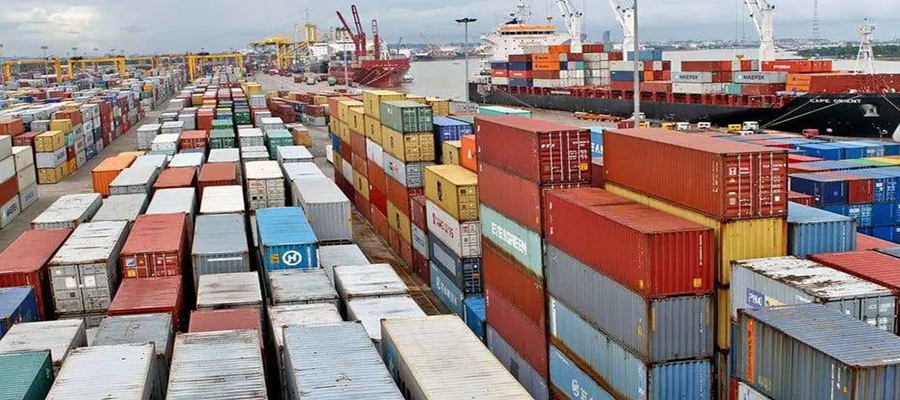
World Bank has ranked the Apapa and Tin Can Island Port complexes in Lagos among the world’s 20 most improved ports in its 2025 Container Port Performance Index (CPPI), released in June 2026.

The ranking places both ports in the “Top 20 Port Improvement Since 2020” category, reflecting significant gains in operational efficiency and vessel turnaround time.
The CPPI is a global benchmark used to assess the efficiency of container ports based on factors such as cargo handling speed, ship turnaround time and overall logistics performance.
According to the report, the improvement highlights ongoing reforms and modernization efforts within Nigeria’s maritime sector.
The Managing Director of the Nigerian Ports Authority (NPA), Mr Abubakar Dantsoho, attributed the recognition to ongoing policy reforms and infrastructure upgrades in the sector.
He said the development reflects the impact of economic policies of President Bola Tinubu and the support of the Minister of Marine and Blue Economy, Mr Adegboyega Oyetola.
“With the investor-friendly policies of President Bola Ahmed Tinubu providing the impetus for increased investment to drive our port infrastructure and equipment modernisation programme, coupled with the unflinching support of the Honourable Minister of Marine and Blue Economy, Adegboyega Oyetola, we have all it takes to further enhance trade facilitation, improve competitiveness and boost the national economy,” he said.
The NPA said the recognition is expected to strengthen investor confidence in Nigeria’s maritime sector and enhance the country’s position as a regional trade and logistics hub.
It noted that improvements in port operations are already contributing to increased efficiency in cargo movement and reduced delays at key terminals.
The authority also pointed to ongoing efforts to modernise port infrastructure and expand digital systems aimed at improving service delivery.
Earlier in February 2026, the NPA said the federal government had intensified efforts to position Nigeria as a leading maritime destination through port rehabilitation and modernization projects.
It also highlighted public-private partnership initiatives, including developments at the Lekki Deep Sea Port, as part of broader reforms aimed at improving efficiency and attracting investment.
The CPPI ranking is expected to further boost Nigeria’s maritime profile and encourage additional investment in the sector.

As digital payment adoption continues to grow across Nigeria and emerging markets, the next phase will depend not just on innovation, but on the strength, reliability, and trustworthiness of the infrastructure behind it.

While the ecosystem has made clear progress in recent years, trust remains a critical issue for users, businesses, and operators alike. Questions around resilience, security, interoperability and transaction reliability continue to shape how the market evolves and how confidently digital payments can scale.
These issues will be central to the deliberations at Digital Pay Expo 2026, where fintech leaders, payment operators, and other ecosystem stakeholders will gather under the theme, “Seamless Digital: Fostering Pan-African Market Expansion in the Era of AI.”
PalmPay’s participation reflects its continued commitment to building trusted and scalable payment infrastructure, while contributing to the broader industry efforts to strengthen systems, standards, and partnerships needed to support long-term ecosystem growth.
Speaking ahead of the event, Olorunfemi Hanson, Head of Marketing and Communications at PalmPay Nigeria, said: “As the financial services ecosystem continues to grow, trust and reliability become even more important.
“The industry’s next phase will be shaped not only by innovation, but by the strength of the infrastructure supporting it. Digital Pay Expo provides an important platform to address the resilience, interoperability, and trust issues that will shape the future of digital payments growth across Africa.”
The event, scheduled to be held from the 17th to the 18th of June, 2026, will feature Chika Nwosu, Managing Director of PalmPay Nigeria, alongside other distinguished guests, including the Director-General, Payment System Management Department (PSMD), Central Bank of Nigeria. The event will examine how the industry can balance innovation, regulation, and scalability while strengthening trust across the digital payments value chain.
For PalmPay, this event reinforces its role in supporting a more resilient, secure and scalable payments ecosystem for Nigeria and emerging markets more broadly.

Police Uncovers N7.7Bn Telecom Data Fraud Syndicate, Recovers Assets Worth Millions

How Fraudsters Stole N134Bn from Banks, Customers in 6 Years – CBN

AfreximBank Urges Nigeria, Others to Strengthen Continental Trade

FG Issues Transition Guidelines for Tax Acts 2025

Mobile Technologies Boost Africa’s Economy by $240B in 2025, Commences a New Phase of Digital Transformation

CBN Extends PoS Geo-Fencing Enforcement Deadline to August 2026

NCC Drafts New Rules for Virtual Mobile Operators

FG Targets Alleged N3tn Capital Flight, Opens Airtime Credit Market to Nigerian Fintechs

London Strengthens Global Investment Ties with Africa @ First Ever London-Africa Business Summit

Easybuy Partners WAWUAfrica to Upskill 10 Million Youths and Women, Boosting Nigeria’s Economic and Financial Inclusion




 Telecom2 days ago
MTN Foundation Commits N32Bn in Projects across Nigeria

 E-Financial2 days ago
IMF Warns of New Risks for Monetary Policy over $59Bn Crypto Inflows into Nigeria

 E-Financial2 days ago
AI-Powered Loan Recovery Pilot Rakes in N69m for VeendHQ

 E-Business1 day ago
NIPOST Plans Digital Postcodes for Every Building in Nigeria

 Telecom2 days ago
NCC Begins Review Telecom Termination Rates after 8 Years

 Telecom2 days ago
Airtel Africa Foundation Completes Year One Scholarship Disbursement for 100 Tech Scholars in Nigeria

 E-Business2 days ago
The Case for a Holistic AI-Led Approach to Cybersecurity in the Fintech Ecosystem

 Broadcasting2 days ago
Stakeholders Endorse Hybrid Model for Nigeria’s Digital Switch