

E-Financial
No Signs of Distress in Nigerian Banks – NDIC

Nigeria Deposit Insurance Corporation (NDIC) on Tuesday said the country’s banks remain stable in spite of a negative rating on Nigeria by global credit rating agency, Moody’s.

Abdulhameed Aliu, NDIC deputy director for Bank Examination, said this at the ongoing workshop for business editors and finance correspondents by the corporation in Yola, the Adamawa State capital.
The theme of the workshop is, “Nigerian Banking System Stability: Tackling Emerging Issues”.
Moody’s Investors Service (Moody’s), one of the global credit rating agencies, on December 4 changed its outlook on Nigeria’s ratings to negative from stable.
It said Nigeria’s weak operating environment posed a challenge to the banking sector in maintaining the recent improving trend, particularly as regards asset quality, given the increasing bank lending.
Mr Aliu said the regulators, which included the NDIC and the Central Bank of Nigeria (CBN), had put in place frameworks that would continuously ensure that the banking industry remains strong.
He said the commercial banks’ Capital Adequacy Ratio (CAR) had improved from 10 per cent to 15 per cent, higher than the right per cent threshold.
CAR is a measurement of bank’s available capital expressed as a percentage of its weighted exposures.
The deputy director said the development meant that Nigerian banks were insulated against some level of risks.
Mr Aliu noted that the regulator had come up with electronic template that monitors excessive charges among banks.
He said: “Any bank that charges customers beyond what is approved, like I said, we’ll go to these banks, it is just unfortunate that our reports are not public reports but we have a lot of circumstances where customers were refunded for excessive charges.
“We have even gone beyond doing these things manually; we have a template that we send to these banks, they are IT driven.
“It is a software that we developed. Once the bank slots in the variables, the results will come out and there is a red flag. So, anyone that has violated the articles, the system generates it.
“It is not the issue of doing manually, the tendency of which there will be mix up, but this is a template that we have been using. So, all those customers that are charged exorbitant charges are flagged off.”
He said the idea behind the template is to ensure that banks do not overcharge customers.
“They will tell you it is based on their source of funds and we are talking of infrastructure also, one of the things that is making the banks drive their rate is infrastructure that we don’t have.
“Like we said, CBN has customer protection desk, we also have it in NDIC and I can tell you the amount of complaints I receive.
“We don’t just wait until customers complain, we request inputs from these banks, they tender their returns and we advise them.
“We don’t wait for customers to complain, but where customers even complain, we investigate that,” he added.



Central Bank of Nigeria (CBN) is outlining plans to process salaries, pensions, and social welfare benefits through the eNaira.

The proposal is outlined in the Nigeria Payments System Vision 2028 (PSV2028), a strategic roadmap aimed at transforming the eNaira from a pilot project into a core component of the country’s payment infrastructure.
Under the framework, the CBN plans to drive wider adoption by integrating the eNaira into government-to-person payments, payroll systems, offline transactions and financial services targeted at micro-enterprises.
Launched in October 2021 as Africa’s first Central Bank Digital Currency (CBDC), the eNaira was introduced to promote financial inclusion, reduce transaction costs, improve remittance flows and support Nigeria’s transition to a cashless economy. However, adoption has remained below expectations despite continued regulatory support.
According to the CBN, the digital currency framework will be reviewed and strengthened to better align with emerging market needs.
The roadmap identifies government disbursements as a key driver for increasing usage and integrating the eNaira into everyday transactions.
If implemented, public sector salaries, pension payments, conditional cash transfers and other welfare programmes could be distributed through the platform, potentially improving payment efficiency and expanding access to digital financial services.
The roadmap also highlights programmable-money capabilities that could set the eNaira apart from traditional payment systems. These features include time-restricted spending, purpose-specific payments, automated payment splitting and dedicated sub-wallets for different financial needs.
The CBN believes these functionalities could improve transparency, strengthen fund management and enhance the effectiveness of targeted government interventions.
Beyond consumer payments, the apex bank said the eNaira could support settlement systems, banking operations and tokenised financial assets such as bonds and securities, strengthening Nigeria’s broader financial market infrastructure.
Olayemi Cardoso, governor, CBN, said the Payments System Vision 2028 strategy is designed to strengthen Nigeria’s position as a leading digital payments market while improving efficiency, resilience and inclusiveness across the financial system.
Despite millions of eNaira wallets being created and transactions worth approximately N22 billion processed, the digital currency has yet to achieve widespread everyday use.
The CBN identified challenges including limited merchant acceptance, weak integration with banking and fintech applications, and the absence of cross-border CBDC payment corridors.
To address these issues, the bank plans to position the eNaira as a preferred platform for government payments, remittances and trade settlements while opening its APIs to fintech firms for broader integration and innovation.
The CBN also intends to explore bilateral CBDC corridor pilots with major trade and remittance partners to facilitate faster and more efficient cross-border transactions.
For MSMEs, wider eNaira adoption could reduce transaction costs, improve access to digital payments, streamline government support programmes and create new opportunities for participation in Nigeria’s growing digital economy.
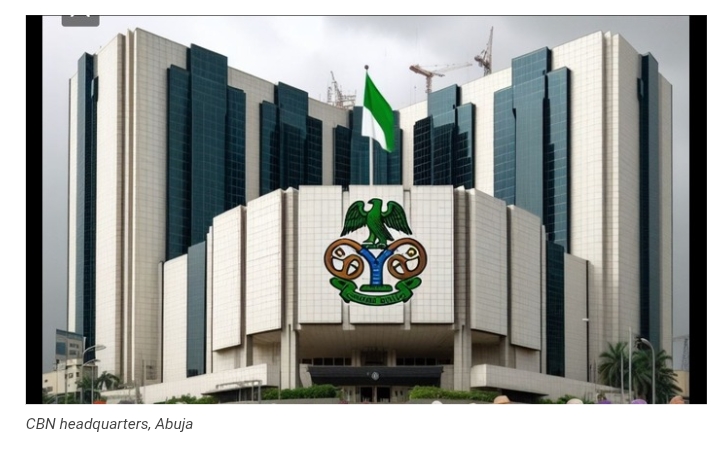
Central Bank of Nigeria (CBN) has proposed a sweeping overhaul of the regulatory framework for Financial Holding Companies (HoldCos), including measures to strengthen the operational independence of subsidiaries by prohibiting parent companies from participating in lending decisions and credit approval processes.

The move would also require the HoldCos to maintain a minimum 51 per cent ownership stake in their subsidiaries.
A bank holding company is a corporation that owns a controlling interest in one or more banks but does not itself offer banking services.
The proposed reforms, contained in the ‘Exposure Draft of the Revised Guidelines for Licencing and Regulation of Financial Holding Companies in Nigeria,’ posted on the apex bank’s website, were aimed at strengthening governance, enhancing accountability and ensuring clearer ownership structures within Nigeria’s increasingly diversified financial groups.
In prohibiting parent companies from participating in lending decisions, it stated that a HoldCo shall not: “Be involved in credit administration and approval processes of any of its subsidiaries.”
It added: “Loans by a banking subsidiary to its HoldCo would be regarded as a return of capital and deducted from the capital of the bank in computing the bank’s capital adequacy ratio.”
According to CBN, the review became necessary after years of implementing the existing framework introduced in 2014.
The draft signed by Dr. Rita Sike, director, Financial Policy and Regulation Department, stated: “Following several years of implementation, the CBN has identified areas within the extant Guidelines that require enhancement to strengthen the operational effectiveness and regulatory oversight of Financial Holding Companies.
“Accordingly, the Guidelines has been reviewed to address observed gaps and align with evolving regulatory and market developments.”
One of the most significant changes proposed by the regulator is the introduction of a mandatory majority ownership requirement for all subsidiaries under financial holding companies.
Highlighting the key amendments, the apex bank stated that the revised framework would introduce, “Ownership and Control Requirements: Requiring FHCs to hold a minimum of 51 per cent equity stake in each subsidiary and to be registered as a person with significant control by the appropriate corporate registration authority.”
The proposed requirement is expected to strengthen the ability of HoldCos to exercise effective oversight over subsidiaries while eliminating ambiguities around control and accountability within financial groups.
The CBN also moved to draw a clear line between the responsibilities of parent companies and those of subsidiaries by prohibiting HoldCos from interfering in operational and business decisions.
According to the draft guidelines, a HoldCo shall not “Arrogate to itself any of the powers or functions of the board or management of any of its subsidiaries or associates.”
The regulator further stated that: “Without prejudice to Section 18 of BOFIA 2020, the practice whereby members of the Board or Management of a subsidiary attend meetings of the Board of the HoldCo and vice versa is prohibited.”
In a particularly strong provision targeted at preserving the independence of subsidiary institutions, the apex bank stated that a HoldCo shall not: “Interfere in the day-to-day activities of the subsidiaries.”
The draft further provides that parent companies must not compel subsidiaries to take instructions from them in the conduct of business.
According to the CBN, a HoldCo shall not: “Require its subsidiaries (including any employee, staff, manager, officer or director thereof) to take directives or act on the instructions of the HoldCo in its decision-making process, or in relation to the conduct of its business in any way whatsoever.”
Beyond governance reforms, the proposed framework also introduces stricter capital requirements for financial holding companies.
The CBN stated: “A HoldCo shall have and maintain a minimum regulatory capital which shall exceed the sum of the minimum regulatory capital of its subsidiaries by at least 20 per cent.”
It added that only paid-in capital would be recognised when assessing compliance with the requirement.
The draft further clarified: “It is the capital of the HoldCo that is applied to the subsidiaries. Consequently, excess capital in one subsidiary shall not be used to make up a shortfall in another subsidiary.”
The revised framework equally tightens oversight of shared services arrangements among members of financial groups.
According to the apex bank, “The HoldCo shall not engage in any transaction or maintain any business relationship with any of its subsidiaries, except such transaction is conducted at arm’s length.”
The guidelines further state that: “Shared services shall be provided at arm’s length. Transactions in respect of such services shall require the consent of the boards of directors of the FHC and the relevant subsidiary.”
To ensure accountability, the CBN directed that: “A value for money audit in respect of shared services shall be conducted at least once every two years by an approved auditor and the report submitted to the Director, Banking Supervision Department, CBN not later than March 31 of the year following the year the audit relates.”
The regulator also tightened rules governing intra-group lending and insider-related transactions, declaring that: “There shall be no insider-related borrowings within a HoldCo.”

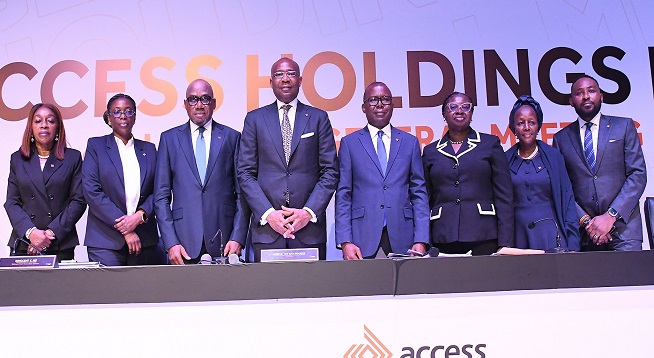
Access Holdings Plc has held its 4th Annual General Meeting (AGM), reaffirming its strategic transition towards long-term value creation, balance sheet resilience, and disciplined growth, even as it navigates a dynamic and evolving operating environment.

Speaking at the AGM, the Chairman, Aigboje Aig-Imoukhuede, CFR, emphasised that the defining test of a financial institution is not merely its capacity for growth, but its ability to grow profitably, sustainably, and with discipline over time.
He noted that Access Holdings’ performance in 2025 reflects a deliberate approach to strengthening the institution’s long-term fundamentals while maintaining strong financial performance.
The Group delivered Profit Before Tax of ₦1.007 trillion, underscoring the strength of its diversified platform and expanding earnings base across key markets. Total assets increased to ₦51.56 trillion, while customer deposits grew strongly, reflecting sustained franchise momentum and deepening customer trust.
The Chairman, however, stressed that these results must be viewed within the context of the Group’s prudent risk management actions during the year. Access Holdings accelerated provisions on legacy and regulatory forbearance credit exposures, resulting in elevated impairment charges.
He explained that the Group consciously prioritised balance sheet strength and long-term resilience over short-term earnings optimisation.
“Periods of economic uncertainty often reveal more about an institution than periods of uninterrupted growth. Our focus remains on building a business that is not only growing, but improving in the quality, resilience, and sustainability of its earnings,” he stated.
The AGM highlighted the Group’s continued evolution beyond traditional banking into a diversified financial services ecosystem, with growing contributions from investment management, insurance, pensions, consumer finance, and payments.
While banking remains the Group’s core earnings engine, emerging growth platforms, including Access ARM Pensions, Access Insurance Brokers, Oxygen X Finance, and Hydrogen Payments, are expanding its footprint across digital finance, consumer lending, retirement services, and payments, thereby strengthening the Group’s long-term earnings mix and scalability.
Looking ahead, the Chairman reiterated the strategic imperative underpinning the Group’s next phase of growth:
“Our strategy, From Scale to Value, reflects the natural evolution of our journey. Scale created opportunity; value creation is how we fully realise it.”
He noted that while the Group continues to generate strong returns, ensuring that earnings per share consistently exceed the cost of capital remains central to unlocking sustainable shareholder value. He also acknowledged the significant unrealised value embedded within the Group’s international subsidiaries and reiterated management’s focus on improving market recognition of that intrinsic value over time.
The Board also addressed shareholders’ concerns regarding dividend payments, clarifying that the temporary suspension of dividend distributions was a consequence of regulatory compliance requirements rather than any deterioration in the Group’s financial performance.
Aig-Imoukhuede reaffirmed that the Group’s earnings capacity remains strong and that the Board’s position reflects adherence to supervisory expectations and prudent capital management principles.
He assured shareholders of the Board’s commitment to resuming dividend payments as soon as the relevant regulatory conditions are satisfied.
“Our approach is clear: capital retained today must translate into greater value tomorrow and sustainable returns for our shareholders.”
Access Holdings further highlighted progress in strengthening governance and leadership continuity. During the year, Innocent C. Ike was appointed Group Managing Director/Chief Executive Officer, while the Board was reinforced through the appointment of Ibironke Adeyemi as an Independent Non-Executive Director.
Shareholders also expressed appreciation for the outstanding contributions of Bolaji Agbede, Executive Director, Business Development, who successfully led the management team as Acting Group Chief Executive Officer prior to the appointment of Mr. Ike.
The Chairman noted that the leadership transition was executed seamlessly, ensuring continuity of strategy, operational stability, and stakeholder confidence.
Despite continuing macroeconomic uncertainties across its operating markets, Access Holdings expressed confidence in its strategic positioning, underpinned by disciplined execution, a diversified business model, a strengthened capital base, and a clear focus on sustainable value creation.
Concluding his remarks, Aig-Imoukhuede reaffirmed the Group’s long-term commitment to shareholders: “Our responsibility is to justify the confidence of our shareholders by building an institution that endures, one defined by clarity of purpose, discipline of execution, and sustainable value creation over time.”

AI-Powered Cyber Threats Put Nigerian Banks on Alert

Guinea-Bissau Taps United Nigeria Airlines to Establish AIR BISSAU, National Carrier

IMF Urges FG to Introduce Fuel, Telecom Taxes

CBN to Expand eNaira for Salaries, Pensions and Welfare Payments

CSOs Raise Alarm over Nigeria’s Data Protection Crisis

CBN Extends PoS Geo-Fencing Enforcement Deadline to August 2026

NCC Drafts New Rules for Virtual Mobile Operators

TD Africa, HPE Drive Conversations on the Future of Intelligent Networking

London Strengthens Global Investment Ties with Africa @ First Ever London-Africa Business Summit

Easybuy Partners WAWUAfrica to Upskill 10 Million Youths and Women, Boosting Nigeria’s Economic and Financial Inclusion




 News3 days ago
UK, Nigeria Launch £15m Growth Programme to Accelerate Economic Transformation

 General News3 days ago
Haleon Introduces New Corporate Identity in Nigeria

 General News3 days ago
Elon Musk Makes History as the World’s First Trillionaire

 Telecom3 days ago
NITDA Unveils Ambitious Strategy to Turn Southwest into Nigeria’s Next Innovation Powerhouse

 General News22 hours ago
₦5m up for Grabs as 10 Startups Clash at the Gathering on 100 Pitchathon Aba
 E-Business22 hours ago
CSOs Raise Alarm over Nigeria’s Data Protection Crisis
 E-Financial22 hours ago
CBN to Expand eNaira for Salaries, Pensions and Welfare Payments

 Telecom22 hours ago
NITDA Reveals Why AI Could Be Nigeria’s Biggest Wealth Creator, Not Oil